
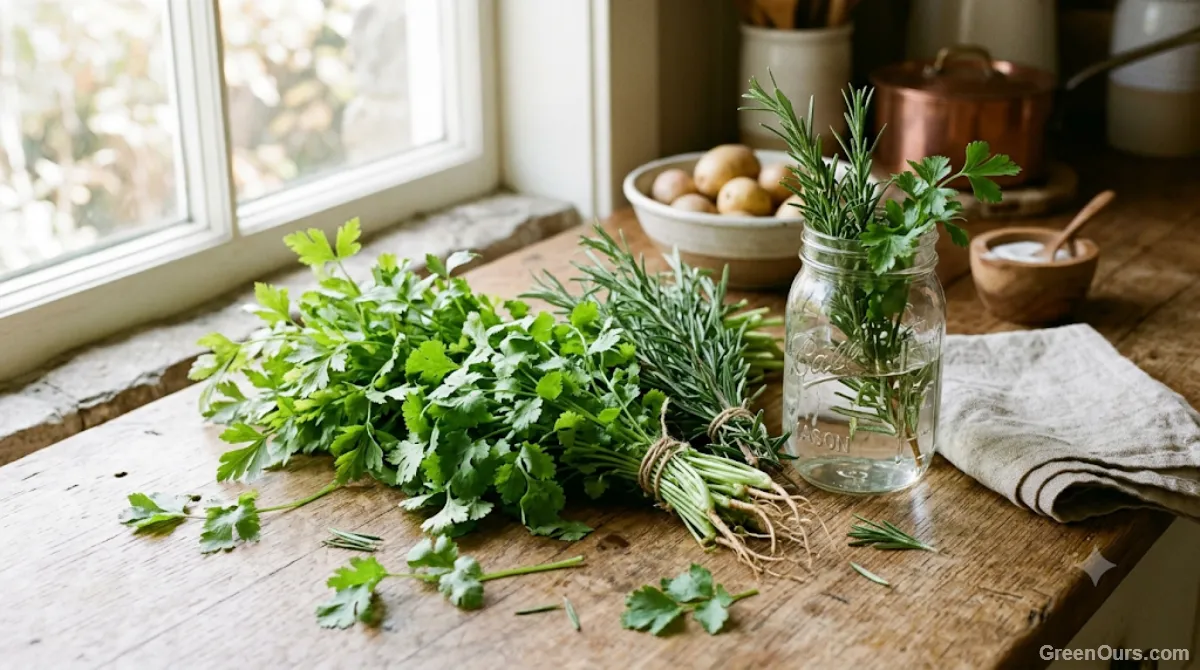

Quick Takeaways
- Match the Method to the Herb: Tender leafy herbs such as parsley and cilantro can be stored upright in water, while woody herbs such as rosemary and thyme generally benefit from a lightly damp cloth.
- Keep Basil Out of the Fridge: Basil is sensitive to cold temperatures and often develops dark spots when refrigerated. Store it in water at room temperature instead.
- Balance Moisture: Herbs need protection from drying air, but excess water encourages mold and decay. Keep storage cloths lightly damp rather than wet.
- Check Regularly: Remove damaged leaves, refresh water, and adjust moisture when necessary to help your herbs last longer.
Quick Answer: Match the Storage Method to the Herb
Different herbs have different storage needs. Delicate leafy herbs lose moisture quickly, woody herbs are more resilient, and basil is particularly sensitive to refrigerator temperatures. Use this comparison to choose a suitable plastic-free method.
| Herb Type | Plastic-Free Storage Method |
|---|---|
| Tender Leafy Herbs (Parsley, cilantro, mint, dill) | Trim the stems, stand upright in a glass jar containing about 1–2 inches of fresh water, and loosely cover the leaves with a reusable, breathable cloth. Refrigerate. |
| Woody Herbs (Rosemary, thyme, oregano, sage) | Wrap loosely in a clean, lightly damp cotton or linen cloth and place inside a reusable storage container in the refrigerator. |
| Basil | Trim the stems and stand them in a glass jar of fresh water at room temperature, away from direct sunlight and excessive heat. Do not refrigerate. |
These methods are starting points rather than guarantees. Freshness also depends on how recently the herbs were harvested, their condition when purchased, and the temperature and humidity of your kitchen or refrigerator.
Before Storing: Prep and Moisture Management
A little preparation can make a noticeable difference in how long your herbs stay usable. Before choosing a storage method, remove damaged leaves and make sure the herbs are not carrying unnecessary moisture.
Essential Prep Steps
- Remove Bundling Bands: Take off tight rubber bands and twist-ties. They can crush delicate stems and restrict airflow around crowded bunches.
- Inspect and Sort: Remove yellow, bruised, slimy, or moldy leaves. Decaying plant material and trapped moisture can encourage further spoilage.
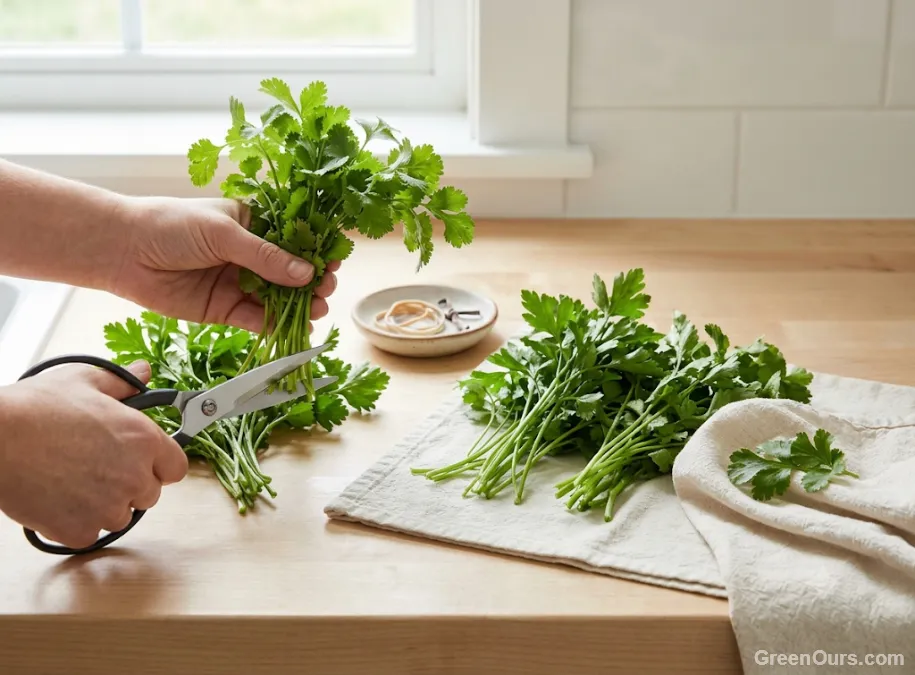
- Trim the Stems: Use clean, sharp kitchen shears to remove a small portion of the stem ends. This gives the stems a fresh surface when placing them in water.
- Decide When to Wash: If the herbs are reasonably clean, you can store them unwashed and rinse them before cooking. If they are sandy or visibly dirty, wash them first and dry them thoroughly with a clean towel or salad spinner. Avoid putting wet leaves into storage.
Tender Herbs: The Upright Jar Method
Tender leafy herbs such as parsley, cilantro, mint, and dill have delicate stems and leaves that can lose moisture quickly. Standing them in water helps keep their stems hydrated, much like cut flowers.
How to Set Up the Jar Method
- Choose a clean glass jar and fill the bottom with approximately one to two inches of fresh, cool water.
- Trim the bottom of the herb stems and stand the bunch upright in the jar, making sure the cut ends are submerged while keeping the leaves above the water.
- Loosely cover the leafy tops with a reusable breathable cloth or a suitable cloth produce bag. Avoid pressing the cover against the leaves.
- Place the jar in a stable spot in the refrigerator where it will not be knocked over. Keep it away from areas that are especially cold or prone to freezing.
- Check the water regularly and replace it when cloudy or dirty. Rinse the jar if needed before adding fresh water.
If you prefer a glass storage container, make sure the leaves are completely dry before storing them. Check regularly for condensation and excess moisture.
Woody Herbs: The Damp Cloth Method
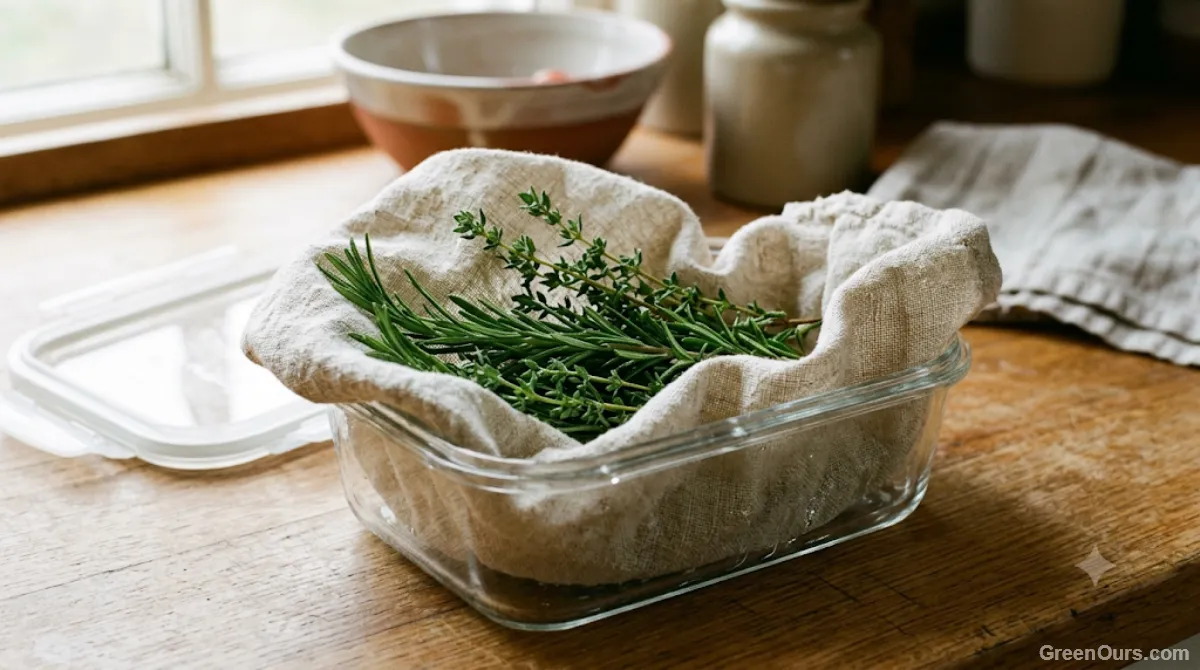
Woody herbs such as rosemary, thyme, oregano, and sage have firmer stems and generally tolerate storage differently from delicate leafy herbs. A lightly damp cloth helps reduce moisture loss while avoiding the need to keep their stems standing in water.
How to Wrap Woody Herbs
- Choose a clean, lint-free cotton or linen cloth. Dampen it with a little water, then wring it out thoroughly. It should feel slightly moist, never dripping.
- Arrange the trimmed herb sprigs in a loose, single layer across the cloth. Avoid packing different bunches tightly together.
- Roll the cloth gently around the herbs, leaving enough room to prevent crushing the leaves.
- Place the bundle inside a reusable storage container or glass dish. Avoid sealing wet herbs in an airtight container.
- Store in the refrigerator, preferably in the crisper drawer, and check the cloth every few days.
If condensation builds up or the herbs begin to look slimy, remove them, discard damaged portions, and replace the cloth with a clean, drier one.
Basil Exception: Why It Often Does Better Outside the Refrigerator
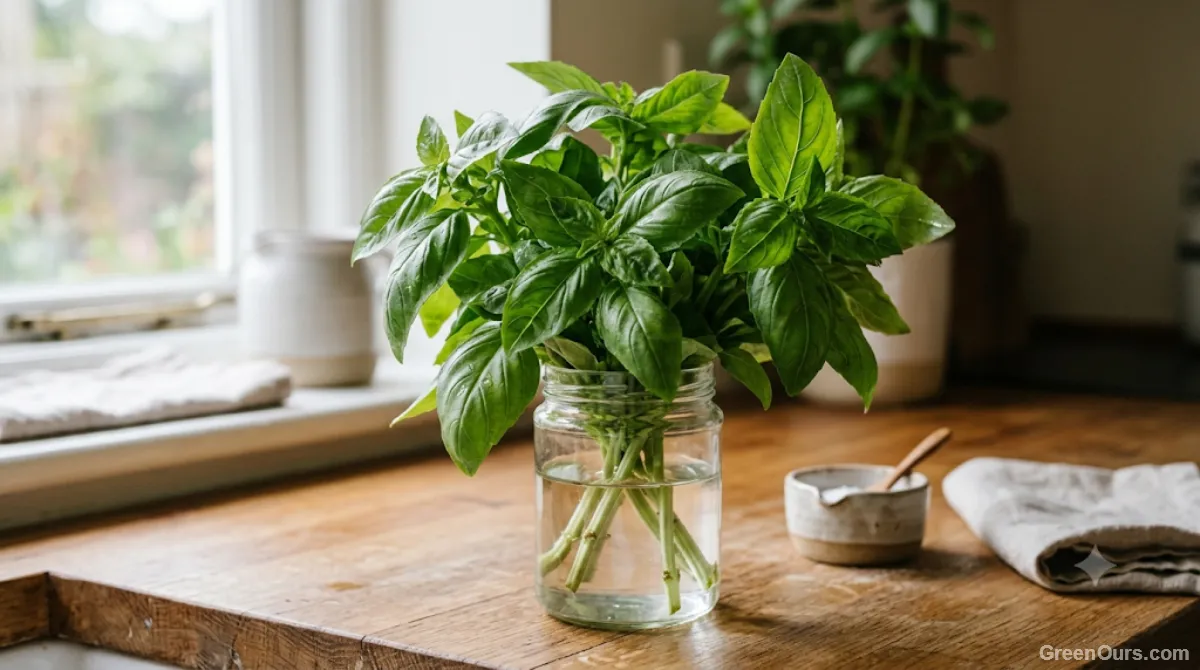
Basil is the exception to many refrigerator herb-storage methods. Unlike parsley and cilantro, this warm-weather herb is sensitive to chilling injury. Exposure to temperatures that are too cold can damage its leaf tissue, causing dark spots, discoloration, and faster deterioration.
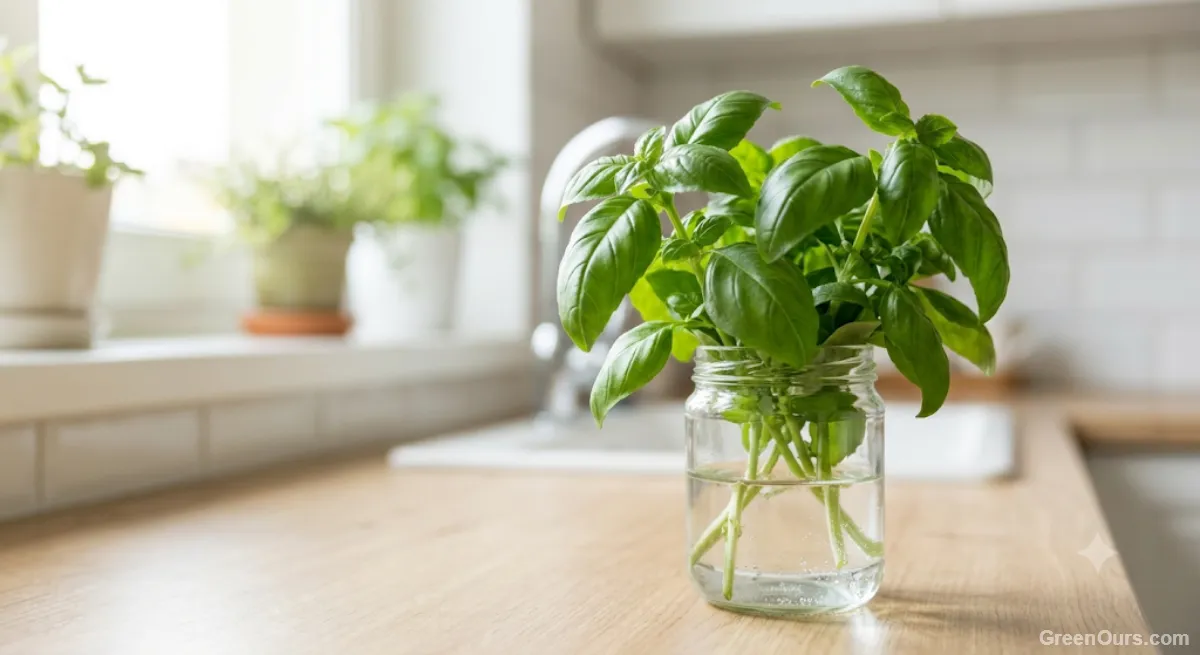
Instead, treat fresh basil more like a cut flower:
- Trim the bottom of the stems and place them upright in a clean glass jar containing a little fresh water.
- Keep the jar at room temperature, away from direct sunlight, excessive heat, and cold drafts.
- Change the water every two to three days or whenever it becomes cloudy.
- Remove any leaves that become damaged or start deteriorating.
Depending on its freshness when purchased and the conditions in your kitchen, basil stored this way may remain usable for several days or longer. Avoid promising a particular storage life, as individual bunches can behave quite differently.
Moisture Balance and Maintenance
Even with the right storage method, fresh herbs need occasional attention. Refrigerators can dry out exposed leaves, while condensation and excess moisture can encourage mold and spoilage.
What Does Damp, Not Wet Mean?
A damp cloth should feel slightly moist when touched but should not release water when squeezed. It should help reduce moisture loss without leaving water droplets on the herbs.
Check your stored herbs every few days. If the cloth feels completely dry, add a little water. If droplets collect inside the container, wipe it dry and replace the cloth with a clean one that is only lightly damp.
For herbs stored in water, replace cloudy water promptly and keep leaves out of the water. These small checks help maintain a better balance between hydration and airflow.
How to Refresh Wilting Herbs
If tender herbs look slightly limp but are still fresh and free from slime, mold, or unpleasant odors, a brief cold-water soak may help restore some crispness.
- Trim and Soak: Trim the stem ends and place suitable leafy herbs, such as parsley or cilantro, in a bowl of ice-cold water for approximately 10 to 15 minutes.
- Check Their Condition: Remove the herbs once they look firmer. This method may help temporarily revive mildly wilted leaves, but it cannot reverse spoilage.
- Dry Thoroughly: Gently remove the herbs and dry them completely with a clean towel or salad spinner before using them.
Avoid trying to revive herbs that have developed mold, slimy leaves, or an unpleasant smell. Those should be discarded rather than returned to storage.
How Long Do Fresh Herbs Last?
There is no guaranteed storage period for fresh herbs. Their usable life depends on how fresh they were when purchased, how they were handled, and the temperature and moisture conditions during storage.
| Herb Type | What to Expect | What to Check |
|---|---|---|
| Tender leafy herbs | Often several days to around two weeks with suitable storage. | Yellowing leaves, sliminess, and cloudy water. |
| Woody herbs | Several days to around two weeks, depending on the herb, its freshness, and moisture balance. | Drying, darkened leaves, mold, or unpleasant odors. |
| Basil | Often several days or longer when kept in water at room temperature. | Dark spots, limp leaves, and deterioration around the stems. |
These are approximate expectations, not shelf-life guarantees. Always inspect herbs before using them. Discard any that show visible mold, sliminess, or an unpleasant smell.
Common Mistakes to Avoid
Avoid these common problems when storing fresh herbs without disposable plastic:
- Trapping Excess Water: Putting wet herbs into closed containers can encourage condensation and mold. Dry washed herbs thoroughly before storing them.
- Refrigerating Basil: Basil is sensitive to chilling injury. Keep it at room temperature in a jar of water instead.
- Ignoring Damaged Leaves: Remove yellowing, slimy, or deteriorating leaves before they affect the quality of the bunch.
- Using a Soaking-Wet Cloth: A cloth that is too wet can leave herbs sitting in excess moisture. Wring it out before wrapping.
- Forgetting to Change Water: Cloudy or dirty water should be replaced to maintain a cleaner storage environment.
What Tools Do You Actually Need?
Disclosure: This article contains affiliate links. GreenOurs may earn a commission if you purchase through these links, at no additional cost to you. We recommend reusable options, but you can also use clean jars and cloths you already own. Read our affiliate disclosure for more information.
You do not need expensive specialty gadgets or dedicated plastic herb keepers to store fresh herbs successfully. A few reusable household items are usually enough:
- Clean glass mason jars or recycled glass jars (view recommended glass jars).
- Reusable cotton kitchen towels, linen dishcloths, or suitable reusable produce bags (view recommended storage cloths).
- Sharp kitchen shears or a knife for trimming stems.
- Reusable glass food-storage containers or ceramic dishes.
Summary: Choose the Right Storage Method
Keeping fresh herbs usable without single-use plastic comes down to choosing the right environment for each type. Tender leafy herbs generally benefit from standing in water, woody herbs do well with a lightly damp cloth, and basil is usually better kept at room temperature.
Start with clean jars and reusable cloths, avoid excess moisture, and check your herbs regularly. You can reduce disposable packaging without buying an entirely new collection of kitchen storage products.
Quick Decision Guide
Tender leafy herbs? Stand them in a jar of water. Sturdy woody sprigs? Wrap them in a lightly damp cloth. Fresh basil? Keep it on the counter in water.
FAQs
Should I wash fresh herbs before storing them in the fridge?
Generally, it is easier to store reasonably clean herbs without washing them first and rinse them just before use. If they are visibly dirty or sandy, wash them and dry them thoroughly before storage. Excess water left on leaves can encourage mold and spoilage.
Why does basil turn black in the refrigerator?
Basil is sensitive to cold temperatures and can develop chilling injury when refrigerated. Damage to the leaf tissue can cause dark spots and discoloration. Store fresh basil upright in a glass jar of water at room temperature instead.
Can I use damp paper towels instead of a cloth to wrap woody herbs?
Yes. A lightly damp paper towel can work if you do not have a reusable cotton or linen cloth available. Wring it out thoroughly so it is not dripping wet. However, a washable cloth is generally a more reusable option for regular storage.
Can I store all fresh herbs in glass jars?
Not necessarily in the same way. Tender leafy herbs often benefit from standing upright in water, while woody herbs are generally better wrapped in a lightly damp cloth. Basil is usually best kept in water at room temperature rather than refrigerated.
How can I tell if fresh herbs have gone bad?
Look for visible mold, slimy leaves, unpleasant odors, or extensive deterioration. Remove mildly damaged leaves when the rest of the bunch is still sound, but discard herbs that show signs of spoilage.