
What's Actually Happening When Variegation Fades
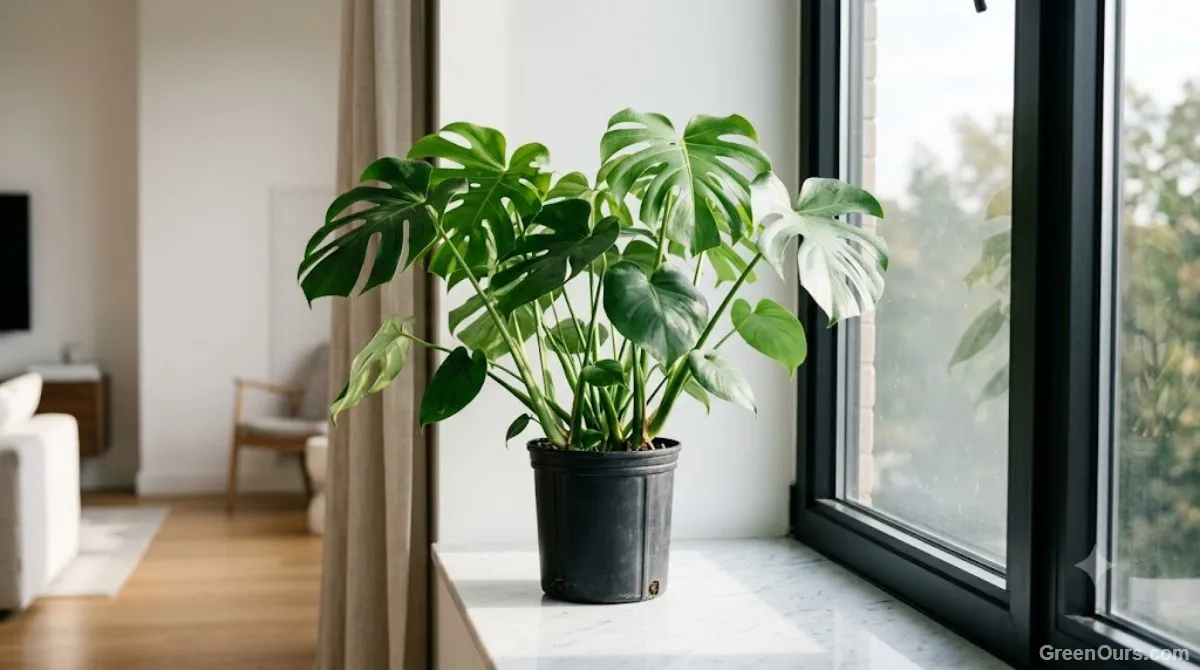
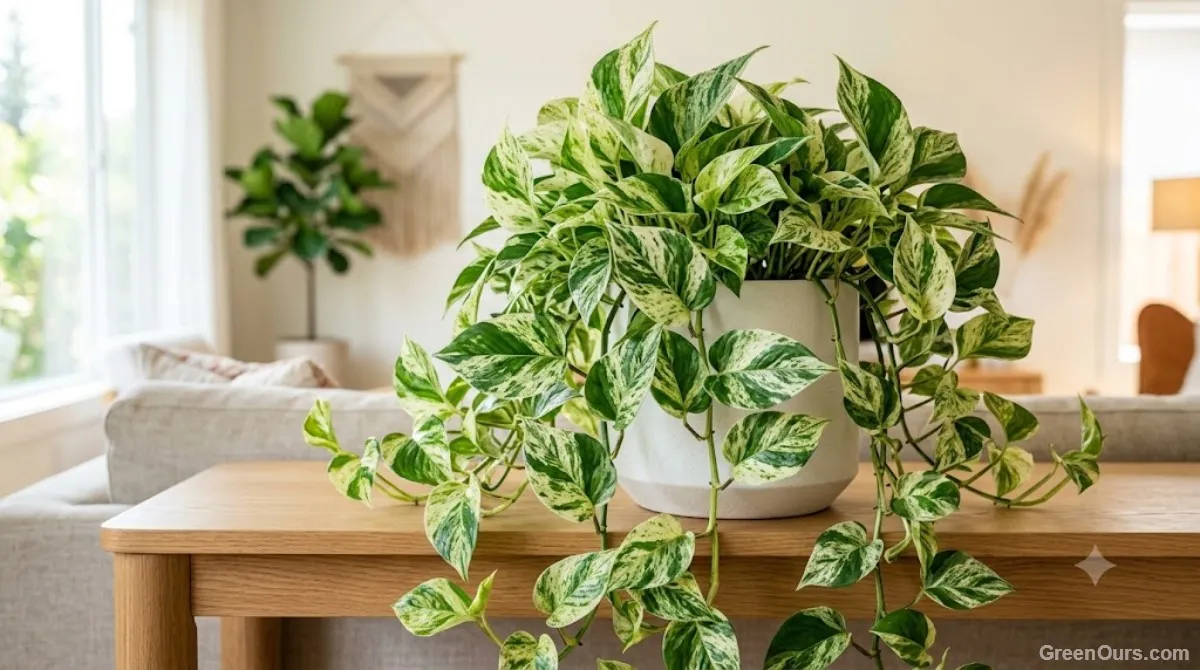
Most variegated houseplants aren't uniformly patterned at the cellular level. In many popular varieties—such as Epipremnum aureum 'Marble Queen', Philodendron brasil, or Monstera deliciosa 'Albo'—the cream, yellow, or white leaf sections lack chlorophyll entirely. Those pale sections cannot produce energy from sunlight, meaning the plant relies almost exclusively on its green tissue to fuel growth.
When a stem produces new growth that is completely green, it is taking the most energy-efficient path available. A fully green leaf photosynthesizes far more effectively than a variegated one, so the plant naturally favors green growth whenever resources are constrained or light is insufficient. Over time, if that solid green shoot isn't addressed, it can outcompete the slower-growing variegated sections and take over the entire plant.
Variegation isn't infectious. A green leaf will never 'spread' green pigment into an adjacent variegated leaf. However, an unchecked green shoot grows much faster, eventually shading out and overtaking the variegated stems below it.
Light and Genetics: The Two Drivers of Reversion
While low light is one of the most common environmental triggers for increased green growth, genetics also play a critical role in whether reversion occurs.
Environmental Reversion: The Light Factor
When a variegated plant receives insufficient light, it adapts by producing more chlorophyll-rich green tissue to capture whatever light energy is available. Tucking a variegated plant into a dim corner or far back from a window accelerates pattern loss as a survival mechanism.
Genetic Reversion: Chimeric Instability
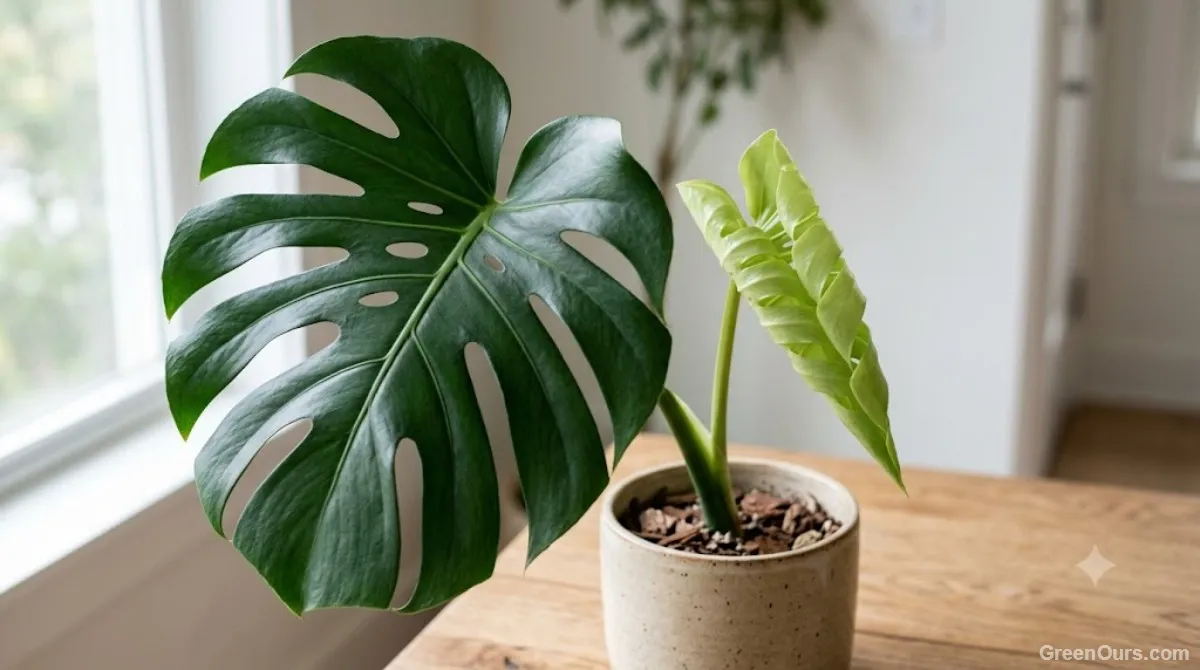
Many variegated plants are chimeras, meaning their growing tips contain two distinct layers of cells—one with normal chlorophyll and one mutated layer without. If the cell layers shift at a stem node, future growth from that point forward may emerge entirely green (or entirely white/cream, which cannot survive long-term). This genetic shift can occur spontaneously regardless of how ideal your lighting conditions are.
How to Set Up Lighting for Variegated Foliage
Variegated plants require significantly brighter light than their solid green counterparts because they operate with reduced photosynthetic surface area. A location that suits a solid green heartleaf philodendron may be far too dim to maintain pattern intensity on a Philodendron brasil or Syngonium.
Aim for bright, indirect light for most of the day. East-facing windows or spots a few feet back from south- or west-facing windows filtered through sheer curtains provide optimal foot-candles. Avoid harsh, unfiltered direct afternoon sun, as white and cream leaf sections lack protective pigments and burn easily under thermal stress.
If natural daylight is limited, supplement with a balanced LED grow light positioned 12 to 18 inches above the canopy for 10 to 12 hours daily. Consistent light intensity is far more effective at preserving patterns than sporadic bursts of direct sun.
Spotting and Pruning Reverted Growth
Reversion almost always starts at fresh growing tips. Regularly inspect stem ends across popular varieties like Marble Queen pothos, variegated Syngonium, or Aglaonema to catch green shifts early.
Because fully green shoots contain 100% chlorophyll, they grow significantly faster than variegated stems. Left untended, a single green shoot will dominate the root system's resources within a single growing season.
How to Prune Reverted Stems Correctly
The most effective physical fix is pruning out green stems before they outgrow the rest of the plant:
- Trace the solid green shoot back down the stem to where it meets the last leaf node that exhibited strong, clear variegation.
- Using sterilized, sharp shears, make a clean cut approximately 1/4 inch above that variegated node.
- Discard the green cutting (or root it separately if you want a solid green plant), and allow the dormant bud at the variegated node to activate.
Avoid removing more than 25–30% of the plant's total foliage at one time. Because variegated plants possess less working chlorophyll, heavy pruning requires longer recovery intervals between shaping sessions.
Can a Reverted Plant Become Variegated Again?
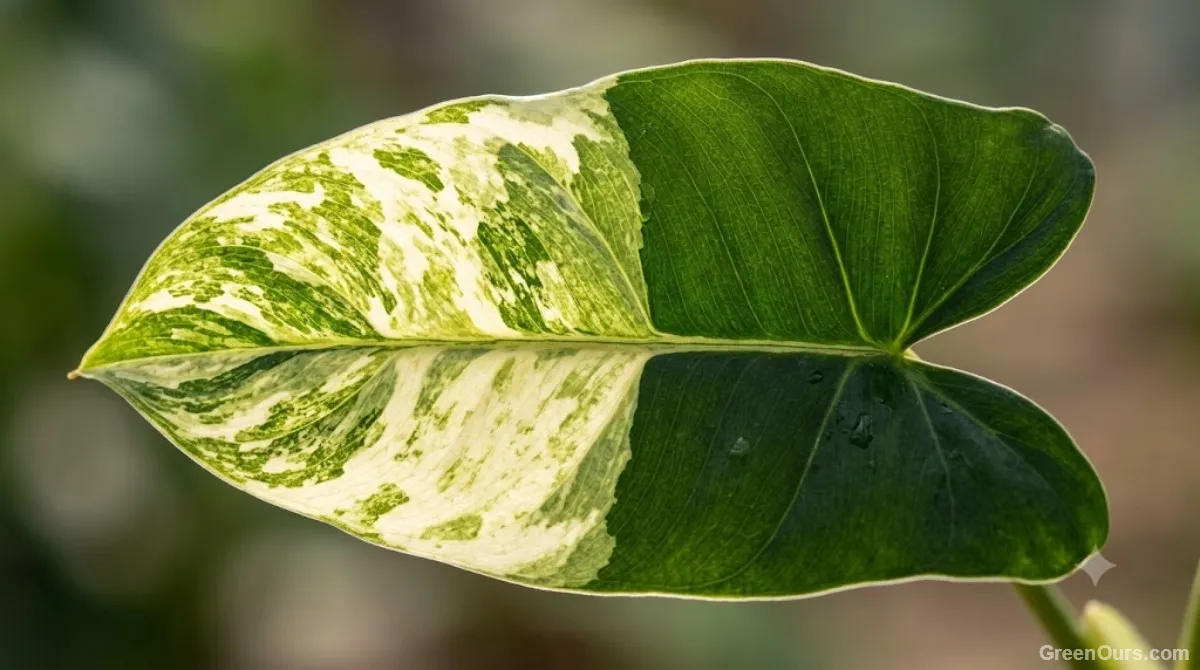
It is important to manage expectations regarding plant genetics: individual leaves that have turned solid green will never regain their white or cream patches. Once a leaf's cellular structure hardens off as fully green, that specific leaf remains green permanently.
However, future growth can emerge variegated again if you prune back to stem tissue that still contains variegated cells. If you cut a reverted stem back to a node that retains chimeric cellular layering and provide strong indirect lighting, the new offshoot has a high probability of unfurling patterned leaves.
If you prune all the way back to the main stem and every single node produces exclusively green growth despite ideal lighting, the plant has undergone total genetic reversion. In those rare instances, enjoy the plant as a healthy, vigorous solid-green specimen.
Explore more houseplant care guides