
The Short Answer Nobody Actually Gives You
Most composting guides treat "cooked food" as one category, and it just isn't. A bowl of plain steamed rice and a plate of buttery garlic shrimp are both technically cooked food, but they behave completely differently once they hit your bin. Rice breaks down. Shrimp attracts every raccoon in a three-block radius and starts smelling like a problem within 48 hours.
The real dividing line has less to do with heat and more to do with fat, protein density, and moisture. Plain, simple cooked foods, mostly plant-based, tend to compost fine. Rich, oily, or animal-based cooked foods are where things get complicated. Once you start thinking about it that way instead of a strict cooked versus raw split, the rest of this gets a lot easier to remember.
The mindset shift that helps: stop asking "was this cooked?" and start asking "is this mostly plain, mostly plant, and mostly dry?" That question gets you the right answer almost every time.
Cooked Foods That Compost Just Fine
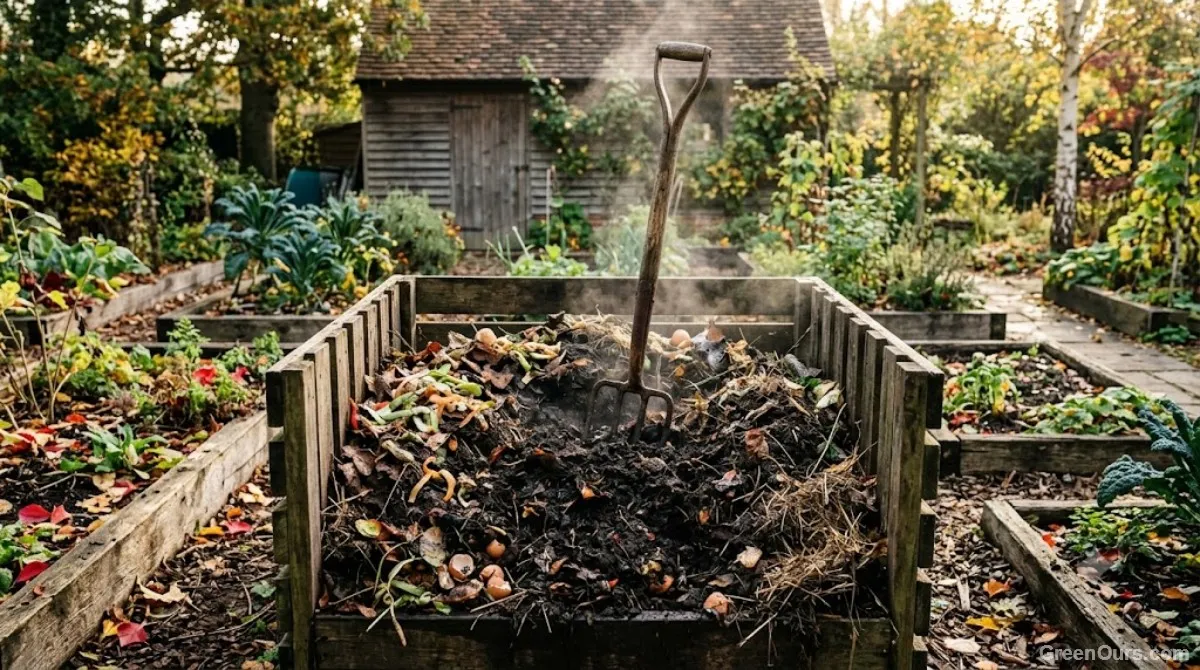
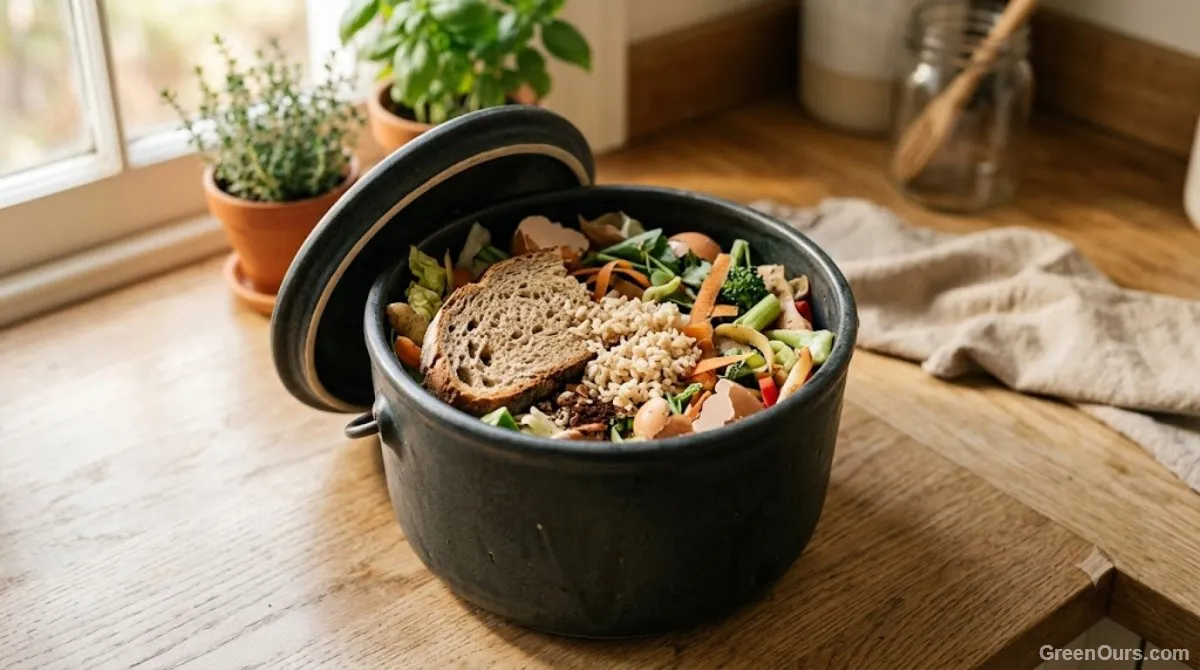
Plenty of everyday leftovers are genuinely fine to toss in. Plain rice, pasta, and other grains break down quickly and add useful moisture. The crusty end of a baguette or a slice of bread gone stale works too, torn into smaller pieces so it doesn't mat down into a soggy clump. Cooked vegetables, even the ones that got a little too soft on the stove, are essentially the same as raw scraps at this point and compost just as easily.
Small amounts of plain cooked beans, lentils, and grains like quinoa also do well. The common thread is that these are foods without much fat, without dairy, and without meat clinging to them. Add them in modest amounts, mix them with something drier and brown like shredded paper or dry leaves, and you won't notice any difference from adding raw kitchen scraps.
The Cooked Foods That Cause Real Problems
Meat, fish, and poultry, cooked or not, are where most beginner compost bins go wrong. They break down slowly, they smell strongly while doing it, and they're exactly what draws rodents and other animals to a backyard bin. The same goes for dairy: melted cheese, cream sauces, and anything with butter worked into it. These items don't just take longer to break down; they change the whole environment of your bin while they're doing it.
Why Oil and Sauces Are the Actual Culprits
If there's one detail that trips people up more than any other, it's oil. A plain vegetable is compost-friendly. The same vegetable roasted in a few tablespoons of oil is a different story, because fat coats other material in the bin, slows down the microbes doing the actual decomposing work, and can turn your pile slimy and anaerobic instead of the crumbly, earthy texture you're going for.
Sauces and Dressings
Anything drenched in a creamy or oily sauce carries the same problem as straight cooking oil, just diluted. A little tomato sauce on pasta is usually fine in small amounts. A plate swimming in alfredo is not.
Fried Foods
Fried leftovers are essentially oil delivery systems. The batter, the grease, all of it behaves in your bin the way oil does anywhere else: it repels water, smothers airflow, and slows everything down. Better to keep fried food out entirely rather than try to manage the mess it creates.
What to Do With the Stuff That Can't Go In Your Bin
None of this means meat scraps, dairy, or oily leftovers have to go straight to a landfill with no alternative. A lot of cities now run municipal or community composting programs specifically built to handle the foods home bins can't, using industrial-scale heat that home setups just don't reach. If yours does, keep a labeled container in the freezer for anything that shouldn't go in your backyard bin, and drop it off when it's full.
If that's not available where you live, it's genuinely okay to send those particular scraps to the trash. Composting doesn't have to be all or nothing to be worth doing. Diverting the rice, bread, and vegetable scraps from your kitchen is still real progress, even if the occasional roast chicken carcass ends up elsewhere.
If You Only Remember One Thing
Skip the mental checklist of individual foods and just ask whether what's on your plate is plain, plant-based, and not swimming in fat. If it is, it's almost certainly fine for your bin. If it isn't, that's not a failure on your part, it just means that particular scrap has a different home to go to.
I still catch myself hesitating over a plate before I scrape it, but these days it's an actual question instead of an old habit. That's really all composting well requires: paying a little more attention to what you're throwing away, and being okay with the fact that not everything belongs in the same bin.