
The Honest Reason Your Compost Reeks
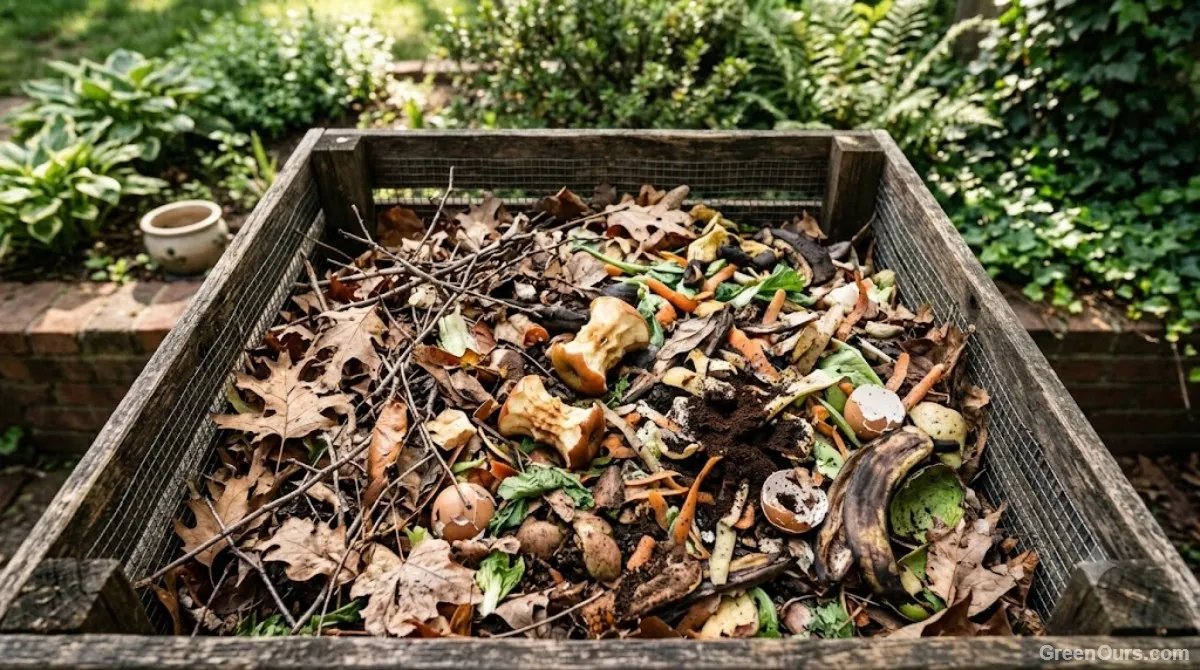
A healthy compost pile has an earthy, slightly sweet smell — think forest floor after rain. If yours smells like rotten eggs, ammonia, or something distinctly sewage-adjacent, that's not a mysterious compost curse. It's chemistry. Smell almost always comes down to one of four things: too many wet, nitrogen-heavy "greens," not enough airflow, too much moisture, or food scraps sitting exposed where they're rotting instead of breaking down properly.
The good news is you don't need to diagnose this like a lab technician. Your nose already knows which category you're in — you just haven't connected it to a fix yet.
Rotten egg smell means anaerobic bacteria have taken over from lack of oxygen. Ammonia smell means too much nitrogen from greens. Both are fixable in the same afternoon.
Getting the Greens-to-Browns Ratio Right
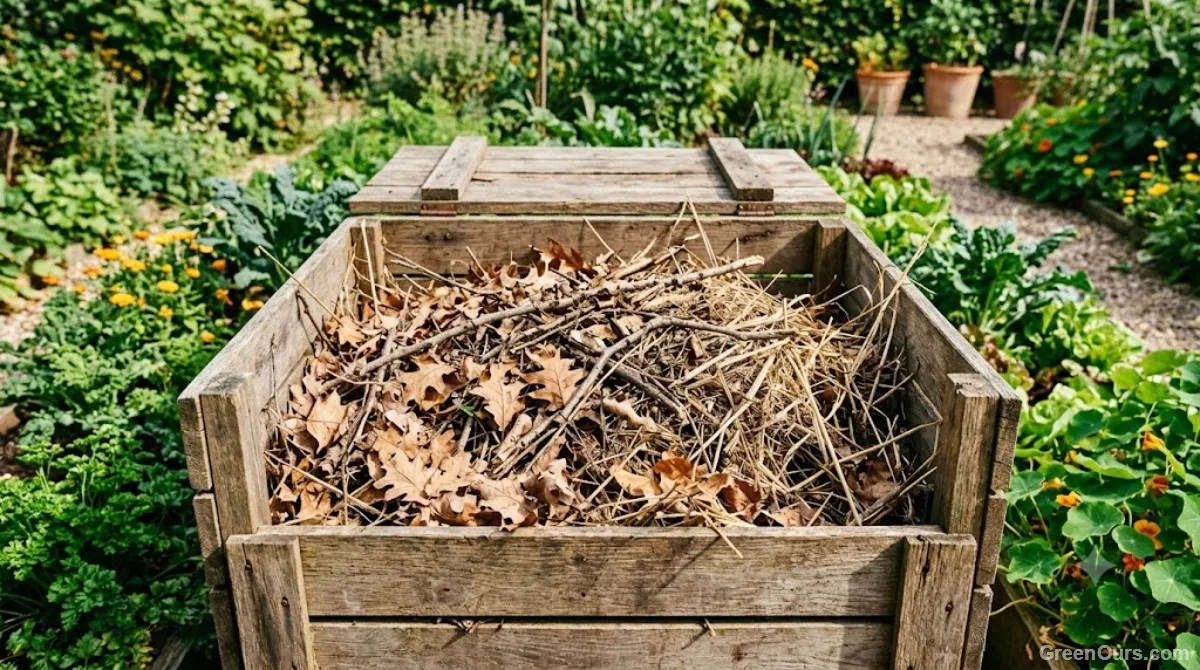
Composting basics get thrown around like everyone already knows them, so let's actually spell it out. "Greens" are your nitrogen-rich materials — food scraps, coffee grounds, fresh grass clippings. "Browns" are carbon-rich — dried leaves, shredded cardboard, straw, sawdust. A pile that smells sharp and ammonia-like is almost always drowning in greens with nowhere near enough browns to balance them out.
The rough target is about two to three parts browns for every one part greens by volume, not by weight. If you've been tossing in banana peels and coffee grounds all week without adding a single handful of dry material, that's your answer.
What Counts as a Brown
Shredded cardboard (skip the glossy or heavily printed stuff), dried fall leaves, straw, sawdust from untreated wood, and even torn-up paper egg cartons all work. Keep a bag of dry leaves or shredded newspaper next to your bin so adding browns becomes as automatic as adding scraps.
What to Hold Back On
Meat, dairy, oily foods, and large amounts of citrus can throw off the balance and invite smell even in an otherwise well-managed pile. These aren't strictly forbidden in every composting system, but if smell is already a problem, pull them out until things settle.
Airflow and Turning: The Fix Nobody Wants to Do
Here's the part I used to skip, and it's exactly why my bin smelled like a locker room. Compost needs oxygen to break down aerobically — cleanly, without that sulfurous rotten smell. When a pile sits untouched and compacts down, the center goes oxygen-starved, and anaerobic bacteria move in. Those are the bacteria responsible for the smell that makes you take three steps back.
How Often to Turn
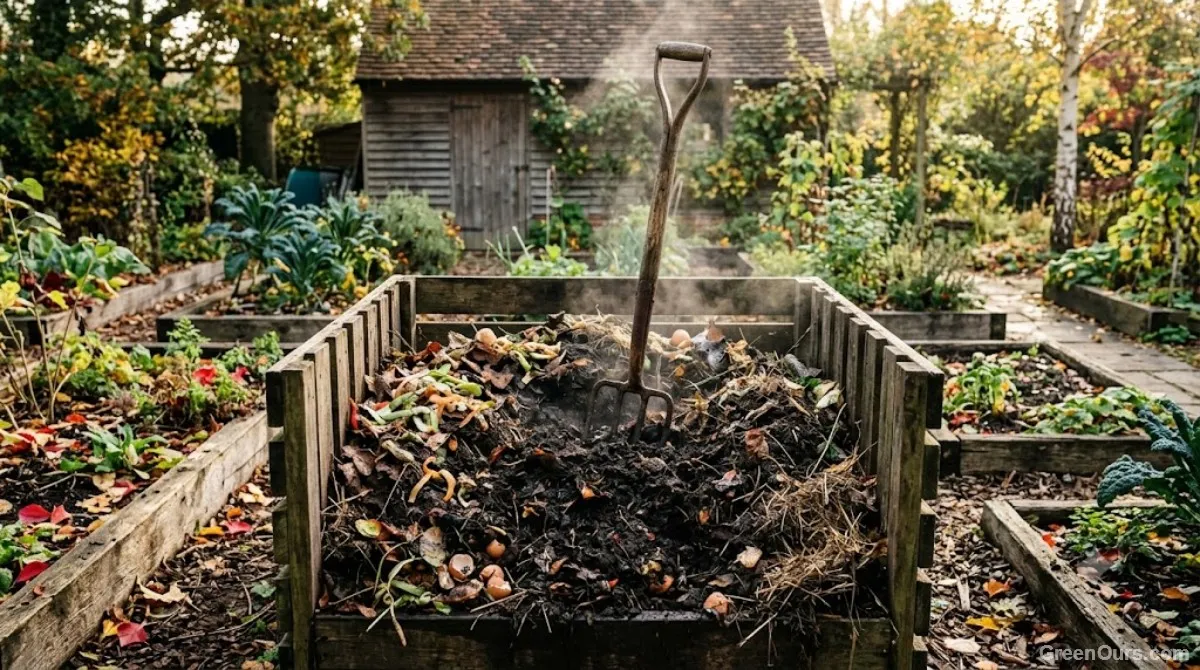
Once a week is a reasonable baseline for an active pile, more often if you've just added a lot of fresh greens. Use a garden fork or a compost aerator tool to lift material from the bottom and center up to the top, breaking up any dense, matted clumps you find.
Signs Your Pile Needs Air, Not Just Time
If you dig in and hit a slimy, gray, matted layer that smells noticeably worse than the surface, that's compacted and anaerobic. Turning it thoroughly, and mixing in dry browns while you're at it, usually clears the smell within a day or two.
Moisture: The Sneaky Culprit
Even with a good greens-to-browns ratio and regular turning, a pile that's too wet will still smell. The general rule people love to repeat is that compost should feel like a wrung-out sponge — damp, but not dripping, and not so dry it's dusty.
Grab a handful from the middle of the pile and squeeze. Water running out means it's too wet — add dry browns and turn to work moisture through evenly. If it crumbles apart and nothing sticks together, it's too dry, and adding a little water while you turn will help. Rain exposure is a common cause of overly wet piles, so if yours is open to the elements, a loose cover — even a scrap piece of tarp or plywood propped over it — can make a real difference.
Keeping Pests Out Without Losing Your Mind
Smell and pests tend to travel together, since flies and rodents are drawn to exposed, rotting food just as much as you're repelled by it. The fix isn't complicated: bury fresh scraps under a layer of browns instead of leaving them on top, and avoid meat, dairy, and bones entirely if pests have been an issue. A secure lid or a layer of finished compost on top acts like a natural barrier that keeps scraps out of sight and out of smell.
If fruit flies are your specific issue, they're usually breeding in an exposed, overly wet top layer rather than the pile as a whole. Covering fresh additions with browns each time solves this faster than any spray or trap will.
What to Do Next
None of this required buying a new bin, a fancy additive, or admitting defeat. A smelly compost pile is just a pile that's asking for a little more air, a little more brown material, or a little less moisture — and once you make that adjustment, the smell clears up faster than you'd expect. Give it a turn, add a handful of dry leaves, and check back in a couple of days. Your nose will tell you when it's working.
Want more composting fixes that don't involve starting over?