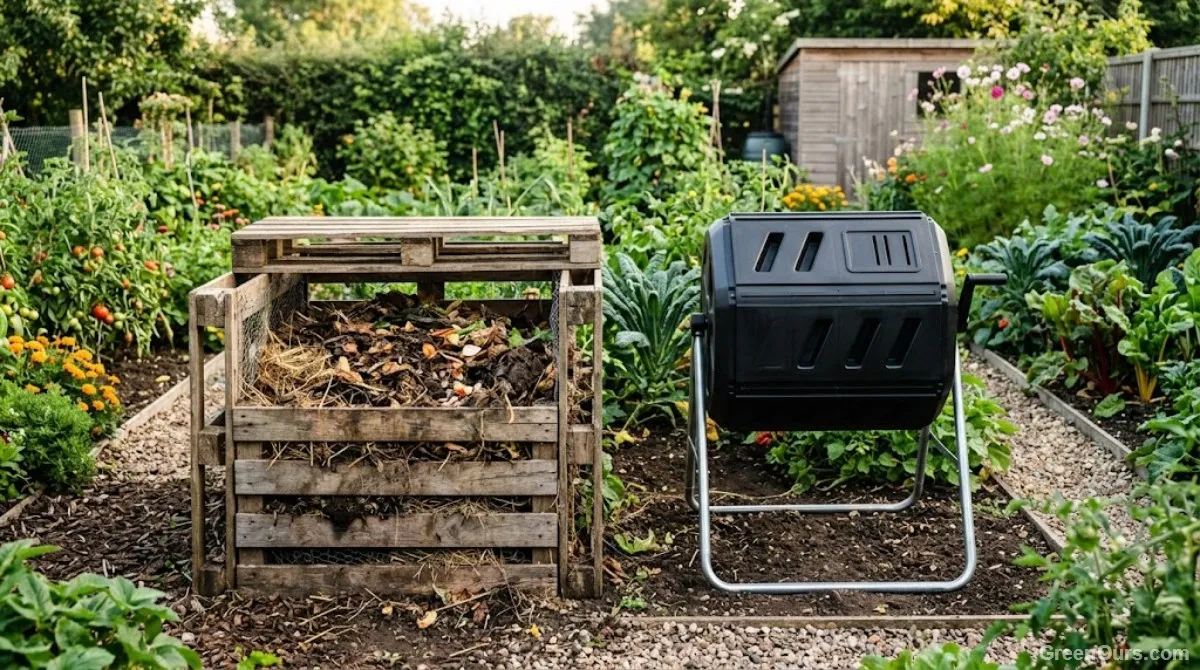

Your Pile Is Either a Desert or a Swamp
Moisture is the number one thing people get wrong, and it swings in both directions. A compost pile that's too dry basically goes dormant. The microbes doing the actual breaking-down work need water to survive, and if your bin has been baking in the sun or you've been adding a lot of dry brown material without balancing it out, decomposition slows to a crawl.
Too wet is just as common, especially if your bin gets a lot of kitchen scraps and not much else. A soggy pile pushes out the oxygen those same microbes need, and instead of composting, you end up with something closer to a swamp — slimy, smelly, and stuck.
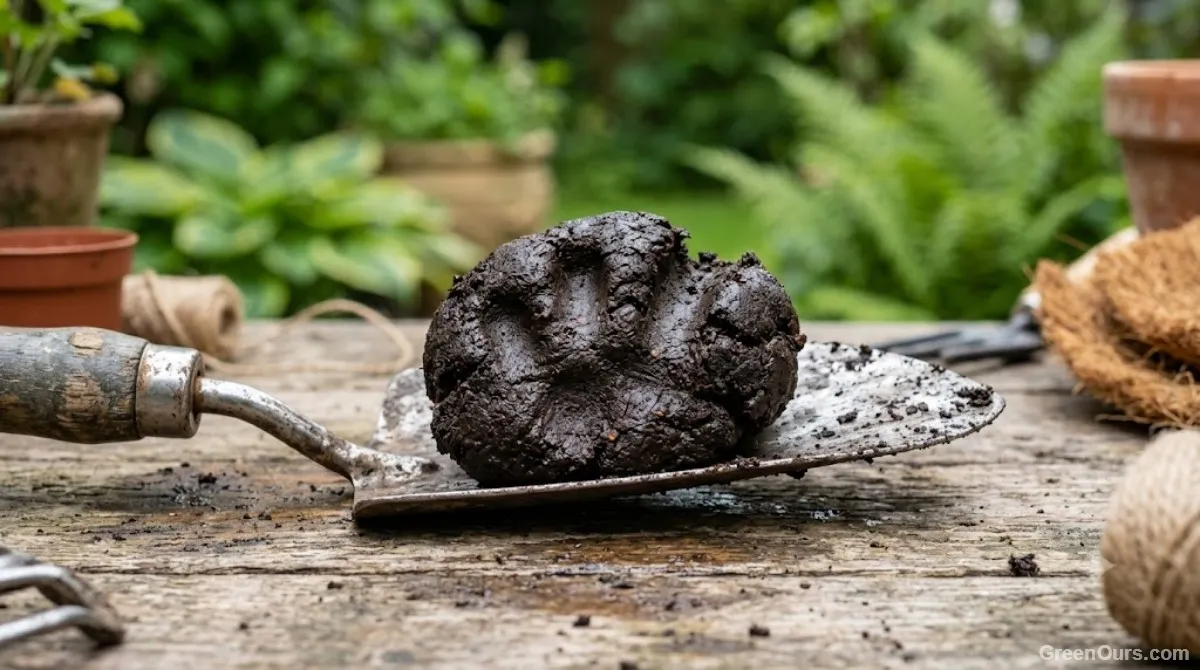
A quick squeeze test in the middle of the pile will tell you which direction yours has swung.
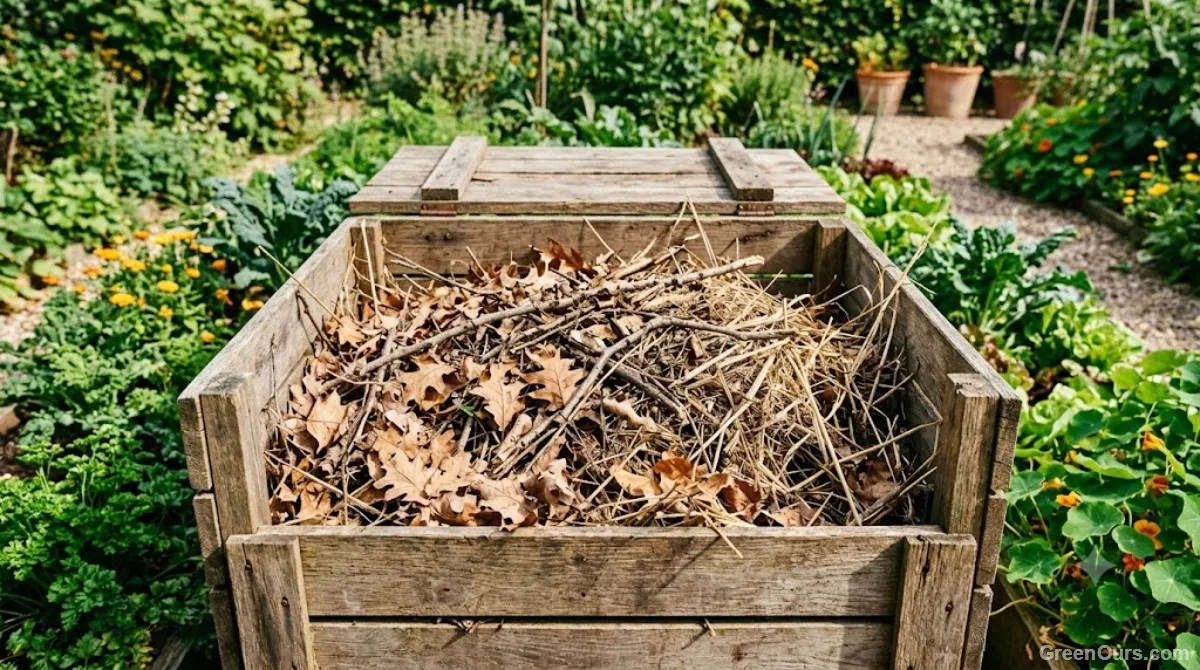
Keep a bag of dry leaves or shredded cardboard near your bin year-round. It's the fastest fix for a soggy pile and costs nothing.
Nothing's Getting In
Compost needs oxygen the same way it needs moisture, and a pile that never gets turned or mixed eventually runs out of it. Once the oxygen is gone, the aerobic microbes that break things down efficiently die off, and slower, smellier anaerobic processes take over instead. That's usually the difference between compost that's quietly working and compost that just sits there.
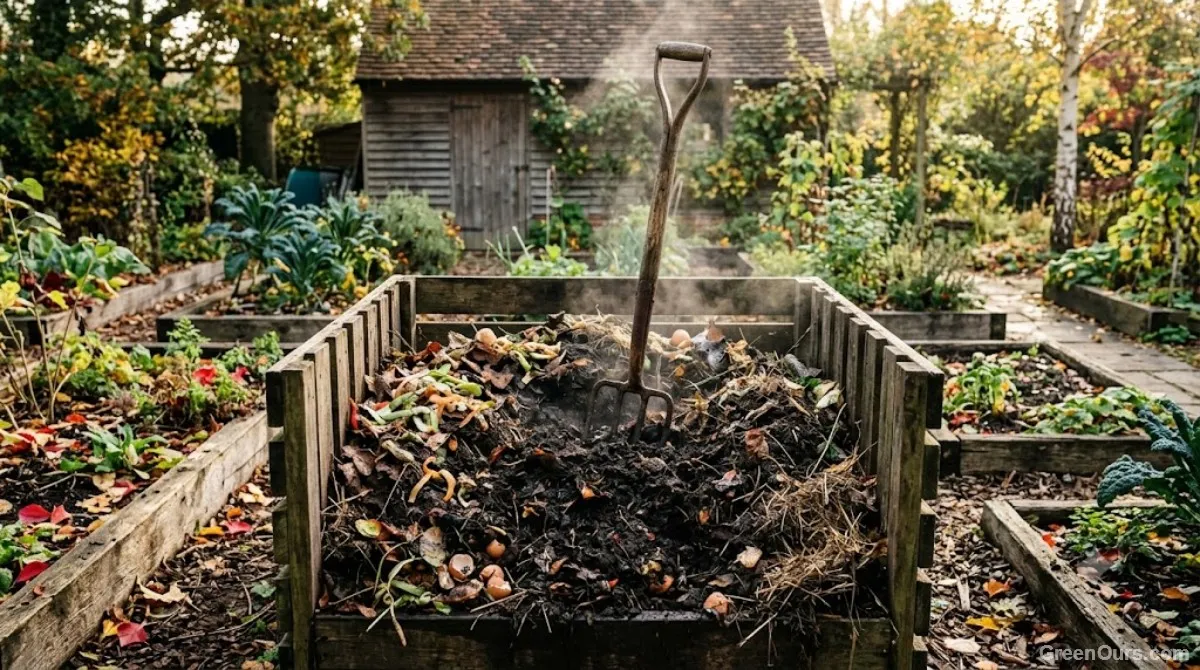
You don't need to turn a pile daily, and you definitely don't need to treat it like a chore you dread. Once a week, loosening the pile with a garden fork or compost aerator is usually enough to keep oxygen moving through it. If you're using a tumbler, give it a few spins each time you pass by.
The Greens-to-Browns Math Nobody Explains Well
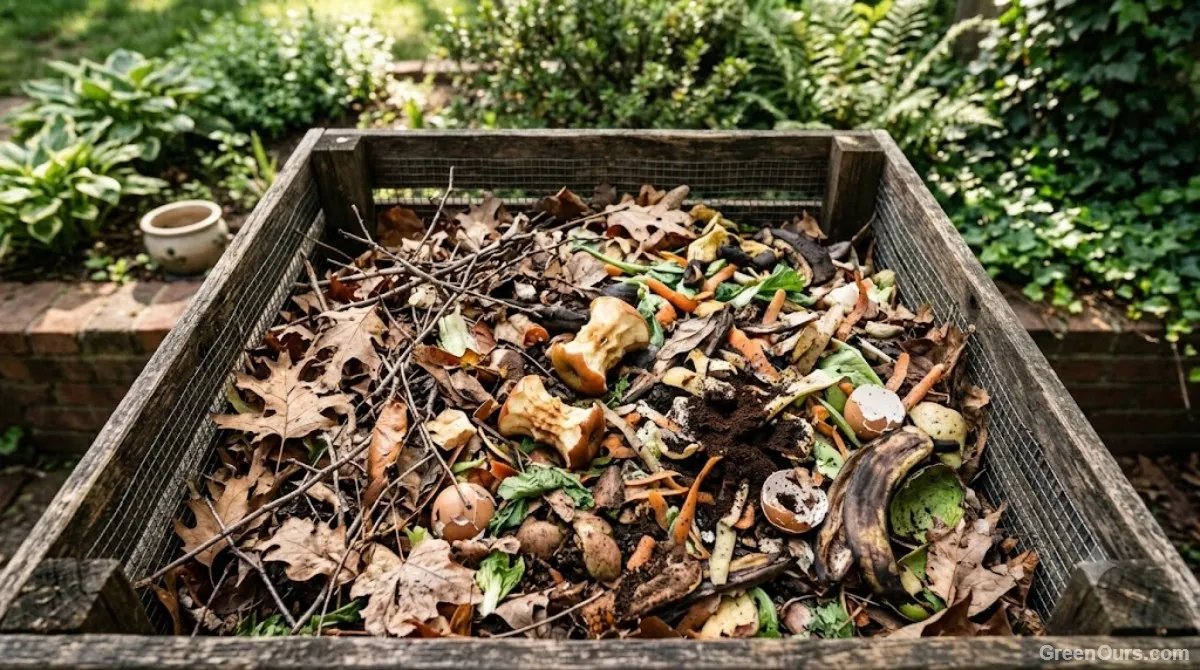
This is the part that trips up almost every beginner, myself included. Compost needs a rough balance of nitrogen-rich "greens" — food scraps, coffee grounds, fresh grass clippings — and carbon-rich "browns" — dry leaves, cardboard, straw. Get that balance wrong, and the pile stalls out in one of two very different ways.
When Greens Take Over
A bin that's mostly food scraps and grass clippings gets wet, dense, and airless fast — usually with a sour or ammonia smell as the first sign.
When Browns Take Over
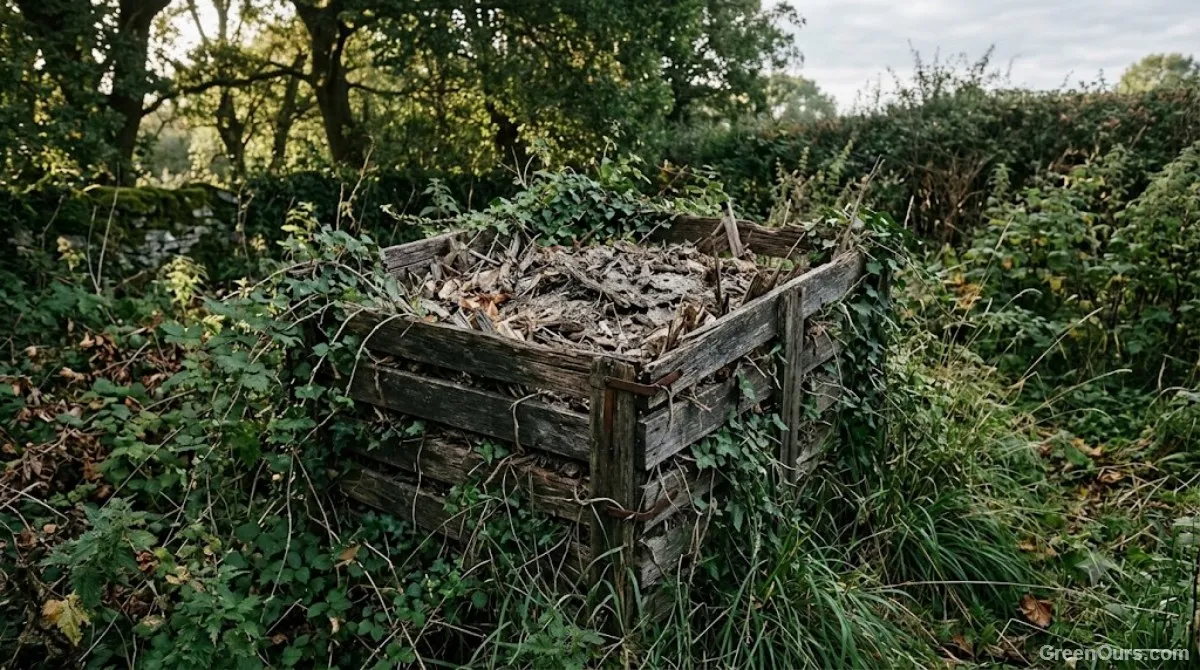
Go too far the other way, and you get a pile that's dry, fluffy, and barely warm. There's plenty of carbon but not enough nitrogen to feed the microbes doing the work, so things just sit there, unbothered, for months.
Why Chopping Matters More Than You Think
I'll admit this one felt like overkill to me at first. Does it really matter if a whole banana peel goes in versus a chopped-up one? It does, more than you'd expect. Microbes break down material from the outside in, so smaller pieces with more surface area decompose dramatically faster than big, intact chunks.
A whole avocado pit or a stack of uncut corn cobs can sit in a pile for the better part of a year, essentially untouched, while everything around them breaks down normally. You don't need to chop everything into confetti, but breaking larger scraps into smaller pieces before they go in will noticeably speed things up.
Pile Size and the Cold Compost Problem
A pile that's too small struggles to hold heat, and heat matters more than most beginner guides let on. Compost piles that reach a decent internal temperature break down faster and kill off more weed seeds and pathogens in the process. If your bin is small, tucked in a shady spot, or mostly air, it may simply never generate enough warmth to get that process moving efficiently.
A pile roughly a cubic yard in size holds heat far better than a scattered, half-full bin. If you're working with a smaller setup, that's not a dealbreaker, but it does mean things will move more slowly, and that's worth knowing going in rather than discovering after months of confusion.
You Might Just Be Impatient
Here's the thing nobody tells you at the garden center: compost is genuinely slow, even when you're doing everything right. Depending on conditions, a batch can take anywhere from a couple of months to closer to a year. If you started four weeks ago and it doesn't look finished, that's not necessarily a mistake. That might just be compost being compost.
The real skill in composting isn't some innate talent. It's learning to read the pile — feeling the moisture, noticing the smell, checking whether it's warm in the middle — and making small adjustments instead of assuming something's fundamentally broken. Once you know what to look for, a stalled pile stops feeling like a mystery and starts feeling like a quick fix you already know how to make.
My first bin eventually did turn into something usable, and honestly, once I understood what it actually needed, every batch since has gone faster. Yours will too. Give it air, give it the right mix of green and brown, and give it a little more time than you think it needs.