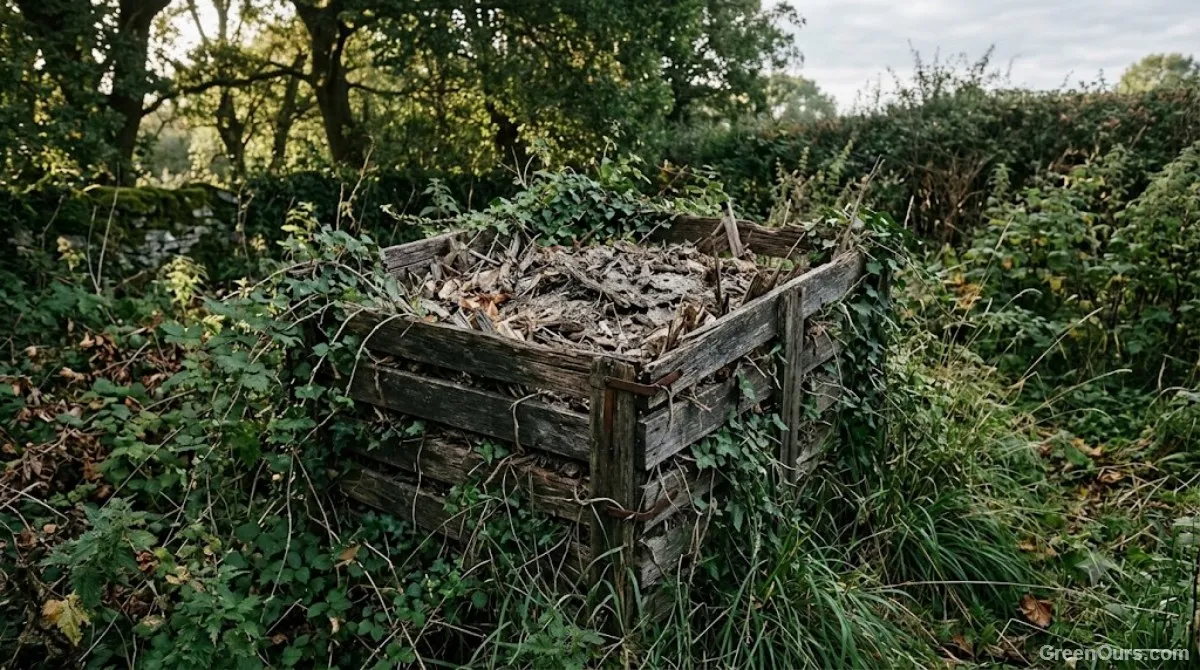

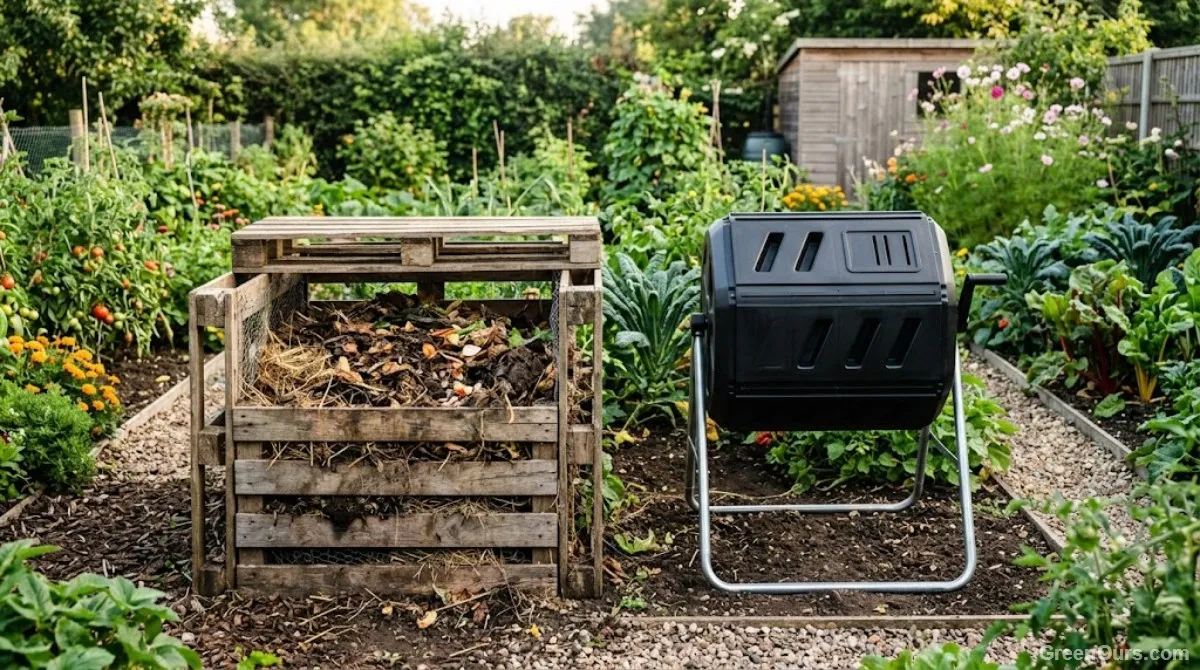
The Real Question Isn't Which Bin—It's Which You'll Actually Use
Every composting guide I read assumed the hard part was choosing materials or troubleshooting a smelly pile. Nobody mentioned that the actual hard part happens before you even start: standing in front of a screen, comparing options for a DIY compost bin vs store-bought compost bin, and feeling like the choice somehow reflects how committed you are to this whole thing.
It doesn't. A twenty-dollar DIY setup made from scrap wood breaks down kitchen scraps exactly as well as a two-hundred-dollar tumbler, provided you actually use it. The decision isn't a referendum on your seriousness—it's a practical question about your space, your budget, and your patience for projects.
The bin that gets used beats the bin that gets researched. Whichever option removes the most friction from your daily routine—not the one with the best reviews—is the right one for you.
How DIY and Store-Bought Bins Compare
Before diving into the specifics of each option, here is how a DIY bin and a store-bought model stack up at a glance across key factors:
| Factor | DIY Bin | Store-Bought Bin |
|---|---|---|
| Upfront Cost | Usually lower (or free with scrap material) | Usually higher ($30 to $200+) |
| Setup Time | Higher (requires assembly/tools) | Low to instant |
| Customization | High (tailored to your space) | Limited to existing design |
| Maintenance | Depends on design and accessibility | Usually more predictable |
| Capacity | Easy to scale or expand | Fixed capacity by model |
| Pest Protection | Depends on construction gaps | Usually engineered in |
| Best For | Tinkerers, tight budgets, custom spaces | Convenience, quick setup, neat looks |
What You're Actually Paying For When You Buy One
Store-bought bins aren't just plastic with a marketing budget attached. You're paying for someone else to have already solved the annoying engineering questions: airflow, pest exclusion, and how to turn the pile without throwing your back out.
Tumblers
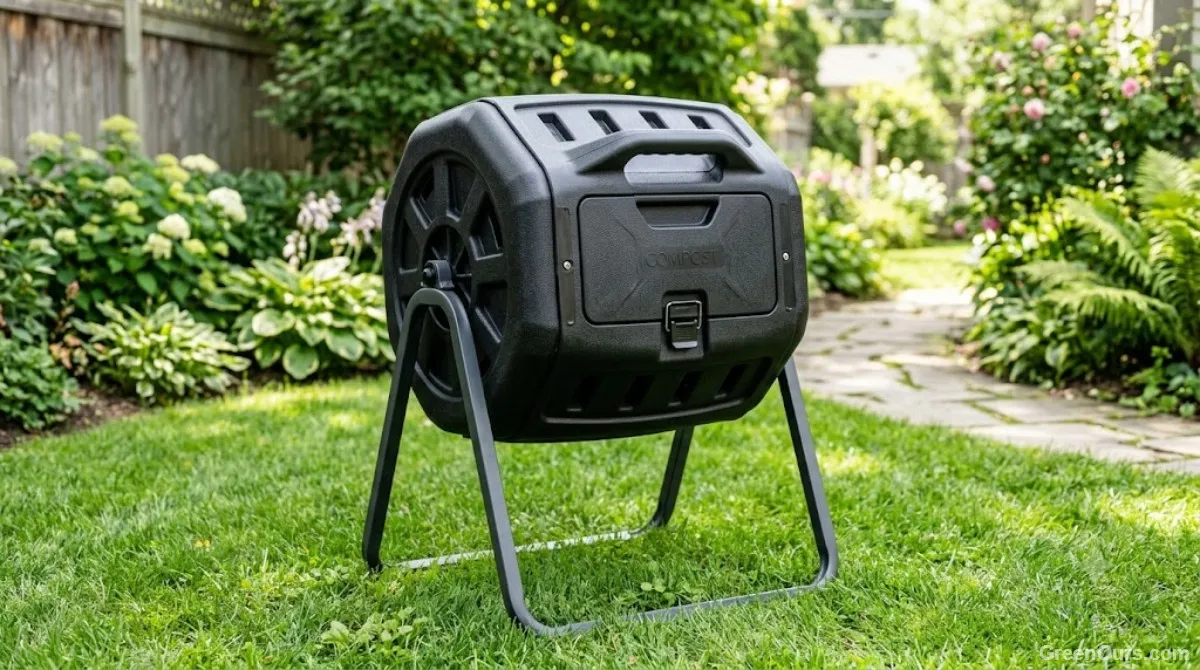
Tumblers sit off the ground on a frame and let you spin the whole drum to mix the contents. That spinning motion is the entire selling point—it aerates the pile without a pitchfork, which matters if bending over a compost heap isn't how you want to spend your Saturday. They tend to run anywhere from moderate to fairly expensive, and the trade-off is capacity: most hold less than a bin you'd build yourself, so they suit smaller households better than big gardens.
Stationary Bins
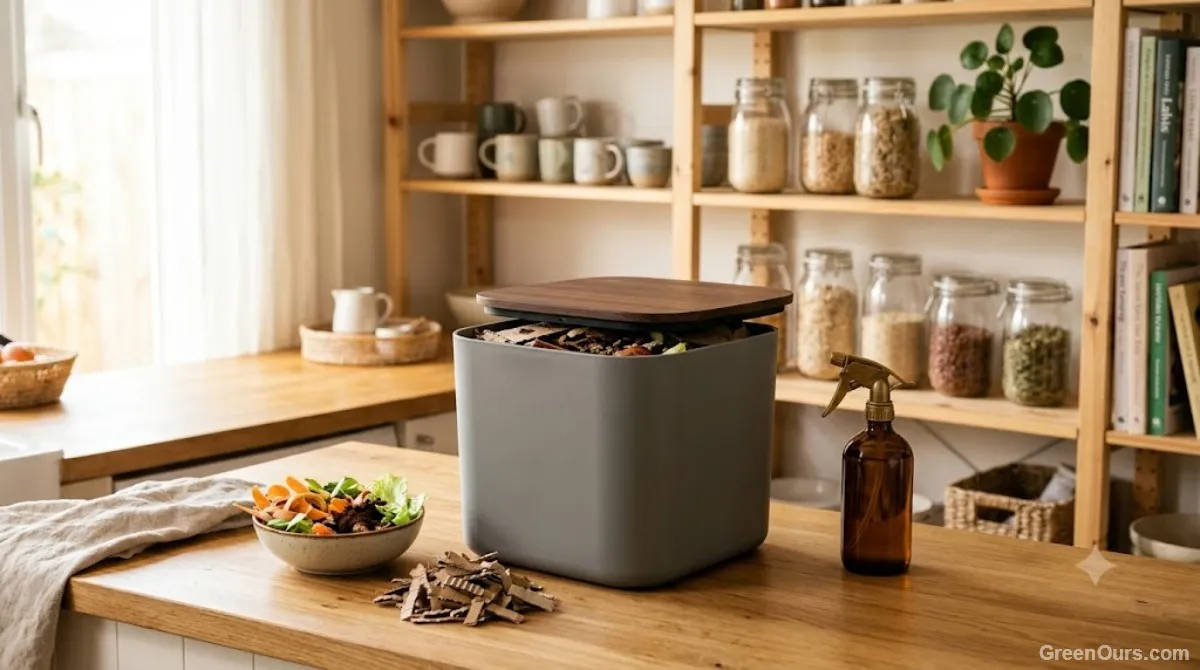
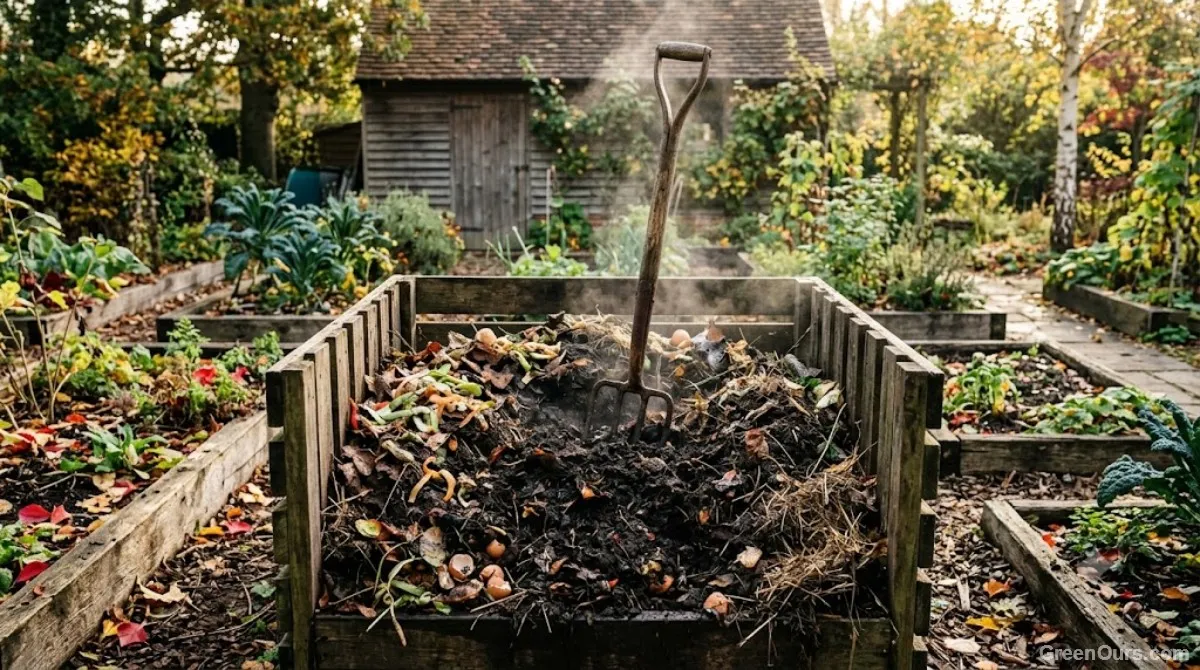
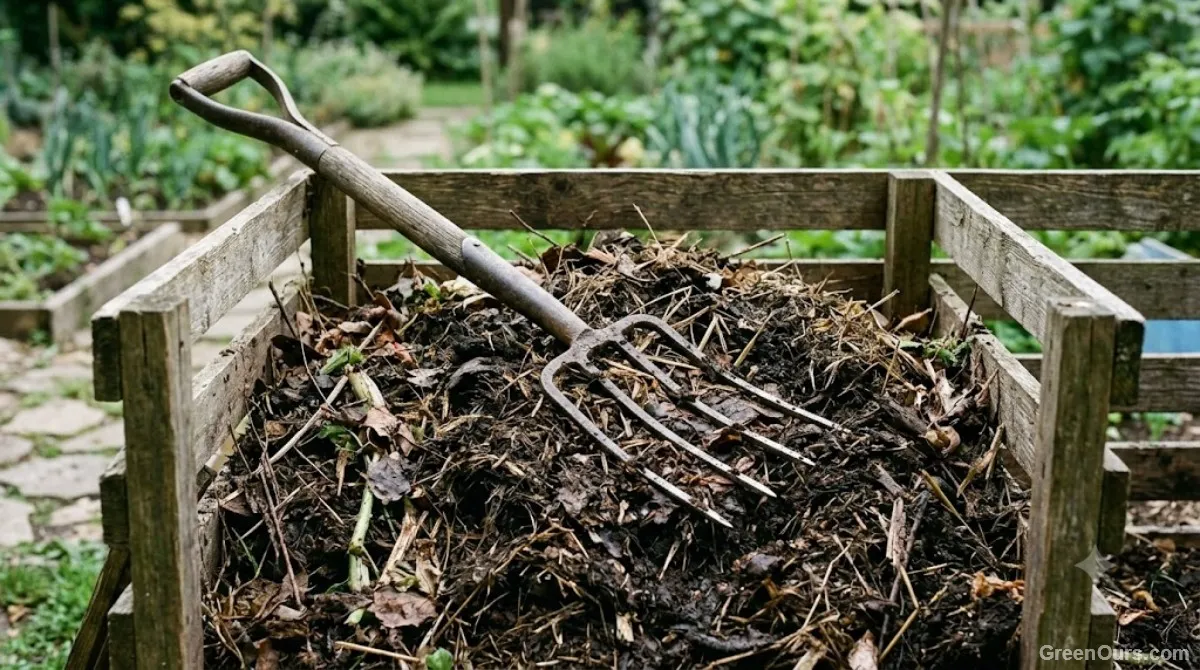
These are the boxy, ventilated containers that sit directly on soil. They're usually cheaper than tumblers, hold more material, and let soil organisms and other decomposers access the pile naturally from below, depending on the setup. The catch is that you'll still need a garden fork to turn the contents yourself, since nothing about them spins.
Price ranges vary—entry-level tumblers typically start under fifty dollars and climb past two hundred for dual-chamber models built for continuous batches, while a basic stationary bin often lands under thirty. What you're really deciding, once you look past the sticker price, is how much you want someone else to have already solved for you. That's not a small thing. I know people who bought the expensive tumbler and never regretted a cent of it, because for them, not having to think about airflow was worth the premium.
What DIY Really Costs (Hint: It's Not Free)
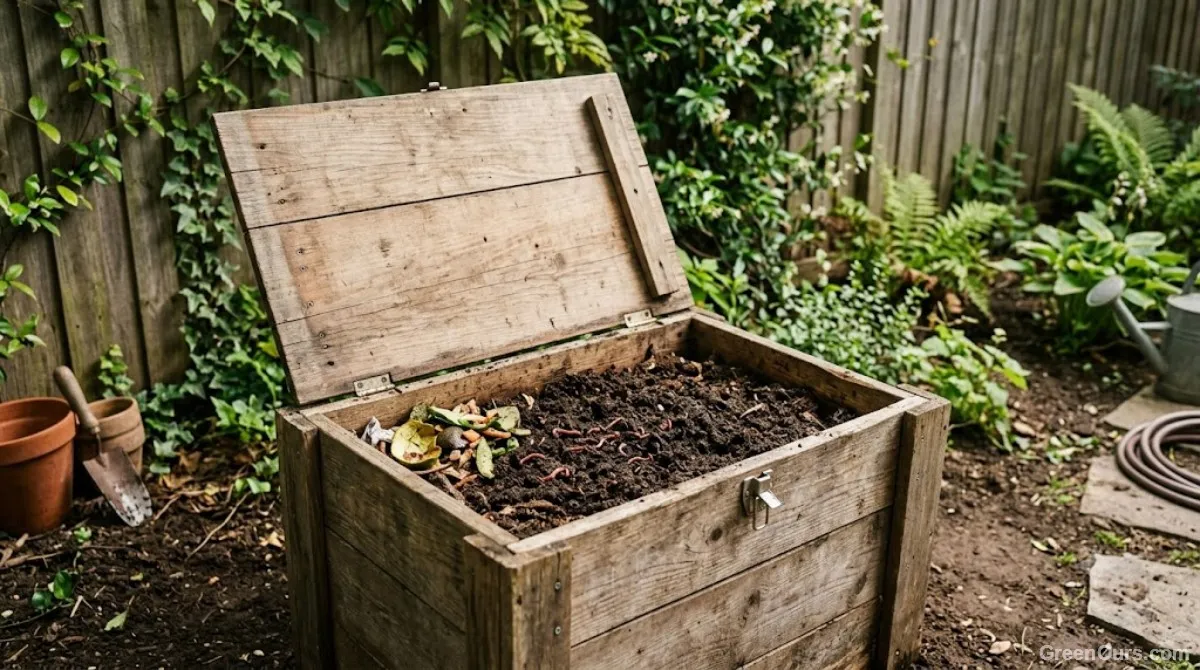
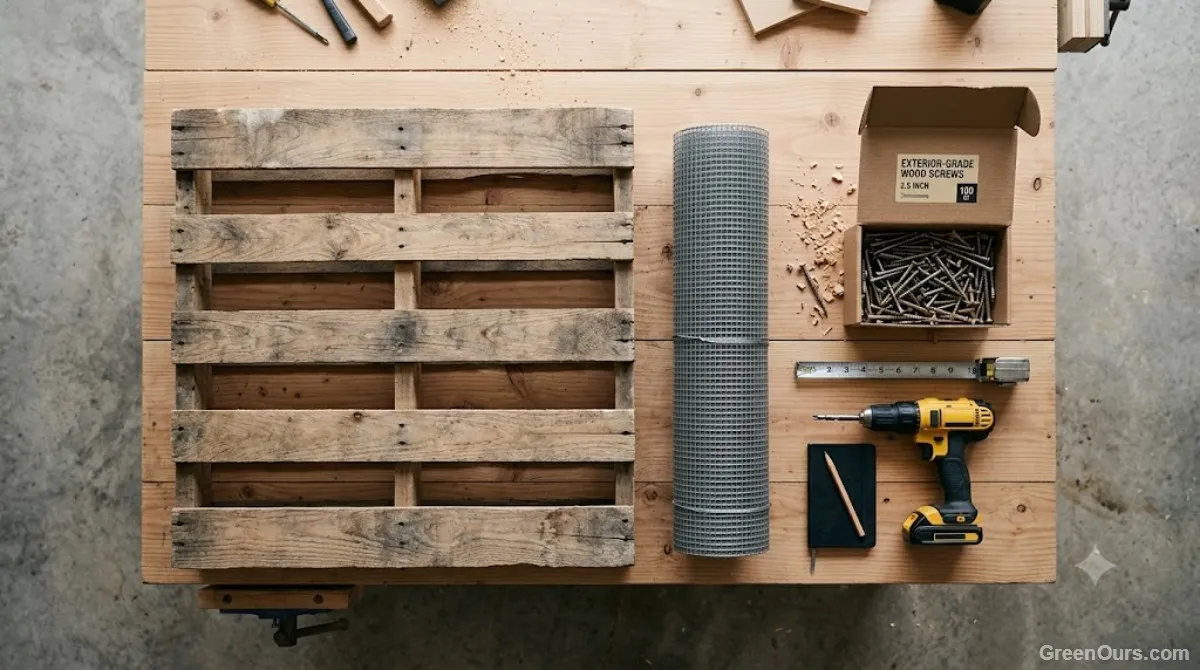
I'll admit the "just build one, it's basically free" advice online glosses over some things. A basic wire-and-post bin needs hardware cloth, wooden stakes or posts, zip ties or wire, and a weekend afternoon. A pallet bin needs three or four free pallets, screws, and either a drill or a very willing friend with one. None of this is expensive, but it isn't nothing either, especially if you don't already own basic tools.
The bigger cost is usually time and trial and error. Your first DIY bin probably won't have quite the right airflow, or the door will be awkward to open, or something will find the one gap you missed. That's not a failure—it's just what building something yourself involves. If tinkering sounds like a fun weekend project, DIY tends to be genuinely satisfying. If it sounds like one more thing on a list you're already behind on, that's useful information too.
When I rebuilt my pallet bin the second time, the fix wasn't fancier materials—it was just wider gaps between the slats so air could actually move through the pile. That kind of trial and error is the real cost of going the DIY route: not dollars, but the time it takes to notice what's wrong and adjust. If you've got a drill, a Saturday, and a tolerance for imperfect first attempts, that cost barely registers. If you don't, it can feel like one more unfinished project staring at you from the yard.
The Maintenance Difference Nobody Warns You About
This is where the two paths genuinely diverge, and it's the part I wish someone had told me upfront. Tumblers are low-effort to turn but harder to inspect—you're spinning a closed drum, so you can't easily see or adjust what's happening inside if something goes wrong. Stationary bins, whether bought or built, are easier to monitor and amend on the fly, but they ask more of your back and your patience with a pitchfork.
Pest resistance also varies more by design than by price. A well-built DIY bin with tight hardware cloth keeps rodents out just as effectively as a commercial sealed tumbler. A cheaply built one with gaps at the corners won't, regardless of how much time you put into it. The lesson isn't "spend more"—it's "check the seams," whichever route you take.
Smell tells you a lot, too. A tumbler that is kept well-aerated and rotated regularly tends to stay low-odor, since it's harder for the pile to go anaerobic in a chamber you're moving every few days. A stationary bin left untouched for a couple of weeks can turn sour fast, not because the design is worse, but because nobody's there to notice and turn it. Neither problem is really about the bin—it's about how often you're willing to show up and pay attention.
My Honest Take After Trying Both
I started with a DIY pallet bin because I didn't want to spend money on something I wasn't sure I'd stick with. It worked, though it took me two rebuilds to get the airflow right. A year later, when I moved to a smaller yard, I switched to a compact tumbler because I no longer had room for something that size, and I don't regret either decision.
If I'm honest, the deciding factor both times had nothing to do with compost science. It was how much yard space I had and whether I wanted one more object taking up part of it. That's a perfectly legitimate way to choose, even if it doesn't show up in most buying guides.
What I'd tell anyone standing where I was: don't let the bin become the reason you delay starting. Pick whichever option you can set up this week, not the one you're still comparing three weeks from now.
More honest looks at zero-waste swaps that actually work.
Compost doesn't care what container it's sitting in. It just needs scraps, air, and time—and the sooner you stop optimizing the bin, the sooner you actually get to use it.