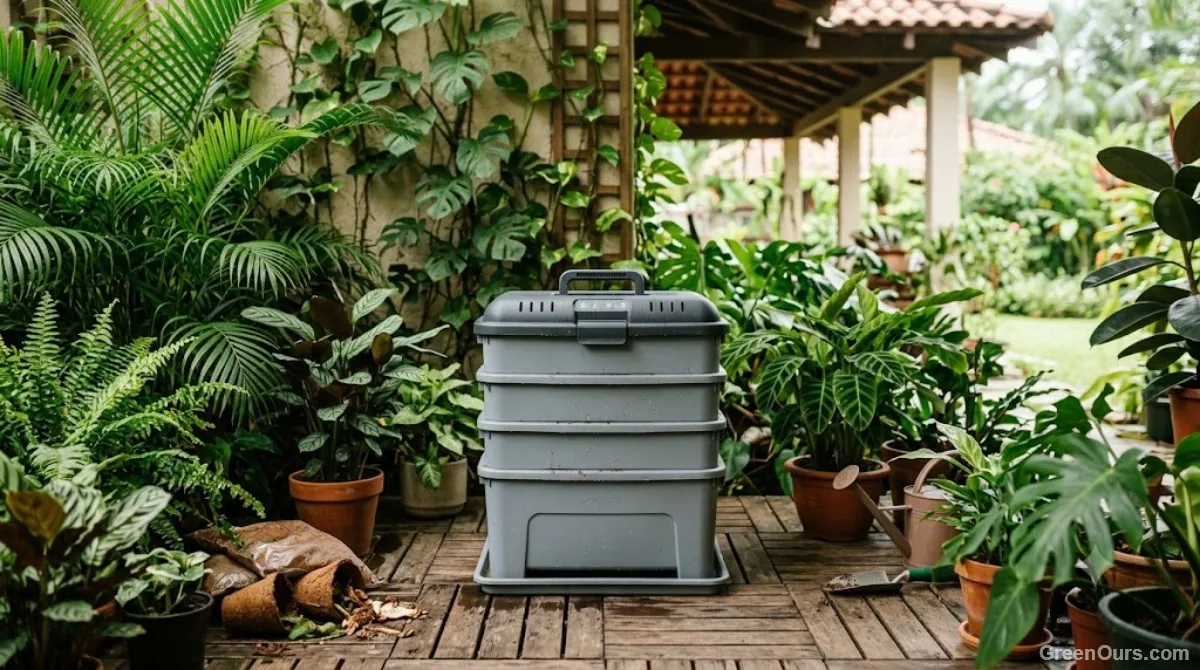

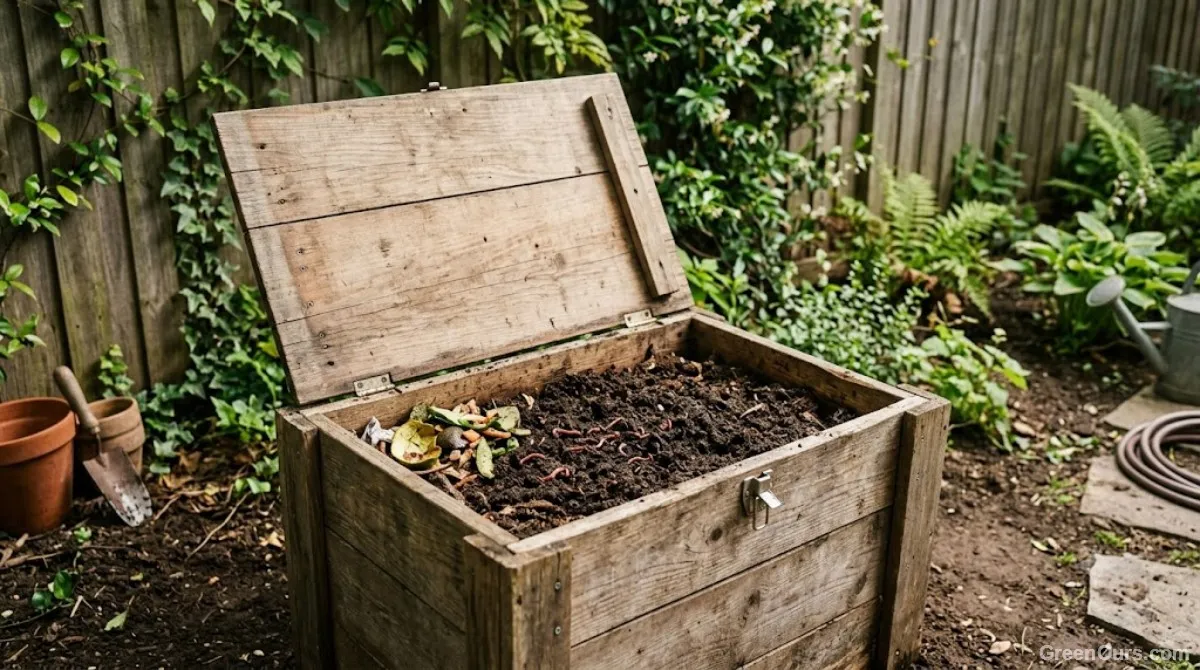
The Smell Test: What Kind of Bad Are We Talking About
Before you start changing everything at once, get close to the bin and actually notice what you're smelling. It feels counterintuitive when your instinct is to back away, but the specific smell is your biggest clue, and most people skip straight to trying to fix everything without ever figuring out what's actually wrong.
Sharp, Like Ammonia or Urine
This one hits you in the back of the throat. It usually means there's too much nitrogen-rich material in the bin relative to carbon, think food scraps piling up faster than your worms and the bedding can process them.
Rotten Eggs or Sulfur
This is the smell of anaerobic decomposition, meaning parts of your bin have gone oxygen-starved. It happens in dense, compacted, or waterlogged pockets where air can't reach, and it's the smell that tends to worry people the most.
Sour, Like Vinegar or Old Beer
Usually this comes from too much fruit, especially citrus, breaking down faster than the worms can keep up. It's unpleasant but rarely a sign of a serious problem.
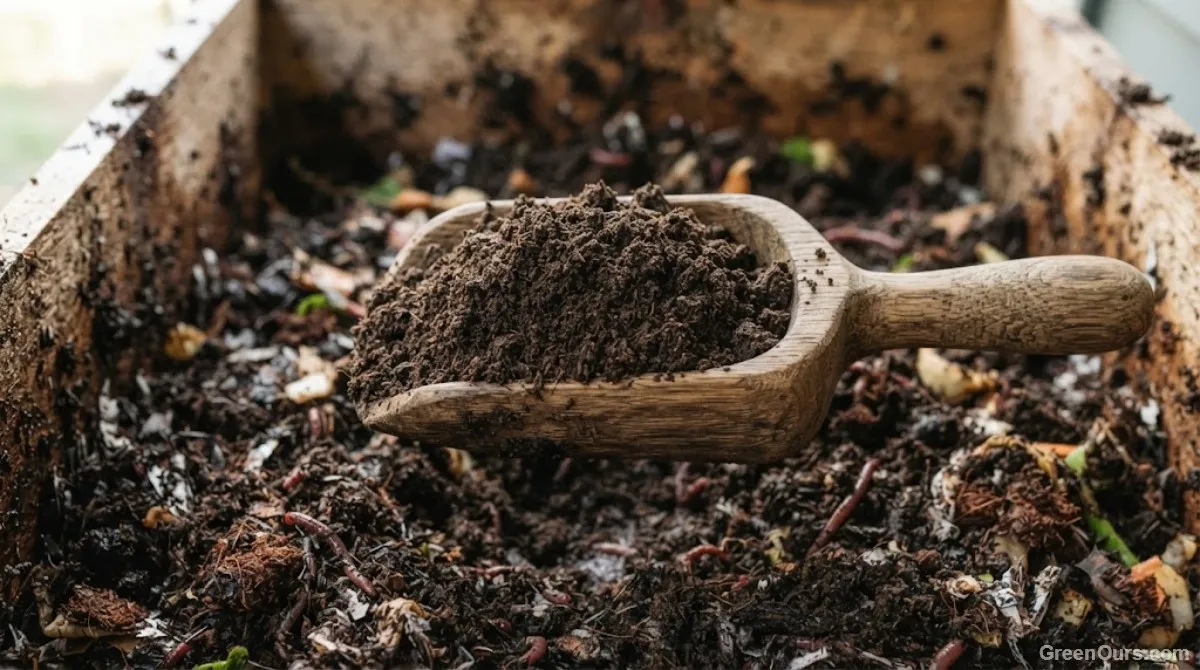
A genuinely healthy worm bin should smell like a forest floor after rain, earthy and a little sweet. If it smells like anything else, something's out of balance, not broken beyond repair.
What's Actually Causing Each Smell
Once you've identified the type of smell, the cause is usually one of a small handful of things. Overfeeding is the most common culprit by far; worms can only process so much food in a given week, and dumping in more "to be safe" just gives bacteria a head start on decomposition your worms never get to finish.
Excess moisture is the second big one. A worm bin should feel like a wrung-out sponge, damp but not dripping. Too much liquid drives out the oxygen worms and beneficial microbes need, which is exactly what creates those anaerobic, rotten-egg pockets.
Compacted bedding is the quieter cause. If your bedding has flattened down into a dense mat, air simply can't move through it anymore, even if moisture levels are fine.
Rebalancing Your Bin, Step by Step
Add Fresh, Dry Bedding
This is almost always step one, no matter which smell you're dealing with. Shredded cardboard, dry leaves, or plain newspaper strips absorb excess moisture, add carbon back into the mix, and open up air pockets that anaerobic bacteria hate.
Cut Back on Feeding for a Bit
Give your worms a week or two to catch up on the backlog before adding anything new. It feels wrong to stop feeding a system you're trying to nurture, but overfeeding is the single easiest habit to fall into, and easing off is often the fastest fix.
Fix the Drainage
If your bin has a drainage layer or spigot, check that it isn't blocked. Excess liquid pooling at the bottom is a slow, steady source of odor that keeps coming back no matter how much bedding you add up top.
Habits That Keep the Smell From Creeping Back
Once your bin is balanced again, a few small habits keep it that way without turning composting into another chore on your list. Bury food scraps under a couple of inches of bedding instead of leaving them on the surface, it cuts down on both smell and fruit flies in one move.
Stick to a rough feeding rhythm rather than adding scraps every time you happen to be in the kitchen. Once or twice a week, checking that the previous batch is mostly gone first, keeps the worms comfortably ahead of the workload.
Do a quick moisture check every so often by squeezing a handful of bedding. A drop or two of water is fine, a steady drip means it's time to add dry material before it becomes a problem again.
When It's More Than a Smell
Occasionally a bin needs more than rebalancing. If you're seeing white mold that won't go away, a swarm of fruit flies you can't get ahead of, or worms actively trying to climb out and escape, that's your bin telling you conditions have gotten genuinely unlivable rather than just a bit off. In those cases, it's worth doing a partial bin refresh, moving your worms to a portion of fresh, dry bedding and letting the old material dry out and recover separately.
That's not a failure either. It's just part of learning the rhythm of a living system that's a little different in every home.
Worm bins don't stay perfectly balanced forever, and that's genuinely fine. Yours will drift out of whack again at some point, probably right when you least expect it, and now you'll actually know what to do about it instead of just closing the lid and hoping.