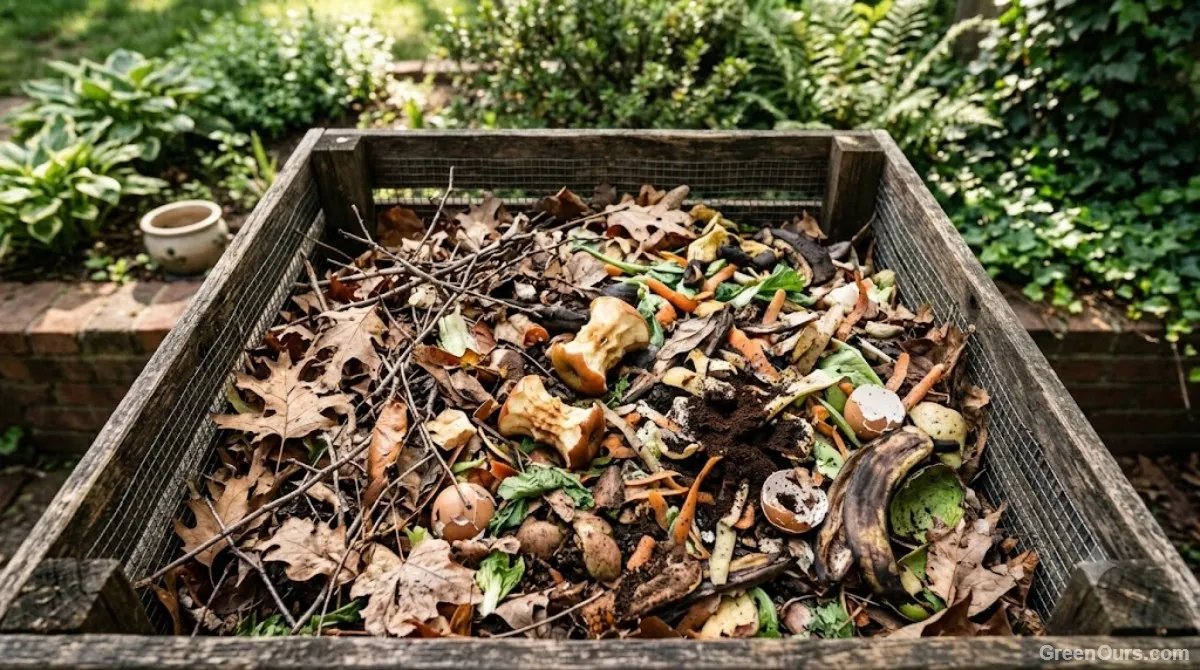

The Composting Problem Renters Actually Have
Most composting advice assumes you can do whatever you want with your own space — dig a pile in the backyard, bolt a bin to the balcony railing, cut a hole in a fence panel for airflow. None of that applies when you're renting. You don't get to modify the balcony, you might not have one, and your lease almost certainly says nothing useful about food scraps.
That's the constraint most composting guides skip entirely. The real question isn't which method breaks down waste fastest. It's which method survives a building you don't control, using a lease that was written without composting in mind.
Before you buy anything, find out what your building already allows. Some properties ban storing anything outside your unit; others have a compost bin in the trash room that nobody mentions until you ask the super directly.
What Your Lease Doesn't Tell You
Renters worry about two things that homeowners rarely think about: pests and permission. A bin that attracts fruit flies or smells through a shared hallway is a problem a homeowner can fix on their own terms. In a rental, it can turn into a conversation with a landlord you'd rather not have.
Permission matters too, even when it isn't spelled out. If your building has shared outdoor space, ask before adding anything to it — a compost setup someone else didn't agree to is a fast way to create friction with neighbors or management, even when it's well-intentioned.
The upside is that almost none of the methods below need permission at all. A sealed container in your own freezer, or a bin small enough to sit under your sink, stays entirely inside your unit and entirely your business.
If your building doesn't mention composting, it's worth asking before assuming it's prohibited. Most properties don't have a specific policy on food waste, so a quick check with management can clarify what's allowed in shared spaces.
The Easiest Option for Renters: Freeze It, Then Drop It Off
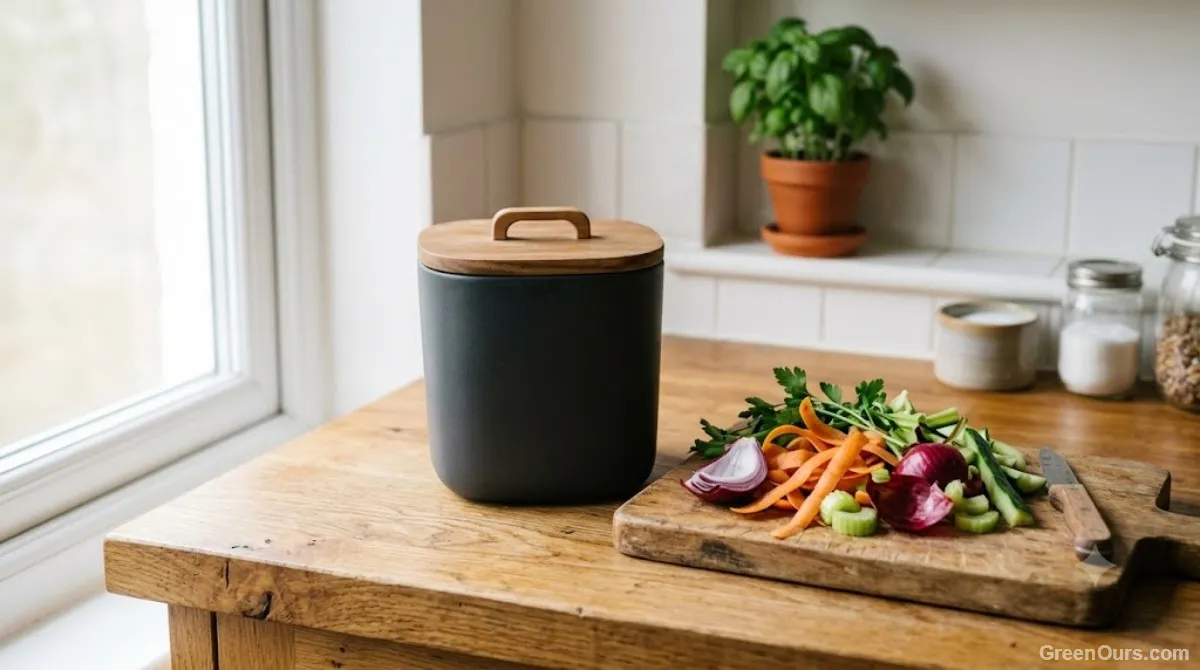
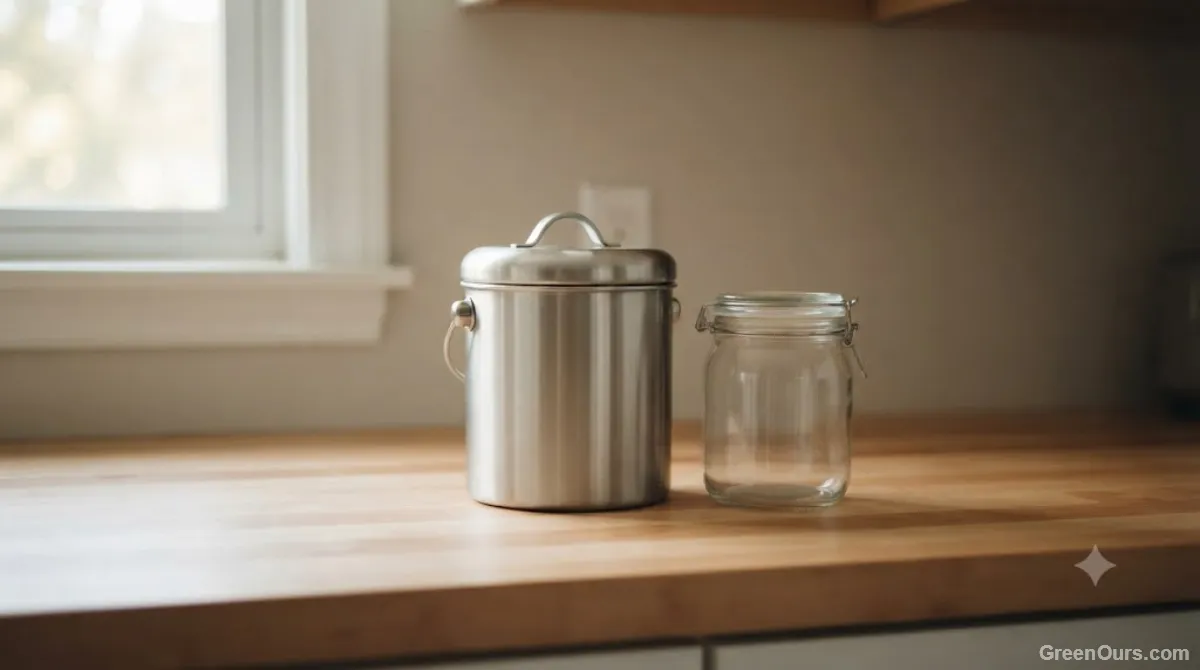
If you want the lowest-commitment option, the freezer method is a practical place to start. A lidded container in your freezer solves more renter-specific problems than any bin you could buy. Scraps go in, the cold stops any smell or breakdown completely, and there's no daily maintenance to keep up with or fall behind on.
You empty it whenever it's convenient — once a week at a farmers market stand, once every couple of weeks at a community garden, or whenever you happen to pass a drop-off point on your normal route. Nothing sits out, nothing needs turning, and nothing depends on your building allowing anything at all.
This is a particularly great setup if you're not sure composting will actually stick. It costs nothing beyond a container you probably already own, and it doesn't ask your landlord for a single thing.
A repurposed yogurt tub or an old takeout container works just as well as anything marketed specifically for the job. The only real requirement is a lid that seals tightly enough to stop freezer odor from mixing with everything else in there.
Other Systems Worth Knowing About
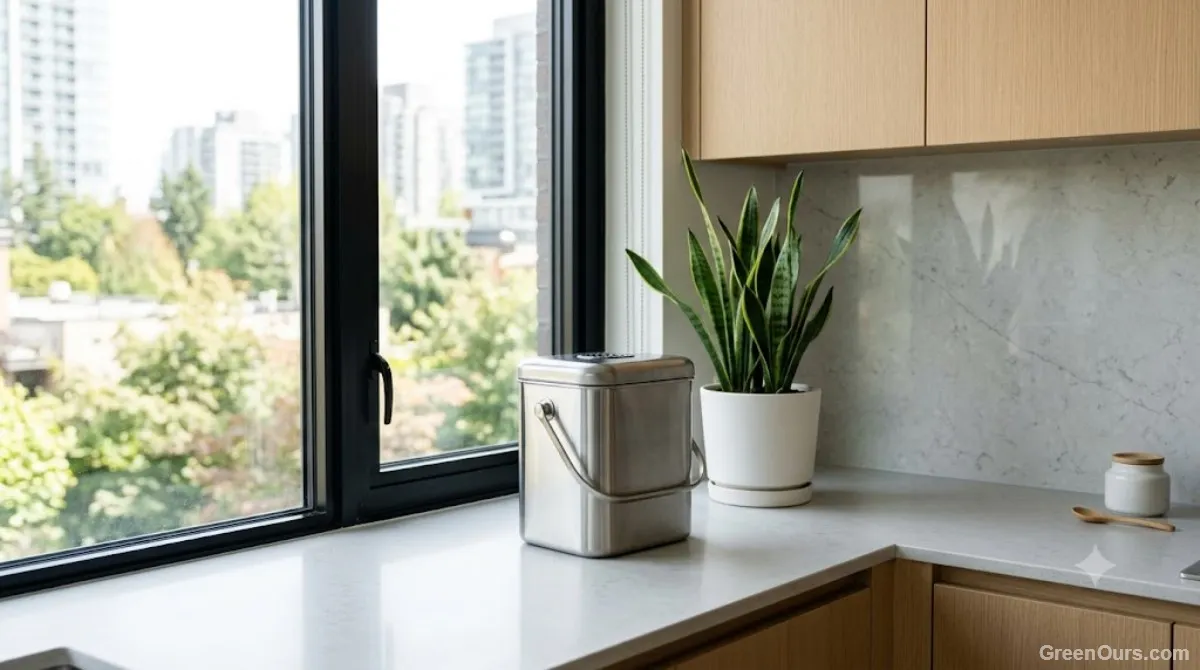
If the freezer method feels like too many trips out, there are self-contained options too. A charcoal-filtered countertop bin holds a few days of scraps before it needs emptying. Bokashi ferments waste in a sealed bucket and can handle small amounts of meat and dairy that other methods can't. Worm bins go a step further and produce finished compost yourself, though they ask for more regular attention than either of those.
Each comes with its own learning curve and its own tradeoffs, so we've broken all three down properly elsewhere rather than repeating it here.
Finding Somewhere to Take Your Scraps
This is the part that stalls most renters before they even start, and it's usually easier than it looks once you actually check. A few places worth looking first — and don't forget to ask a neighbor with a yard before assuming you have no options nearby:
- Farmers markets — many now run a compost collection stand right alongside the produce stalls
- Community gardens — most accept outside food scraps on set days, even without a plot of your own
- Building compost programs — some larger apartment complexes already have a bin most residents never notice
- Curbside or municipal pickup — check whether your city offers a subscription or free collection service
- Neighborhood sharing apps — community platforms connect people with spare compost capacity to people who need somewhere to send scraps
Keeping It Odor-Free in a Small Kitchen
A properly managed apartment compost setup shouldn't smell like garbage. If it does, something specific has gone wrong — usually too much liquid, not enough airflow, or scraps sitting too long before you deal with them.
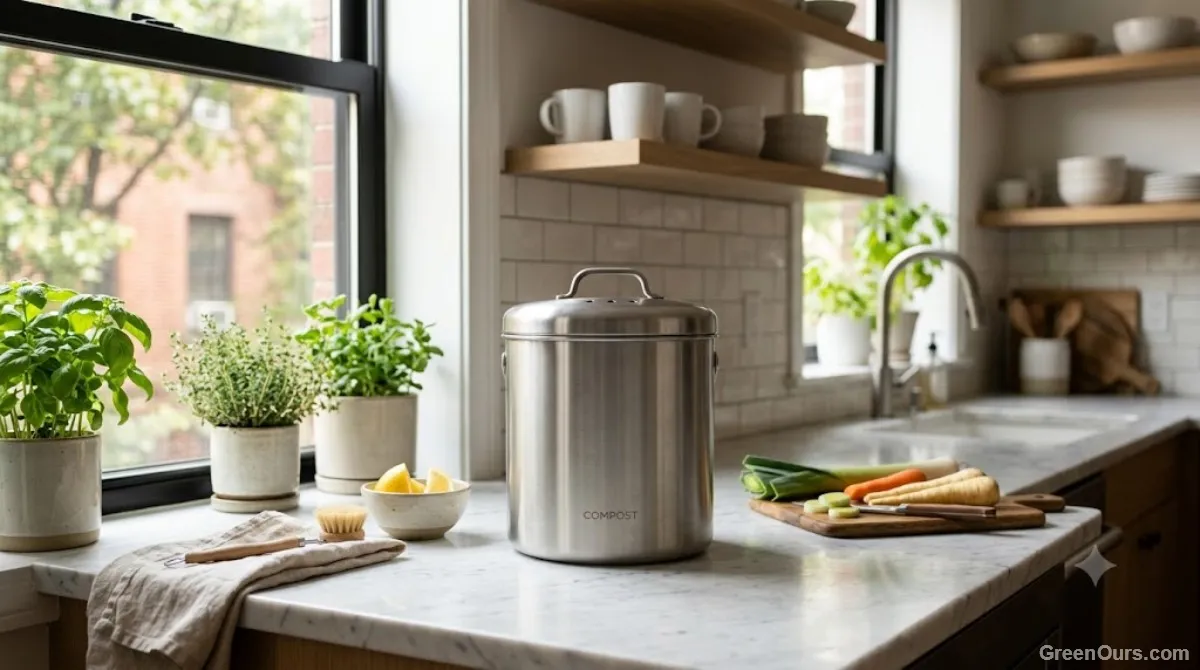
The freezer method sidesteps this entirely, since nothing decomposes while it's frozen solid. If you're using a countertop bin instead, the charcoal filter is doing real work, not just decoration — keep the lid seated properly and empty the bin before it's packed tight.
Mistakes That Send Beginners Running
The most common one is letting a container sit too long before emptying it. A bin packed past capacity loses airflow, and that's usually when smells and fruit flies show up. Emptying more often, even when it feels premature, prevents this outright.
The second is assuming one rule covers every system. Plant-based scraps are the safe default for the freezer method and a standard countertop bin, but bokashi is built specifically to handle meat and dairy — check what your chosen method actually accepts instead of assuming a blanket restriction applies everywhere.
The third is picking a method that doesn't match how you actually move through your week, then blaming yourself when it falls apart. If a bin gets forgotten because emptying it isn't convenient, that's a mismatch between the system and your routine, not a personal failure.
What to Do Next
If you want the lowest-commitment starting point, clear a space in the freezer. It works regardless of what your lease says, buys you time to figure out drop-off logistics, and lets you decide whether a countertop bin or bokashi system is worth adding later. Find one drop-off point near you this week — that's the single practical step that gets the routine moving.
Pick a drop-off point and try it this week
I still don't have a garden, and my landlord still doesn't know or care what I do with my food scraps. What changed wasn't my apartment — it was building a routine around the one thing I actually control: what happens before the scraps leave my kitchen.