
What Are Laundry Detergent Sheets?
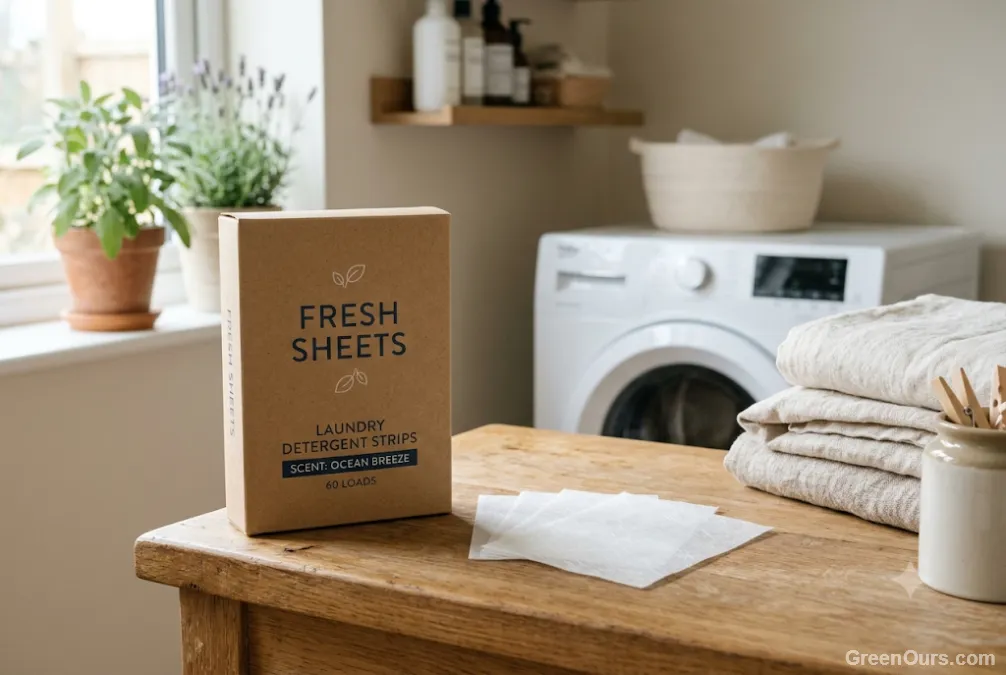
Laundry detergent sheets (or eco-strips) are thin, pre-measured laundry detergent formats made with surfactants and other cleaning ingredients. Many use a water-soluble synthetic polymer, such as polyvinyl alcohol (PVA/PVOH), as part of the sheet's structure.
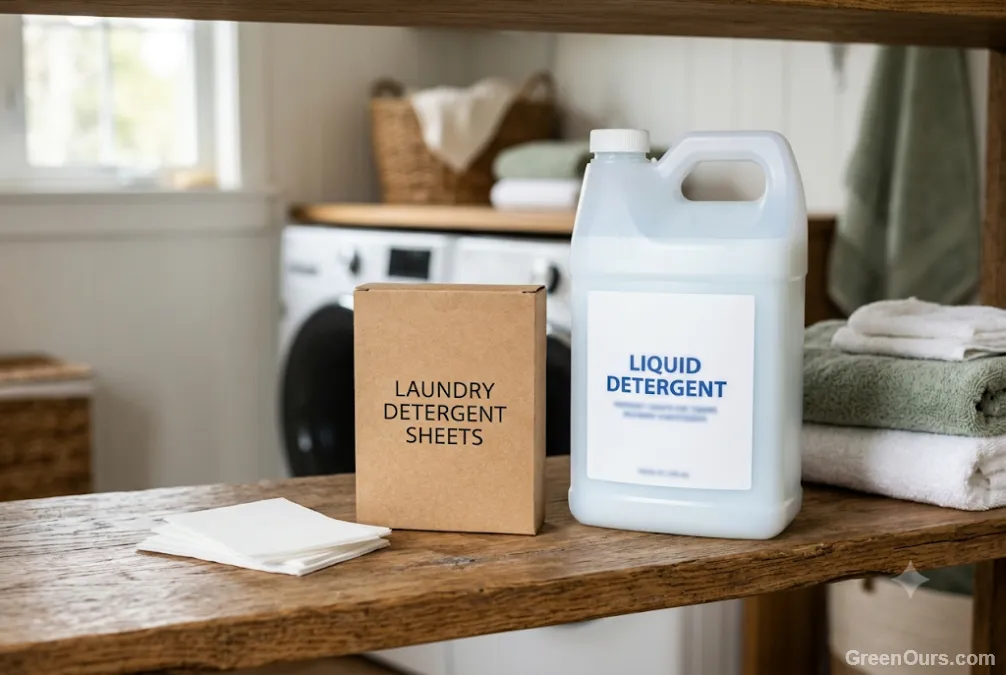
When tossed into your washing machine drum, the sheet is designed to dissolve upon contact with water, releasing its active cleaning ingredients into the wash cycle. Because they contain almost no moisture, they are packaged in compact paperboard envelopes that take up significantly less space than conventional liquid detergent bottles.
Format Comparison: Sheets vs. Liquid, Pods, and Powder
Every laundry detergent format involves distinct operational trade-offs regarding stain removal, dosing flexibility, and packaging.
| Detergent Format | What Readers Should Evaluate |
|---|---|
| Detergent Sheets | Performance on routine light soil versus heavy stains, dissolution speed across water temperatures, actual dose needed for full loads, and paperboard packaging. |
| Liquid Detergent | Can offer high cleaning efficacy on body oils and ground-in soil, precise dose measurement, container recyclability, and refill options depending on formula. |
| Detergent Pods | Often offer strong stain-removal capability, pre-measured single-dose convenience, higher cost per wash, and PVA pouch film; must be stored safely away from children and pets. |
| Powder Detergent | Can offer strong performance on certain soil types, including mud and clay depending on formulation, low cost per load, paperboard packaging, and variable dissolution depending on water temperature and wash conditions. |
Do Laundry Detergent Sheets Actually Clean?
Determining whether detergent sheets work requires looking closely at independent laboratory testing rather than manufacturer claims. Independent organizations use different testing methods to evaluate sheets, yielding distinct findings.
What Independent Lab Tests Show
In testing published by Consumer Reports (updated March 2026), conventional thin detergent sheets as a group generally scored lower in overall cleaning performance compared to top-rated liquid detergents and single-dose pods. Within the broader sheet category, novel formats like Tide Evo Free & Gentle Fiber Tiles led overall performance ratings, whereas traditional thin strips like Arm & Hammer Power Sheets and Earth Breeze Liquidless Eco Sheets tied near the top of the conventional thin-sheet group despite modest overall stain-removal scores. Other brands, such as Tru Earth Eco-Strips, performed particularly poorly on difficult stains in their lab evaluations.
Separately, evaluations published by the Good Housekeeping Institute (updated June 2026) tested 34 detergent sheet formulas across standardized stain swatches, 8-pound heavy-soil loads, whiteness retention, and dissolution rates. Good Housekeeping's testing evaluated real-world household stain swatches, finding that while results varied considerably across specific brand formulas, select top-performing sheets delivered solid stain removal on specific soils. Because each testing organization uses distinct protocols and product sets, their results reflect different aspects of detergent performance rather than a single unified rating.
Dissolution and Water Temperature
Dissolution speed varies significantly by water temperature, drum agitation, and formula. While sheets are designed to dissolve in cold water, using short cycles or overloading the drum can cause un-dissolved sheets to catch in garment folds, leaving a sticky residue. (For broader temperature tips, see our guide to cold water laundry performance).
Cost per Load: How to Calculate Value
Advertised "per-box" prices can be deceiving because manufacturers define a "standard load" differently. To calculate true value, do not rely on front-of-box load counts alone; calculate the cost using the manufacturer's recommended dose for your actual load size and soil level.
The Cost-per-Wash Formula
To determine your actual cost per wash, use the following simple formula:
$$\text{Cost per Wash} = \frac{\text{Package Retail Price}}{\text{Total Recommended Doses per Package for Your Load Size}}$$
Many brands base their advertised load counts (e.g., "60 Loads") on a half-sheet dose intended for small, lightly soiled washes. If a package's advertised load count assumes half a sheet per wash, using one sheet per wash halves the number of washes available from that package and doubles the effective cost per wash.
Evaluating Green Claims: Packaging and Ingredients
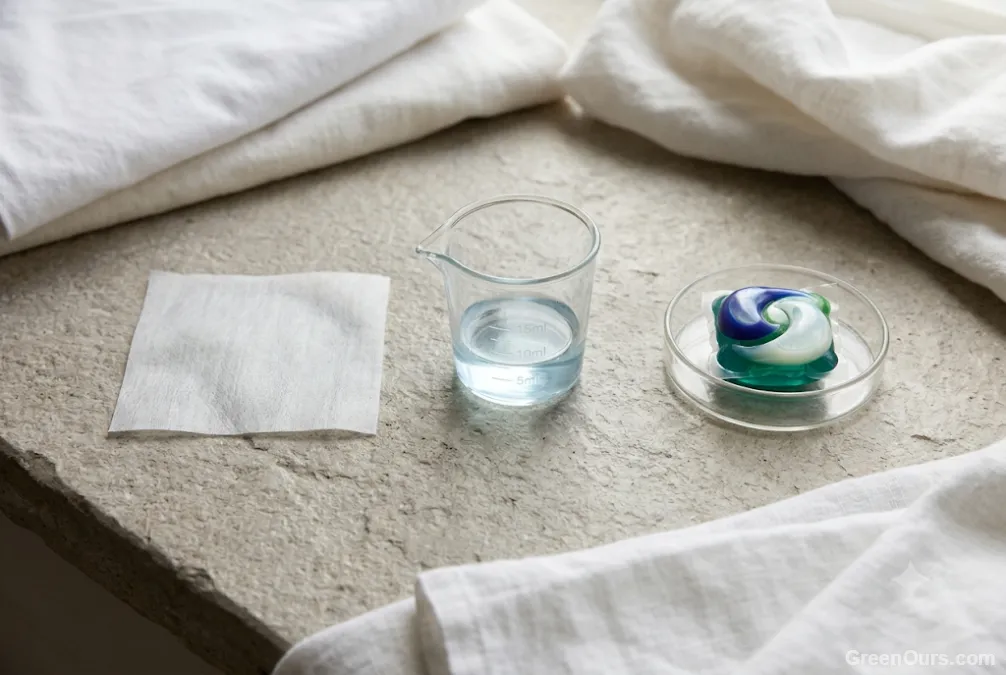
Environmental marketing often blurs the line between outer paperboard packaging and detergent chemistry. Examining both reveals a nuanced sustainability profile.
Packaging and Transport Impacts
Detergent sheets may lower shipping volume and reduce reliance on single-use plastic packaging, depending on the product and its packaging. Traditional liquid detergent is largely water packaged in plastic jugs. Compact fiber-based envelopes can reduce packaging weight and volume, but consumers should check for plastic inner linings and whether the outer packaging is accepted by local recycling programs before assuming a lower overall lifecycle impact.
Understanding PVA and Ingredient Safety
Detergent sheets rely on polyvinyl alcohol (PVA/PVOH) as a dissolvable structural matrix. The environmental fate of PVA is a topic of ongoing scientific study. A 2024 study evaluating a representative PVOH polymer reported an average removal of approximately 97.4% during the plateau phase of a simulated municipal wastewater treatment system. However, researchers emphasize that this finding applies to a specific PVOH material under controlled experimental conditions, and actual removal rates vary based on polymer formulation and facility treatment parameters.
When evaluating ingredient safety, check the product label for specific formulation choices:
- Fragrance & Dyes: Fragrance-free and dye-free formulations are preferable for consumers seeking to reduce personal fragrance exposure or avoid known skin sensitizers.
- Enzymes: Specific enzymes (such as protease for proteins or lipase for fats) target distinct stain types, but overall cleaning effectiveness depends on enzyme selection, concentration, and the complete detergent formulation.
- Preservatives: Because dry sheets contain negligible water content, manufacturers can often reduce or omit certain liquid preservatives. However, dry formulations can still contain other active ingredients that cause irritation or allergic reactions in sensitive individuals.
For a detailed look at eco-certifications, explore our guide on laundry detergent eco-labels.
What to Consider Before Switching
Before replacing your existing detergent format, weigh these core operational factors to determine if sheets align with your household needs:
- Stain Severity: If your laundry consists primarily of everyday office wear, sheets can be an efficient option. For heavy oil, grease, or mud, keep a liquid detergent or high-performing pod on hand for pre-treatment or heavy-duty loads.
- Machine & Septic Compatibility: Most low-sudsing detergent sheets are compatible with High-Efficiency (HE) washing machines. However, always consult individual manufacturer guidance regarding septic system compatibility and low-water wash settings.
- Dosing Flexibility: Sheets pre-measure your detergent, making them easy for travel or shared laundry facilities, but less flexible for micro-loads unless easily torn into smaller portions.
Which Laundry Format Should You Choose?
Choosing the right laundry detergent format depends on matching product strengths to your household's stain levels and daily routine:
- Choose Detergent Sheets If: You travel frequently, live in a small space with limited storage, wash lightly soiled garments, and prioritize lightweight paper packaging.
- Choose Liquid or Pods If: You regularly tackle heavy mud, grease, or tough toddler stains, or run large family loads requiring stronger cleaning performance for heavily soiled items per recommended dose.
Quick Decision Guide
Want lightweight, paper-packaged convenience for light everyday loads? Try Detergent Sheets. Need stronger cleaning performance for ground-in mud and grease? Stick to Liquid or Pods.
FAQs
Where do you put detergent sheets in a washing machine?
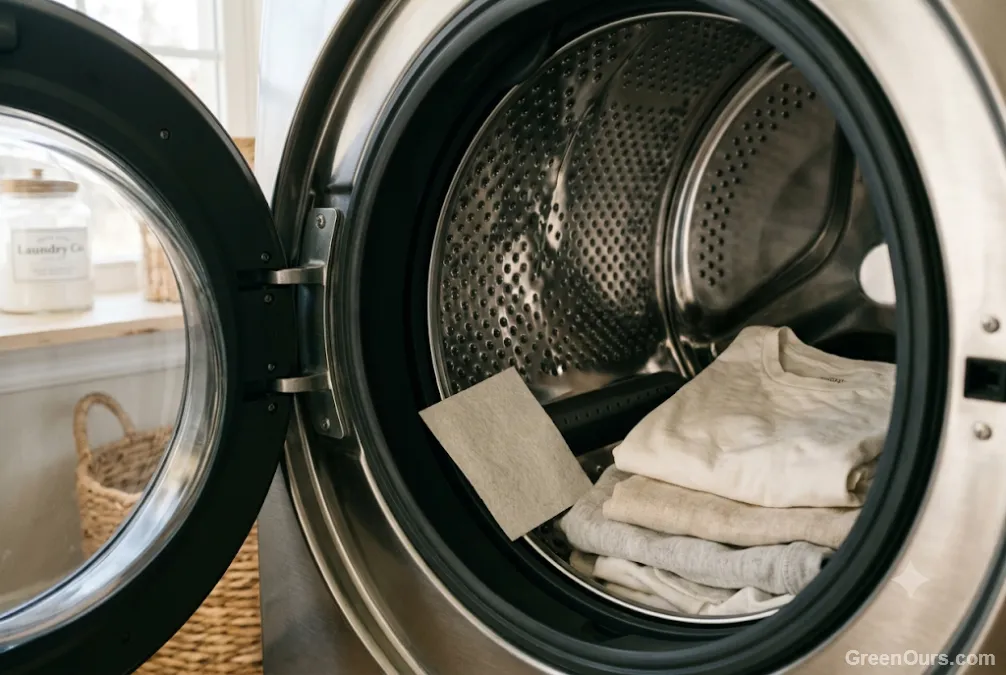
Place the sheet directly inside the empty washing drum before adding your clothes. Avoid placing sheets in the liquid detergent dispenser drawer, where they can clump or dissolve incompletely.
Are laundry detergent sheets safe for HE washers and septic systems?
Most detergent sheets produce low sudsing and are HE-compatible. However, because formulations and dissolving agents vary, always check the manufacturer's label for septic system and machine compatibility guidelines.
Do detergent sheets leave residue on clothes?
Residue can occur when a sheet does not dissolve or circulate properly—for example, if it gets caught in garment folds during cold, short, or low-water cycles. Adding the sheet to the bottom of the drum before loading clothes helps ensure proper circulation.
Swapping to eco-friendly laundry products is a journey of finding the right balance between cleaning performance, household cost, and environmental impact.
Explore more eco-friendly laundry guides