
Why the Front of the Bottle Can't Be Trusted
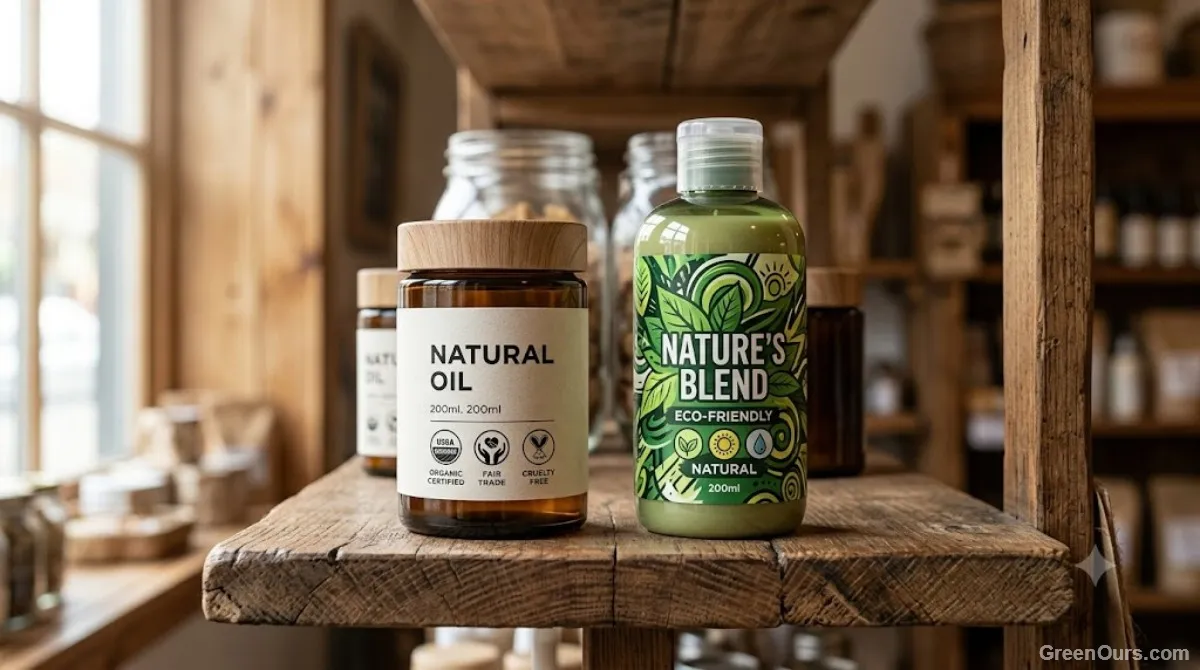
A detergent might use one plant-derived surfactant out of a dozen ingredients and still call the whole formula "plant-based." That's technically accurate and practically misleading at the same time.
Words like "natural," "eco," and "green" generally have no fixed legal definition on a detergent label, so any brand can use them. The rest of this article stays with detergent specifically: which marks, ingredients, and label details are worth your two minutes.
If a label leads with an adjective ("eco," "green," "pure") instead of a specific claim ("phosphate-free," "readily biodegradable surfactants"), treat it as marketing first and verify the specifics before trusting it.
The Ingredients Actually Worth Checking
You don't need to memorize a chemical dictionary. Three things are worth a look.
Surfactants
These lift dirt and oil out of fabric, and they're one of the main environmental considerations in a detergent formula. Plant-derived surfactants can be a useful signal, but the source alone doesn't tell you how environmentally preferable a detergent is.
Biodegradability, the full formulation, and the product's overall environmental criteria matter too. That's why a named certification usually tells you more than the words "plant-based."
Fragrance
"Fragrance" is often a single catch-all word covering many undisclosed compounds. Three separate questions hide inside it: disclosure (can you see what's in it?), sensitivity (does it bother your skin or nose?), and environmental behavior (how it breaks down after the rinse).
A fragrance-free formula sidesteps all three. A fully listed scent at least lets you judge for yourself.
Optical brighteners and dyes
These exist to make clothes look brighter or the liquid look prettier, not to clean better. Because they're purely cosmetic, they're an easy ingredient to skip. Some certification schemes restrict or scrutinize them, so check the certifier's current criteria if this matters to you.
Laundry Detergent Certifications Worth Knowing
Some seals require independent third-party review against published standards. Others are a brand printing its own badge on its own bottle. The useful ones have a name you can search, and each certifier publishes its own criteria.
Which marks you'll see depends on where you shop, and criteria get updated. The table describes what each program generally says it verifies, so read the certifier's current standard before treating any mark as a guarantee.
| Label | What the certifier says it verifies | What it doesn't tell you |
|---|---|---|
| EPA Safer Choice (US) | Ingredients screened against the program's human-health and environmental criteria, with ingredient transparency | Packaging or transport impact |
| EU Ecolabel (Europe) | A life-cycle approach with limits on hazardous substances, plus requirements covering areas such as biodegradability, packaging, and dosing information | Which certified option suits your budget or water |
| Nordic Swan Ecolabel | Life-cycle criteria with limits on harmful substances | Availability, since it's mainly found in Nordic markets |
| USDA Certified Biobased Product (US) | The share of renewable, plant-based content | Toxicity, biodegradability, or packaging |
| Leaping Bunny or vegan marks | Animal testing or animal-derived ingredients | Anything about environmental impact |
To check a mark, look it up on the certifier's own website and see whether the specific product appears in its directory. A logo on a bottle is a claim, while a directory listing is verification.
A cruelty-free or vegan mark is a perfectly good ethical choice, but it isn't an environmental certification. Don't let it stand in for one.
Packaging: One More Thing to Check
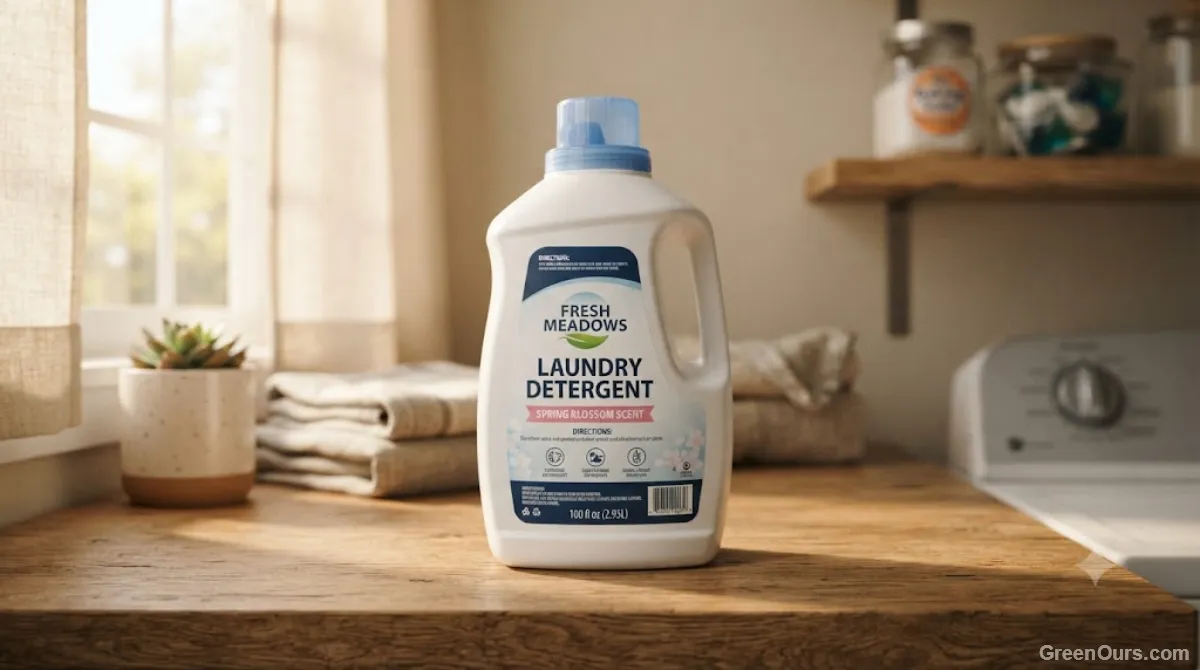
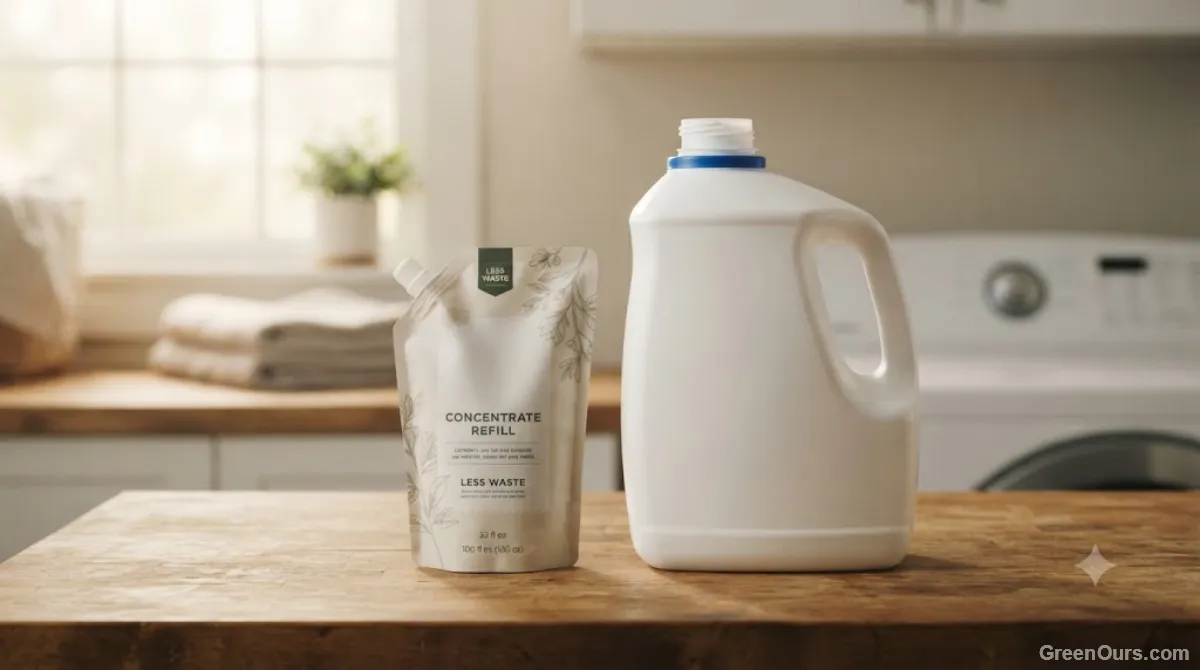
Packaging is one factor on the label worth reading, not a reason to overhaul your routine. Look at what the container is made of, how concentrated the formula is, and how many loads you actually get from it. Two detergents with similar credentials can differ a lot on those points.
What a Good Detergent Label Should Tell You
When you're comparing two bottles, run through this list. The one that answers more of it clearly is usually the better bet.
- A named certification, where one applies, that you can verify with the certifier
- Full or meaningful ingredient information, not just a few flattering ingredients
- Fragrance disclosure: scented, fragrance-free, or a listed scent
- Clear dosage and load count
- Packaging material and concentration
- A specific environmental claim rather than vague "green" language
- Price per load, not price per bottle
Where to Start With Your Next Bottle
You don't need to toss a half-used bottle of conventional detergent to prove you're serious. Finish what you have, then make a better choice on the next purchase. That works longer than a guilt-driven overhaul that fizzles out by month two.
If you're starting from scratch, look for a named certification first, then pick fragrance-free or fully listed scents, then check the packaging and load count.
I still don't buy the "perfect" detergent every time. Sometimes the refill is out of stock and I grab whatever's on the shelf, and that's fine. So which item on that checklist would you actually stick with?
A slightly better choice each time you restock beats a perfect routine you never start.