
The Math Everyone Skips When Comparing Prices
The sticker price on a concentrate pack looks scary at first. You're paying $12 for something that looks like four AA batteries' worth of liquid, next to a $4 spray bottle at the grocery store. But that's comparing a whole bottle of already-diluted cleaner to a pack that makes four or five bottles once you add water. In the price comparisons I tracked, most concentrates landed between $2 and $3 per finished bottle — close to or cheaper than standard pre-mixed versions.
The number that actually matters is cost per use, not cost per pack. I started tracking mine in a notes app for two months. Across my three-bottle rotation of glass cleaner, all-purpose spray, and bathroom cleaner, the refill system cost about 40 percent less over that stretch than buying pre-mixed equivalents, even after factoring in the upfront cost of reusable bottles.
I also priced out the reusable bottle itself. In the models I evaluated, a decent glass spray bottle ran $6 to $10 upfront. Spread across a full year of routine refills, that initial purchase adds only pennies to each individual cleaning session.
Where people get burned is buying a fancy reusable bottle system with a subscription attached, then forgetting to cancel it or letting refills pile up unused. That's not a concentrate problem, that's a subscription problem, and it'll eat your savings just as fast with coffee pods or razor blades.
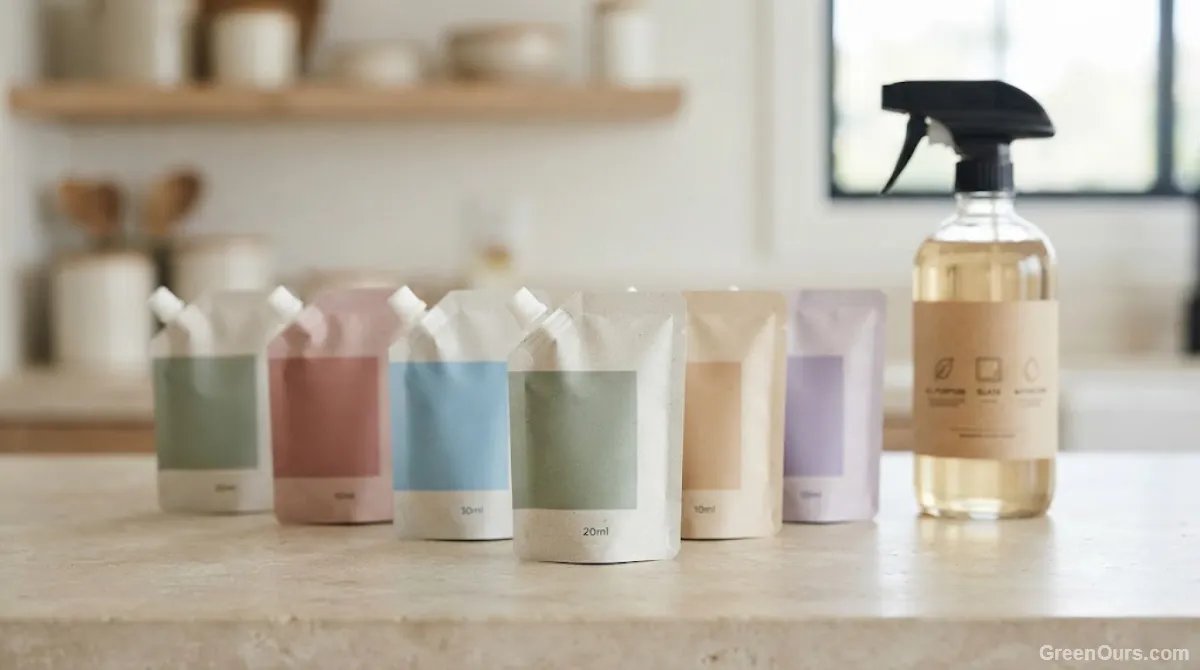
If a brand won't tell you the dilution ratio on the package itself, that's a red flag. You shouldn't need to dig through a website to find out how much water goes in.
How to Calculate Your Real Cost Per Bottle
Before committing to a refill system, run this simple formula to see if the math works for your household budget:
Refill Pack Price ÷ Total Finished Bottles Yielded = True Cost Per Bottle
For example, if a multi-pack of concentrate tablets or liquid pouches costs $14 and yields 5 full 16-ounce spray bottles, your true cost is $2.80 per bottle ($14 ÷ 5 = $2.80). Compare that figure against your standard store-bought brand. If your regular pre-mixed cleaner costs $3.99 for a similar bottle size, you are saving $1.19 on every refill after your bottle is paid off.
What You're Actually Paying For
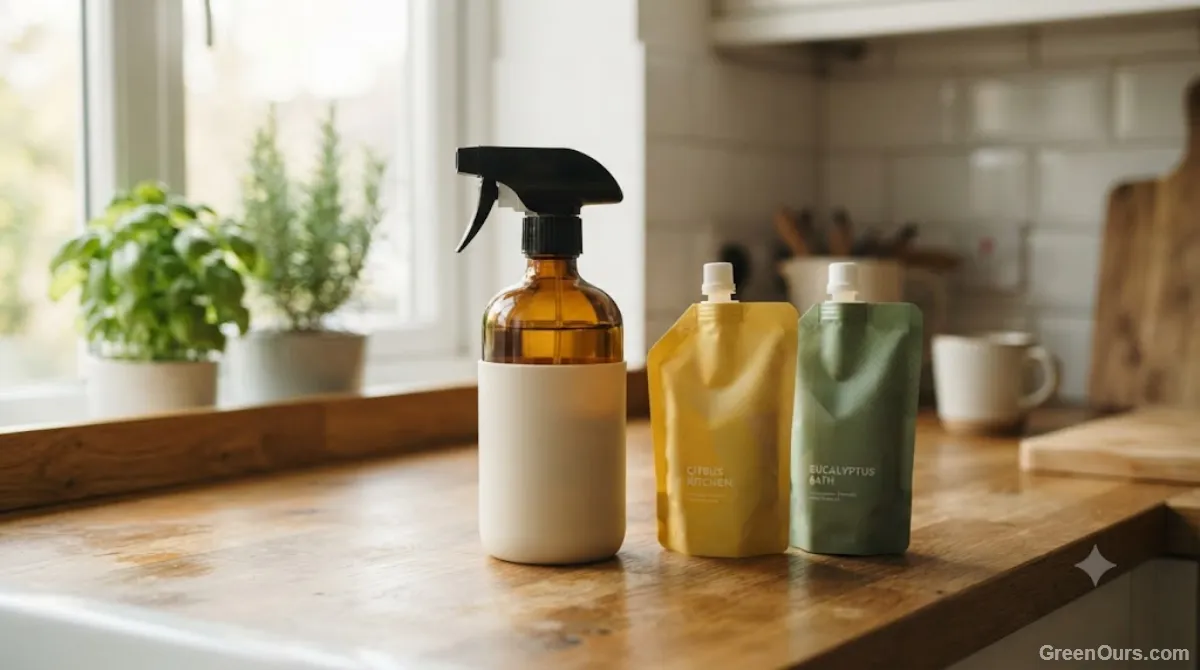
A pre-mixed spray cleaner is largely water, which means a lot of what you pay for in a standard bottle is packaging, storage, and transport. Concentrated cleaning refills flip that ratio. You're buying the active cleaning agents and adding the water yourself, directly from your tap.
That's the part that made the switch click for me. It's not that concentrates are magic or morally superior. It's that standard bottles force you to pay for moving water from a factory to a warehouse to your local store shelf.
The trade-off is that you're now doing a small amount of labor the manufacturer used to do for you: measuring, pouring, sometimes shaking. If that sounds like a dealbreaker, it's worth being honest with yourself about that before you invest in a whole refill system.
The Shipping and Packaging Side Nobody Talks About
This is the part of the concentrated cleaning refills conversation that gets flattened into a single number in ads, something like "up to 90 percent less plastic". The real story has more nuance once you look at where that number actually comes from.
Why Concentrates Ship Lighter
Because concentrates eliminate added water, they take up significantly less weight and volume during transport. A single concentrate pouch weighs a fraction of what a filled spray bottle weighs, allowing delivery trucks to move far more cleaning capacity per shipment.
Where the Packaging Savings Actually Go
Most concentrate pouches are still plastic, just thinner and smaller. That's a real reduction in material, not a total elimination of it. If a brand claims their refills are zero waste, ask what the pouch is actually made of and whether it's accepted by your local recycling program, not just technically recyclable somewhere in theory. A lot of thin multi-layer pouches aren't accepted curbside at all.
The Convenience Trade-Off
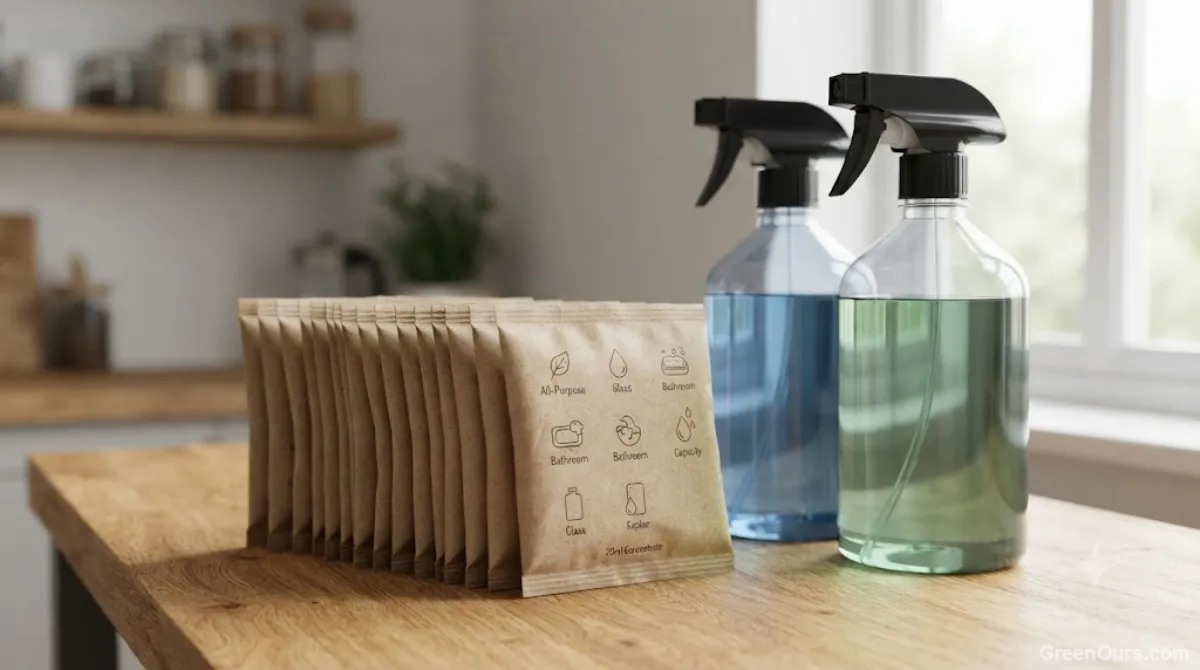
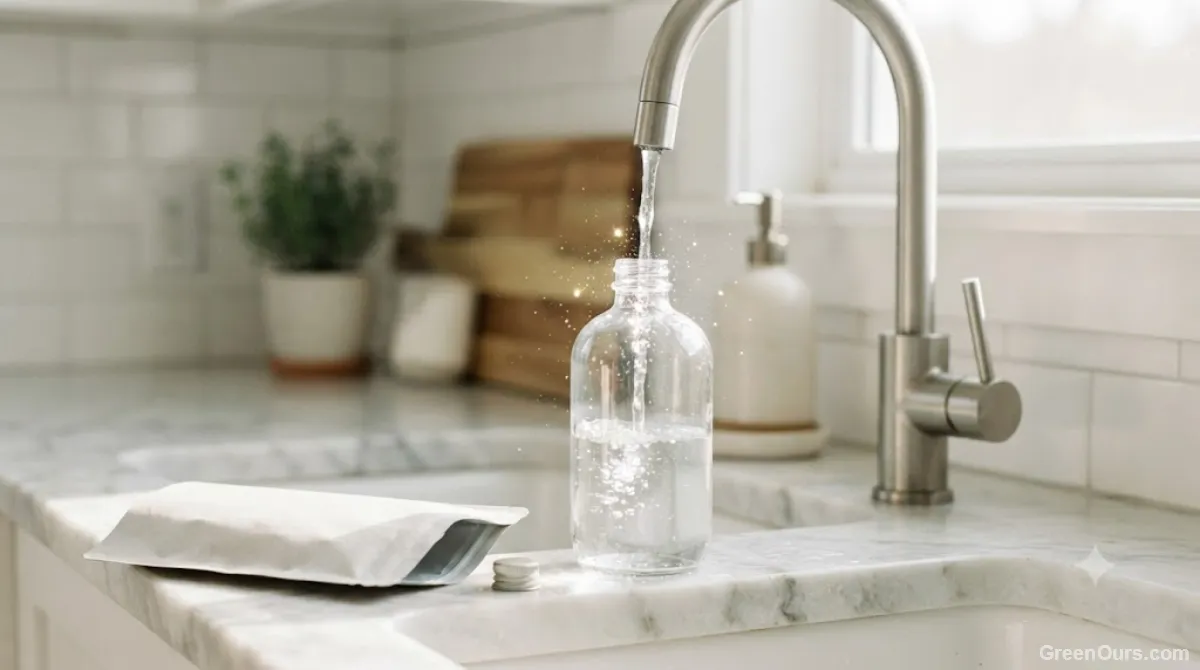
I won't pretend this is effortless. Mixing your own bottle takes maybe ninety seconds, but it's ninety seconds you didn't used to spend, and on a chaotic Tuesday that can feel like one more thing on the list. You also need somewhere to store the concentrate packs themselves, plus enough reusable bottles that you're not scrambling to refill one while it's still half full of something else.
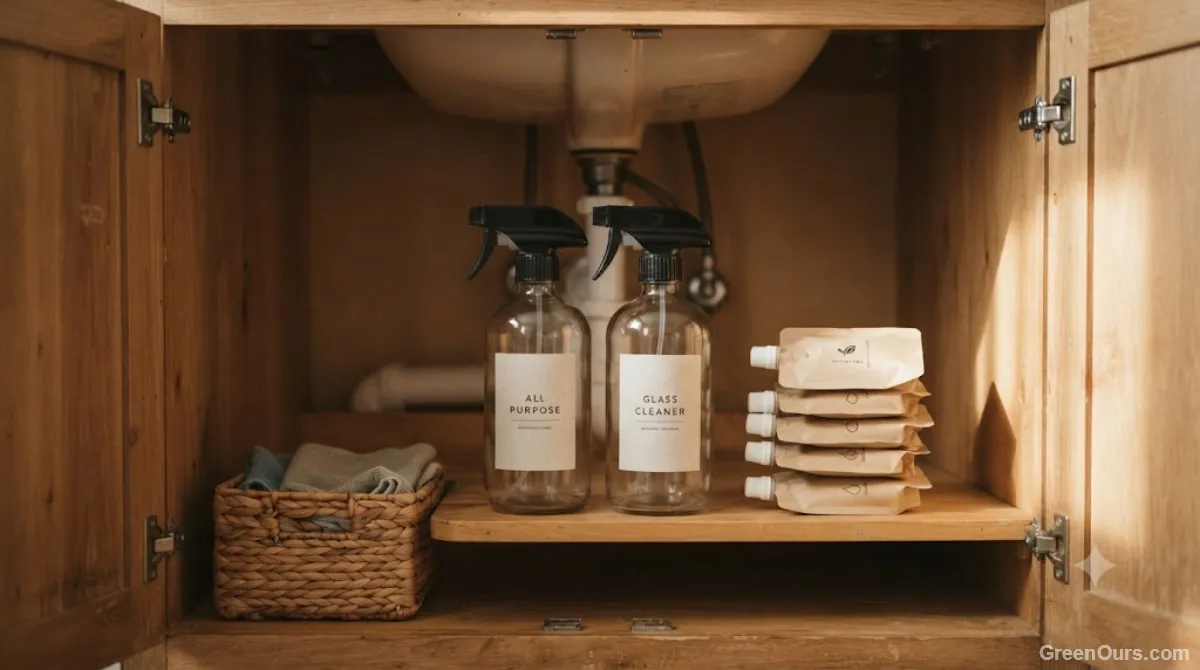
What actually made this sustainable for me, in the everyday sense and not just the environmental one, was labeling my bottles clearly and keeping the concentrate packs in the same spot every time. Once the system had a home, the extra ninety seconds stopped registering as a chore.
When Concentrates Aren't Worth It
If you clean infrequently, a single small bottle of regular cleaner might sit in your cabinet for a year and get the job done without you ever needing a refill system. Concentrates make the most sense for the products you go through fastest, usually all-purpose spray and glass cleaner, not the specialty stuff you use twice a year. And if a "concentrate" only saves you 10 or 15 percent per use once you actually do the math, the hassle of mixing your own probably isn't worth it for that product.
More honest looks at sustainable swaps.
I still have that one glass jar of homemade cleaner sitting under my sink, mostly out of nostalgia at this point. But the rest of that cabinet is a lot calmer now: a few labeled bottles, a small stack of pouches, and a system I don't have to think about twice. That's really all sustainable living needs to be some days.