
The Kit You're Already Sitting On
Before you buy anything, do one thing first: open every cabinet where cleaning supplies live and actually look at what's in there. Not a quick glance, an honest look. Most households already own the bones of a zero-waste kit without realizing it.
You've probably got a drawer of t-shirts too stretched or stained to wear again. A toothbrush or two past its prime, sitting in a cup because throwing it away felt wasteful but you didn't know what else to do with it. Glass jars from pasta sauce or jam, washed and kept "just in case." An old kitchen towel with a hole in the corner. None of that is trash. It's inventory.
The goal of this first pass isn't to clean anything yet. It's to separate what you can repurpose from what you'll need to buy, and you'll likely find that pile is smaller than expected.
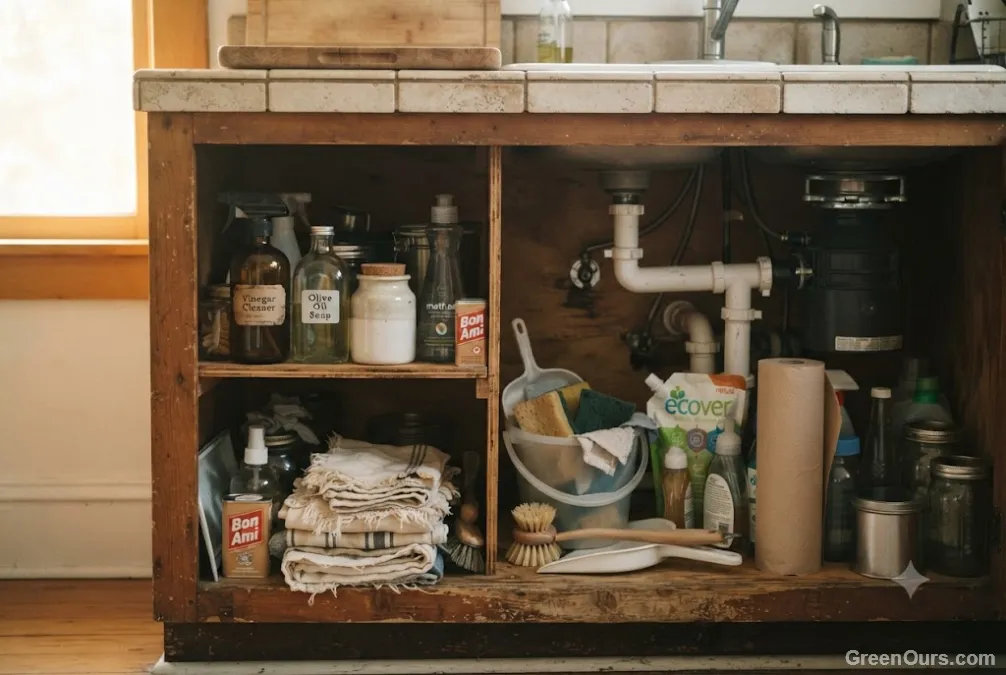
The real starting point isn't a store shelf — it's your recycling bin and the drawer of things you didn't know what to do with. Sort before you shop.
Turning Trash Into Tools
Once you've got your pile sorted, the fun part is figuring out what each item can actually become. It's less "crafting project" and more "five minutes with scissors."
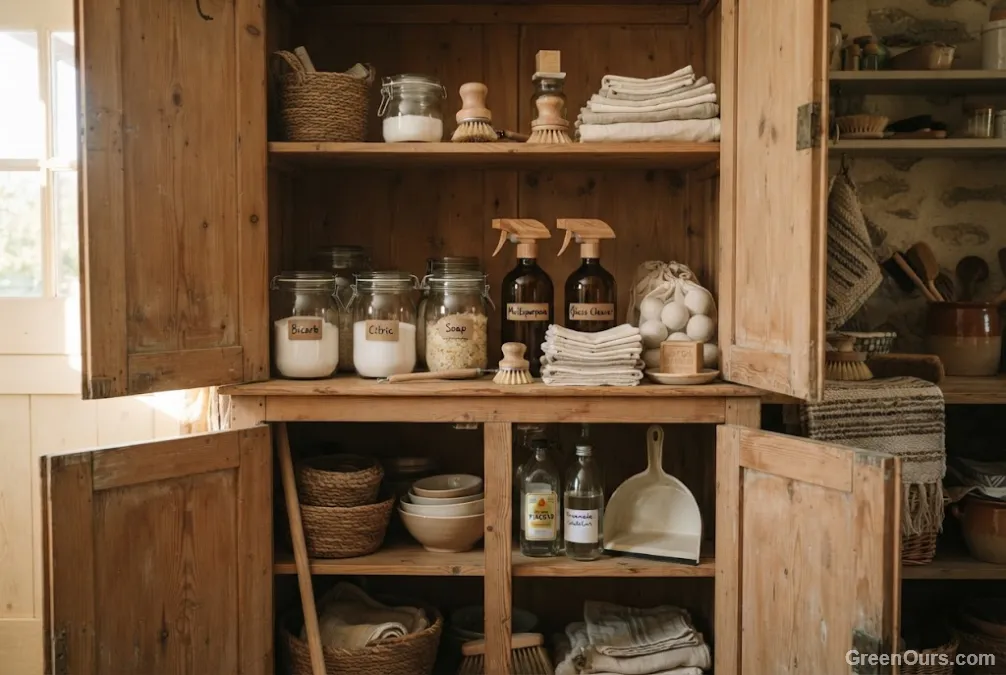
Cut old t-shirts into rough squares and you've got a stack of reusable cleaning rags that outperform paper towels for most jobs — they hold more liquid, don't shred, and go straight into the wash when they're done. A retired toothbrush becomes the best tool you own for grout lines, faucet edges, and the gunk that collects around drain covers. Glass jars, once the labels soak off, hold homemade cleaning solutions far better than the flimsy spray bottles that come with store-bought products.
Even a mesh produce bag has a second life — stuff it with soap scraps too small to use and you've got a low-effort dish scrubber that lasts for weeks. None of this requires a tutorial. It just requires looking at an object and asking what job it's actually suited for, instead of what job it was originally sold to do.
The Three Things Worth Buying (If You Buy Anything at All)
I'm not going to pretend you can build a fully functional kit with zero purchases — most of us eventually need one or two things that repurposed items can't replace well. The trick is buying only what genuinely earns its place.
A Concentrate You Refill
A single bottle of concentrated cleaner, diluted into your saved spray bottles, replaces dozens of single-use plastic bottles over time. You're paying for the active ingredient, not the packaging and the water.
A Brush That Actually Lasts
If your old toothbrushes have finally given out, one solid natural-fiber brush with a replaceable head is worth the upfront cost. It's the one tool where durability actually saves money and waste long-term.
Cloths You Buy Once
If you're genuinely out of old fabric, a small stack of proper microfiber or cotton cloths is a one-time purchase, not a recurring one. Buy them once, use them for years.
Building Your Actual Kit
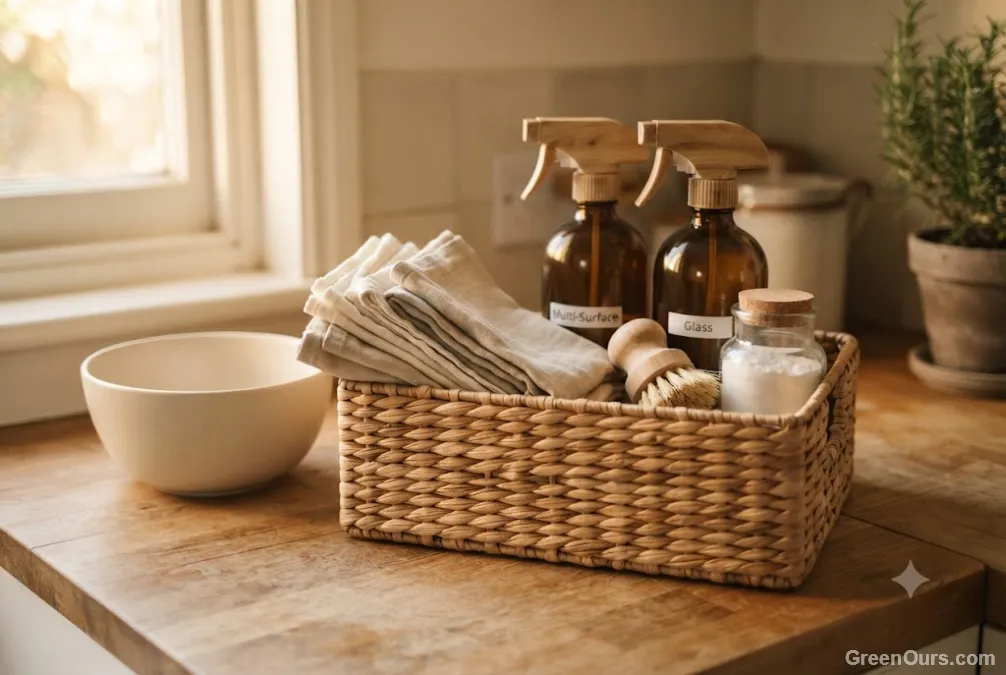
Here's where it stops being theoretical. Grab a bin, a basket, or even just a designated shelf, and physically put your repurposed items and any minimal purchases in one place. This step matters more than it sounds like it should.
A kit that's scattered across three cabinets doesn't get used consistently — you'll default back to whatever's closest, which is usually the disposable option. A kit that lives in one spot, fully assembled, is the thing you actually reach for on a Tuesday when you're tired and just want to wipe down the counter.
Label your refilled bottles so you're not guessing what's inside three weeks from now. Keep your rag pile somewhere you'll actually see it, not buried under "good" towels. Small logistics like this are what separate a kit that works from good intentions that quietly fade.
What This Looks Like a Month In
A month in, your kit won't look like the stock photo version. Your rags will be stained. Your jars won't match. And that's exactly what success looks like here — this isn't about aesthetics, it's about not throwing things away that still work.
You'll probably still buy something occasionally. Maybe a new brush head, maybe another concentrate refill. That's fine. The point was never zero purchases forever. It was breaking the habit of assuming a cleaning problem needs a new product, when half the time it just needs something you already own, used a little differently.
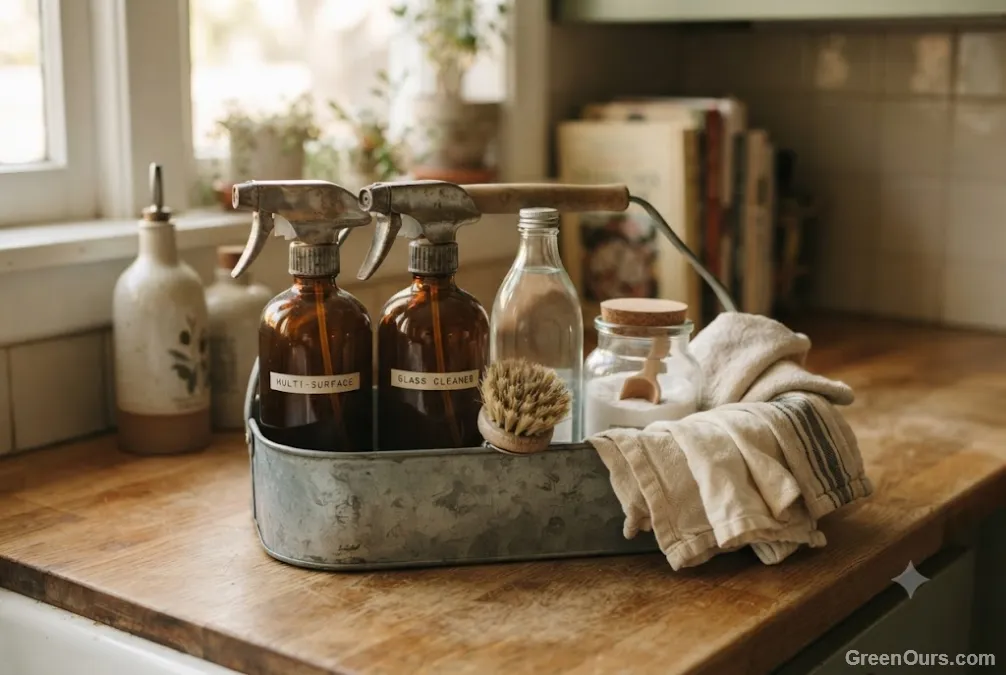
You didn't need the jute ribbon or the matching bottles. You needed to look at what was already in your house a little differently, and give it one more job before it went in the bin.
More ways to waste less without buying more:
Use What You Have Before Buying More