
The Swap Graveyard in My Cabinet
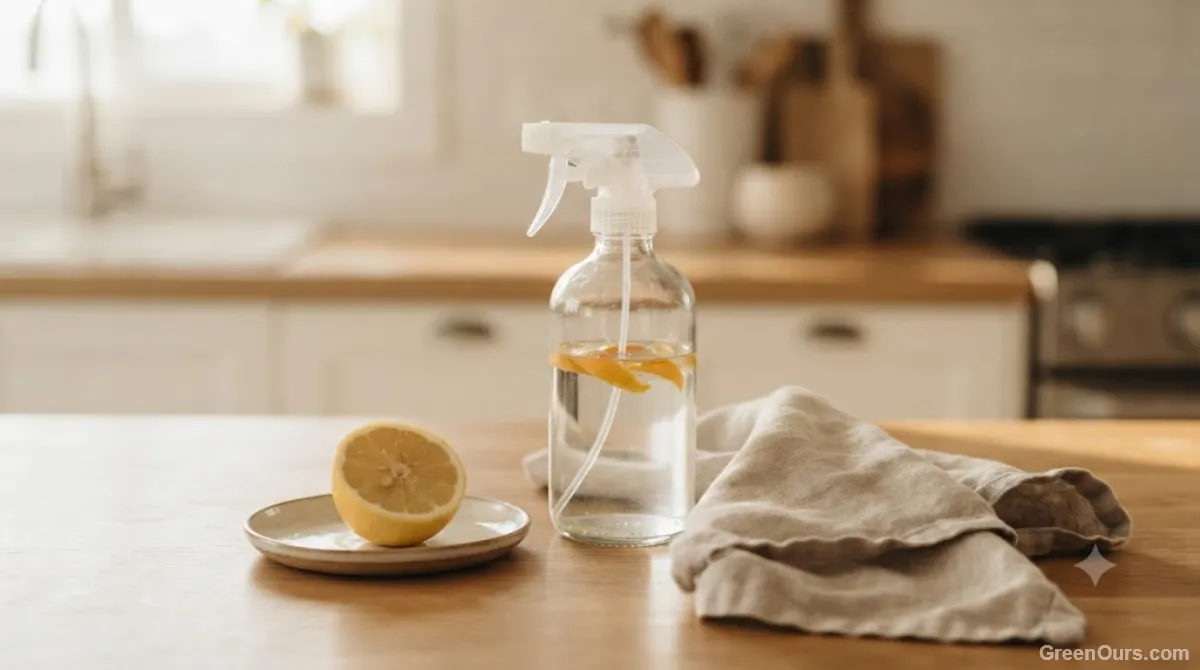
Every zero waste household I know has one: a shelf or drawer where good intentions go to die. Mine currently holds two silicone stretch lids that never fit the bowl I actually needed them for, a set of cloth napkins I bought for dinner parties I stopped hosting, and a stainless steel straw I've used exactly twice. None of these were bad products. They just didn't match how I actually cook, eat, or clean.
That's the pattern I kept running into. A swap would look great in a five-minute video, and then completely fail to fit into the three minutes I actually have between finishing dinner and collapsing on the couch. I don't say this to guilt anyone, including myself. Admitting the graveyard drawer exists is the first honest step to actually fixing anything in it.
What Actually Determines Whether a Swap Sticks
After enough failed attempts, I started paying attention to what separated the swaps that lasted from the ones that didn't. Three things kept showing up.
First, friction. If a swap adds even one extra step — walking to another room, hand-washing something I used to toss, hunting for a lid that fits — it competes with whatever habit it's replacing, and the old habit almost always wins on a tired Tuesday.
Second, visibility. Anything I had to remember to grab from a cupboard got forgotten. Anything sitting right where I needed it, at eye level or within arm's reach, got used without me thinking about it at all.
Third, a backup plan for the moments a swap can't cover. If my only produce storage option is beeswax wrap and it can't handle raw meat or something greasy, I'll reach for plastic wrap out of panic, not laziness. A swap needs an honest answer for its edge cases, or it gets abandoned the first time it fails. The swaps that lasted in my kitchen all had one, even if I hadn't planned it that way.
The mindset shift that helped most: stop trying to replace every disposable item at once. Pick one you touch daily, get it fully automatic, and only then add the next. Trying to overhaul the whole kitchen in a weekend is exactly how you end up with a graveyard drawer.
The Swaps That Survived My Kitchen
A few things did stick, and looking back, every single one followed the friction-visibility-backup rule without me planning it that way.
Where I Keep Things Matters More Than What I Buy
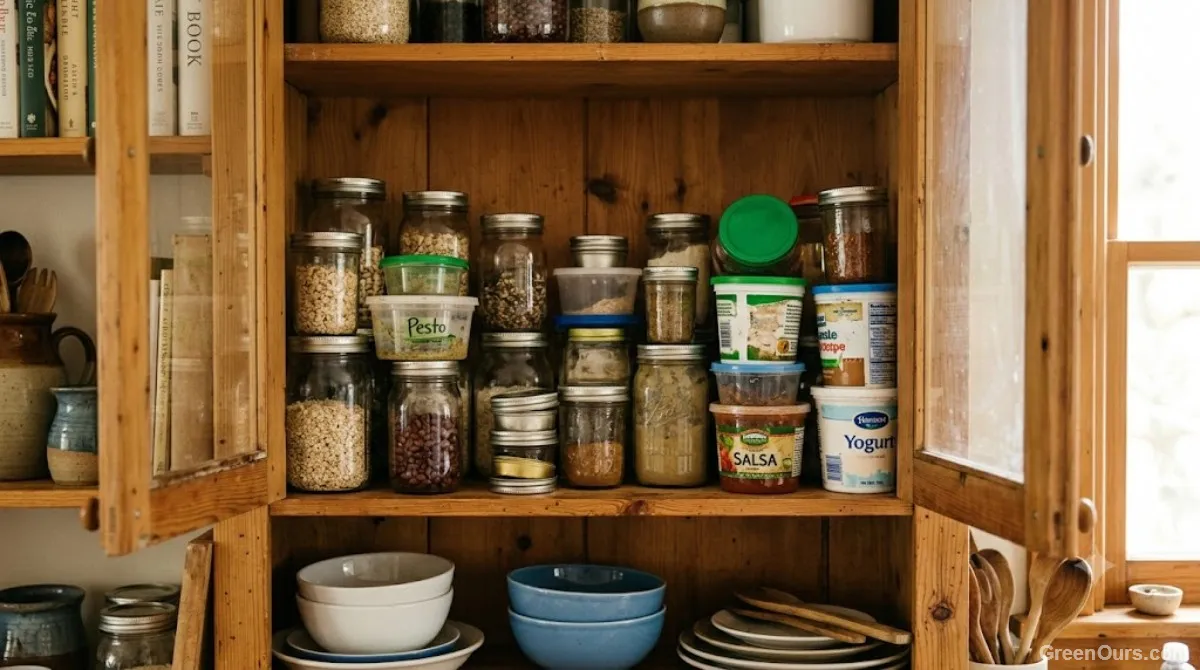
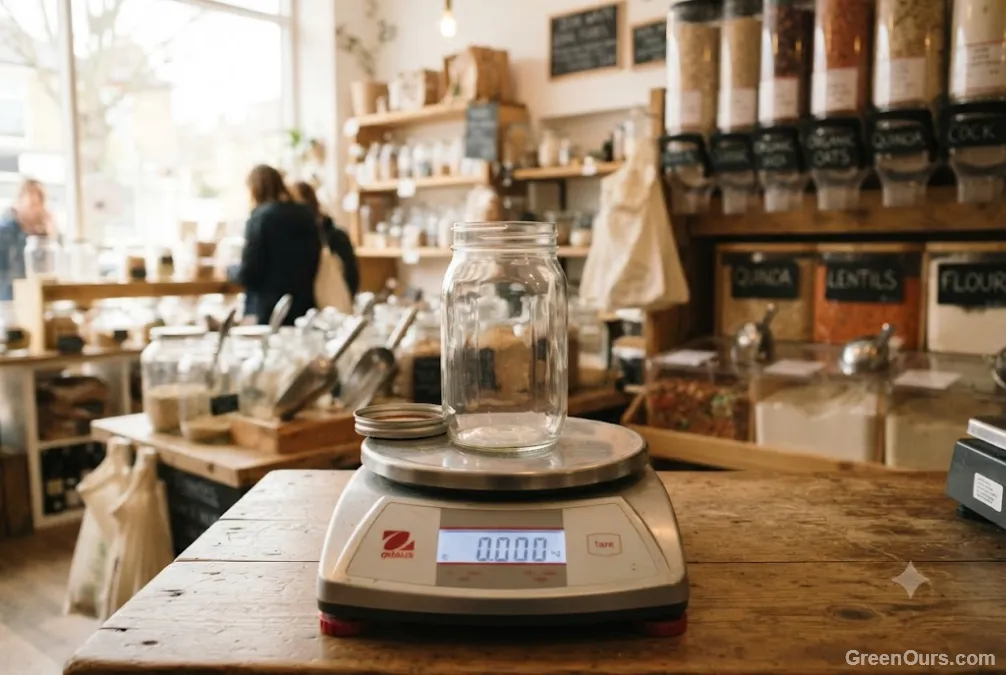
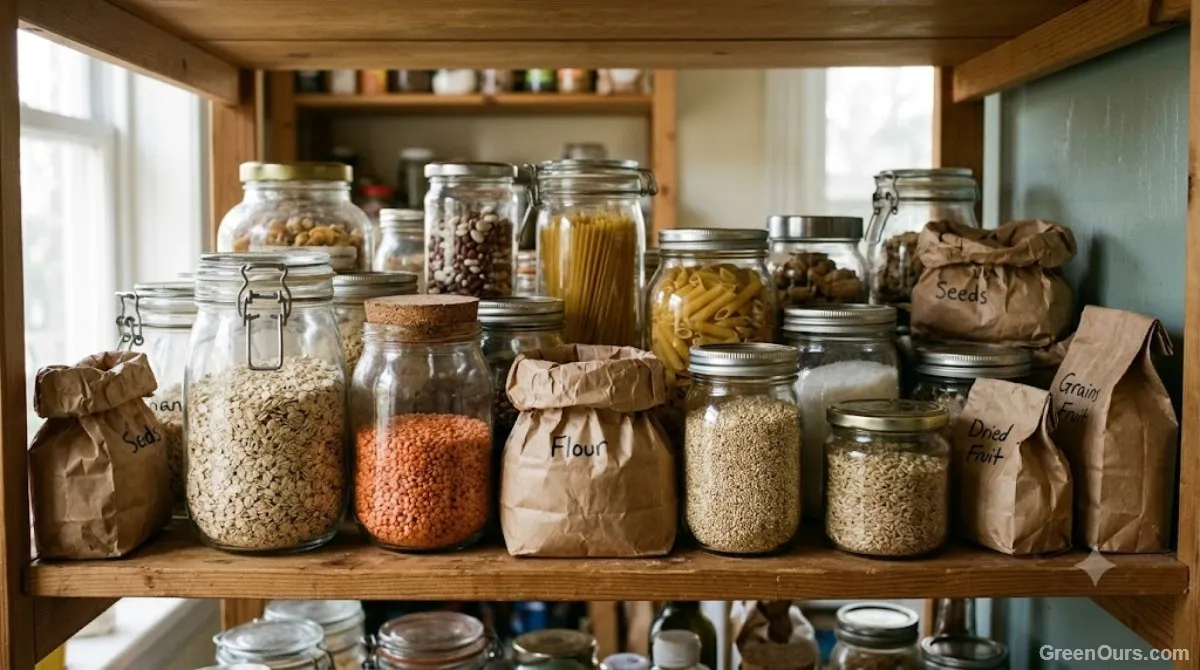
The one glass jar that actually gets used every day sits open on my counter, filled with pasta I buy from the bulk bins at my grocery store. It's not hidden in a cabinet with a lid I have to twist off. I scoop, I cook, I refill. The other jars from that same three-year-old order are still in the cabinet, because I never gave them a job that sat in plain sight.
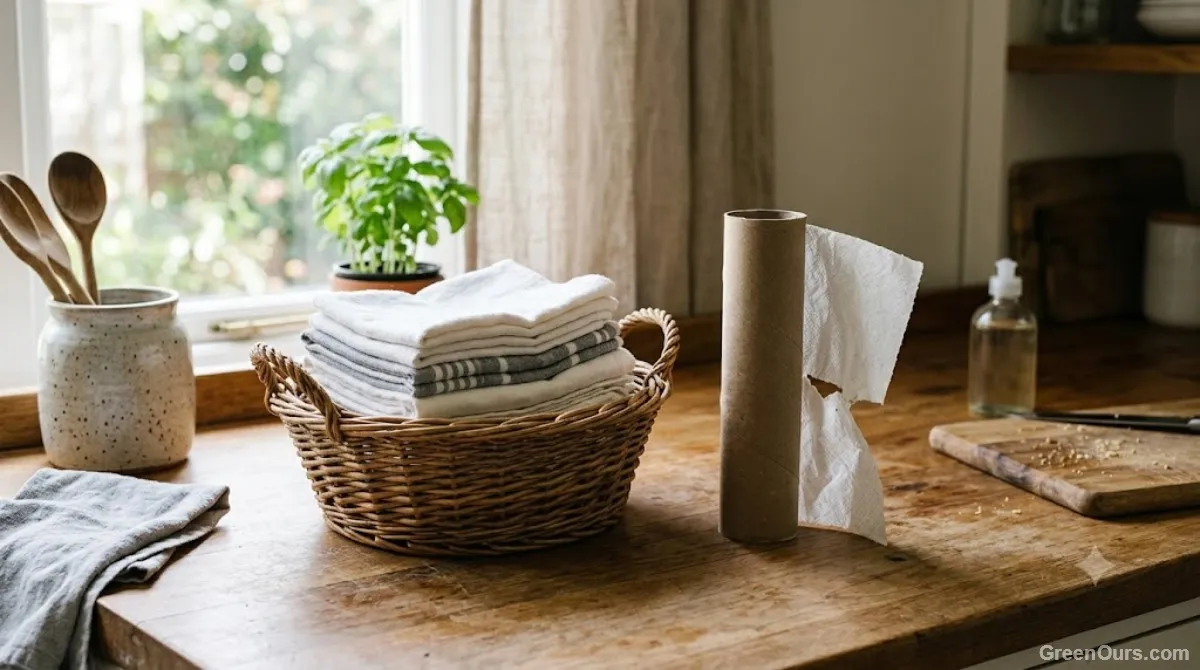
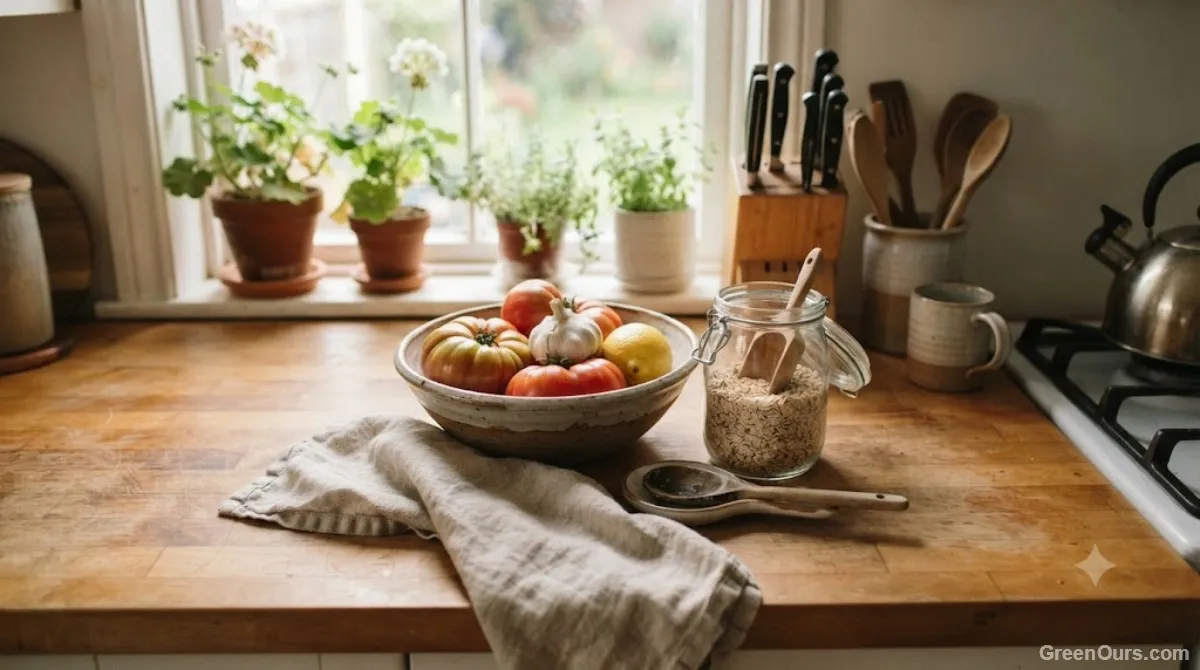
A cotton dish towel now lives folded over my oven handle instead of a paper towel roll. It mops up spills, dries hands, and gets tossed in the regular laundry with everything else. I go through maybe two paper towel rolls a year now, mostly for genuinely greasy messes I don't want on fabric.
The One Rule That Saved My Produce Bags
My mesh produce bags only stuck once I stopped storing them with my other reusable bags in the hall closet and started clipping them to my keys instead. That's it. That was the entire fix. Three years of forgetting them in the car, solved by moving them eight inches closer to the door I actually walk through. It's a small enough change that it feels almost too simple to count, but it's the one that finally worked.
Swaps I Gave Up On (Honestly)
I tried cloth "unpaper towels" for wiping down a cast iron pan and gave up within two weeks. The grease didn't come out in a regular wash, and I didn't want a separate laundry system just for kitchen rags. I also tried composting every scrap in a small countertop bin before I had anywhere to actually take it, which meant it sat too long and started to smell. That one wasn't a bad idea; it was a sequencing mistake. I needed a compost drop-off point sorted out before I needed the bin.
Giving up on a swap isn't failure. It's information. The unpaper towels taught me that greasy jobs still get a disposable towel in my house, and that's fine. Zero waste that only works if I pretend my kitchen is spotless isn't actually sustainable — it's just a different kind of performance. I don't plan to try either of them again the same way, though I might revisit composting once I've got a drop-off point figured out.
How to Test a Swap Before Committing
Before I buy anything new now, I give it a two-week trial using something I already own, if that's possible. Before buying beeswax wrap, I tried covering bowls with an upside-down plate for a week to see if I even minded the habit change. Turns out I didn't, so the wrap was worth buying. Before switching to bar soap at the sink, I used up an old bar that had been sitting in a guest bathroom instead of buying a new one blind.
The two-week trial does two things. It tells you honestly whether a habit fits your life before you've spent any money, and it forces you to notice the small frictions — the wrong shelf, the missing lid, the extra step — while they're still cheap to fix. That's really the whole test I'd suggest for any zero waste kitchen swaps you're considering, before they end up joining the drawer.
If you've got a drawer of half-used zero waste products too, you're in good company — start with one, not all of them.
My kitchen isn't zero waste. It's just noticeably less wasteful than it used to be, one swap that actually fits my life at a time. That feels like a more honest goal than a spotless before-and-after photo, and honestly, it's the only version of this that's lasted longer than a few weeks for me.