
Why the Bulk Aisle Feels Harder Than It Is
Most of what makes bulk bins intimidating has nothing to do with the actual process and everything to do with not knowing the unwritten rules. Regular grocery shopping never asks you to weigh anything yourself or interact with a scale before you've even paid. So your brain flags it as a bigger deal than it is.
In reality, bulk shopping removes a step you're used to — someone else pre-measuring and pre-packaging your food — and hands it back to you. That's the whole shift. You're not doing anything a store employee wasn't already doing behind the scenes; you're just doing it in front of other shoppers, which is the part that actually feels uncomfortable.
What to Bring (And What You Don't Need Yet)
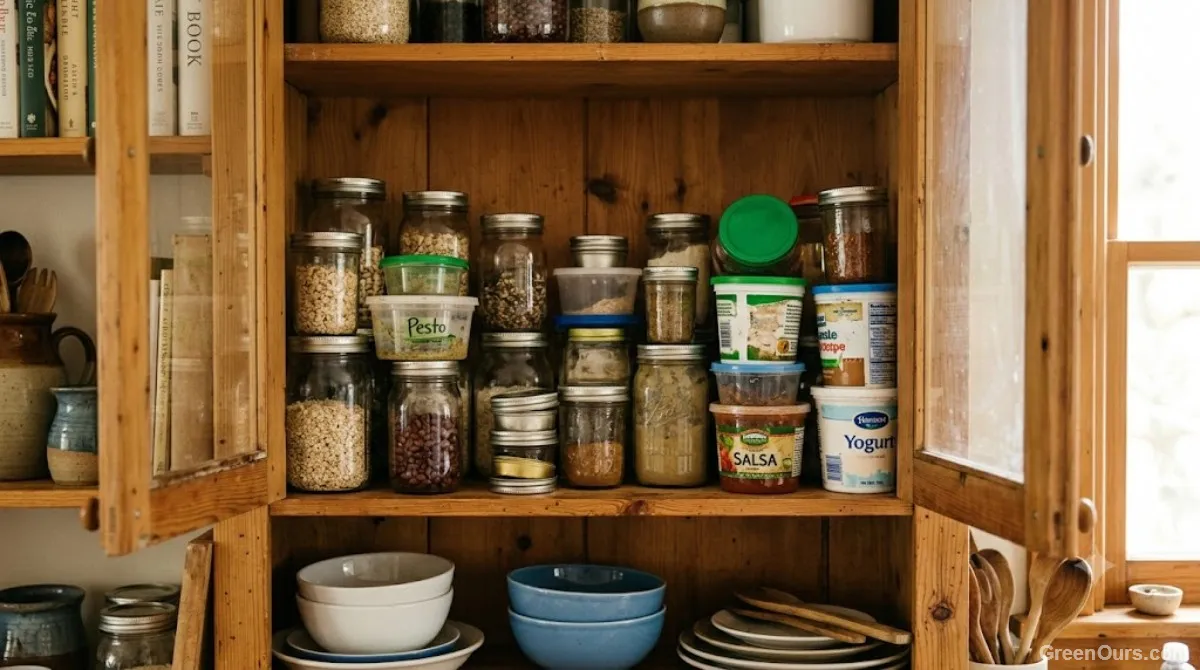
You don't need a matching set of glass jars or a drawer full of muslin bags to start. Bring what you already own that seals well: an old pasta sauce jar, a lidded plastic container from your cupboard, even a clean produce bag from a previous trip. The bins don't care what your container looks like.
A permanent marker or a roll of masking tape is genuinely more useful than any container you'll buy, because you'll use it to note weights and item codes. If your store has small paper bags at the bulk station, grab a couple even if you're using jars — they're handy for anything you're only buying a spoonful of, like a specific spice for one recipe.
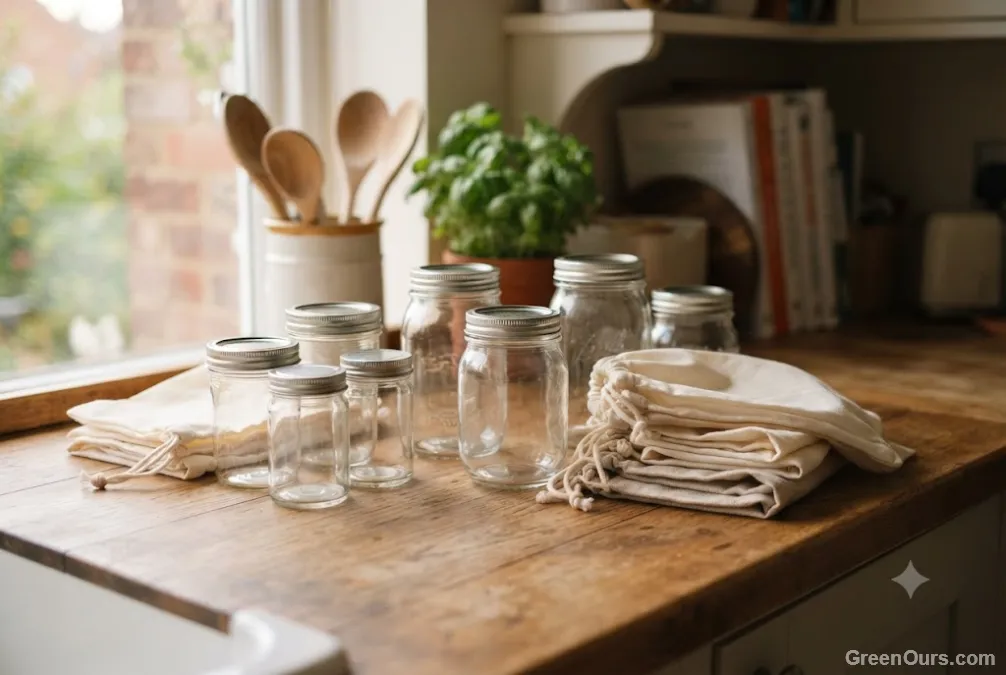
Weigh your empty containers at home first if you have a kitchen scale, and write the weight right on the jar in marker. It saves you a step in the store and means you never have to guess.
The Tare Weight Trick That Makes Everything Click
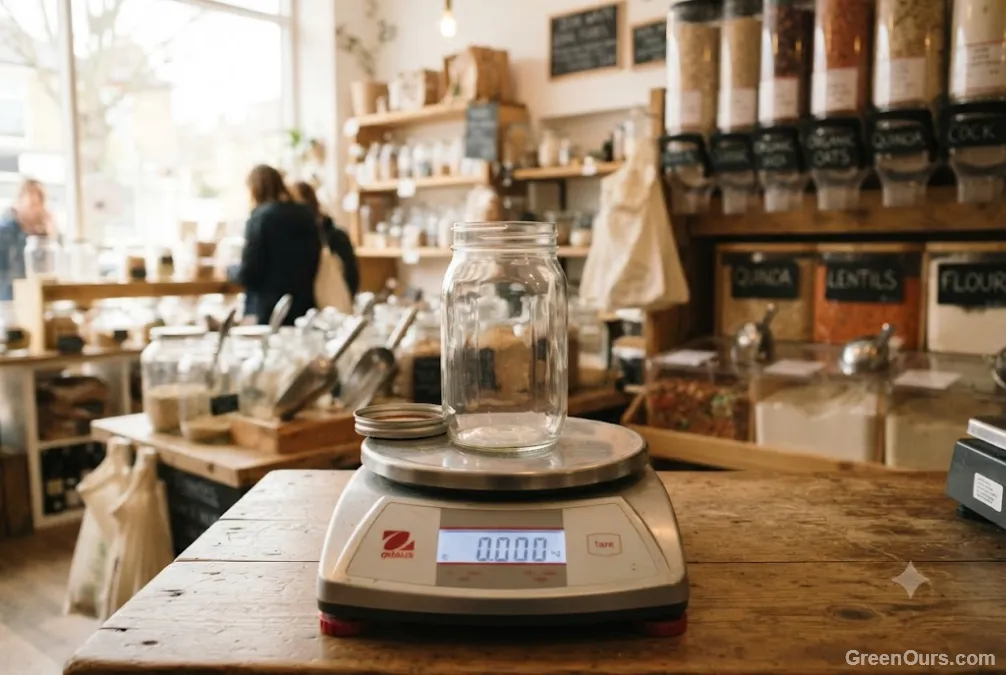
Tare weight is just the weight of your empty container, subtracted out so you only pay for what's inside it. Every bulk station scale — whether it's a self-serve unit by the bins or the one at checkout — has a tare function built in. You're not expected to do this math yourself.
Getting Your Container Weighed First
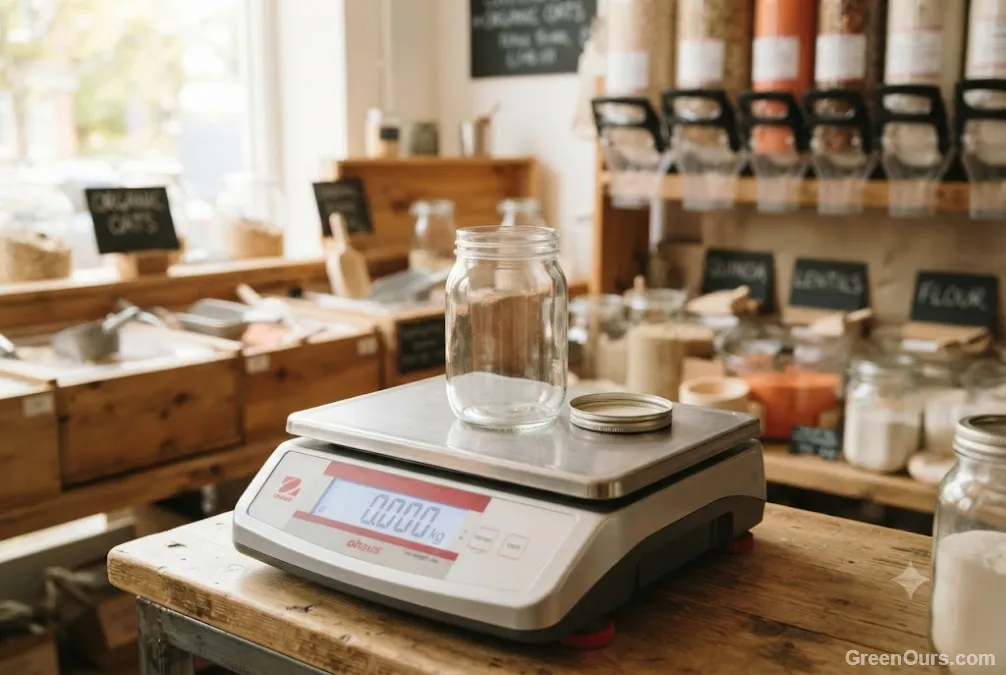
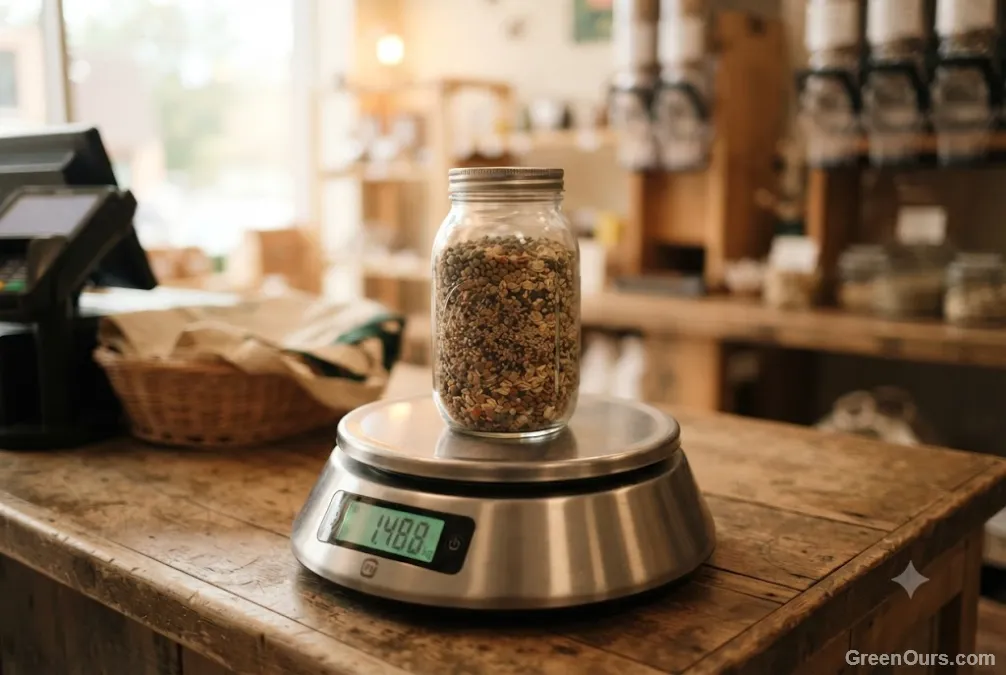
Before you fill anything, take your empty jar to the bulk station scale (most stores have one right there, separate from checkout) or to a staff member if there isn't a self-serve option. Place the jar on the scale, and either the scale will print a small sticker with the empty weight or a staff member will write it on with a grease pencil. This happens before a single almond goes in.
Writing Down the Number
If your store uses stickers, stick it directly on the jar — done. If it's a store where you write the tare weight yourself, jot it clearly near the lid. This number gets subtracted at checkout so you're only charged for the rice, beans, or coffee you actually added, not the glass around it.
A Simple Walkthrough at the Bins
With your tared, labeled container in hand, walk up to the bin you want. Most bins have a lever or twist dispenser at the bottom and a small scoop hanging nearby for anything that doesn't pour cleanly, like nut butters or dried fruit. Fill your container to whatever amount you actually need — bulk bins are one of the few places where buying exactly two tablespoons of a spice you'll use once is completely normal and nobody blinks.
Each bin has a code number posted on a sign, usually alongside the price per pound or per hundred grams. If your store doesn't print this on a sticker automatically, jot the code on your jar or a scrap of paper so the cashier can ring it up correctly. This is the part people worry about forgetting, and it's genuinely the easiest step — the code is right there on the bin.
Checkout Without the Awkward Pause
At checkout, hand your jars over as normal. The cashier weighs each one, subtracts the tare weight already recorded, and charges you for the difference at that item's price. You don't need to explain what you're doing or apologize for the jars — cashiers who work anywhere near a bulk section do this dozens of times a day.
If a code got smudged or you forgot to note one, just tell the cashier what was in the jar. They can usually look it up. Nobody's trip to the store has ever been ruined by a cashier asking, "Was that the steel-cut oats or the rolled ones?"
What to Do Next
The first bulk bin trip is the only hard one. After that, it's just another aisle — one where you happen to bring your own jar and skip the packaging that was never going to get used for anything else anyway.
Ready for more everyday swaps that don't require overhauling your kitchen?