
Why the Weekly Shop Feels Wasteful Even When You're Trying
Most grocery waste doesn't come from one bad decision. It comes from a dozen small ones that add up quietly over a week. You buy the bigger bag of spinach because it's better value, then half of it turns brown in the crisper drawer. You grab something because it looked good at the store, without a real plan for using it. You over-buy on a normal Tuesday because you're not sure what's already at home.
None of that makes you careless. It makes you a person shopping on autopilot, which is what most of us are doing most of the time. The goal here isn't to shame the autopilot — it's to nudge it in a slightly better direction.
The mindset shift that actually helps: you're not aiming for a perfect cart. You're aiming for a cart that's a little better than last week's. That's a bar you can clear every single time.
Build a List That Actually Stops You From Overbuying
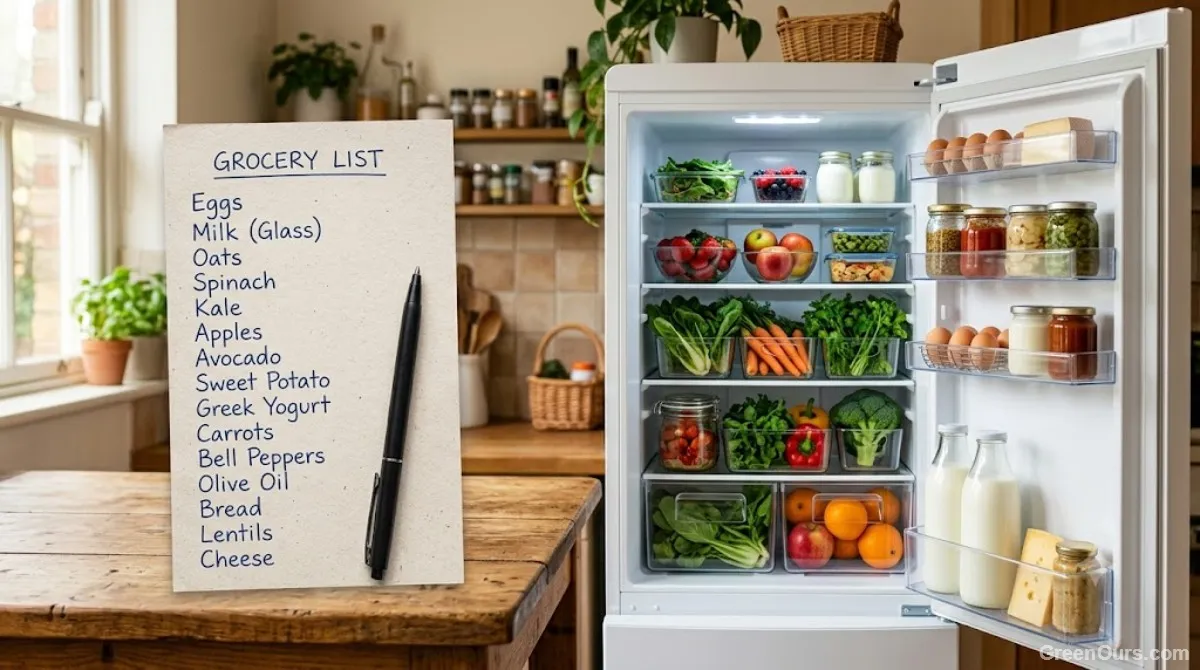
Most grocery lists are written from memory, which means they're really a list of habits, not a list of needs. A more useful list starts somewhere unexpected: the fridge, not the pantry app.
Before you write anything down, open the fridge and the crisper drawer and actually look. What's close to going bad? What half-used jar needs a second life this week? Building your list around what already needs using is the single fastest way to stop duplicate buying — the extra bag of carrots, the third jar of a condiment you already had two of.
From there, keep the list loose rather than locked to specific recipes. "Something with the zucchini" gets you just as far as a rigid recipe, and it leaves room to buy what's actually fresh and reasonably priced when you get there.
Where You Shop Matters Less Than How You Shop
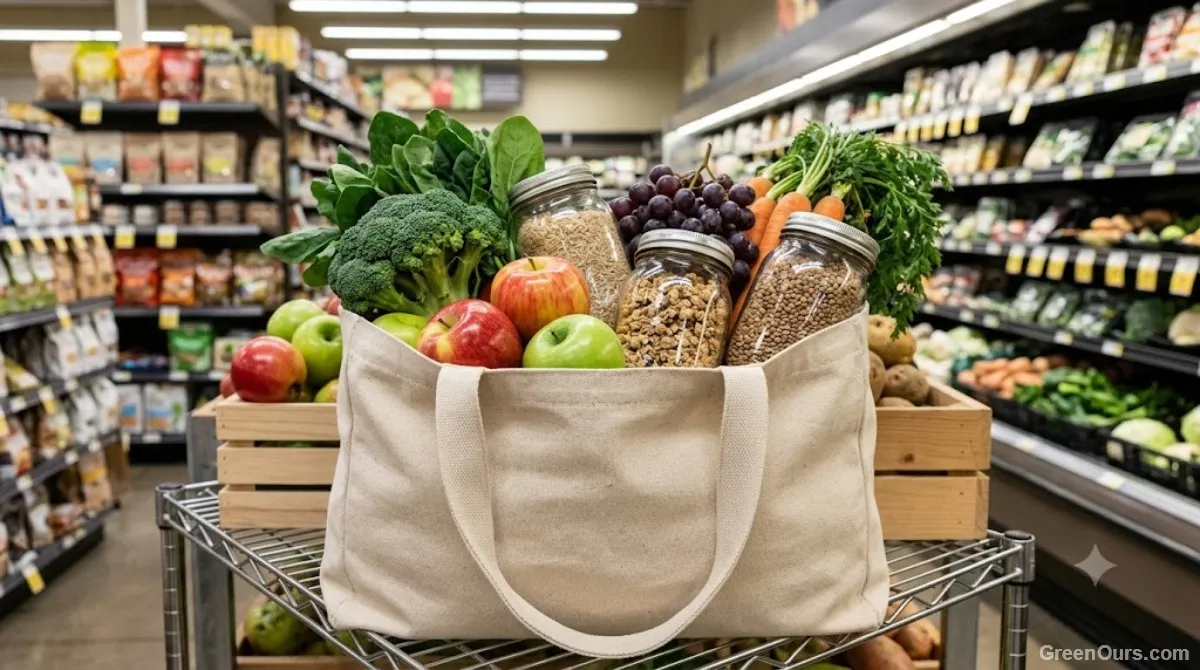
You don't need a farmers market membership or a bulk-bin co-op to shop with less waste. Most of the difference happens at a completely ordinary supermarket, in the choices you make once you're inside it.
Skip the produce bag habit where you can
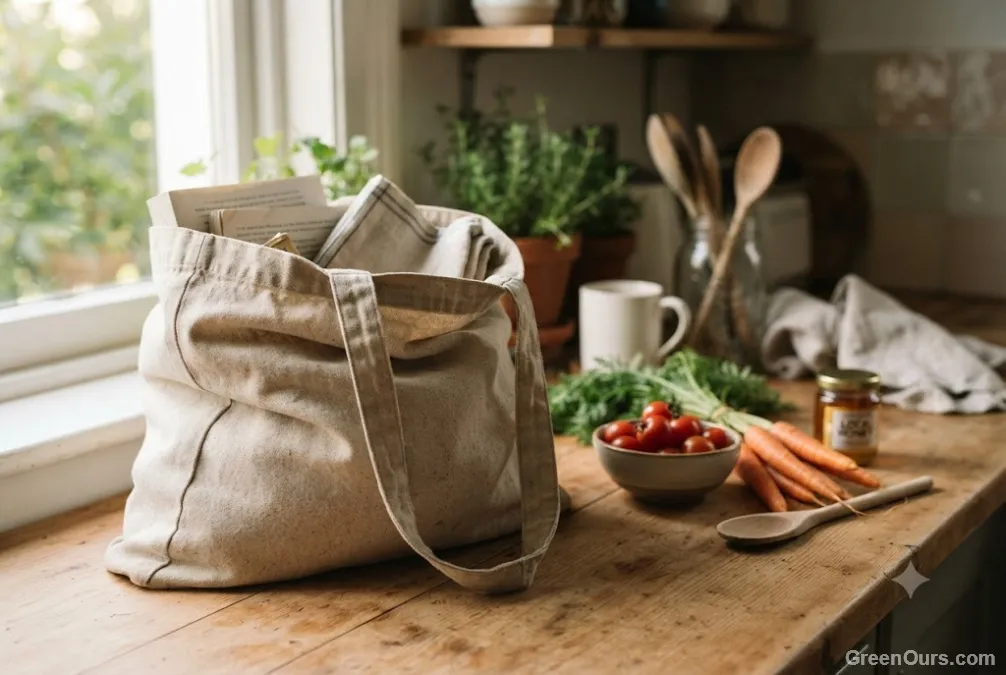
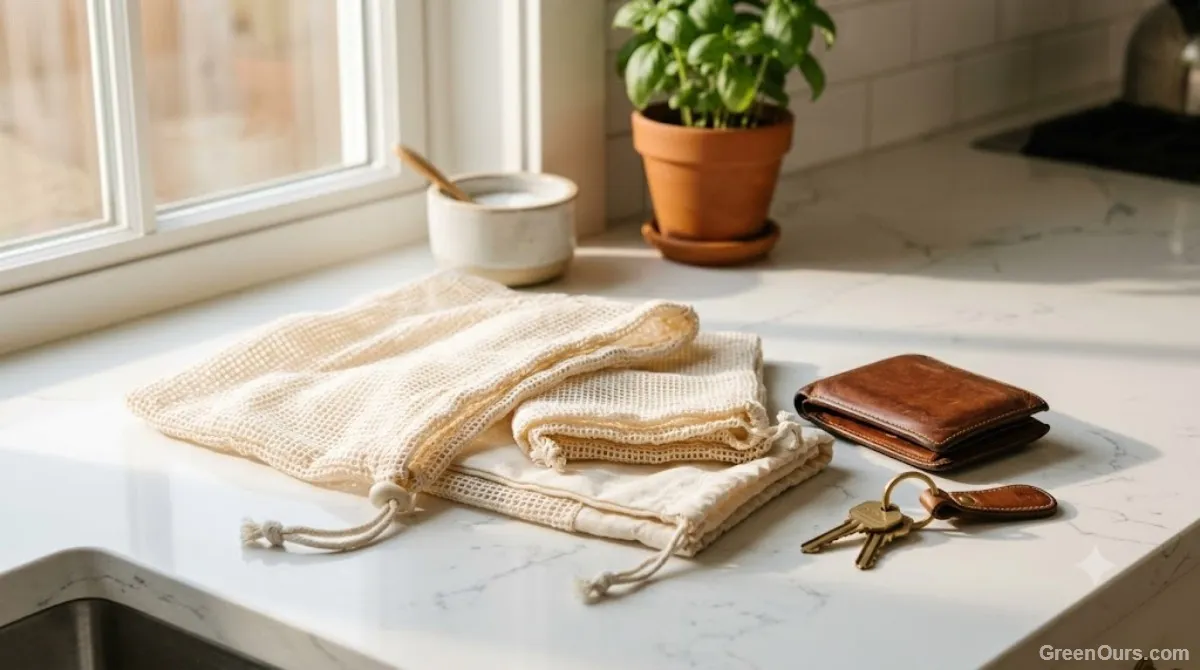
Thin plastic produce bags feel free, but they're one of the easiest things to opt out of. Bananas, avocados, and anything with a peel don't need a bag at all. For items that do, a couple of reusable mesh produce bags kept in your grocery tote handle almost everything, and they last for years.
Use bulk bins if you have them, and simple substitutions if you don't
If your store has bulk bins for rice, oats, nuts, or beans, they're often cheaper per unit and skip the packaging entirely. If it doesn't, buying the largest reasonable package of a shelf-stable staple you actually use regularly does something similar: less packaging per meal, without changing where you shop.
Swaps That Don't Raise Your Grocery Bill
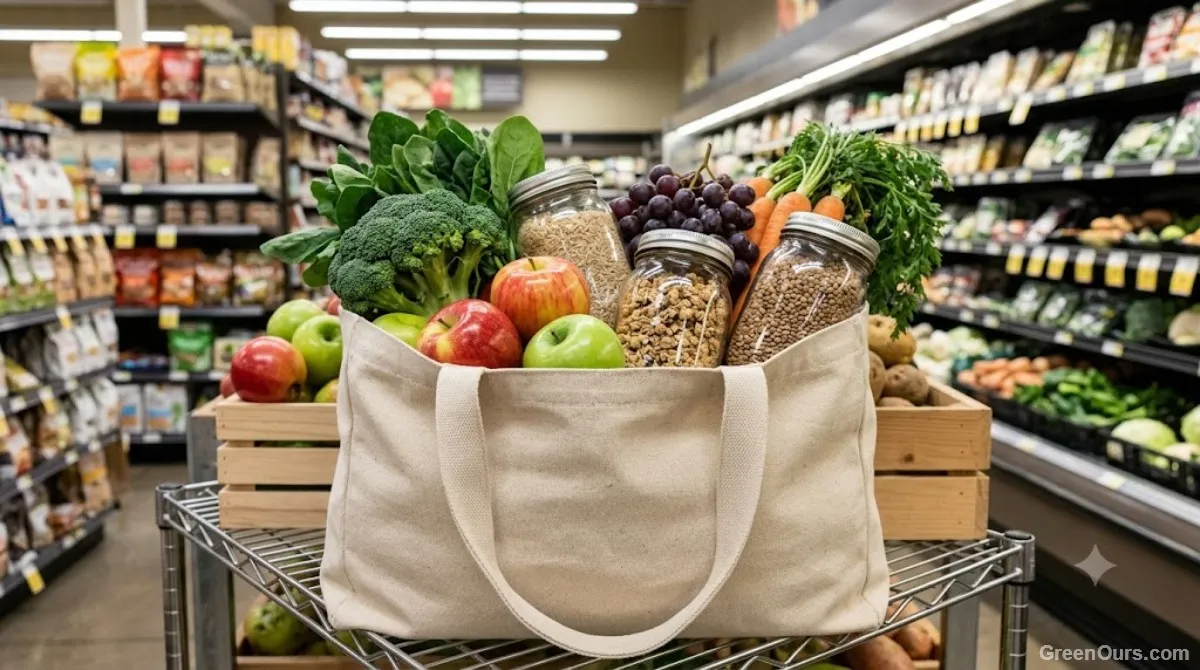
This part surprises people every time: a lot of lower-waste choices are also the cheaper ones. Loose produce is usually less expensive per pound than the pre-cut, pre-bagged version. Store-brand staples in simple packaging often cost less than the branded version wrapped in three layers of marketing. Buying just enough rather than the jumbo size means less spoils before you use it, which is money as much as it is waste.
The swaps that do cost more — specialty zero-waste brands, package-free stores, subscription produce boxes — are genuinely nice if they fit your budget, but they're not required reading for this. The free swaps get you most of the way there.
The One Habit That Matters More Than Any Product
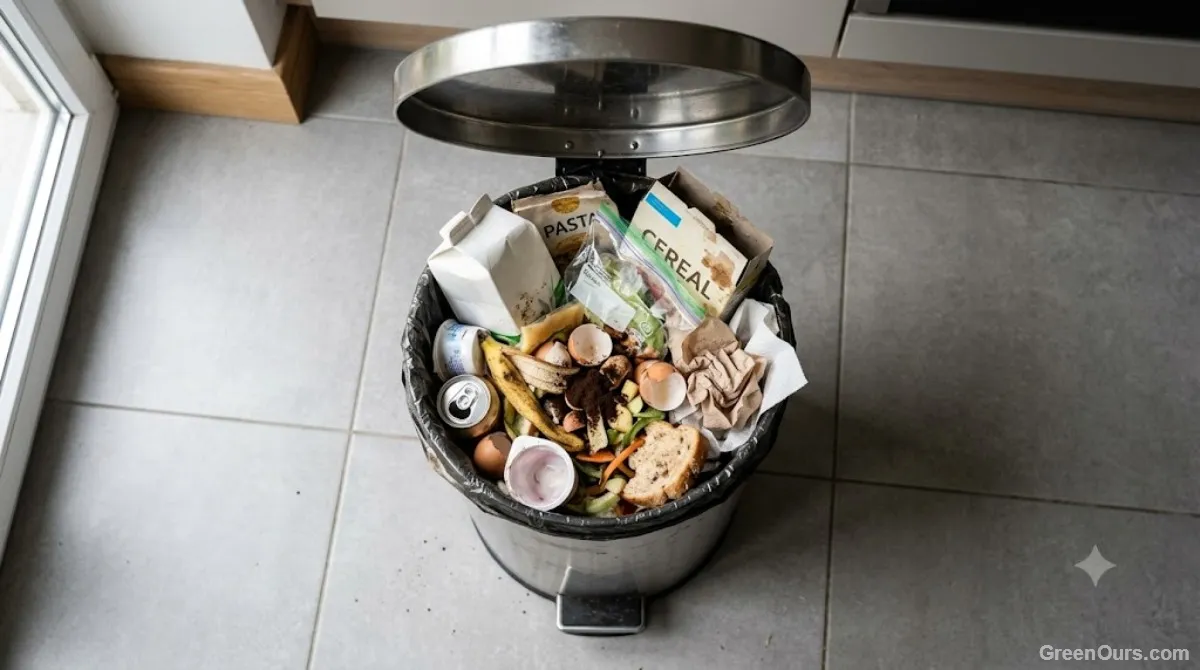
If I had to pick a single habit that outperforms every reusable bag and bulk bin combined, it's this: eat what you bought before you buy more. Food waste is one of the biggest hidden costs of a typical grocery routine, and it has nothing to do with which store you shop at.
A standing "use it up" dinner once a week — whatever's left, thrown into a pan or a pot — does more for your waste and your wallet than almost any single swap on this list. It's not glamorous, and it doesn't need a name or a hashtag. It just needs to happen most weeks.
When the Week Falls Apart Anyway
Some weeks you'll forget the bags. Some weeks takeout wins because it's been that kind of day, and the loose spinach still goes brown before Thursday. That's not a failure of the system — that's just a normal week. The routine only has to work most weeks, not every week, and it only has to be a little better than the one before it.
More ways to make small changes that actually stick.
Next time you're standing in the aisle deciding between the bagged spinach and the loose bunch, you don't need to solve sustainability in that moment. You just need to make the slightly better choice available to you right then, and let next week's trip be a little better than this one.