
The Bag Drawer Confession
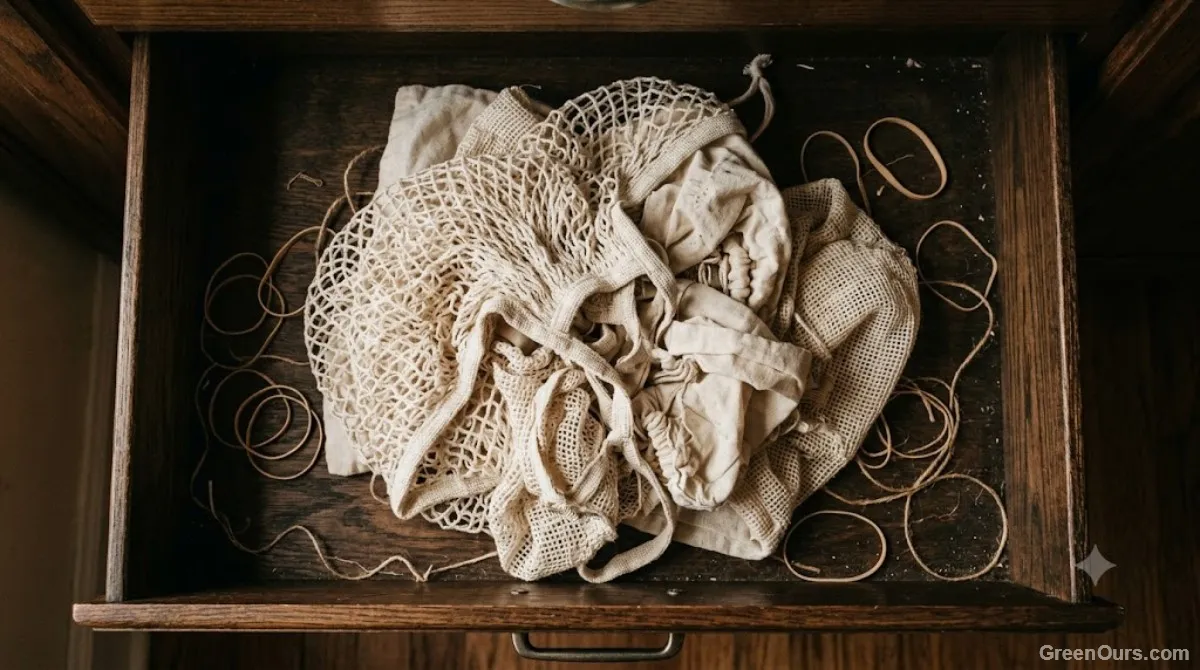
Somewhere in most eco-conscious kitchens there's a drawer, a tote, or a car door pocket with three or four sad reusable produce bags in it. Bought with genuine intention, used a handful of times, then quietly abandoned once the novelty wore off and the thin plastic roll bags by the mushrooms became the path of least resistance again.
I'm not telling you this to make you feel bad. I'm telling you because if this has happened to you, you're not uniquely flaky. You're responding to a habit gap, not a character flaw, and habit gaps have practical fixes. The people who use produce bags consistently aren't more disciplined than you. They've just closed the gap between owning the bags and remembering the bags at the exact right second.
Why We Forget Them in the First Place
Most reusable swaps succeed because they attach to something you already do daily. You brush your teeth every day, so a bamboo toothbrush is easy to remember. You leave the house every day, so a tote bag by the door gets grabbed on the way out.
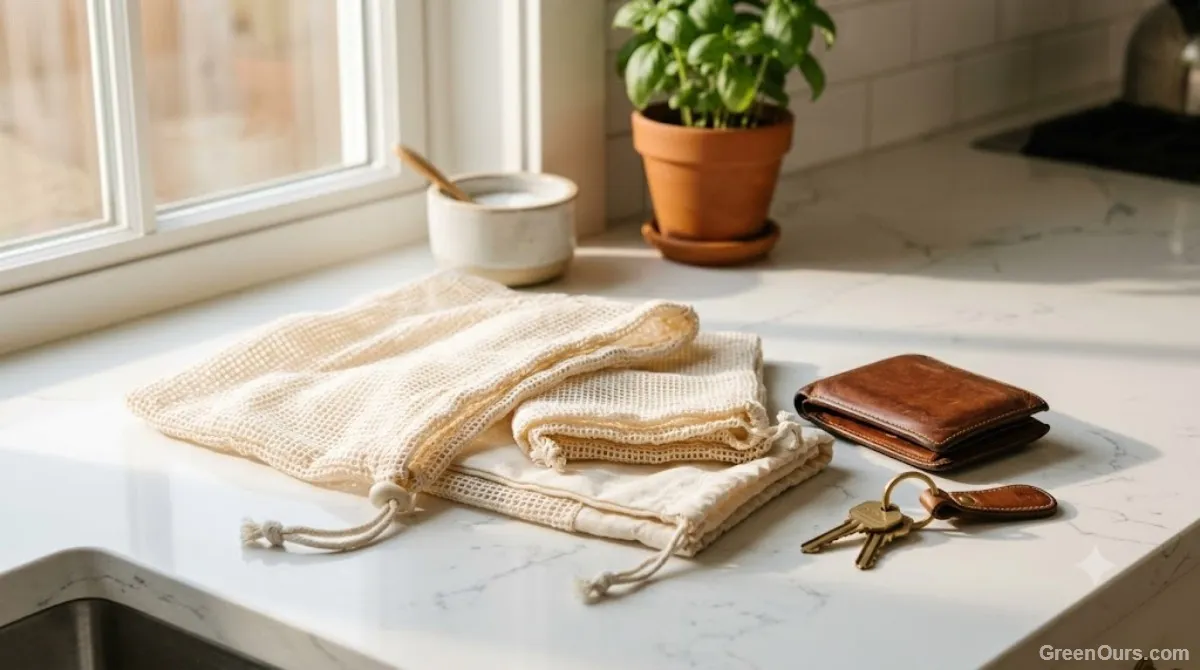
Produce bags fail this test twice over. First, you have to remember them before you leave home, which means they need to be visible at the exact moment you're gathering keys and a wallet, not buried in a drawer three rooms away. Second, you have to remember them again once you're inside the store, standing over a pile of loose carrots, thinking about six other things.
The fix isn't willpower, it's location. Produce bags only get used consistently when they live somewhere your hands already go on the way out the door, not somewhere your brain has to actively recall.
When Reusable Produce Bags Actually Make a Difference
Loose produce is where these bags earn their keep. Apples, green beans, brussels sprouts on the stalk, garlic bulbs, ginger root, anything you'd otherwise grab a thin plastic roll bag for at the scale or checkout. That plastic is genuinely single-use, genuinely thin, and genuinely adds up over a year of weekly shopping trips.
Bulk bins are the other clear win. If your grocery store has bulk grains, nuts, dried fruit, or coffee, a cloth or mesh bag replaces a plastic bag every single visit, and bulk shoppers tend to go back to the same bins often enough that the habit compounds fast.
When They're Honestly Kind of Pointless
I want to be straight with you here, because most articles on this topic won't be. If your produce already comes pre-bagged, a clamshell of strawberries, a net bag of oranges, a banded bunch of bananas, a reusable produce bag isn't replacing anything. You'd just be adding a second bag around packaging that already exists.
Buying a fifth or sixth style of produce bag because it looked cute online isn't a sustainability upgrade either. It's still a purchase, still uses resources to make and ship, and a drawer with eight barely used bags isn't better for the planet than a drawer with two well used ones. If you already own bags that work, you don't need new ones because a different brand launched a nicer print.
Building the Habit That Actually Sticks
Store Them Where You'll See Them, Not Where You'll Organize Them
The instinct is to fold your produce bags neatly into a kitchen drawer. Resist it. Loop them over the handle of the tote bag you already grab for groceries, or hang them on a hook by the door. If they're visible at the exact second you're already thinking about leaving for the store, you don't need to remember them, you just see them.
Keep a Backup Set in the Car
This is the one exception to the glovebox rule. A single spare set living permanently in the car, separate from your main set at home, covers the trips where you didn't plan to stop at the store but ended up there anyway. You're not trying to remember two sets, you're just never without one.
Start With the Produce You Buy Every Week
Don't try to convert your entire produce routine overnight. Pick the two or three items you buy nearly every trip, apples, garlic, green beans, whatever it is for you, and commit to bagging just those in reusable bags first. Once that's automatic, it naturally spreads to everything else.
Do You Even Need to Buy Them?
Before you add anything to cart, check what you already own. An old mesh laundry bag, a cotton drawstring pouch from a gift, even a clean pillowcase in a pinch, all of these can hold loose produce just fine on a trip where you forgot your dedicated set. The goal is less single-use plastic, not a matching aesthetic set of bags with a brand name on them.
If you do decide to buy, two or three bags in a mix of sizes is plenty for most households. You're not outfitting a farmers market stall, you're covering a weekly grocery run.
What to Do Next
Reusable produce bags were never going to save the planet on their own, and nobody serious ever claimed they would. What they do is quietly shave off a little plastic, week after week, if you actually use them. That's not a failure of the idea. It's just a reminder that the swap only works once it stops living in the glovebox and starts living in your hand.
Small swap, real habit. Here's how to make it stick without overthinking it.