
The Cotton Pad Pile-Up Nobody Talks About
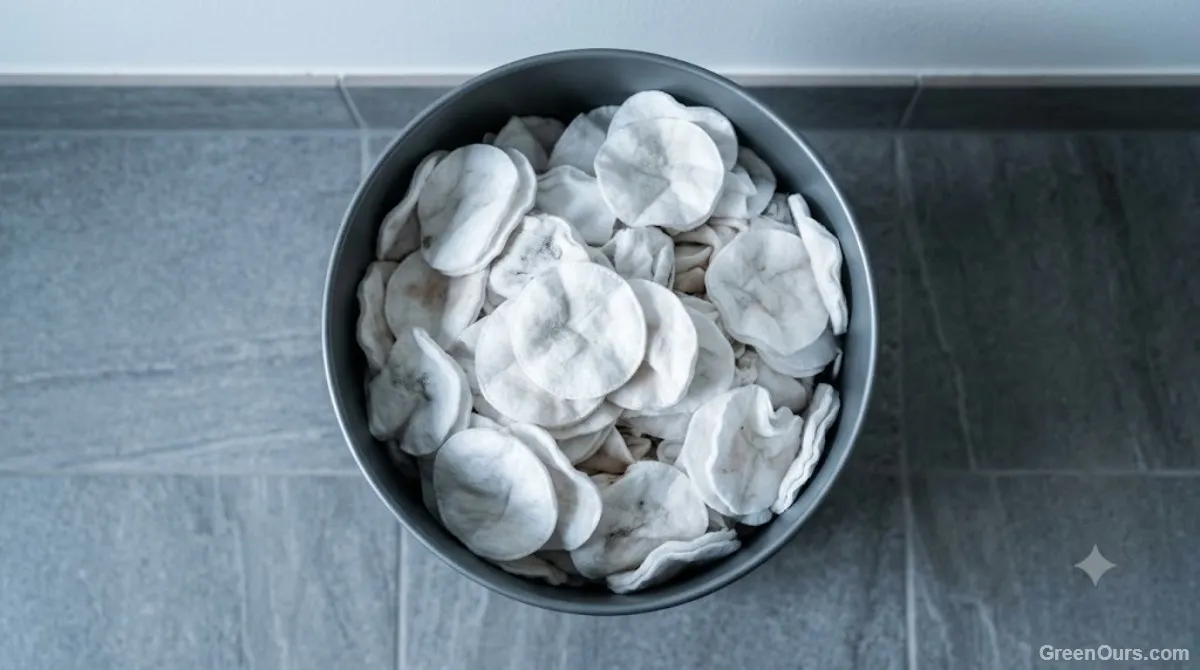
Here's the thing: a basic skincare routine, done twice a day, eats through cotton pads faster than most people realize. Toner in the morning, makeup remover at night, maybe a swipe of something acid-adjacent for whatever your skin is doing this month — that's four to six pads a day for a lot of us. As one example, a routine at that rate works out to somewhere in the range of 1,500 to 2,000 small cotton discs a year — your own number will run higher or lower depending on how many steps are actually in your routine.
Nobody budgets for that. You just keep buying the same bag at the drugstore, tossing it in the cart next to the shampoo, and it never registers as a habit worth examining. That's exactly why disposable pads are such a quiet source of bathroom waste — they're cheap enough per unit that the accumulation hides in plain sight until you actually stop and count.
What You're Actually Comparing
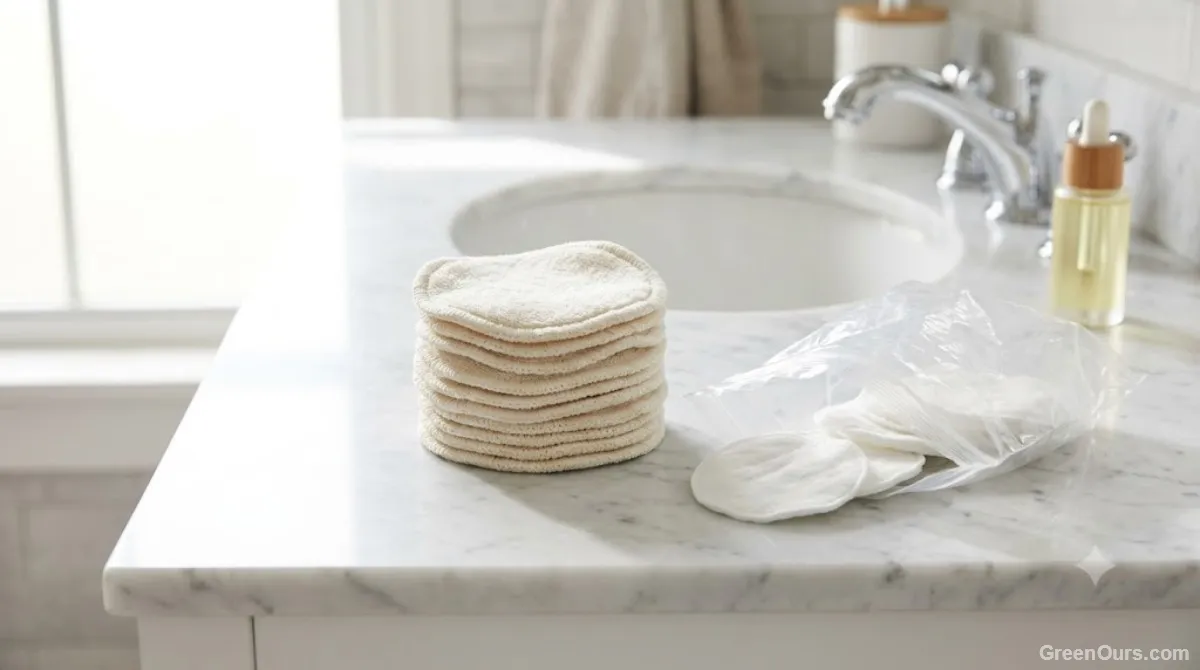
Cost is the easiest part to settle. A bag of disposable rounds runs a few dollars and lasts a few weeks, depending on how heavy-handed you are with toner. A set of reusable rounds costs more upfront — often somewhere around what you'd spend on two or three months of the disposable kind — but if you're washing and reusing them for a year or longer, the math tends to favor reusable rounds. The exact break-even point depends on how many rounds you buy, how often you replace worn-out ones, and what you're already paying for disposables, so it's worth doing your own rough math rather than assuming a universal timeline.
Skin feel is more personal, and it's honestly where people get surprised. Reusable rounds made from terry cloth or bamboo-cotton blends tend to hold more product without soaking it all up before it reaches your skin, which means you can often use less toner or micellar water per pass. Disposable pads, especially the thin pressed kind, can feel scratchier on sensitive skin and shed tiny fibers that end up stuck to your face. Neither is objectively better here — it depends on what your skin actually tolerates.
| Factor | Reusable rounds | Disposable pads |
|---|---|---|
| Upfront cost | Higher | Lower |
| Ongoing cost | Usually lower over time | Continuous, per bag |
| Waste generated | Less | More |
| Laundry required | Yes | No |
| Travel | Needs a bit more planning | Easier to pack and toss |
| Storage | Needs a clean/used system | Minimal |
| Best for | Consistent, stable routines | Maximum convenience |
If you're testing the switch, buy a small set of five or six rounds before committing to a full pack of twenty. It's the cheapest way to find out if the texture works for your skin before you're stuck with a drawer full of them.
The Laundry Question: Does This Actually Fit Your Routine?
This is the part that makes or breaks whether reusable rounds actually stick. They need to go somewhere between uses — a small mesh bag or lidded jar works fine — and they need to get washed regularly, either by hand in the sink or tossed into your normal laundry inside a mesh bag so they don't scatter through the machine.
If you already do laundry once or twice a week and don't mind a two-minute rinse under the tap in between, this is barely a chore. If your laundry situation is less predictable — shared machines on a schedule, a laundromat trip every couple of weeks, or a household where bathroom counter space is already at a premium — the reusable system asks more of you than the disposable one ever did. That's not a moral failing, it's just a logistics mismatch, and it's worth being honest about before you buy a set.
What About the Water and Energy Cost of Washing?
Reusable rounds trade one kind of footprint for another, and it's worth being honest about that instead of only counting what stays out of the trash. Washing them uses water, a bit of detergent, and — if you're tossing them into a dedicated load instead of an existing one — some extra energy from the machine.
In practice, this impact is generally small compared to what disposable pads cost to manufacture, package, and ship, because most people aren't running a wash cycle just for a handful of cotton rounds. Tossing them into a laundry load you're already doing, rather than running the machine specifically for them, keeps that added cost close to negligible. Hand-rinsing between full laundry days is an even lighter option, since it skips the machine entirely for most of the week.
Skip washing rounds as their own separate load. Add them to a laundry day you're already running — the marginal water and energy cost is minor when they're riding along with a full load rather than triggering an extra one.
Where Reusable Rounds Actually Shine (and Where They Don't)
They're a great fit if...
You have a consistent laundry rhythm, a bit of counter or drawer space for a small jar, and a skincare routine that's steady enough that you're not constantly buying new products to test. If toner and makeup remover are already fixtures in your routine, reusable rounds slot in without adding much friction.
Maybe skip it if...
Your bathroom routine changes often, you travel frequently and don't want to pack damp used rounds, or laundry is genuinely unpredictable in your household right now. In those cases, disposable pads aren't a failure of willpower — they're just the lower-friction option for where you are at the moment.
Washing and Storage Tips That Keep Them From Becoming Another Chore
The system only works long-term if it's genuinely easy, so keep it simple:
- Keep two small containers by the sink — one for clean rounds, one for used ones waiting on a wash.
- Rinse rounds with makeup remover or oil-based product under warm water before tossing them in the laundry bag, so they don't stain as easily.
- Wash on a normal warm cycle inside a mesh bag; skip fabric softener, since it can coat the fibers and make them less absorbent over time.
- Air dry rather than tumble dry on high heat if you want them to hold their softness longer.
- Keep a small backup stash of five or six extra rounds so you're never caught short between wash days.
Exact wash temperature and drying tolerance vary by material and brand, so check the care label that came with your rounds before settling into a routine — bamboo-cotton blends and pure cotton terry don't always tolerate the same heat.
The Verdict: What Actually Fits Your Routine
Neither option is the objectively correct one — that framing misses the point. Reusable cotton rounds save money and reduce waste over time, but only if your laundry habits can actually support them without turning into one more thing you resent. Disposable pads cost more per use and generate more trash, but they ask nothing of you beyond restocking the drawer.
Start with a small set and see if it fits your routine.
If you're on the fence, start small: a handful of reusable rounds, tested for a month, alongside whatever disposable pads you already have on hand. You'll know within a few weeks whether it fits your routine or just adds another thing to think about — and either answer is a fine place to land.