
Why I Finally Gave Refillable Deodorant a Real Shot
What actually got me to switch wasn't some grand environmental awakening. It was running out of my usual stick on a Tuesday and realizing I'd bought that exact same plastic cartridge probably forty times over the years. Forty little plastic tubes, all headed to the same landfill, all doing the same job a metal case could do indefinitely.
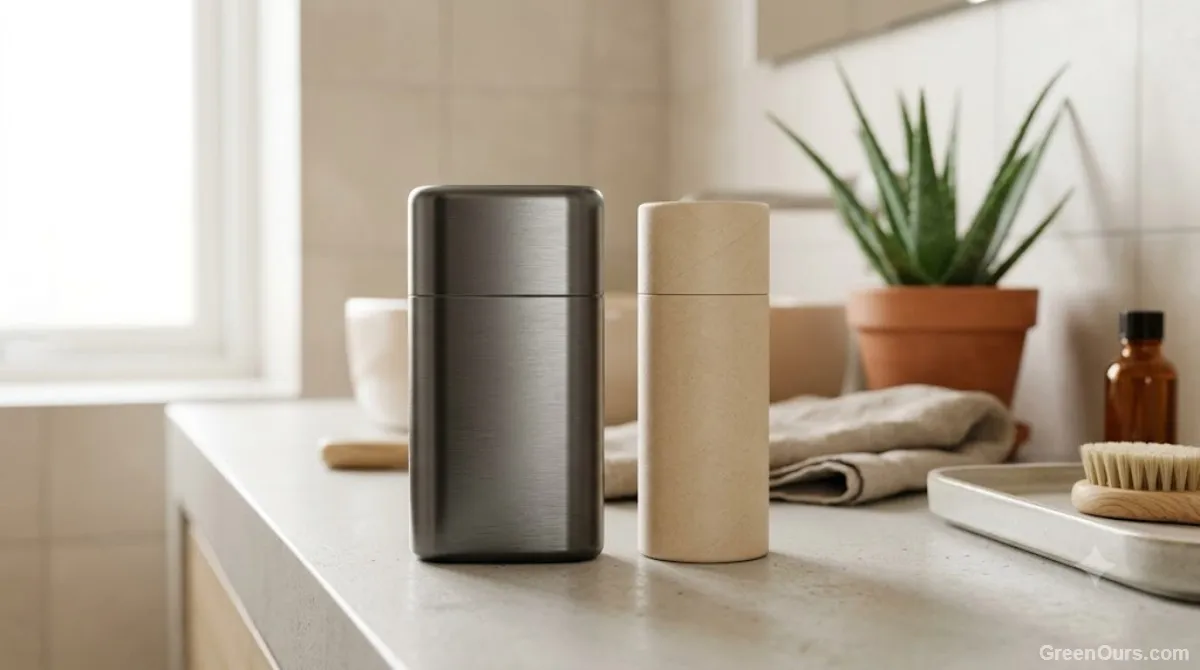
That's the pitch for refillable deodorant in a nutshell: you buy the outer case once, then replace only the inner refill — usually cardboard, sometimes a slim recycled plastic tube — when it runs out. The case is meant to last years, not weeks.
I did the math on my own bathroom drawer before I let myself feel smug about any of this. Between deodorant, razors, and travel-size everything, I was tossing out a small mountain of plastic every year without ever really looking at it as a pile. Seeing it that way, instead of one cartridge at a time, is what actually stuck with me.
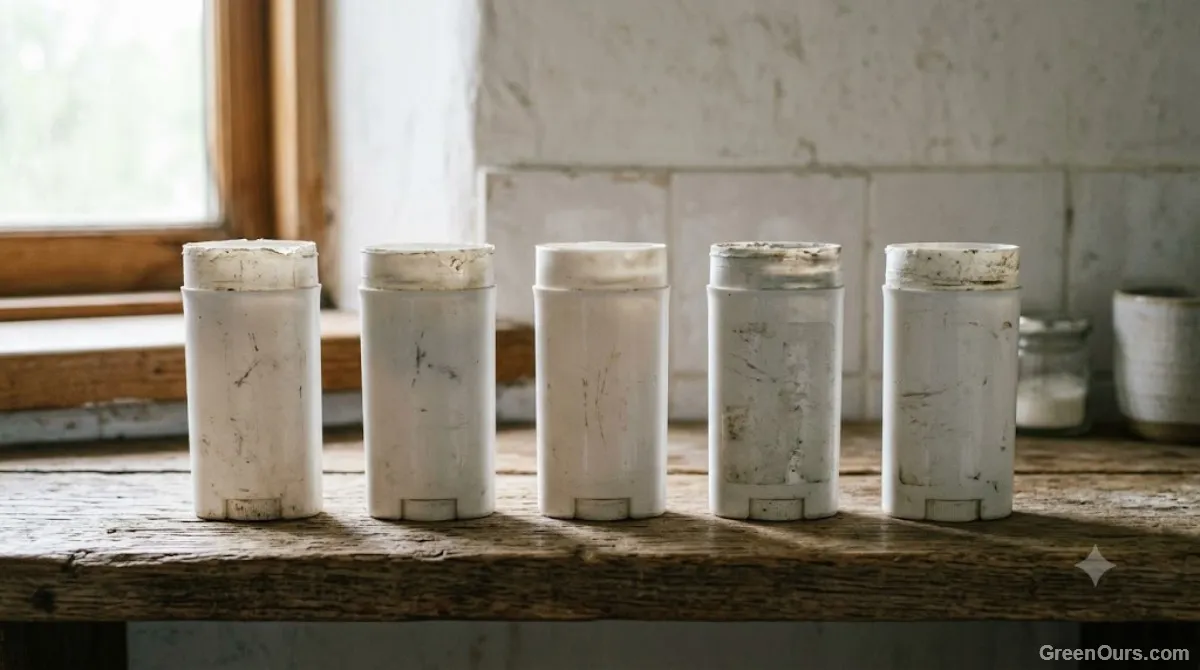
I also started keeping the empty cartridges instead of tossing them right away, just to see the shape of what I'd been buying. Lined up on the counter, they looked almost comically identical — same curve, same size, same locking tab — which made the whole switch feel less like a moral stance and more like swapping one container for a smarter one.
How the Refill Mechanism Actually Works
I was expecting something finicky. It isn't. Most systems use one of two designs: a twist-up mechanism where the refill clicks into a spring-loaded base, or a simple push-and-slide tube that drops into an open-backed case. Either way, you're looking at ten seconds of effort, not a repair job.
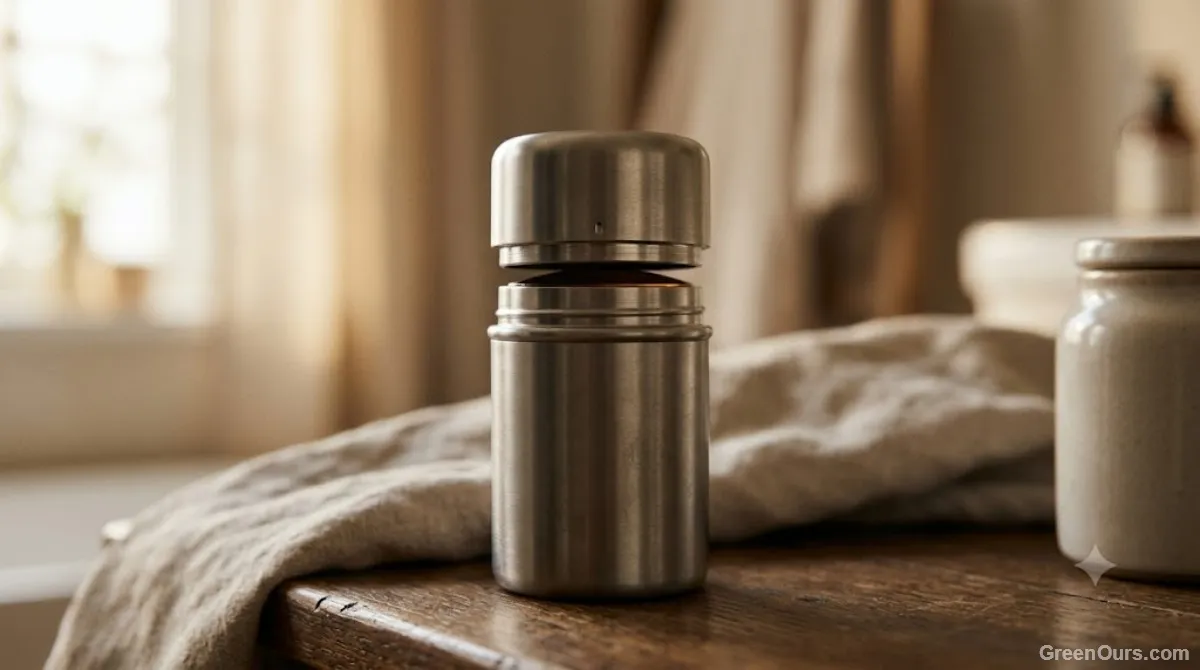
The case itself holds up better than I expected, too. Mine's aluminum, and a year of daily use has left it a little scuffed but structurally the same as the day it arrived. I wipe it out with a damp cloth between refills, mostly to clear out any residue, and that's the extent of the maintenance.
Formula and Skin Sensitivity
The formulas themselves vary by brand, same as conventional deodorant. Some lean into baking soda and can irritate sensitive skin; others use magnesium or a baking-soda-free base. If your skin has ever reacted to a natural deodorant before, that history matters more than the refill packaging does.
I patch-tested for about a week before committing, the same way I would with any new stick, natural or not. My skin's fairly reactive, so I wasn't taking that step for granted, and it paid off — no redness, no irritation, nothing beyond the usual adjustment period where any new formula needs a few days to settle in.
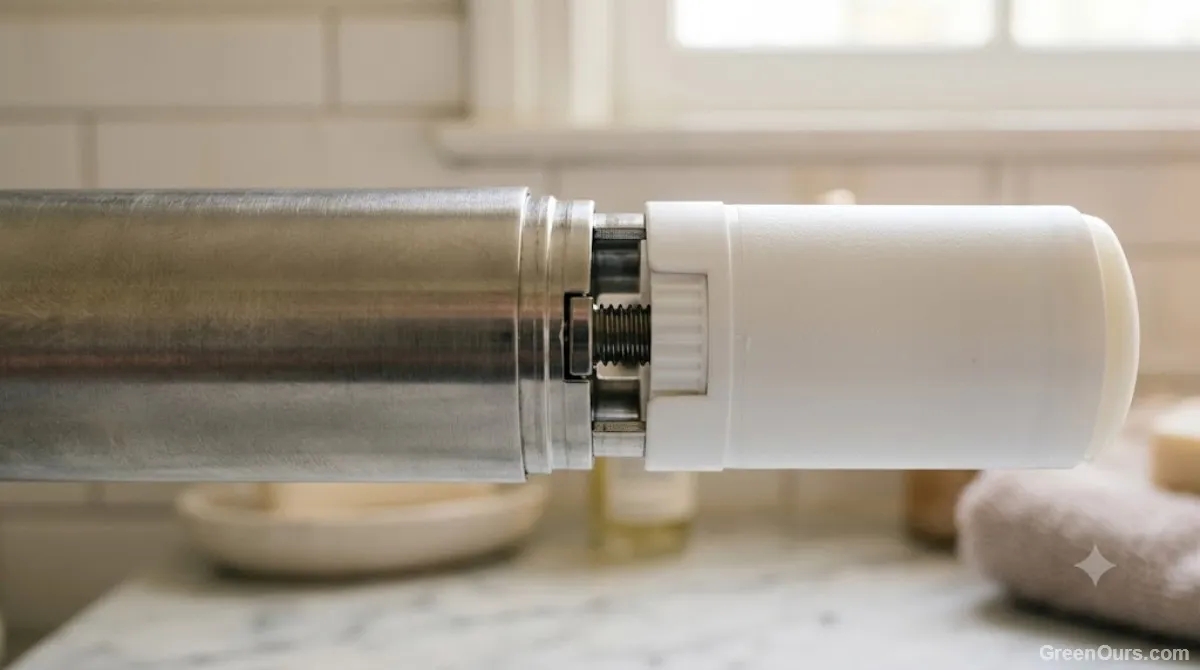
The one thing that trips people up isn't the swap itself — it's forgetting to order the next refill before the current one runs out. Set a reminder for when you're about two-thirds through a stick, not when it's empty.
Taking It on the Road: Travel Realities
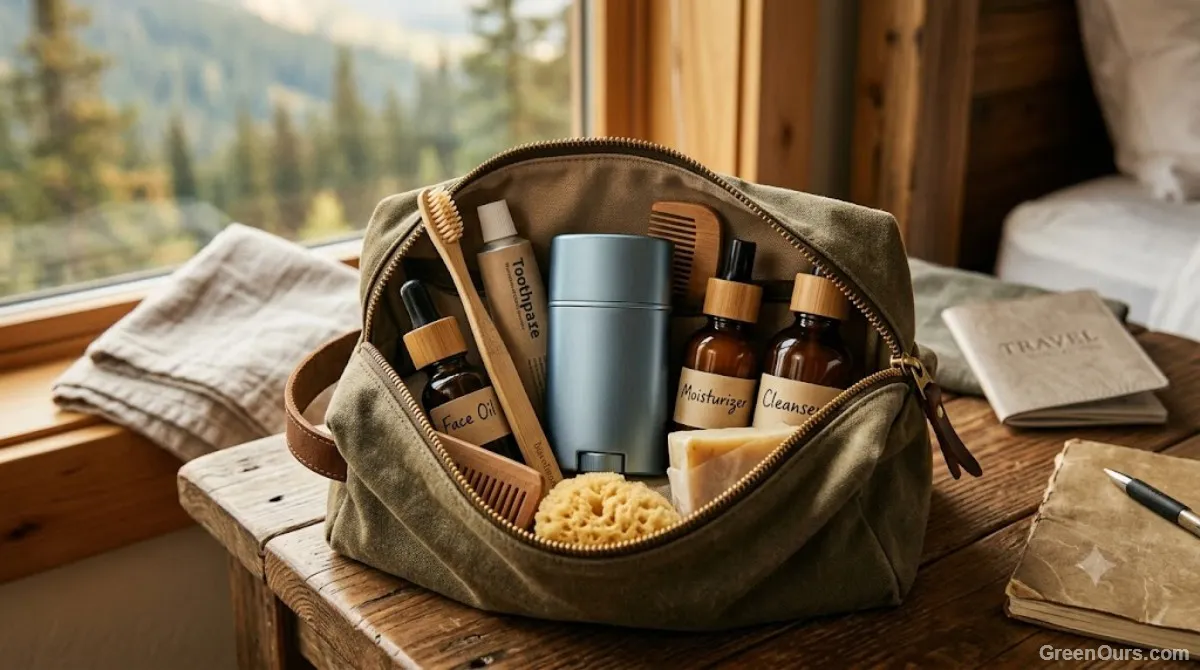
This is where I expected refillable deodorant to fall apart, and it mostly didn't. The metal cases are TSA-friendly and survive a packed toiletry bag better than I anticipated — no cracked plastic, no lid popping open in transit, which has happened to me with regular sticks more than once.
Hot climates are the one place I've noticed a real difference. On a trip through a humid summer, the baking-soda formula I was using softened more than my old stick ever did, to the point where I started keeping it in the shade of my bag instead of a sunny window ledge. That's a formula issue more than a case issue, but it changes how I'd pack for a beach trip.
Airport security has never blinked at it either, which surprised me the first time. It scans the same as any solid metal container would, and I've never been pulled aside or asked to open it separately from the rest of my bag. That's a small thing, but after years of half-empty liquid deodorant bottles getting confiscated at random checkpoints, it's a real point in its favor.
The one genuine downside: refills aren't sold everywhere. If you're traveling for weeks and run out mid-trip, you can't just grab a replacement at any pharmacy the way you could with a mainstream brand. I've learned to pack a spare refill rather than cut it close.
The Real Cost Math Over a Year
Here's the part most buying guides skip. The case itself is the expensive bit upfront — usually somewhere in the range of a nice dinner out. After that, refills tend to cost roughly the same per use as a mid-range conventional deodorant, sometimes a little more.
So the honest answer is: it doesn't save you money in year one. It starts paying off from year two onward, once the case cost is behind you and you're just buying refills. If you replace deodorant sticks often or switch brands frequently, that math looks different — you're paying for a case you might not stick with.
Breaking it down further, I went through roughly six refills over the year, which put my per-swap cost a little above what I used to spend on a drugstore stick but noticeably below what I was paying for the natural, plastic-packaged brand I'd switched to right before this one. The case itself is the only real gamble — if you abandon the system after a few months, you've effectively paid a premium for a couple of refills.
Some brands also offer a subscription option that shaves a little off each refill's price if you're willing to commit to a set delivery schedule. I skipped it at first because I didn't want to overcommit to a system I hadn't tested, but once I'd gone through two or three refills without wanting to quit, switching over made the math a bit more forgiving.
Where Refillable Deodorant Falls Short
I want to be straight about this instead of glossing over it. If you rely on antiperspirant for medical reasons, most refillable options are deodorant-only and won't do that job. If you like being able to buy whatever's on sale that week, a fixed refill system removes that flexibility. And if you move often or aren't great with routine, remembering to reorder refills can genuinely be a hassle.
There's also a scent-longevity difference worth naming honestly. Natural formulas in general tend to wear off a few hours earlier than the antiperspirant sticks most of us grew up on, and that held true here regardless of the refillable packaging. If all-day scent staying power matters more to you than the plastic question, that's a real trade-off, not a minor one.
There's also the simple fact that a metal case can get dented or scratched in a way a cheap plastic stick never really shows. Mine picked up a small dent after a fall from a shelf early on, and while it still works exactly the same, it was a reminder that this is a physical object you're now responsible for keeping track of, not something you toss and replace without a second thought.
My Honest Verdict
A year in, I'm still using mine, but I don't think it's a universal fix. It works because my routine is stable enough to plan around refill orders, and because I was tired of the plastic pile-up. If your routine is less predictable, or you need antiperspirant specifically, this particular swap probably isn't your first move — and that's fine. There are plenty of others.
The best swap is the one you'll still be using in six months.
What I keep coming back to, after putting this refillable deodorant review together, is this: the best sustainable swap isn't the one that looks best online, it's the one you'll actually keep using six months from now. For me, that turned out to be the little metal case sitting on my bathroom shelf. Your answer might be something else entirely, and that's not a failure — it's just how this works.