
Why My Junk Drawer Kept Winning
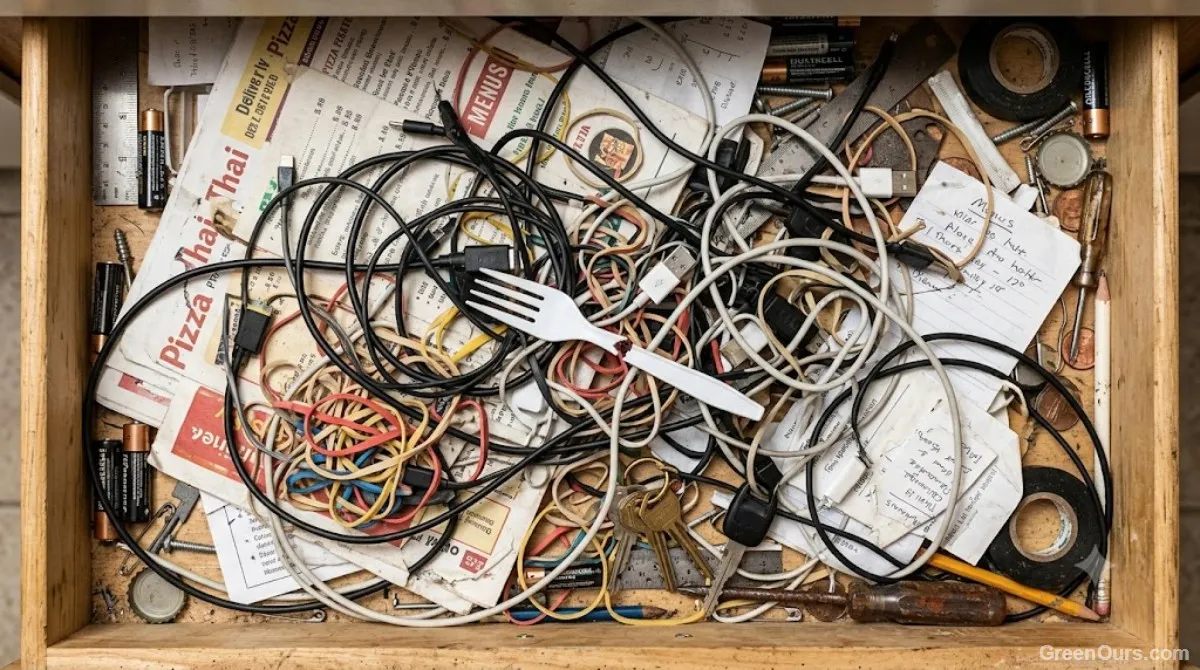
For years, my kitchen had a drawer that no longer closed properly. It held three bottle openers, a whisk with a bent handle, rubber bands from produce I'd eaten months earlier, and at least one gadget I couldn't identify. Every time I bought something new for the kitchen, it just went in on top. Nothing was ever bad enough to throw out, and nothing was ever good enough to actually use.
That drawer wasn't a storage failure. It was a decision I kept avoiding. Every item in there represented a moment where something new came in and nothing old went out, and over a few years, those tiny moments added up to a drawer that physically wouldn't shut.
The rule isn't really about tidiness. It's a built-in pause before a purchase becomes permanent clutter, which is where most household waste quietly starts.
What the One-In, One-Out Rule Actually Means
The premise is straightforward: before a new item earns a permanent spot in your home, an equivalent item has to leave. New shoes mean an old pair gets donated. A new coffee mug means one from the back of the cabinet goes to a thrift store or a friend who actually needs one. It's not about matching categories perfectly — a new book doesn't have to bump exactly one old book — it's about keeping the total volume roughly steady instead of climbing.
What makes this different from a big decluttering purge is the timing. Purges happen after clutter has already built up, usually on a weekend you'd rather spend doing something else. This rule works before that point, catching the accumulation as it happens instead of cleaning up after it.
Where This Habit Makes the Biggest Difference
Some categories in a home fill up faster than others, and this rule tends to matter most in a few predictable places.
Clothes
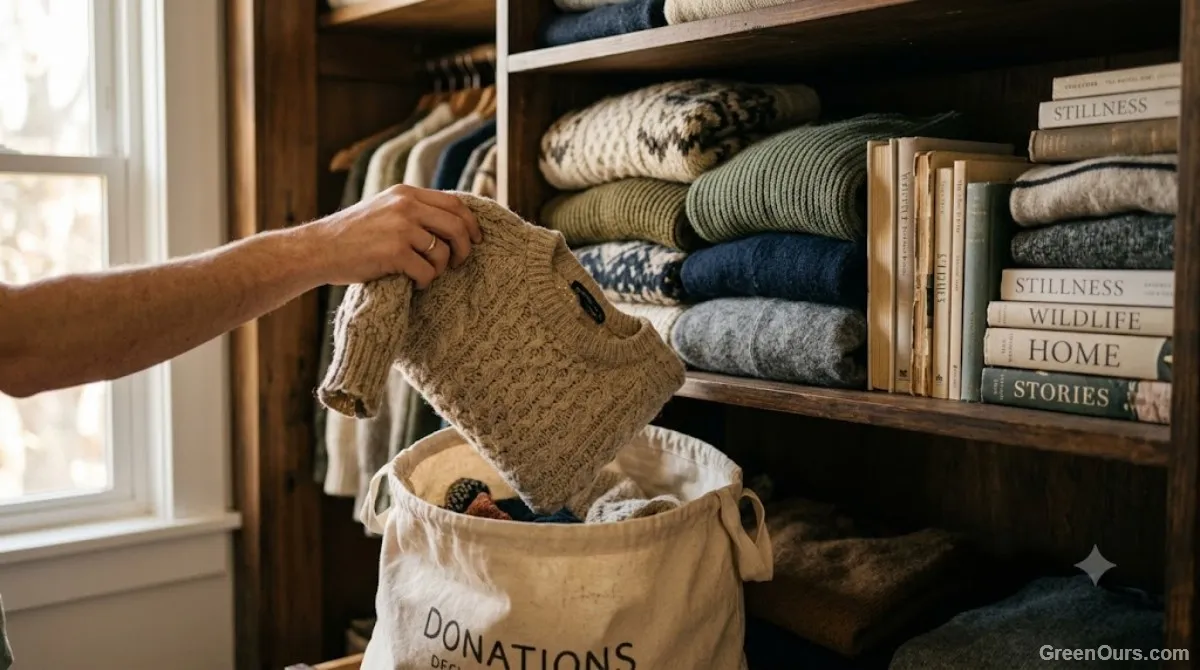
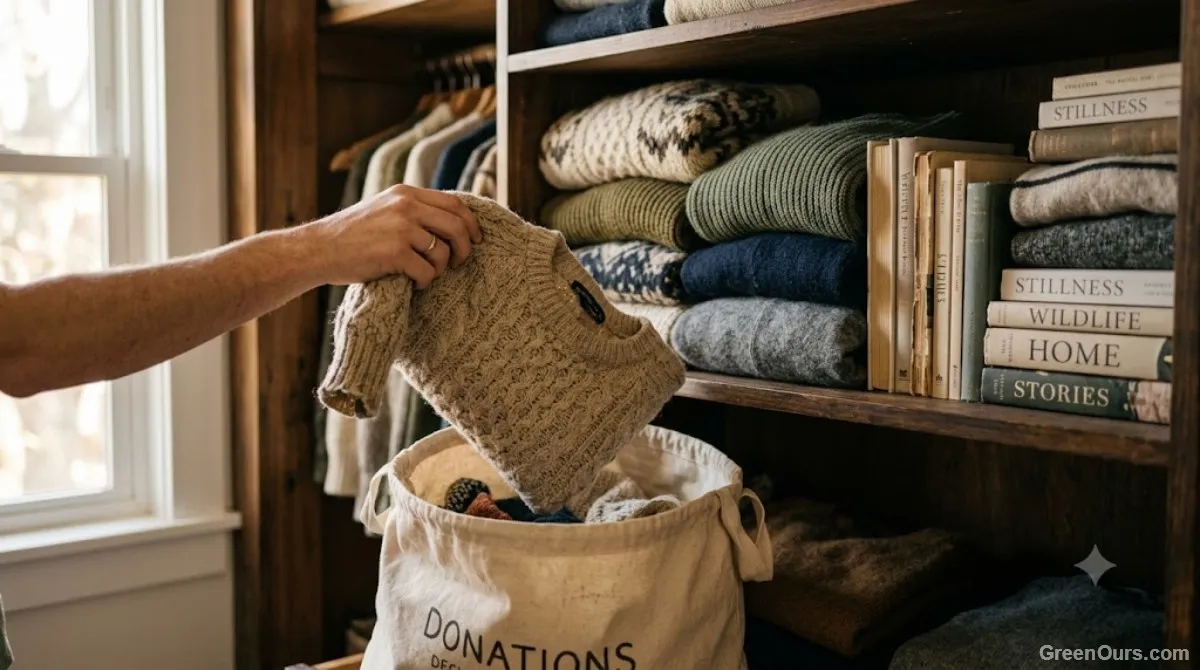
Clothing is the easiest place to start because most of us already know, deep down, which items we're not wearing. When a new shirt comes in, I make myself pull one out — not necessarily the newest or oldest, just the one I reach for least. It goes straight into a bag by the door so it doesn't quietly migrate back into rotation.
Kitchen Gadgets
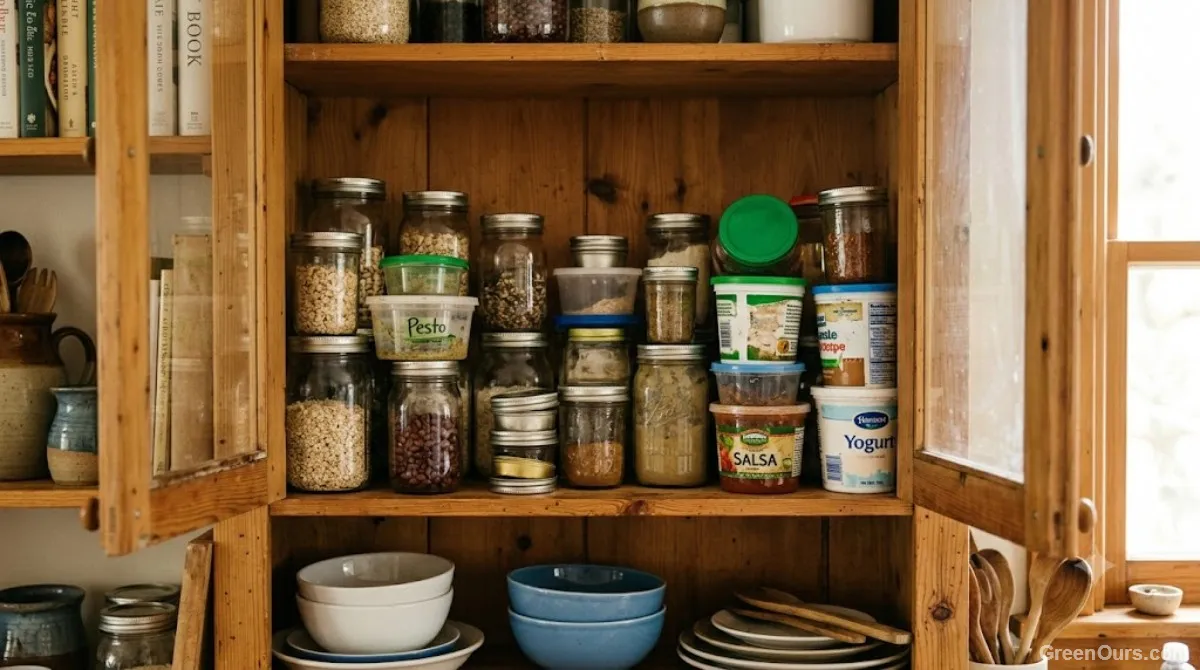
Kitchens accumulate single-purpose tools faster than almost any other room. An avocado slicer, a garlic press, a second set of measuring cups you bought because you couldn't find the first set. Before a new gadget earns a drawer spot, ask whether an existing one can retire, especially if it does something similar.
Kids' Toys and Paper Clutter
If you have kids, toys and school papers multiply on their own schedule, not yours. A rotating system works better here than a strict swap — every new toy in means an old one gets donated or passed along, reviewed together with your kid so it doesn't feel like things are disappearing behind their back.
How to Actually Start Without Overhauling Your Life
You don't need to apply this to every category in your house on day one. Pick the area that bothers you most — for me it was that kitchen drawer — and start there. When something new comes in for that category, pause before putting it away and ask what's coming out instead.
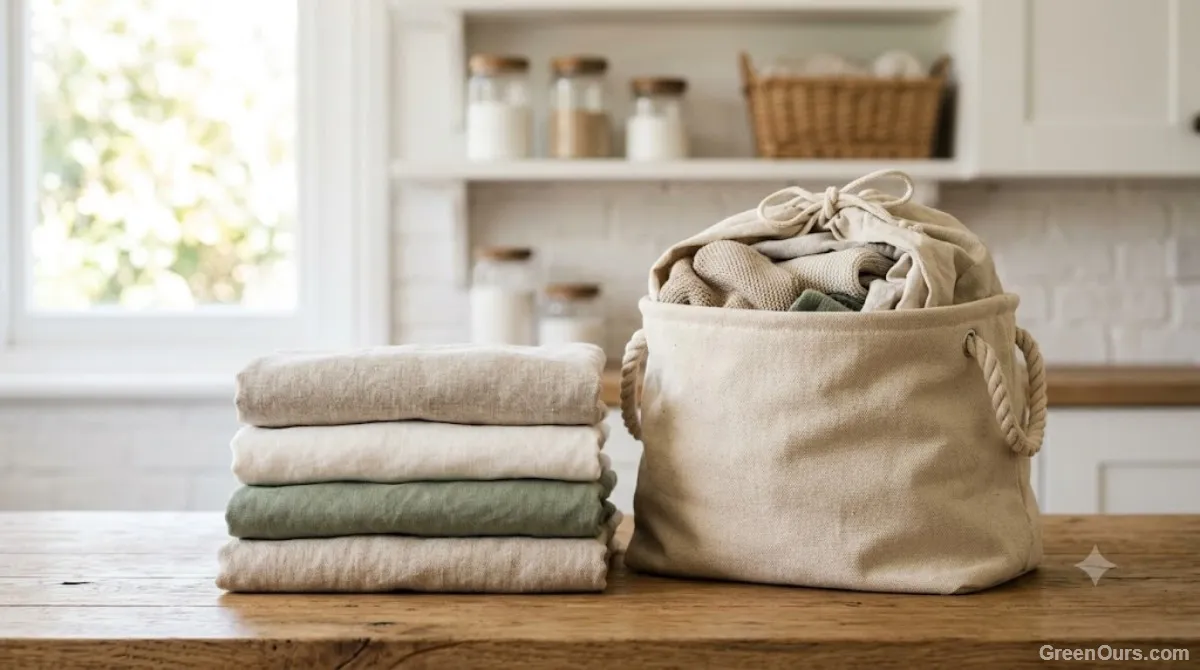
Keep a donation bag somewhere visible, not tucked away in a closet where it's easy to forget. The items you're removing need somewhere to go immediately, or they'll just relocate to a different pile in your house instead of actually leaving it.
The Exceptions Worth Making
This rule isn't meant to be applied with zero flexibility, and treating it like a strict law is a fast way to abandon it entirely. Consumable items like toothpaste or spice jars obviously don't need a one-out match. Genuine necessities — a replacement for something broken, a coat for a kid who's grown three inches — aren't really "new" purchases in the spirit of the rule, they're replacements.
The rule is most useful for discretionary stuff: things you want rather than things you need. If you're stopping to ask "what am I removing for this?" and the honest answer is "nothing, because I actually need it," that's a fine reason to skip the swap. The goal is awareness, not a rigid quota.
What Changes After a Few Months
The visible change is less stuff. The quieter change is that you start noticing the pause before a purchase even happens — standing in a store, half reaching for something, and thinking about what would have to leave your house to make room for it. A lot of the time, that's enough to put it back.
My kitchen drawer closes now. Not because I did one big overhaul, but because every new gadget since has had to justify bumping something else out, and most of them simply weren't worth the trade.
This isn't about running a perfectly minimal household or feeling guilty every time something new comes through the door. It's a small habit that quietly keeps the balance in check, one swap at a time, without asking you to change much else about how you live.
Want more low-effort ways to keep waste down at home?