
The Problem Isn't Reusing — It's the Free-for-All
Here's the thing about that drawer I mentioned: it wasn't a reuse system. It was just a place where I put things instead of deciding what to do with them. A takeout container, a candle jar that could hold pens, a strip of bubble wrap — none of it was bad on its own. But without any limits, "I might reuse this" became the excuse for keeping almost anything that wasn't actively garbage.
That's the trap. Reusing feels responsible, so it's easy to let it justify holding onto things you'll never actually touch again. The goal isn't to reuse everything you possibly can. It's to reuse the things you'll genuinely use, and let the rest go without the guilt spiral.
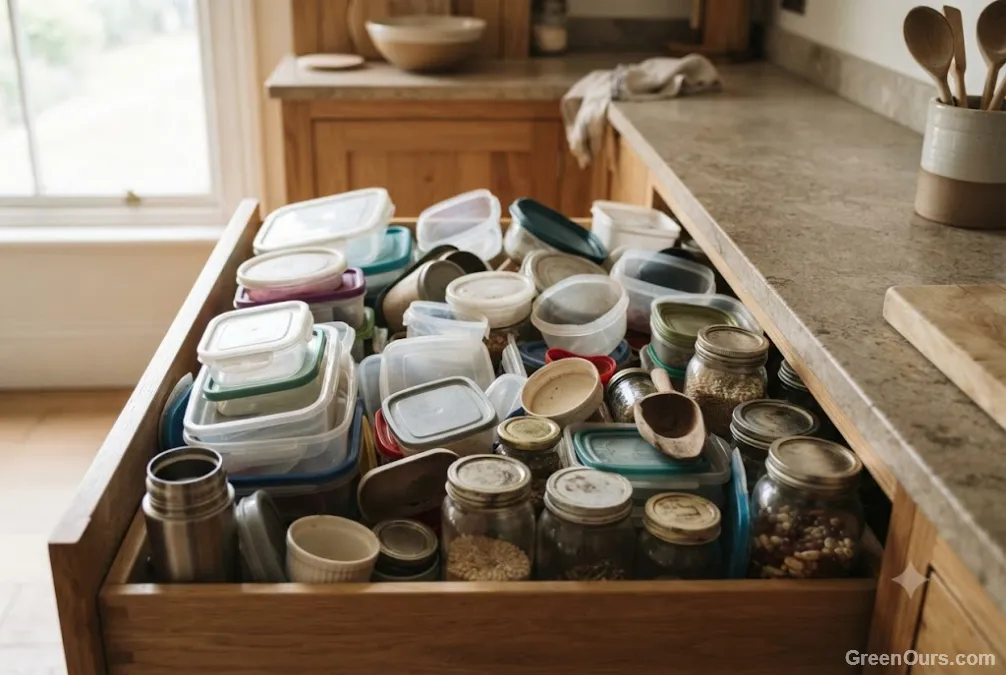
The mindset shift that fixed this for me: a reuse box isn't storage for "maybe." It's a short-term holding space for items you have an actual plan for. If there's no plan, it's not reuse — it's just delayed trash.
Setting Up Your Reuse Box (Without It Becoming Another Junk Drawer)
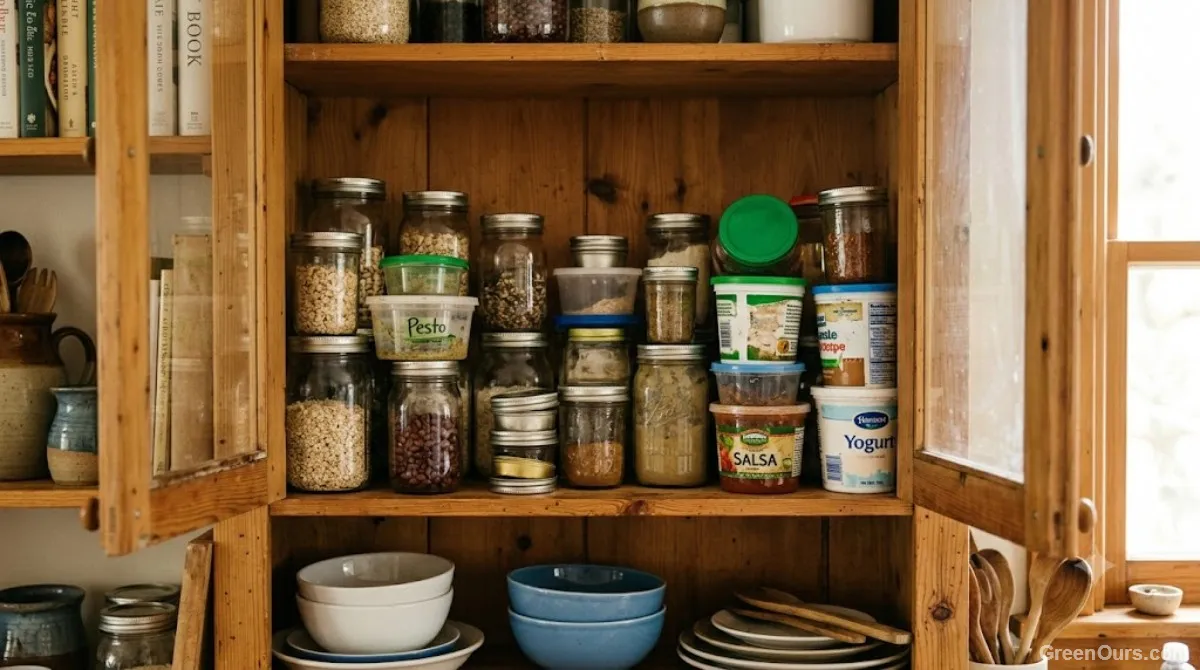
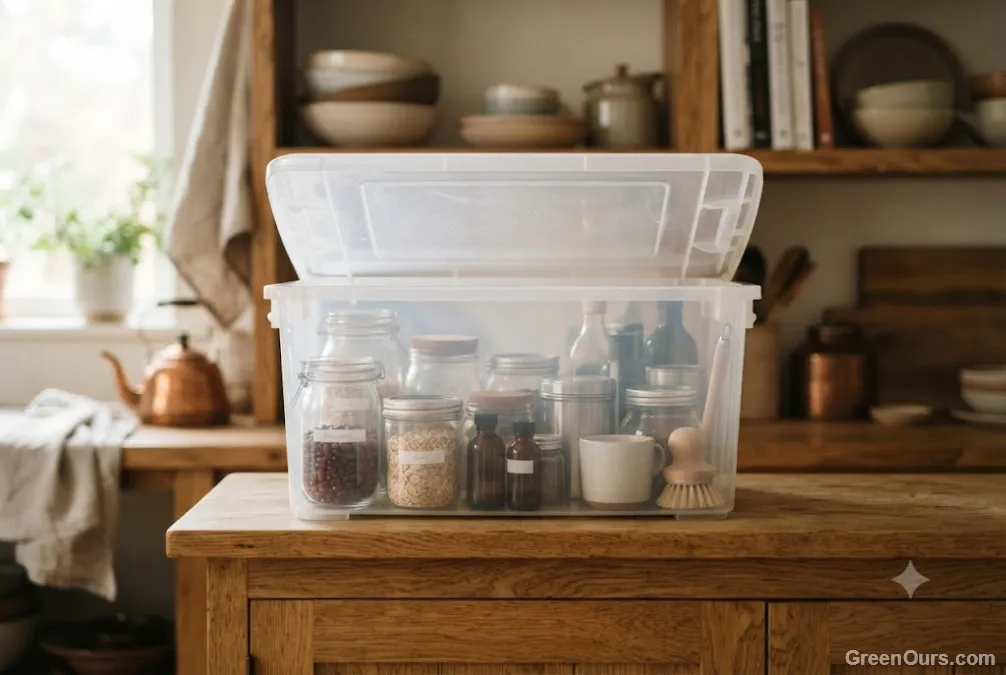
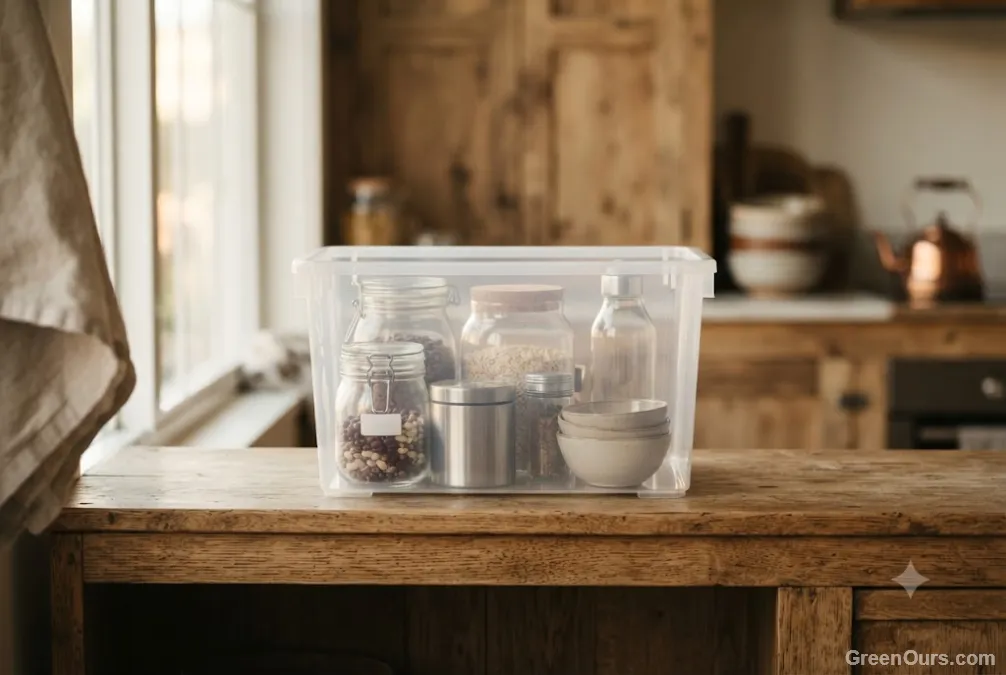
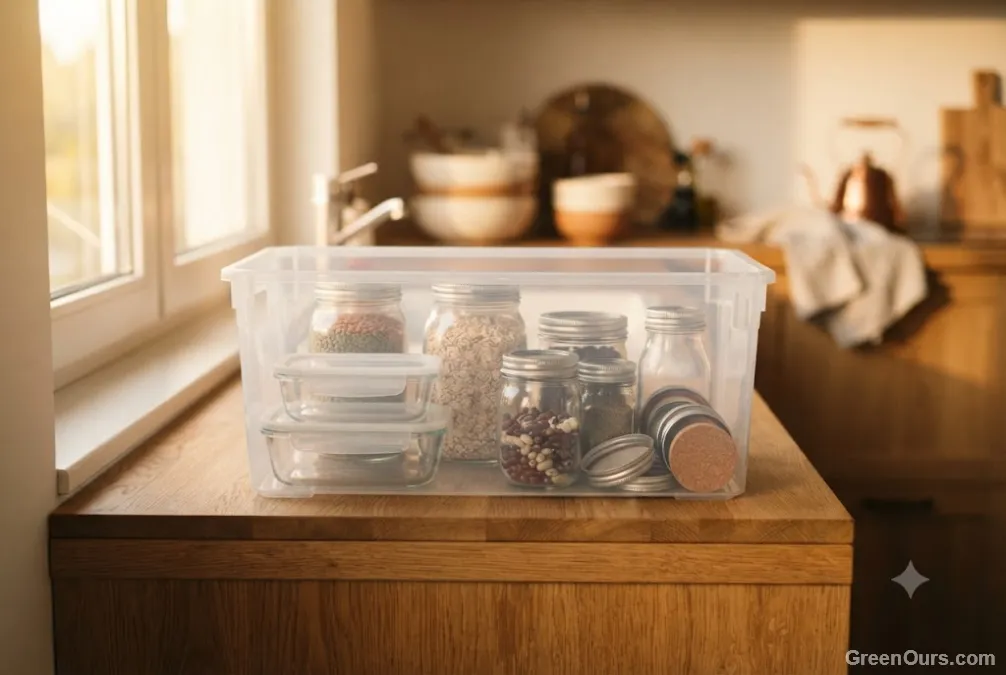
Start with one container, not a shelf, not a corner of the garage — one clearly defined box or bin. Mine is a shoebox-sized clear tote that lives in a kitchen cabinet. The size is the whole point: when it's full, you stop putting things in until something comes back out. No box swapping. No "just this once" overflow bag sitting next to it.
Label it if that helps you stay honest, but the real rule is simpler than any label: everything in the box has to physically fit. If a jar doesn't fit, it doesn't go in — end of discussion. That one constraint does more to control clutter than any decluttering philosophy I've tried, mostly because it doesn't require willpower, just measuring tape.
The Three Questions That Decide What Stays
Every item earns its spot with three quick questions. If it fails any one of them, it's out — into recycling, donation, or the trash, whichever actually fits.
Will I Use This in the Next Three Months?
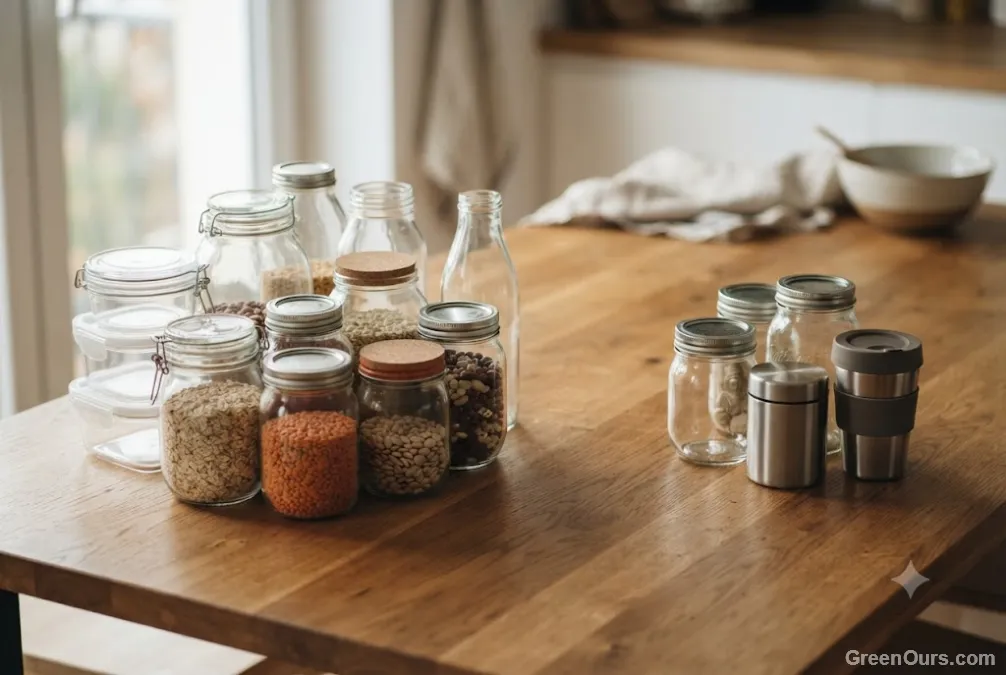
Not "someday." Three months. If you can't picture the specific use — a jar for the bulk flour you buy every other week, a container for the soup you make on Sundays — it's not earning its space. Vague future usefulness is how drawers turn into landfills with extra steps.
Do I Already Have Three of These?
Three is my personal ceiling for any single category — glass jars, takeout containers, tote bags, whatever it is. Past that number, a new one doesn't get to stay just because it's structurally sound. You already have enough, and more of them usually just means you use fewer of them properly.
Would I Actually Buy This If I Saw It in a Store?
This one's blunt, and that's exactly why it works. If you wouldn't spend two dollars on this exact item in a store, it's probably not actually useful to you — it's just familiar. Familiarity isn't the same thing as value, even though it feels like it in the moment.
What to Do With the Overflow
Here's the part nobody wants to hear: the overflow doesn't need a second box. If something fails all three questions, it goes to one of three places immediately — recycling if it qualifies, a donation bag by the door if it's still good, or the trash if it's genuinely spent. Don't let "I'll decide later" become its own category. That's exactly how the first drawer happened in the first place.
If you're staring at a lot of overflow all at once, don't panic-purge the whole thing in one afternoon. Process it by category over a few days — jars one day, bags the next, odd containers after that — so you're actually applying the questions instead of just shuffling everything back to where it came from.
The One Rule That Keeps It From Taking Over
The box stays contained because of a single non-negotiable: something has to leave before something new comes in, once it's full. Not weekly. Not eventually. At the moment it would overflow. This is the rule that separates a working system from good intentions that quietly turned into clutter again.
It sounds almost too simple, but simple is what makes it stick. Complicated systems get abandoned by week three. A box with one hard limit just keeps working, month after month, without asking much of you at all.
I still keep that clear tote in the cabinet, and it's the only reuse system that's ever survived longer than a season for me. Not because I got more disciplined, but because the box did the deciding for me. Give yours one container, one hard limit, and three honest questions, and you'll be surprised how little it actually takes to stop things from piling up again.
More ways to cut clutter and waste at home:
One-In-One-Out Rule for Decluttering