
The Problem With Buying Your Way to Zero Waste
There's a particular kind of irony in ordering a bundle of eco-cleaning products wrapped in cardboard and bubble wrap, shipped from a warehouse, to replace products you already own and haven't finished yet. It feels green. It often isn't.
The lifecycle of any product — even a "sustainable" one — starts long before it reaches your door. Manufacturing, packaging, and transport all carry a footprint. So the question isn't really "is this product eco-friendly?" It's "do I actually need this at all?"
For most people, the honest answer is no. Not yet, anyway. The low-waste cleaning routine doesn't begin with a shopping list. It begins with an audit of what you've got.
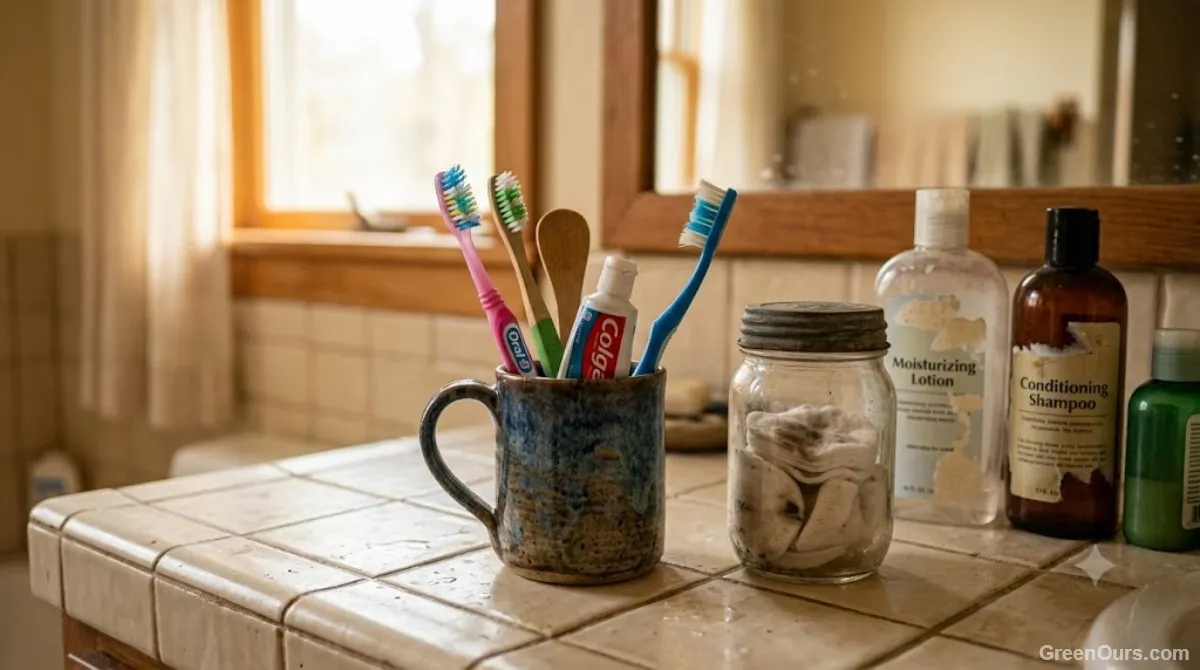
Before buying anything new — even something sustainably made — use up what you already own. Pouring away half-empty cleaning products to replace them with greener alternatives wastes both the product and the energy that went into making it.
What You Already Own (And How to Use It)
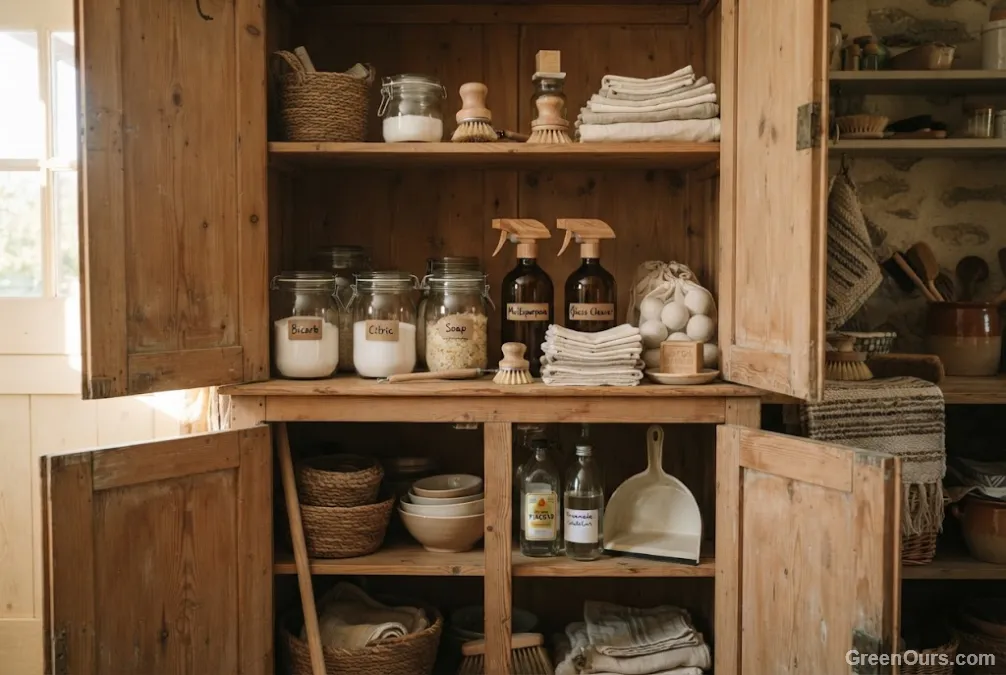
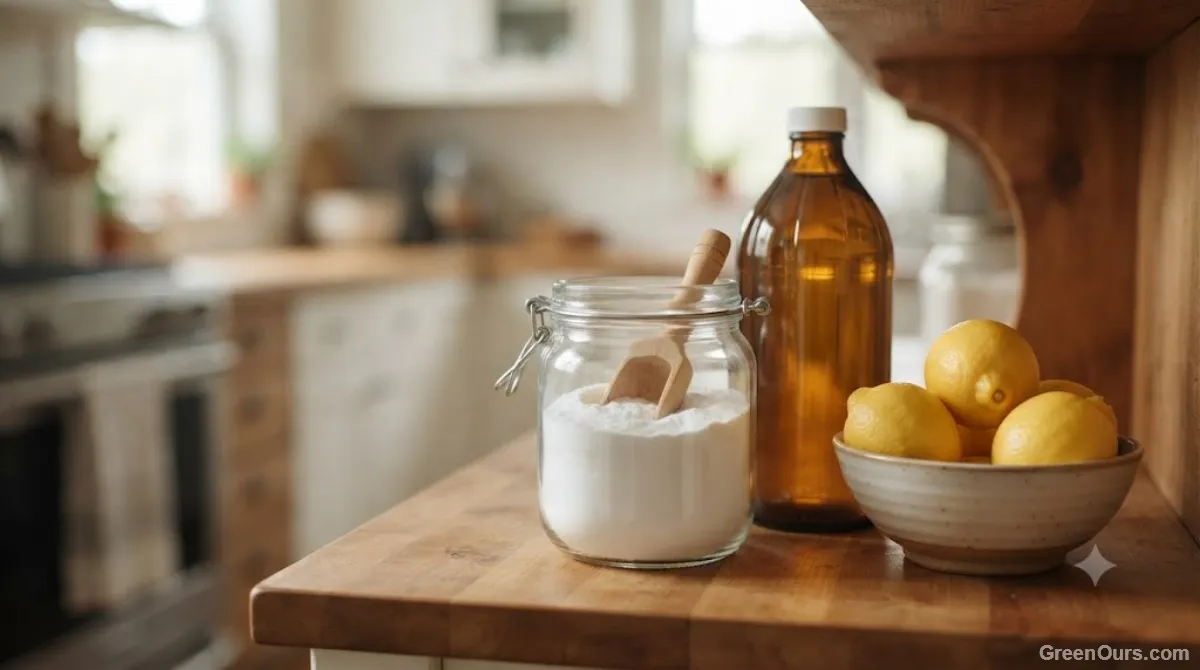
White vinegar and bicarbonate of soda are the workhorses of DIY cleaning, and there's a decent chance you own both right now. White vinegar is a mild acid — it cuts through limescale, neutralises odours, and leaves glass streak-free. Bicarbonate of soda is a gentle abrasive and deodoriser. Together, they cover a surprising amount of cleaning ground.
Lemons, if you have them going soft in the fruit bowl, are useful for cutting grease and brightening surfaces. Washing-up liquid diluted in water handles most everyday spray jobs. Castile soap, if you happen to own it, is versatile enough to replace several different products.
The point isn't to memorise a list of magic ingredients. It's to recognise that cleaning a home doesn't require a different specialist product for every surface. Most surfaces respond just fine to warm water, a small amount of soap, and a clean cloth. Everything else is largely marketing.
Making Your Own Cleaning Solutions
DIY cleaning solutions get a reputation for being fiddly or unreliable, and that reputation is mostly undeserved. The recipes that actually work are short, cheap, and made from things that don't expire.
All-Purpose Surface Spray
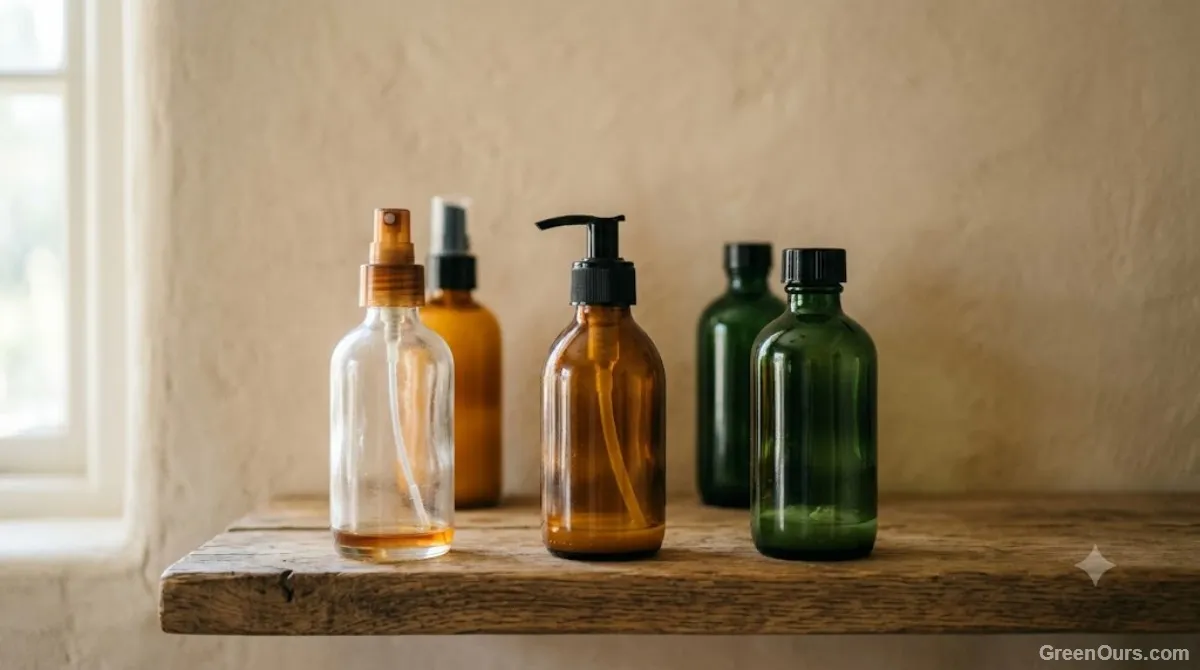
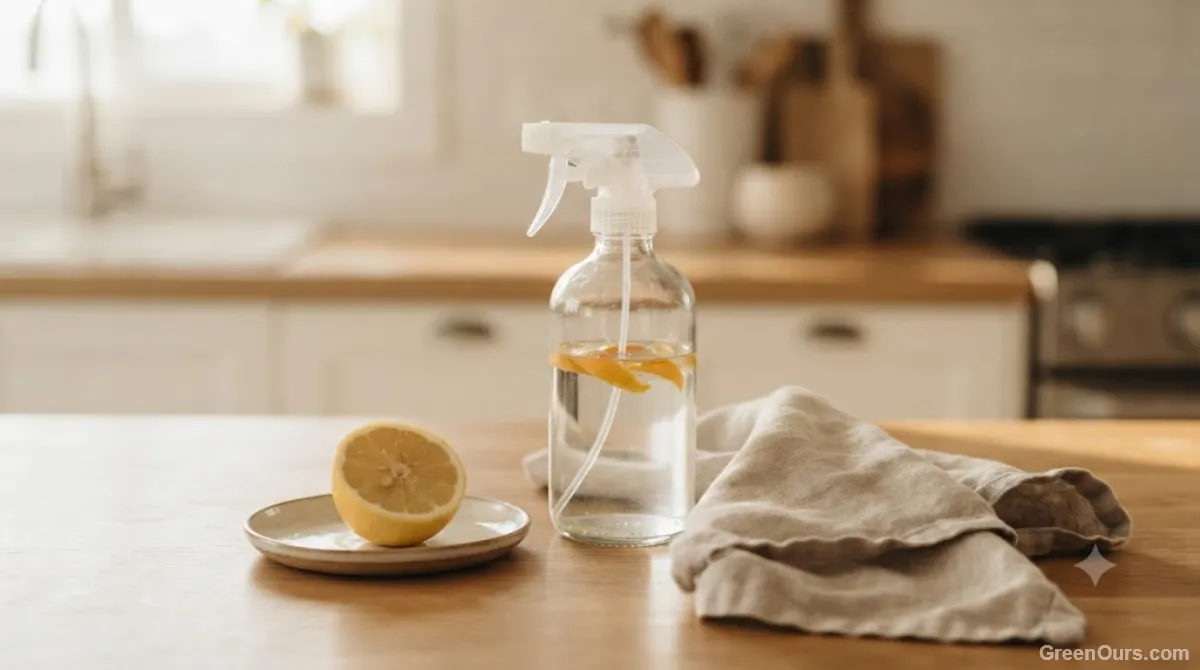
Fill a reused spray bottle with equal parts white vinegar and water. That's it. Use it on kitchen counters, hob surrounds, bathroom tiles, mirrors, and windows. If the vinegar smell bothers you, add a few drops of essential oil — but it dissipates quickly on its own once the surface dries. Avoid using it on natural stone surfaces like marble or granite, where the acidity can cause damage over time.
Gentle Scrub for Sinks and Tubs
Sprinkle bicarbonate of soda directly onto the wet surface, then scrub with a damp cloth. It lifts soap scum and light staining without scratching. For stubborn limescale around taps, soak a cloth in undiluted white vinegar, wrap it around the affected area, and leave it for twenty minutes before wiping off.
Everyday Floor Cleaner
A few drops of washing-up liquid in a bucket of warm water cleans most hard floors effectively. For wooden floors, wring the mop out well — wood and excess water are not friends.
Drain Freshener
Pour a tablespoon of bicarbonate of soda down the drain, follow with white vinegar, wait for the fizzing to stop, then flush with hot water. It doesn't unblock a serious clog, but it does keep drains smelling fresher and helps with slow drainage caused by grease build-up.

Rethinking Your Cleaning Tools
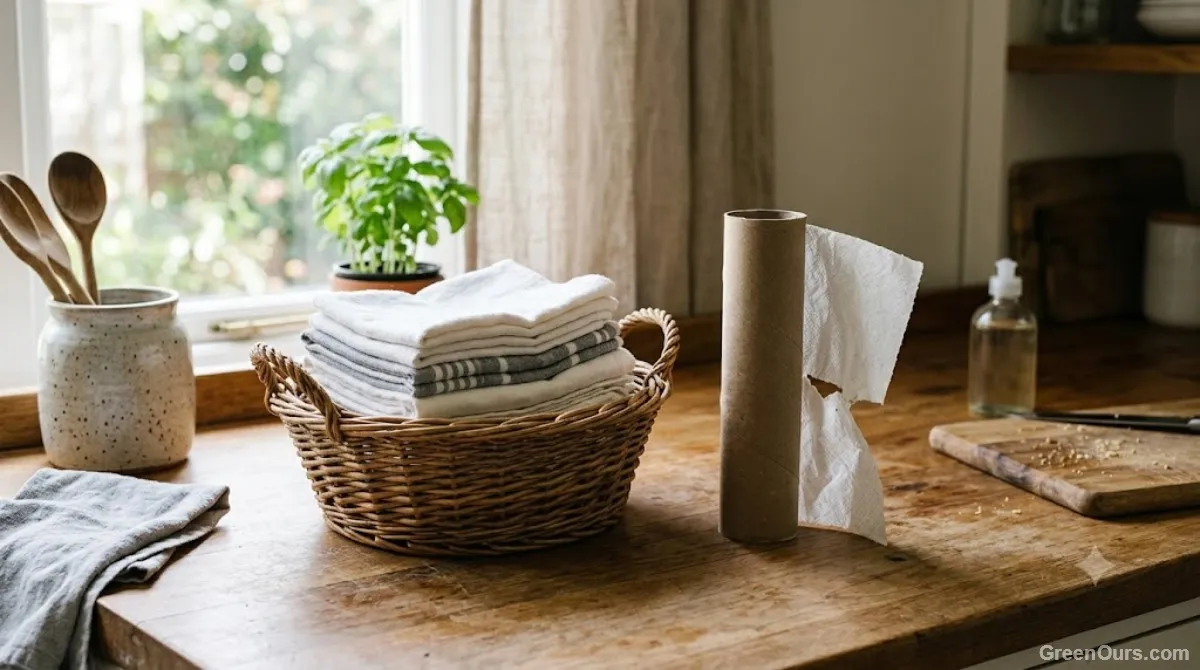
Single-use paper towels and disposable cleaning wipes are genuinely one of the easier things to cut from a cleaning routine, because the alternative — a cloth — is almost certainly already in your home in some form.
Repurpose Before You Replace
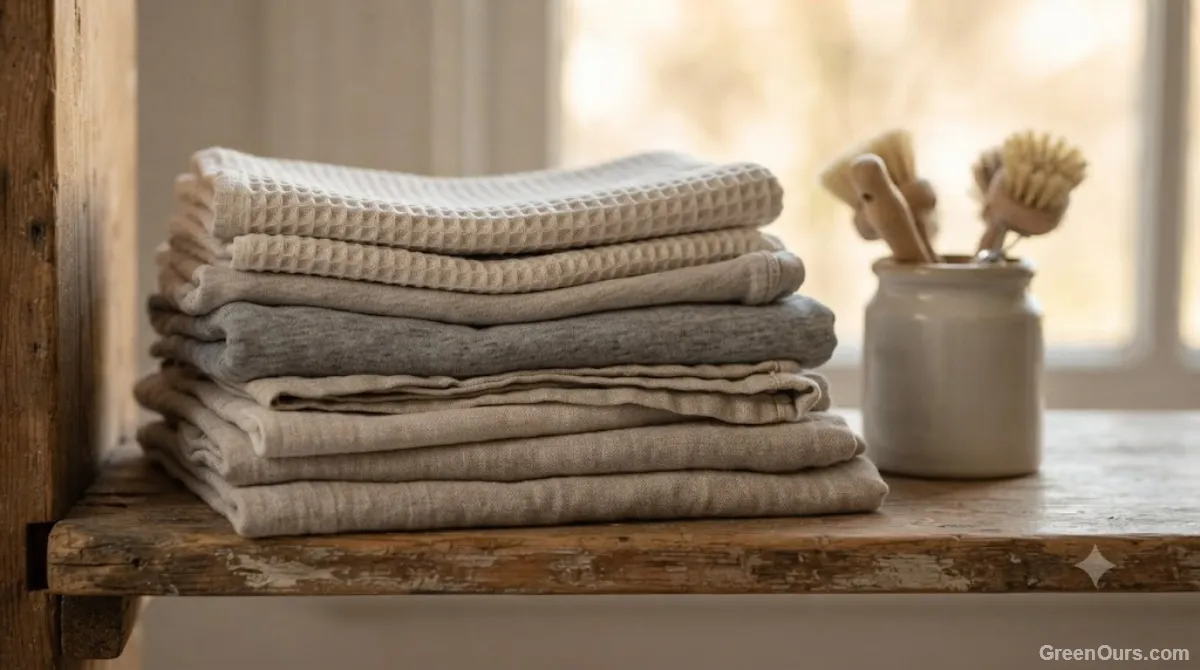
Old cotton t-shirts cut into squares make excellent general-purpose cloths. Worn-out towels work well for floors and bathrooms. Mismatched socks with holes in them are weirdly good for dusting. None of this requires buying anything. It requires looking at what was going in the bin and redirecting it.
If you do eventually want to invest in purpose-made reusable cloths, wait until you've used up your existing disposables and genuinely need something new. Swedish dishcloths, unpaper towels, and microfibre cloths are all solid options — but they're not urgent, and they're not free.
Washing Your Cleaning Cloths
The most common concern with switching to cloth is hygiene — specifically, the worry that you're just spreading bacteria around. In practice, the solution is straightforward: keep cloths for different tasks (a colour-coding system helps), rinse them after use, and wash them at 60°C regularly. A hot machine wash kills the bacteria that matter. You don't need antimicrobial products or special sanitising sprays.
The Routine Itself: Keeping It Simple
A low-waste cleaning routine works best when it's boring. Not in a bad way — in the way that means you'll actually do it without thinking too hard.
The principle that helps most people is cleaning little and often rather than doing one big weekly session. Wiping down the kitchen counter after cooking takes thirty seconds and prevents the kind of build-up that requires serious scrubbing. Running a damp cloth around the bathroom sink every couple of days means you rarely need to deep-clean it at all.
This matters for waste reduction because the less grime you're dealing with, the less product you need. Heavy cleaning jobs tend to involve more solution, more disposable tools, more effort. Light, regular maintenance keeps things manageable with a spray bottle and a cloth.
Room by Room
In the kitchen, the vinegar spray covers surfaces, the bicarb handles the sink, and washing-up liquid handles anything greasy. A damp cloth does the hob after every use. In the bathroom, bicarb on a cloth cleans the basin and tiles; the vinegar spray handles the mirror and any limescale around taps. In the rest of the house, dusting with a damp or slightly damp cloth traps dust rather than redistributing it, and a basic floor wash once a week covers most hard floors.
That's genuinely most of it. No product for every surface. No specialist sprays. Just a few reusable tools and two or three solutions that cover everything.
What to Do When You Run Out of Something
Here's where the transition to a genuinely lower-waste routine actually happens: when you use up an existing product and decide what replaces it.
If you've been getting on fine without a specialist bathroom spray because the vinegar solution is doing the job, you probably don't need to replace it at all. If you've been reaching for paper towels out of habit but your cloth collection is handling things fine, paper towels drop off the shopping list. The routine essentially edits itself as you go.
When you do need to replace something — washing-up liquid, for instance, or a new scrubbing brush — that's the moment to make a considered swap. A concentrated refillable washing-up liquid, a wooden brush with replaceable heads, a bar of castile soap. Small decisions made at the right moment, rather than a wholesale overhaul you didn't need.
Use what you have. Replace things only when they're actually gone.
The cleaning cupboard doesn't need to be emptied and restocked to become more sustainable. It just needs to be used thoughtfully, refilled slowly, and slowly simplified. Most people who stick with a low-waste cleaning routine do so because it turned out to be cheaper and easier than what they were doing before — which, honestly, is a much better reason to keep going than guilt.