

Why the Motivation Always Fades by Day Eight
There's a reason the first week of any new habit feels easier than the second. Novelty does a lot of heavy lifting early on. Starting something new activates a kind of built-in enthusiasm — you're paying close attention, you're proud of yourself, and every small win feels significant. But that enthusiasm was never designed to last. It's a launch mechanism, not a fuel source.
Once the habit stops being new, your brain stops rewarding you for it the same way. Composting your vegetable scraps goes from feeling like a small act of rebellion against waste to just another thing you're supposed to remember before the bin goes out. That's not you failing. That's just what happens once a behavior graduates from exciting to ordinary — which, honestly, is where it needs to go if it's going to survive long term.
The Difference Between Discipline and Novelty
Here's a distinction that took me embarrassingly long to figure out: discipline and novelty feel almost identical from the inside during week one. Both give you energy to act. But novelty runs out, and discipline has to be built — usually by lowering the bar so far that skipping the habit feels more annoying than doing it.
I used to think the goal was to recreate that initial excitement over and over. Buy a new eco-product, start a new challenge, find a new reason to care. That works for about four days before it collapses into the same fatigue. The habits that actually stuck for me were the boring ones — the ones that stopped needing me to feel anything about them at all.
Motivation isn't something you need before a habit sticks — it's usually a byproduct of one that already has. Waiting to feel inspired before you act on a sustainable habit has it backwards.
Building a Habit That Doesn't Rely on Feeling Inspired
If motivation is unreliable, the fix isn't finding more of it. It's designing habits that don't need it in the first place.
Anchor New Habits to Existing Routines
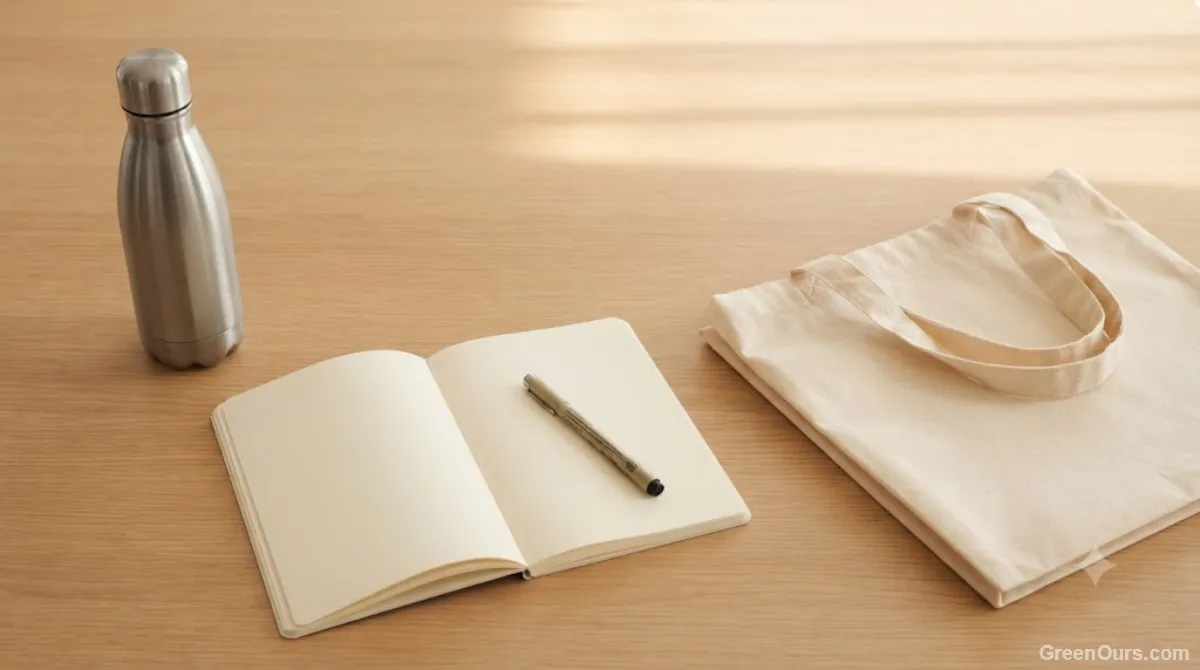
The habits that survived for me were the ones I stapled onto something I was already doing without thinking. Rinsing containers for recycling happens right after I load the dishwasher, not as its own separate task I have to remember. Refilling my water bottle happens the second I walk past the kitchen tap, not on some imagined schedule. When a habit rides on the back of an existing routine, it stops depending on your memory or your mood.
Make the First Step Absurdly Small
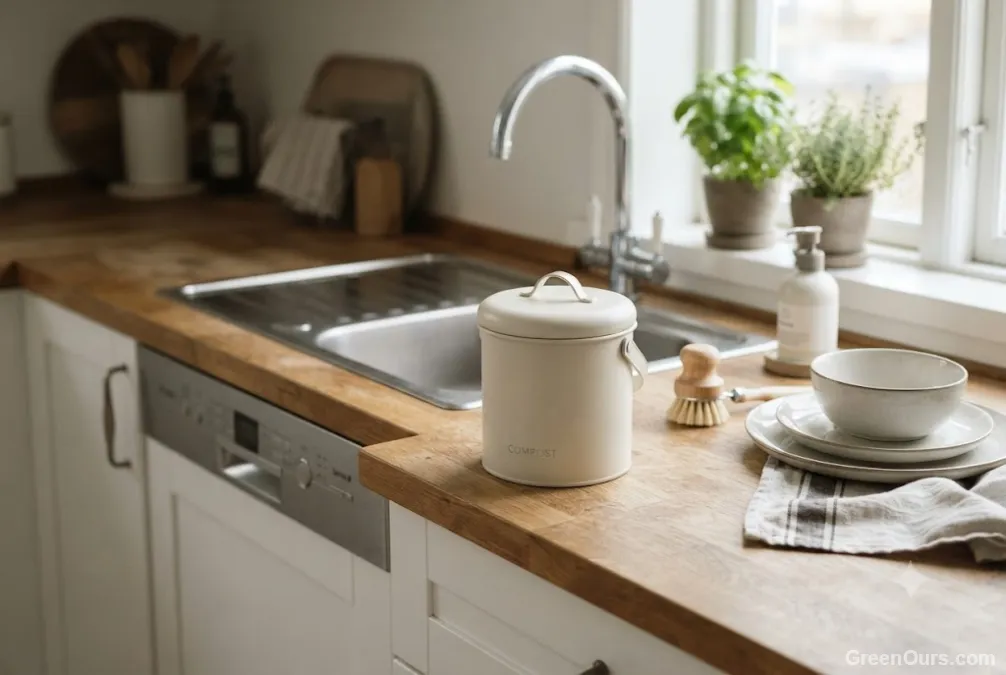
When a habit stalls out, it's usually because the version you're picturing is too big. "Compost everything" is a project. "Put the scraps in the caddy" is a five-second action. Shrink the habit down until skipping it feels genuinely silly, not just inconvenient.
What to Do When You Skip a Day (or a Week)
You will skip days. I skip days constantly — the compost caddy has absolutely sat forgotten on the counter for four days while I pretended not to notice it. The habit doesn't die because you missed a day. It dies because missing one day turns into a story you tell yourself about how you're just not a sustainable-living kind of person.
The actual fix is almost anticlimactic: you just start again, without the guilt tour. No re-commitment ceremony, no buying new supplies to feel motivated again, no treating the missed days as evidence of failure. You empty the caddy. You move on.
Tracking Progress Without Turning It Into a Guilt Trip
I'm generally skeptical of habit trackers, mostly because I've abandoned every single one I've started. But there's a version that works: track what you actually did, not what you think you should have done. A rough tally of "composted most days this month" tells you something useful. A perfect unbroken streak chart mostly just gives you something new to feel bad about breaking.
Progress in sustainable living is lumpy. Some weeks you'll nail every habit. Other weeks you'll remember your reusable bags and completely forget you own a compost bin. Both weeks count.
If You Only Do One Thing This Month
Pick the single habit that's closest to already sticking and let the rest wait. Not because the others don't matter, but because trying to hold five new habits together at once is exactly how all five collapse. One habit that survives is worth more than five that quietly disappear by the second week.
More ways to reduce waste at home.
The version of sustainable living that lasts isn't the one powered by enthusiasm. It's the quieter one — a little forgetful, occasionally inconsistent, but still standing long after the excitement of week one has worn off. That's not a lesser version of caring about this stuff. It's just the one that's still around in month six.