
Why Room-by-Room Beats the Whole-House Overhaul
Most eco-friendly home guides treat your house like a single project with a single finish line. That's part of why they fail. Your kitchen habits, your bathroom habits, and your laundry habits have almost nothing to do with each other, so trying to fix them all at once just means you're bad at five different things simultaneously instead of good at one.
Breaking it down by room does something quieter but more useful: it turns an abstract goal like "live more sustainably" into a specific, finishable task. You're not trying to become a different kind of person. You're just deciding what happens in your kitchen this month.
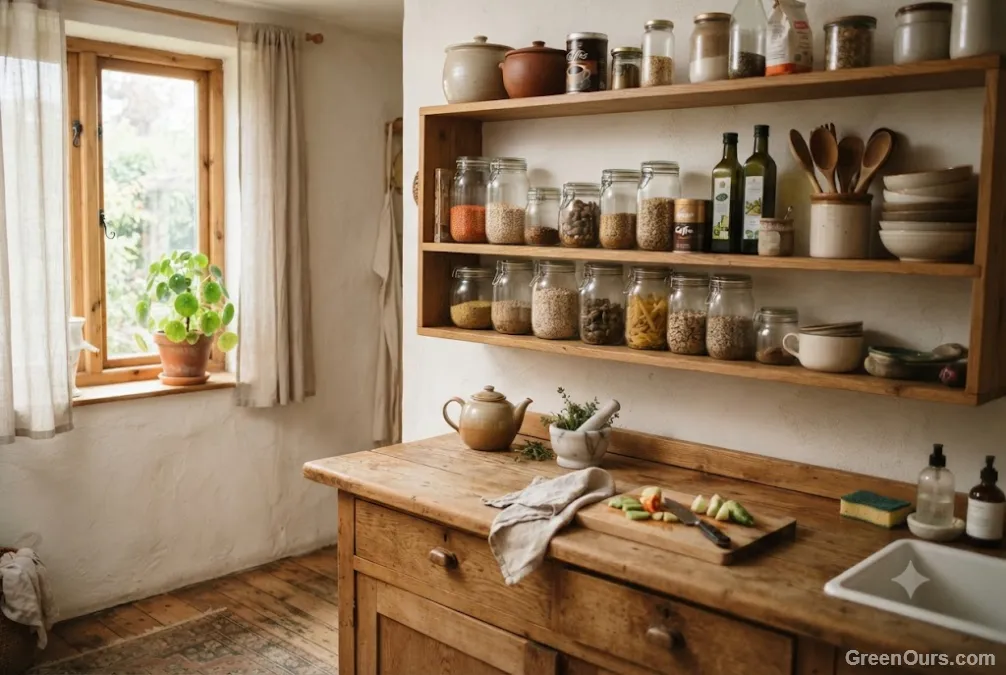
Pick one room and give yourself a full month there before moving to the next. Momentum, not speed, is what makes this stick.
Start With Habits, Not a Shopping List
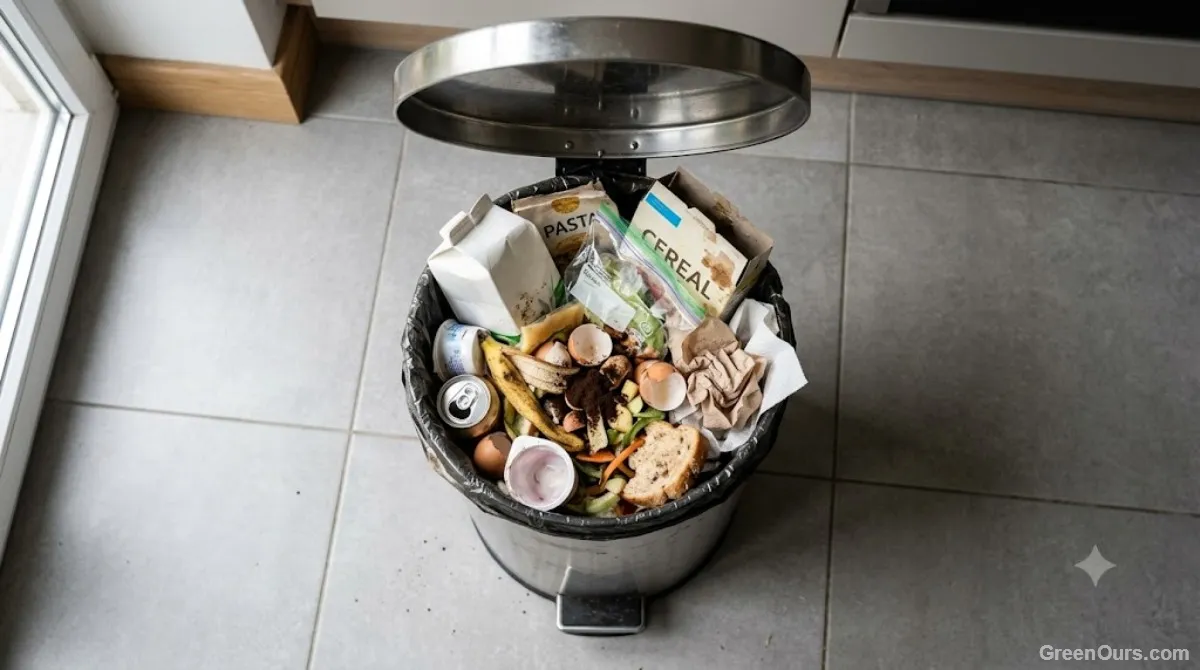
Before you buy a single reusable anything, look at what you're already throwing away and why. Most of it isn't a product problem. It's a habit problem wearing a product-shaped disguise.
I used to blame my plastic wrap for existing. The real issue was that I never planned meals far enough ahead to use leftovers before they went bad, so I was tossing food and its packaging together. No beeswax wrap was going to fix that. A five-minute Sunday habit of glancing at what needed eating first did.
The Kitchen: Where Habits Matter More Than Products
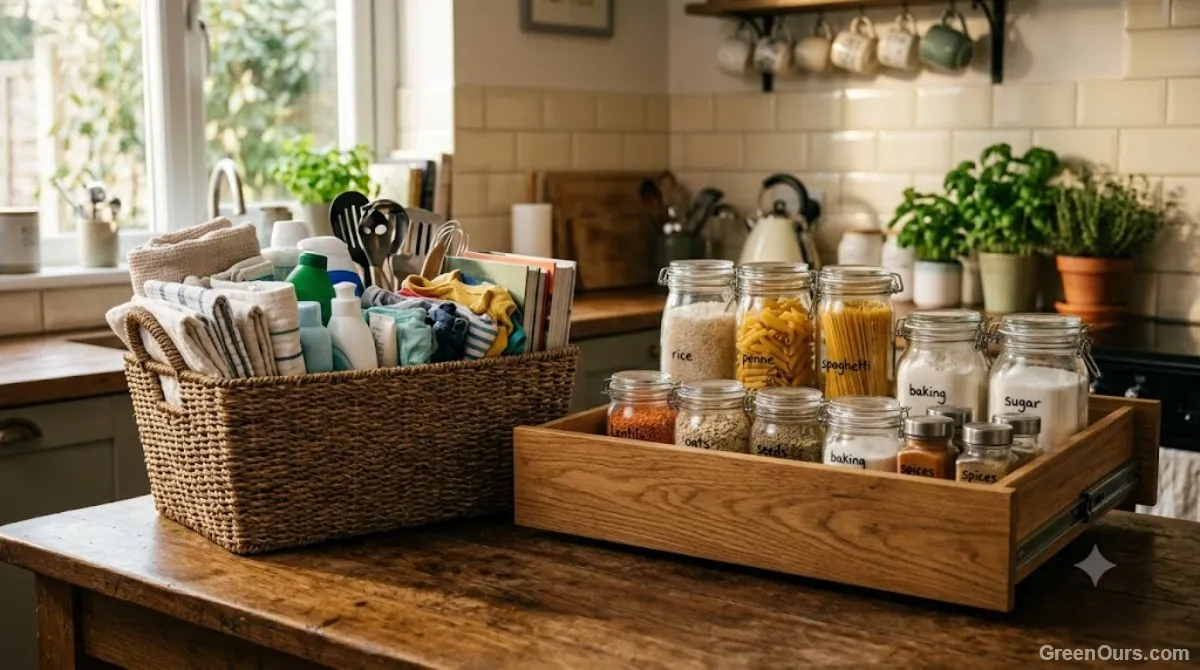
Start by using what you already own. Yogurt tubs, jam jars, takeout containers — these are storage, even if they don't match. The goal isn't a Pinterest pantry. It's fewer things going in the trash.
What to change first
Store food where you can see it. Buried leftovers get forgotten and wasted, matching containers or not. Move anything close to its use-by date to eye level.
What to buy later, if at all
Only replace something once it actually wears out. A cracked plastic container becomes a glass one. A worn-out sponge becomes a compostable one. Buying replacements for things that still work just moves waste from your kitchen to a landfill on a delay.
The Bathroom: Small Space, Big Waste
The bathroom is where I've made the fewest swaps and felt the least guilty about it. It's a small room, so even one or two changes go further than people expect.
The habit that mattered most for me wasn't a product at all — it was using up what I already had before buying the next version of it, even when the next version was the "better" one. Half-used bottles of things I'd replaced out of impatience were the actual waste, not the plastic itself.
The Bedroom and Closet: Slow Down Before You Swap
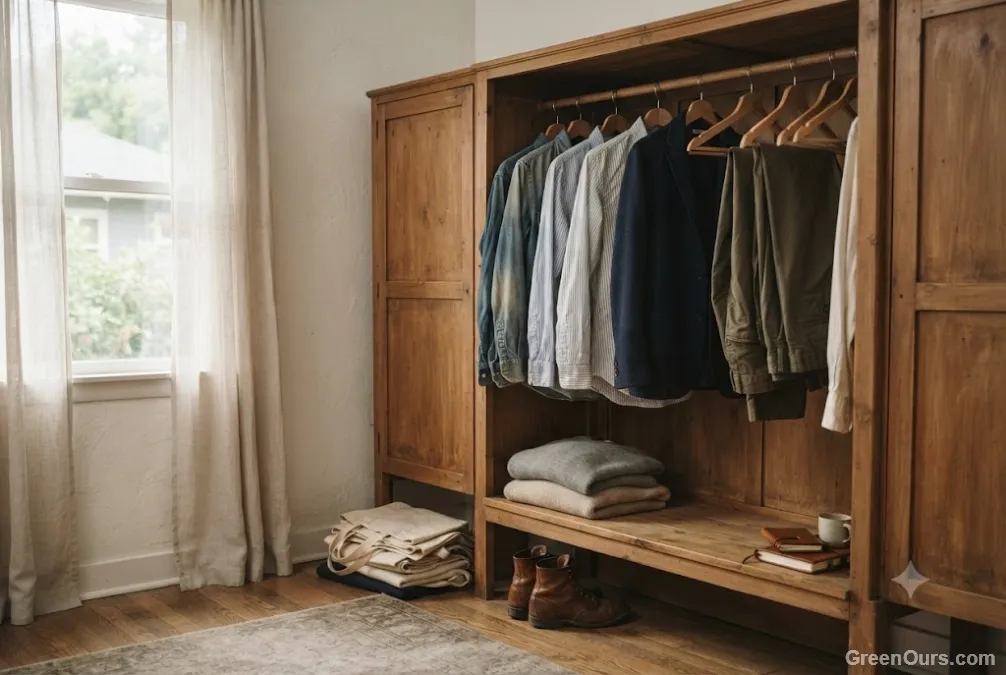
Nobody talks about closets in eco-friendly home guides, and that always struck me as strange, because clothes are one of the easiest places to accumulate waste without noticing. The fix here isn't a capsule wardrobe overnight. It's simply slowing down the in-and-out.
Before buying something new, I now ask what I'd be replacing and whether that item is actually worn out or just less exciting than it used to be. That one question has cut my clothing purchases more than any sustainable-brand research ever did.
The Living Room and Laundry: The Rooms People Forget
These rooms rarely make it into eco-friendly checklists, which is odd, because laundry habits alone can shift how much water and energy a household uses week to week. You don't need a new machine. You need fuller loads and a lower default temperature.
In the living room, the biggest shift isn't a product either — it's noticing what gets left running. Chargers, lamps, a TV on standby. None of it feels significant in the moment, and all of it adds up over a year in ways a single reusable swap never will.
What to Skip For Now
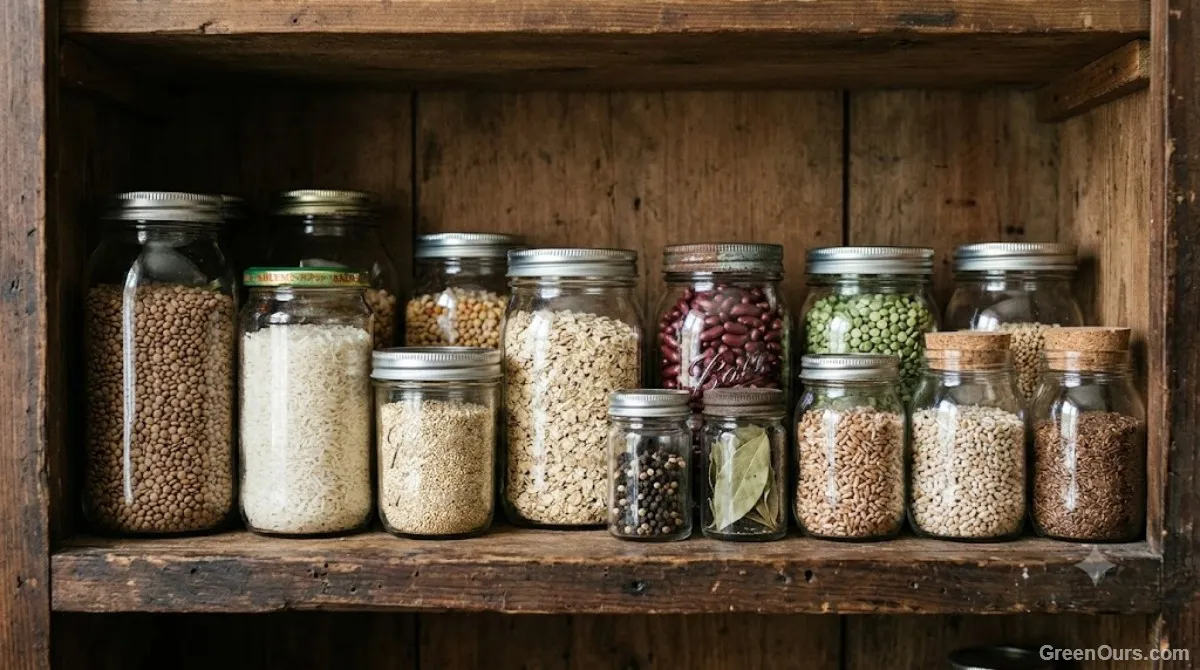
You don't need a zero-waste kit, a matching set of jars, or a bathroom full of bar soap on day one. Skip anything marketed as a starter bundle. Start with the room, the habit, and the thing you're already throwing away too often. The products can catch up later, once you actually know what you need.
More gentle ways to green your home.
None of this happens in a weekend, and it isn't supposed to. A few months from now, your kitchen will look different, then your bathroom, then your closet, and you won't remember deciding to become someone who does this. You'll just notice you already are.