
Why Most Plastic-Free Advice Assumes You Have More Time Than You Do
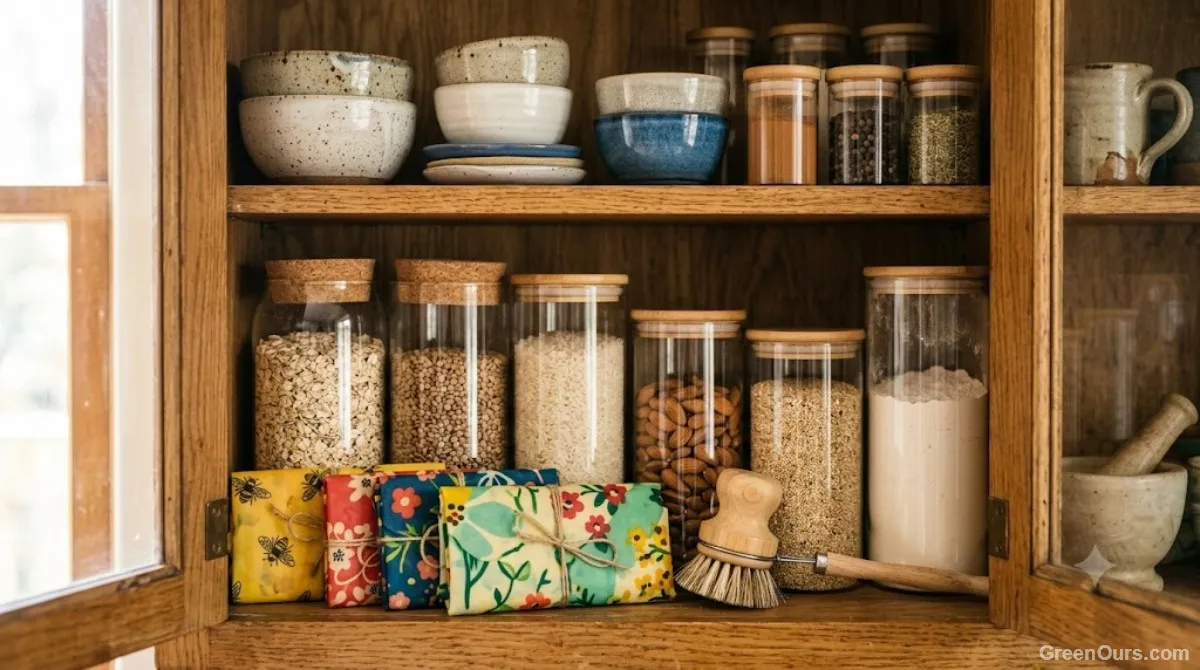
A lot of the guides out there start with a full pantry overhaul — mason jars for every grain, a dedicated bulk-buying routine, homemade everything. That's a lovely picture, and for some households it genuinely works. For a lot of us, it's the reason the whole idea gets shelved before it starts. If the entry point feels like a lifestyle change, it's not a swap anymore, it's a project, and busy households don't finish projects that don't have a deadline.
The swaps that actually stick are the ones that slot into a routine you already have. You still open the fridge the same way, you still pack the same lunches, you just reach for something different when you do it. That's the whole premise here.
Pick one category to swap at a time — storage, cleaning, or dishwashing. Trying to overhaul all three in the same week is how good intentions end up back in a junk drawer.
Start With What You Touch Every Day
Food storage is the highest-traffic item in most kitchens, which makes it the swap with the biggest daily impact and, frustratingly, the one that takes the longest to fully convert. You don't need to replace everything at once. Replace what breaks or wears out first, and let attrition do the rest of the work.
Glass and Steel for the Front Line
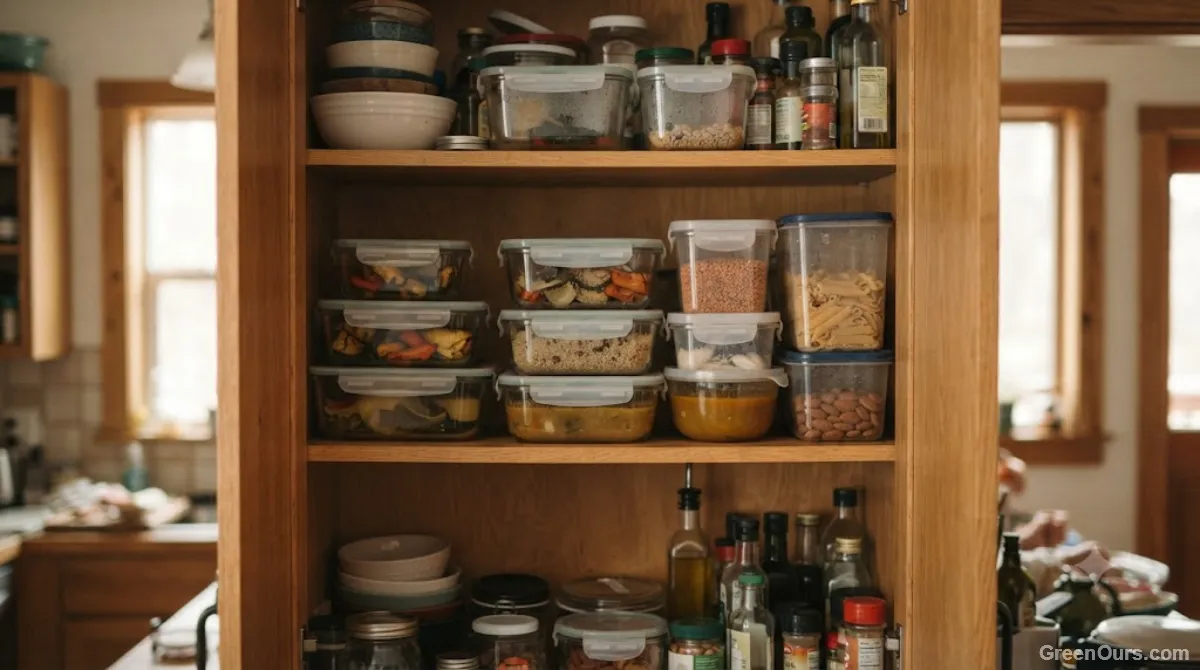
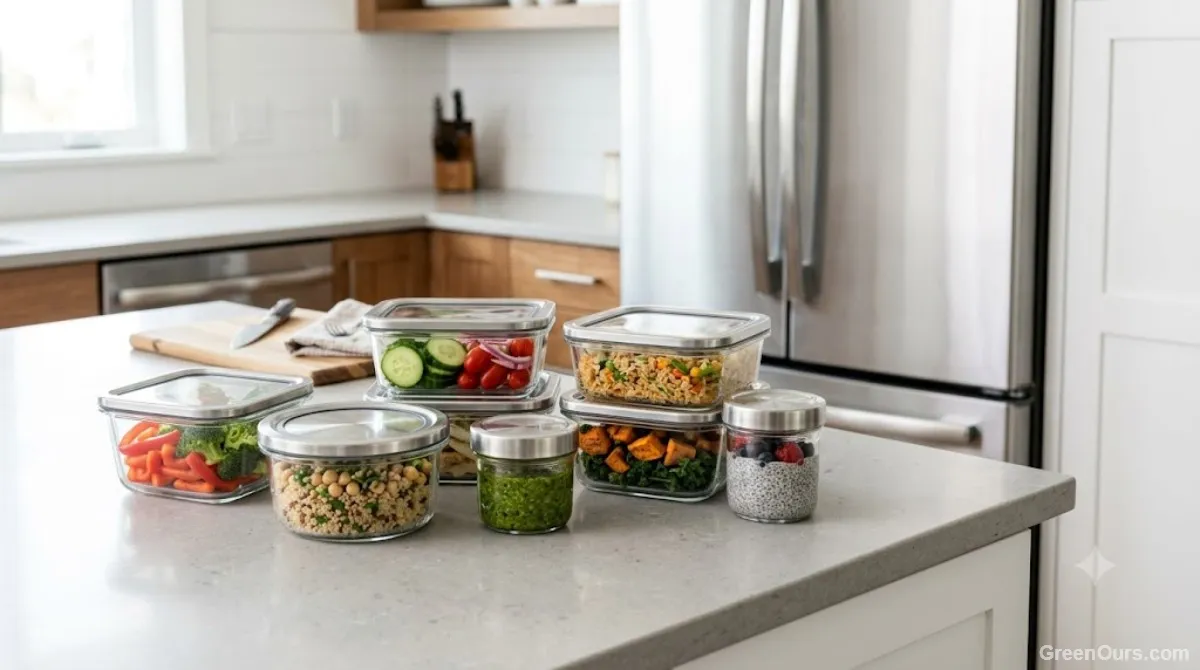
Glass containers with snap-lock lids handle the stuff you reach for constantly — leftovers, prepped vegetables, sauces. They go straight from fridge to microwave without the faint plastic smell some containers develop after a year of tomato sauce. Stainless steel tins are better for lunches that leave the house, since they don't shatter in a bag and they don't stain from turmeric or beet anything.
You don't need a matching set. Buy two or three as your plastic ones crack or warp, and within six months you'll notice the drawer looks completely different without ever having done a big purge.
Wraps That Replace Cling Film, Not Everything
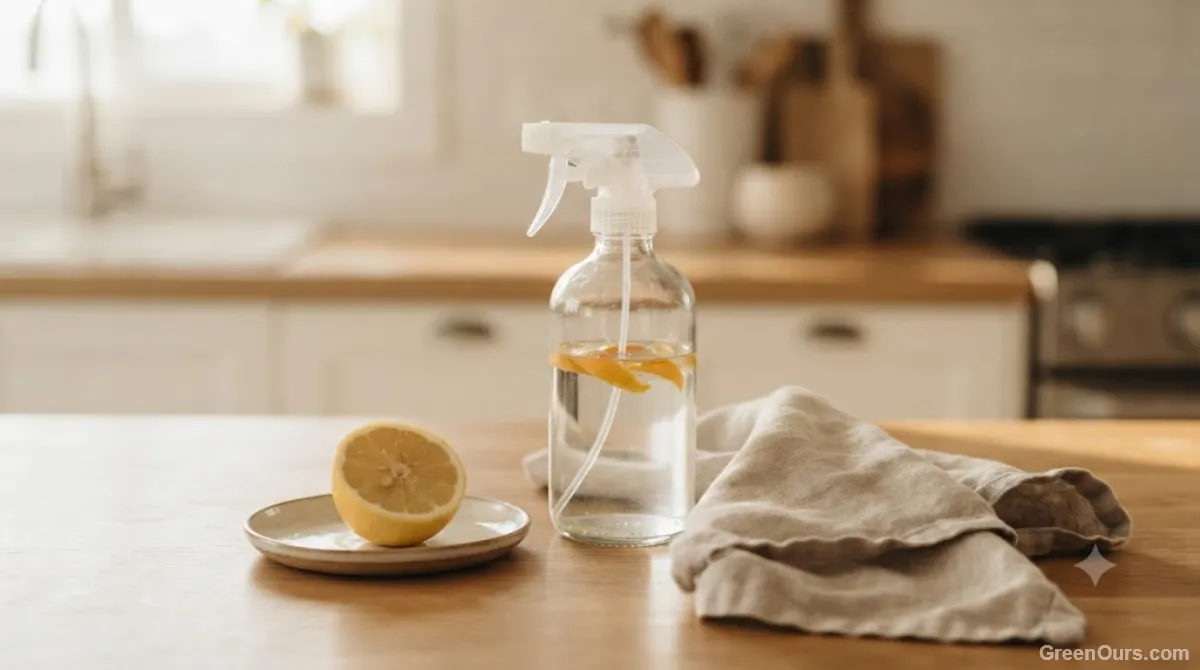
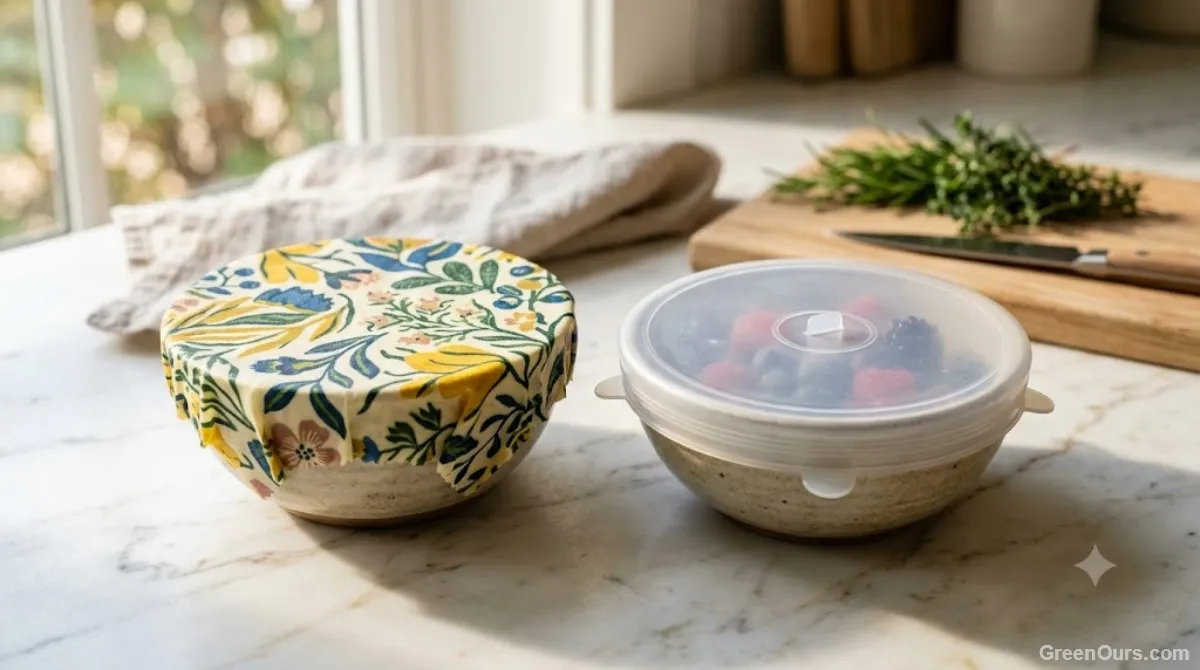
Beeswax wraps are good for covering a bowl or wrapping a cut lemon, not for anything wet or anything you're going to freeze. Silicone stretch lids do the job cling film used to do for covering leftovers straight in the pan or bowl, and they're the swap I've had the least friction with because the habit change is almost nothing — you're still just covering a bowl.
The Small Tools That Make the Biggest Difference
This is the category people skip because it feels minor, and it's actually where the easiest wins live. Dishwashing tools get replaced constantly, which means every plastic sponge you buy is a small, repeated decision — and every swap here compounds fast.
Dish Brushes With Replaceable Heads
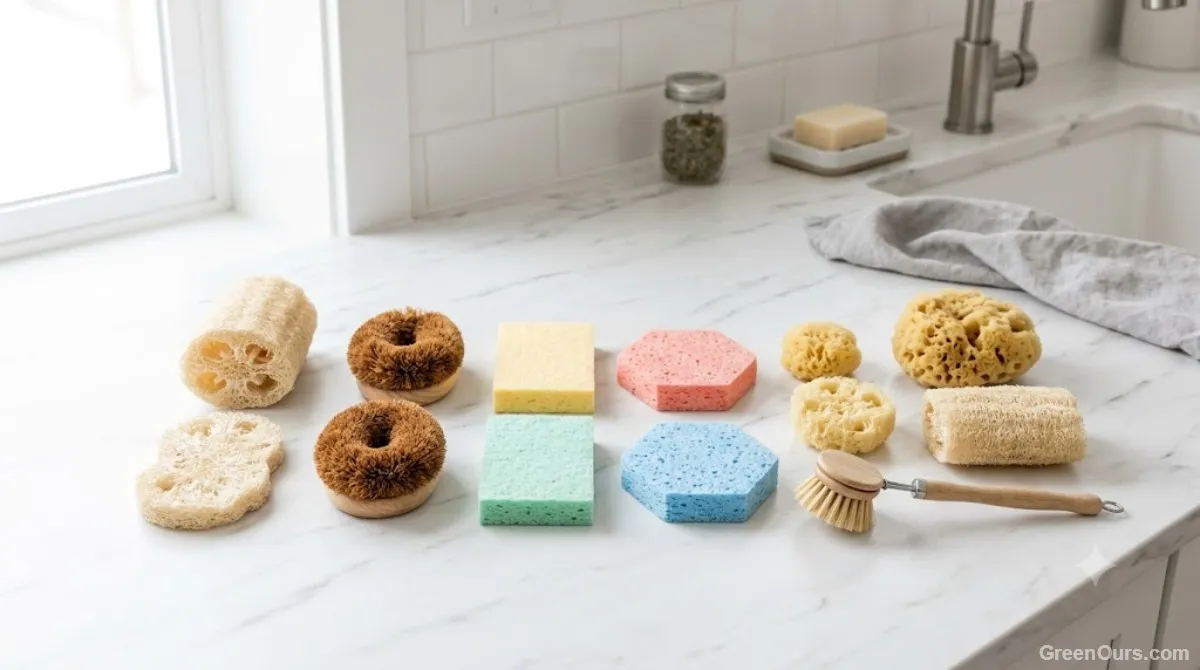
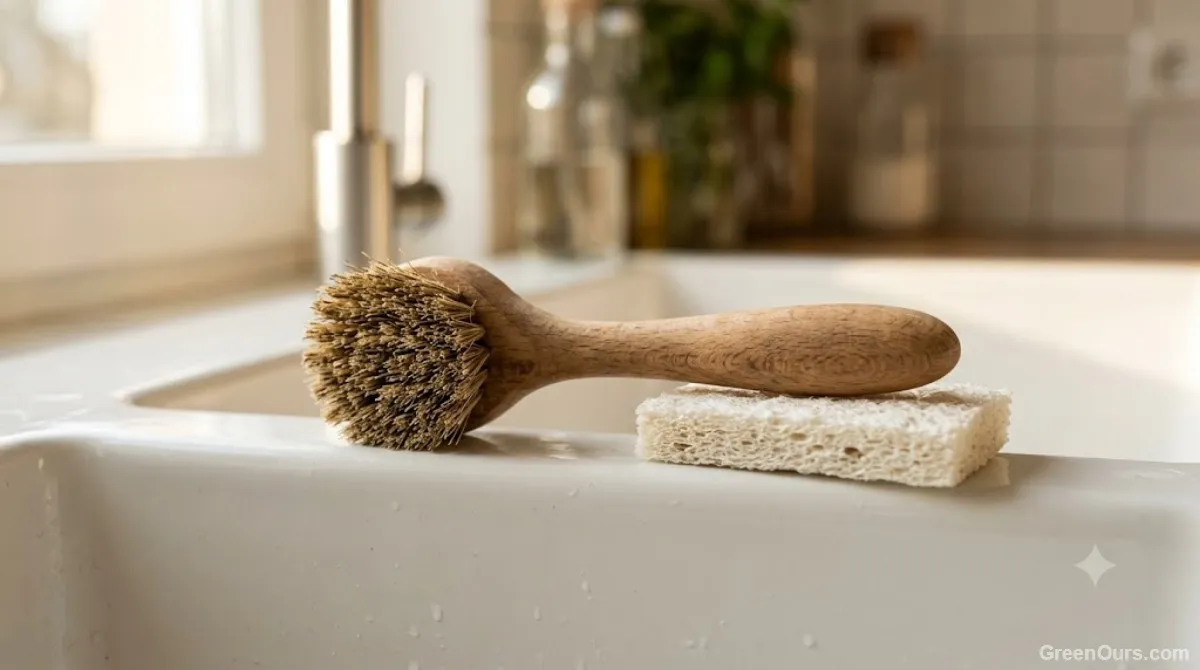
A wooden dish brush with a swap-out head means you're not throwing away a whole handle every time the bristles wear down, just the head, which is usually compostable or at least much smaller waste. They also just clean better than a soggy sponge once you're used to the scrub.
Compostable Sponges and Scourers
Cellulose and loofah sponges break down in home compost or a green bin instead of shedding microplastic every time you squeeze them out, which plastic sponges genuinely do. They don't last quite as long as synthetic ones, so budget for replacing them a little more often — that trade-off is worth knowing upfront rather than discovering it disappointed three weeks in.
Bar Soap Over Bottled
A solid dish soap bar in a little dish by the sink cuts out the plastic bottle entirely and, in my experience, actually lasts longer per wash than liquid soap does. It feels like a strange swap the first week and then becomes completely invisible.
Budget First: Prioritizing Swaps by Impact and Cost
Not every swap costs the same, and not every swap saves the same amount of plastic, so it's worth being honest about where your money goes furthest. If funds are tight, skip the aesthetic upgrades and go for the items you replace most often — sponges, brushes, cling film — because those are recurring purchases where a plastic-free version pays for itself.
Save the bigger investments, like a full set of glass storage or steel lunch tins, for when something actually needs replacing anyway. There's no environmental upside to throwing out perfectly good plastic containers just to buy new ones; the more sustainable move is using what you have until it fails, then replacing it with something better.
What to Skip, at Least for Now
Not every trendy swap earns its place in a busy kitchen. Compostable cling film alternatives that need hand-washing and air-drying every single use tend to get abandoned fast if you're already stretched thin — better to get the stretch lid and the bar soap habit solid first. Same goes for elaborate bulk-bin systems if your nearest refill store is a twenty-minute drive; the fuel and time cost can outweigh the plastic saved.
Give yourself permission to skip what doesn't fit your actual week. A plastic-free kitchen that's 70% converted and still in use beats a 100% converted one that quietly reverts because it was never realistic to begin with.
What to Do Next
My plastic drawer still exists, by the way. It's just smaller now, mostly takeout lids I keep meaning to return to the restaurant that gave them to me. I'm not chasing a plastic-free kitchen so much as a kitchen with a lot less plastic in it than it used to have, and honestly, that's felt like a much easier goal to actually keep.
Ready for the next low-waste step?