
Why Planning Backward Just Works Better
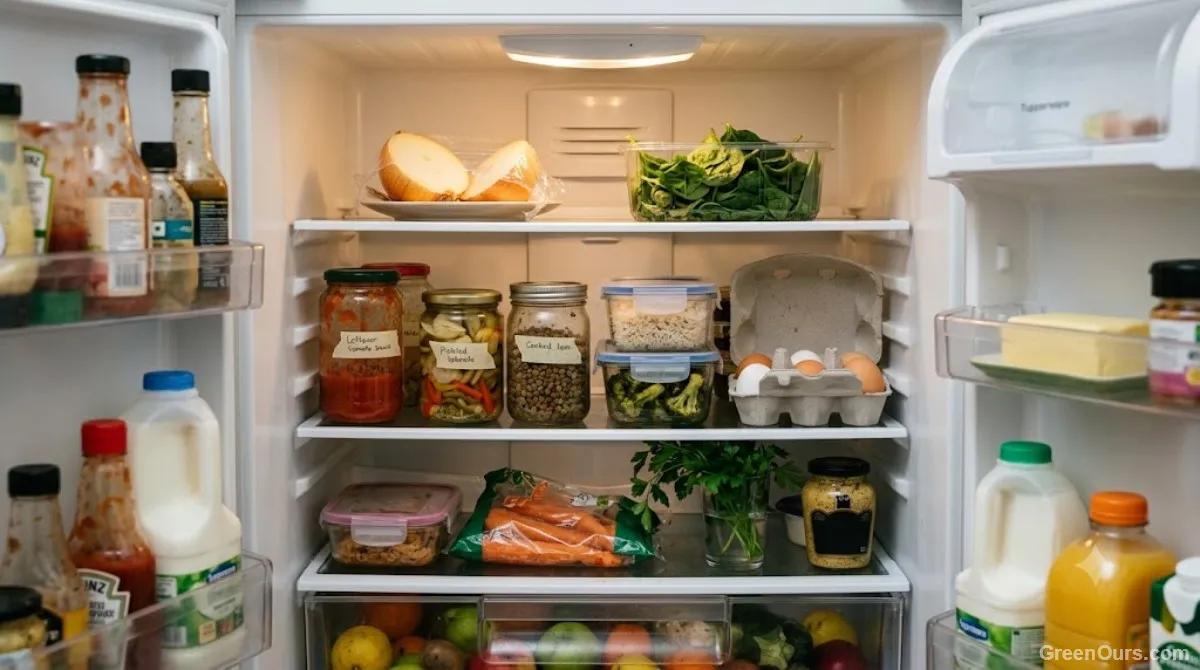
Most meal planning advice tells you to decide what you're craving, then shop for it. That's a lovely idea if your fridge is empty. Mine never is — there's always a lonely half onion, three eggs, and something green that was ambitious two weeks ago. Planning backward means those things become the starting ingredients instead of the stuff you feel guilty about later.
It also removes a surprising amount of decision fatigue. You're not choosing from every recipe on the internet. You're choosing from what's in front of you, which is a much shorter, much less overwhelming list.
Here's the thing — most of us aren't actually bad at meal planning. We're just planning for a version of our kitchen that doesn't exist, the empty, idealized one from the grocery ad. A use it up meal plan works with the kitchen you actually have, half-full jars and all, which honestly makes it a lot more forgiving on the weeks when you didn't have time to think ahead at all.
Take Inventory Before You Plan a Single Meal
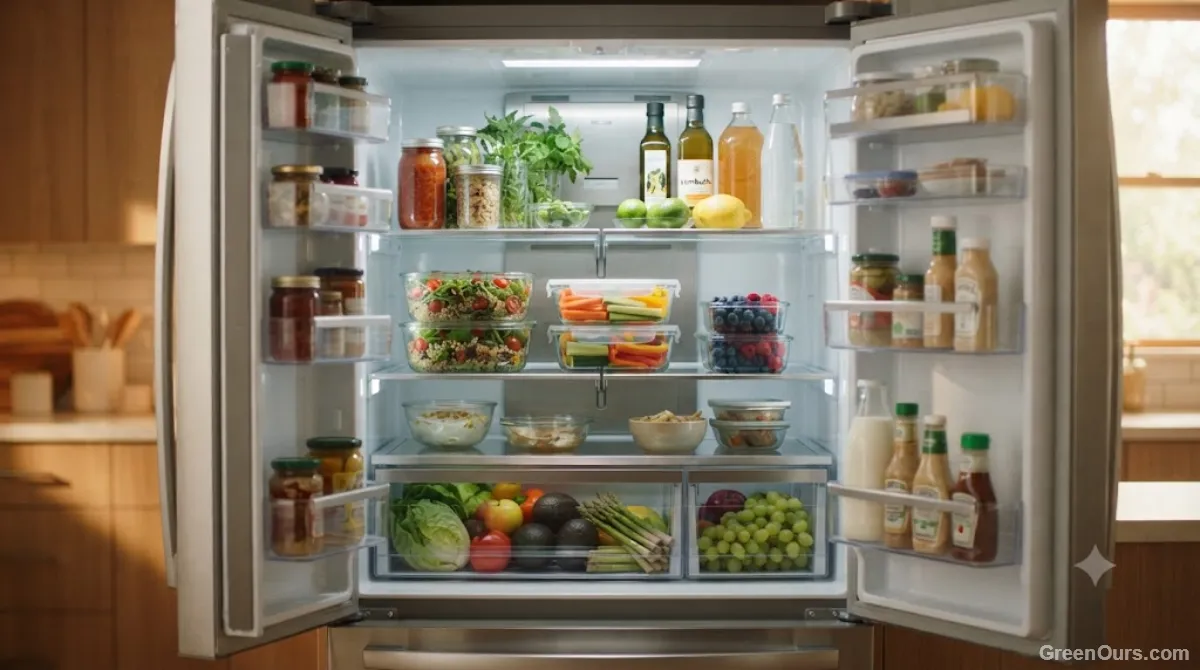
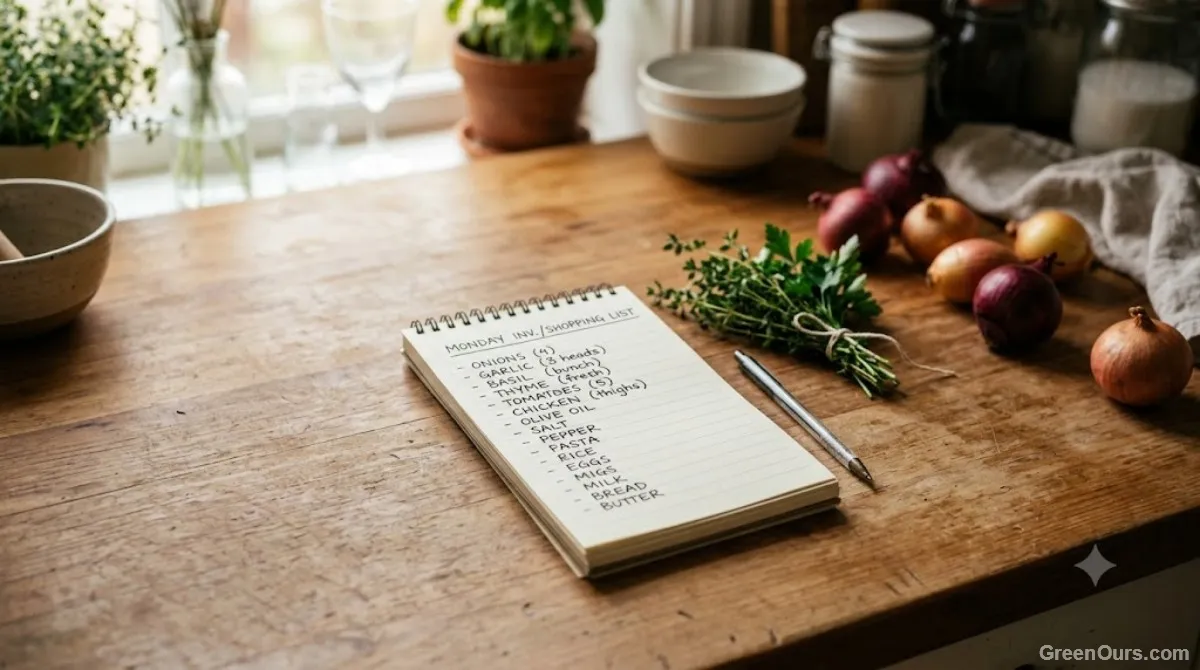
Before you write down one meal, open the fridge, the freezer, and the pantry, and just look. Not a full spreadsheet — a five-minute scan with a notepad or your phone's notes app is plenty.
Group what you find into rough categories: proteins, vegetables that need using soon, grains or starches, and anything shelf-stable that could stretch a meal further. You'll usually find you have more of a head start than you thought.
It helps to note rough quantities too, not just what's there — half a bag of spinach reads differently than a single wilting leaf. A loose sense of "enough for one meal" versus "just a garnish" saves you from planning a whole dinner around two tablespoons of something.
Do this for a few weeks in a row and you'll start noticing patterns you didn't expect — maybe you always have too many eggs and not enough grains, or your freezer quietly fills up with single servings of things nobody finishes. That's useful information, not a failure. It tells you what to actually buy less of next time, instead of guessing.
The produce that looks closest to done — the wilting greens, the softening peppers — goes at the top of your list for the first two days, not the last two. Plan around urgency first, everything else second.
Building a Flexible Weekly Frame, Not a Rigid Schedule
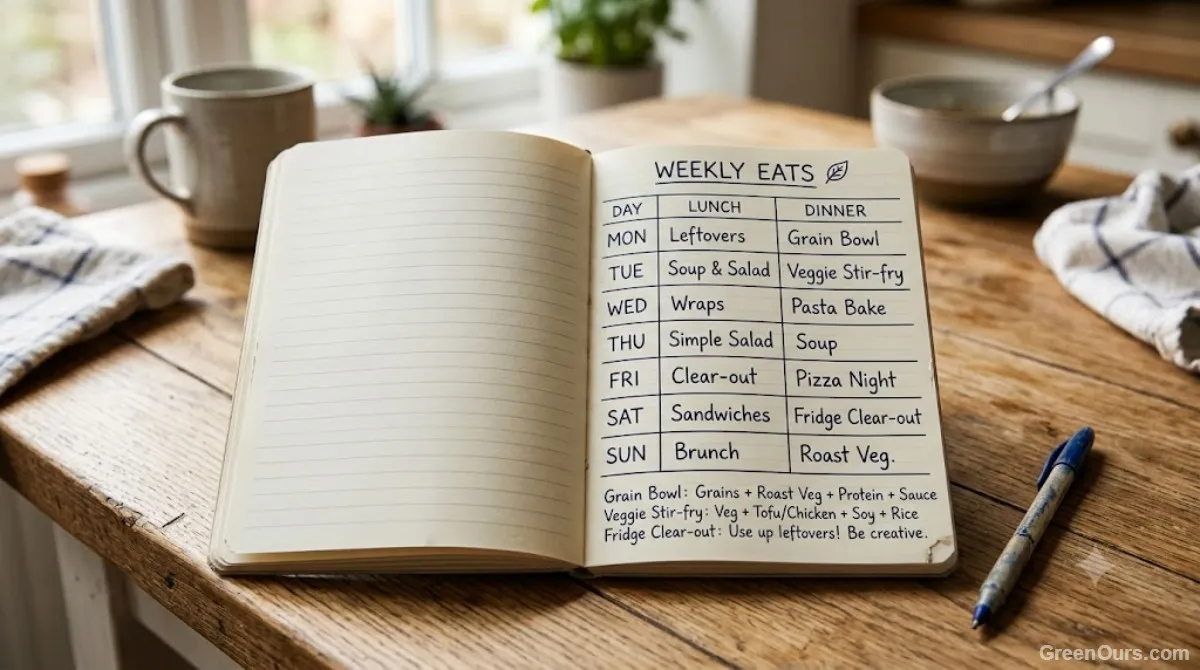
Here's where a lot of meal plans fall apart: they assign a specific dish to a specific day, and the second Wednesday goes sideways, the whole plan feels broken. Instead, try a loose frame — categories instead of fixed recipes.
Assign Roles, Not Recipes
Something like: two "clean out the fridge" nights, one grain bowl night, one soup or stew night, and one flexible night for whatever's left. You decide the exact combination the day of, based on what actually needs eating.
This is where the use-it-up approach earns its name. You're not deciding on Tuesday what you're craving — you're deciding what needs to disappear from the fridge before it goes soft, sour, or forgettable. It's a small mental shift, but it changes grocery shopping too, because you stop buying backup ingredients for a plan that already accounts for what's on hand.
Leave One Night Genuinely Open
Life happens. A late meeting, a tired evening, a sudden takeout craving. Building in one unplanned night from the start means it doesn't derail anything — it was already part of the plan.
Turning Odds and Ends Into Actual Dinners
This is the part that used to intimidate me most, and it turns out it just needed a few reliable formulas rather than inspiration.
The Sheet Pan Sweep
Chop whatever vegetables are on their way out, toss with oil and whatever seasoning you have, roast until browned, add a protein and a starch. It's forgiving of odd combinations in a way that's honestly a little freeing.
The Soup Pot Catch-All
Stock, any vegetables, any grain or legume, simmered until it tastes like something you meant to make. Soup hides more mismatched ingredients than any other dinner format, and nobody's ever complained.
The Grain Bowl Remix
Cooked rice, quinoa, or leftover pasta becomes a base for whatever vegetables, beans, or protein are hanging around, dressed with anything acidic and something with a little fat — a squeeze of lemon, a spoon of tahini, whatever's already open in the fridge door. It's less a recipe than a formula, and it's forgiving of ingredients that don't obviously belong together.

What to Do When the Week Doesn't Go as Planned
Here's the thing — some weeks, you'll still end the Sunday with food left over, and that's not a failure of the method. It just rolls into next week's inventory. The whole point is that nothing is wasted by being "wrong," including your plan.
If you skip a planned dinner entirely, don't scrap the week. Just shift that meal's ingredients to the top of tomorrow's list. The plan bends. That's the design, not a flaw in it.
I used to treat a skipped dinner like proof the whole system had failed, which, looking back, is a pretty dramatic way to respond to leftover broccoli. These days I just shrug and move it to the next night's list. The food doesn't know it was supposed to be eaten on a Tuesday instead of a Wednesday.
Making This a Habit Instead of a One-Time Experiment
The first week feels like an experiment. By the third or fourth, it starts feeling like how you naturally shop and cook — you buy less because you're already using more of what you have, and the grocery bill quietly shrinks along with the food waste.
You'll also start shopping differently without really trying to. Once you know Sunday's inventory scan will catch anything half-used, you stop buying the same backup vegetable you already had two of at home. It's a quiet kind of confidence — trusting that what's already in the kitchen is usually enough to start from.
The freezer ends up doing more work in this routine than people expect. Odd amounts that won't stretch to a full meal on their own — half a cup of rice, a single chicken thigh, the last few spoonfuls of a sauce — go into labeled containers instead of the trash, and they become the head start for a soup or grain bowl two or three weeks later. It's the same use-it-up logic, just running on a longer timeline.
Start this Sunday with nothing more than a fridge scan and a notepad. You don't need a perfect system — you need one that forgives you for having a normal, unpredictable week, and this one does.
Ready to try your first use-it-up week?