
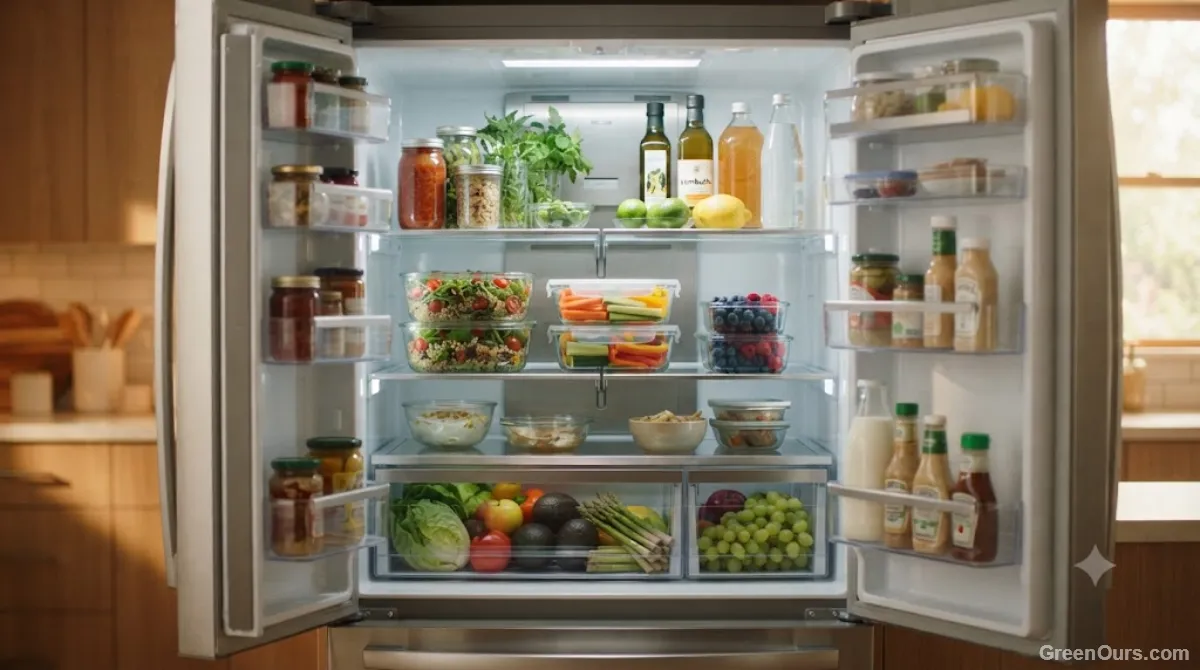
The Fridge Graveyard Nobody Talks About
Every fridge has one: that back corner or bottom drawer where food goes to be forgotten. It's not really your fault. Refrigerators are designed like little filing cabinets, and filing cabinets are built for storage, not visibility. The problem is that food isn't a document you can retrieve six months later. It has a shelf life, and every day it sits unseen is a day closer to the trash. That's exactly the problem zero waste fridge organization is meant to solve.
I used to think I was just bad at meal planning. Turns out the real issue was that I couldn't see half of what I owned. Sauces hid behind sauces. Produce wilted in crisper drawers that lived up to their name in the worst possible way. By the time I found things, they weren't ingredients anymore — they were guilt.
The mindset shift that actually helps: before you make a grocery list, shop your own fridge first. Treat what's already in there as the ingredients for tonight's dinner, not leftovers to work around.
The Ten-Minute Reset (No Bins Required)
You don't need a Pinterest-worthy fridge to fix this. You need about ten minutes and a willingness to look at everything you own at once.
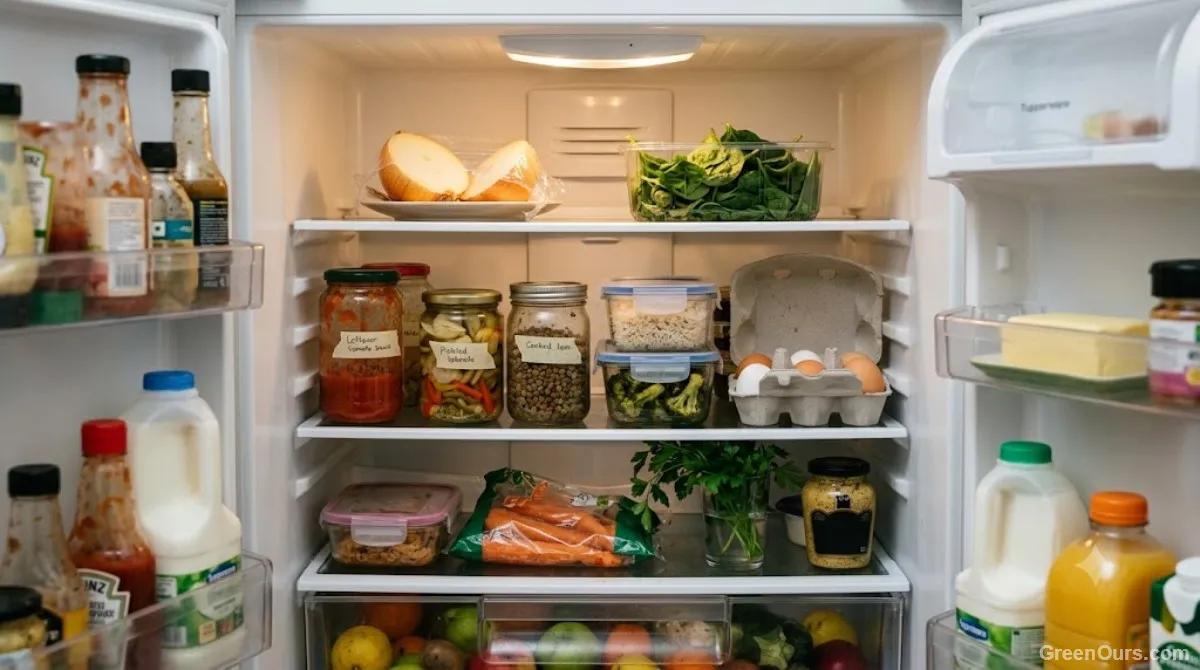
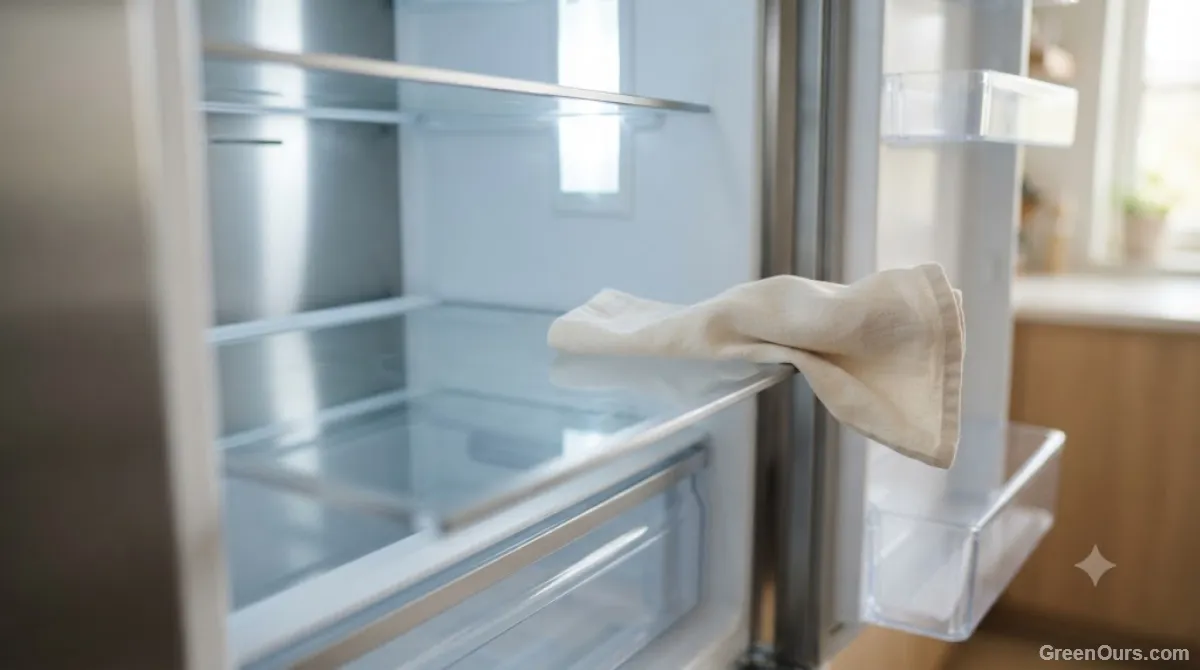
Pull everything out onto the counter, sorted loosely into three groups: things you'll eat this week, things that need to be used today or tomorrow, and things that are already done for. Wipe down the shelves while everything's out — it takes thirty seconds and resets the whole space mentally as much as physically. Then put things back with intention instead of just shoving them wherever there's a gap.
Give Your "Eat Me First" Zone Some Power
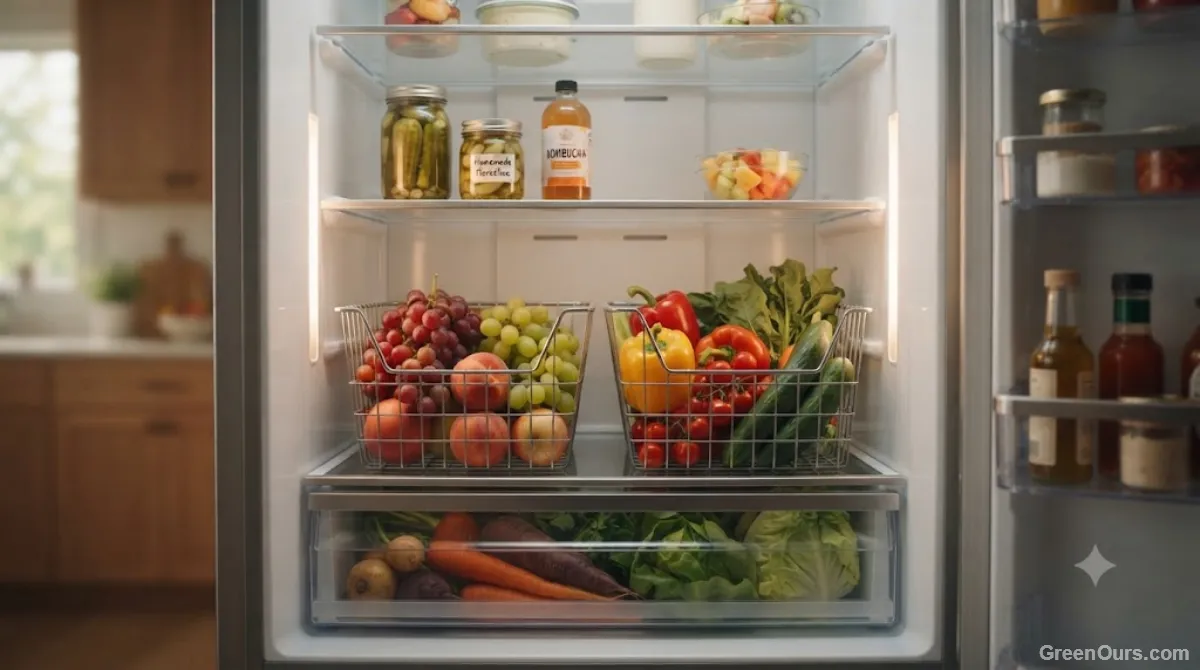
Restaurants don't put their least popular dishes at the top of the menu, and your fridge shouldn't bury the food that's about to go bad. Once you've reset everything, designate one visible spot — a shelf at eye level, a single clear bin near the front — as your "eat me first" zone. Anything close to its expiration date, any half-used produce, any cooked extras from last night's dinner goes there and nowhere else.
Eye Level Is Prime Real Estate
The top and middle shelves at eye level are the most valuable space in your fridge, yet most people fill them with condiments that last for months. Swap that. Let ketchup live in the door where it belongs, and give the good real estate to food that's actually perishable.
Rotate, Don't Stack
When you bring groceries home, resist the urge to shove new items to the front. Move older ones forward first. It's the same logic grocery stores use to keep their own shelves from rotting — there's no reason your fridge should work differently.
The Habit That Actually Sticks: The Sunday Scan
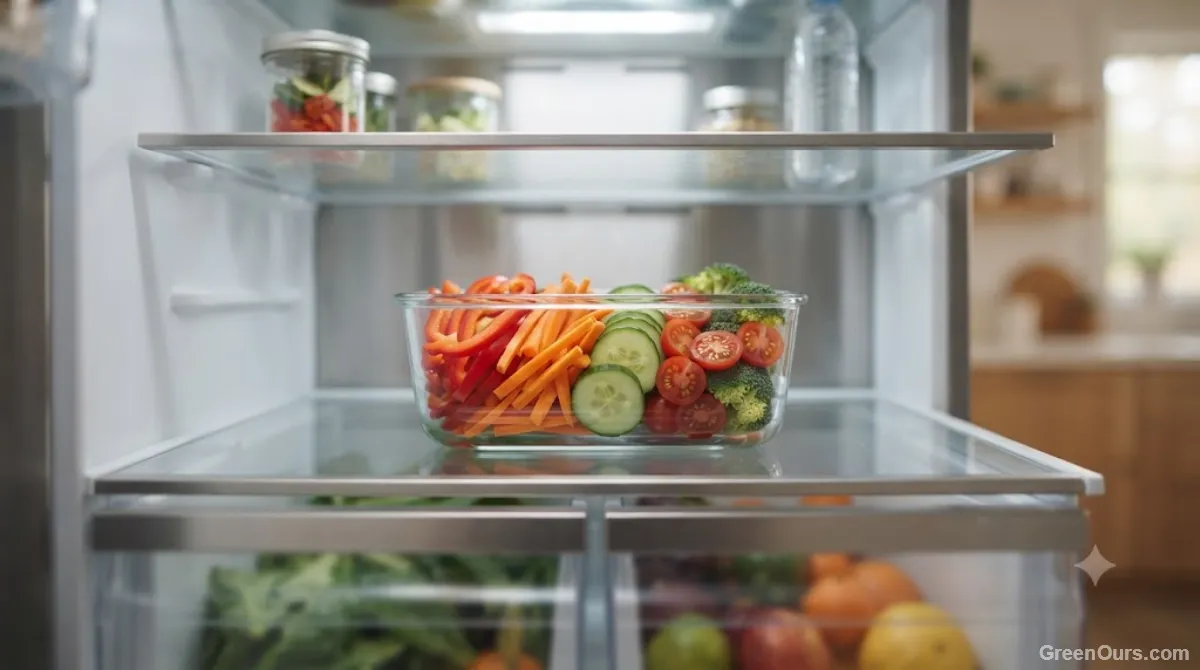
Reorganizing once feels great for about a week, and then life happens and everything slides back into chaos. The habit that actually keeps a fridge working is a five-minute check-in before you make your shopping list, not after.
Open the fridge, look at what's already there, and build your meals around it before you add anything new to the cart. If you've got half a bag of carrots and some cooked rice, that's most of a stir-fry already decided for you. This one small habit does more to prevent waste than any container or app ever will, because it changes the order of operations — using what you have becomes the plan, not an afterthought.
It also tends to save real money. Buying food you already own is one of the quietest ways a grocery budget leaks, and most people never notice it happening.
If You Only Do One Thing
Skip the full reset if you have to. Skip the labels, skip the bins, skip all of it if that's what it takes to actually start. The one habit worth keeping is the eat-me-first zone — a single spot in your fridge reserved for food that needs to be eaten soon. Everything else is a bonus.
More ways to waste less at home.
My fridge still isn't perfect. There's probably a lonely jar of something in the door right now that I'm forgetting about. But the spinach graveyard hasn't happened again, and that's really the whole point — not perfection, just food that gets eaten instead of quietly disappearing into the back shelf.