

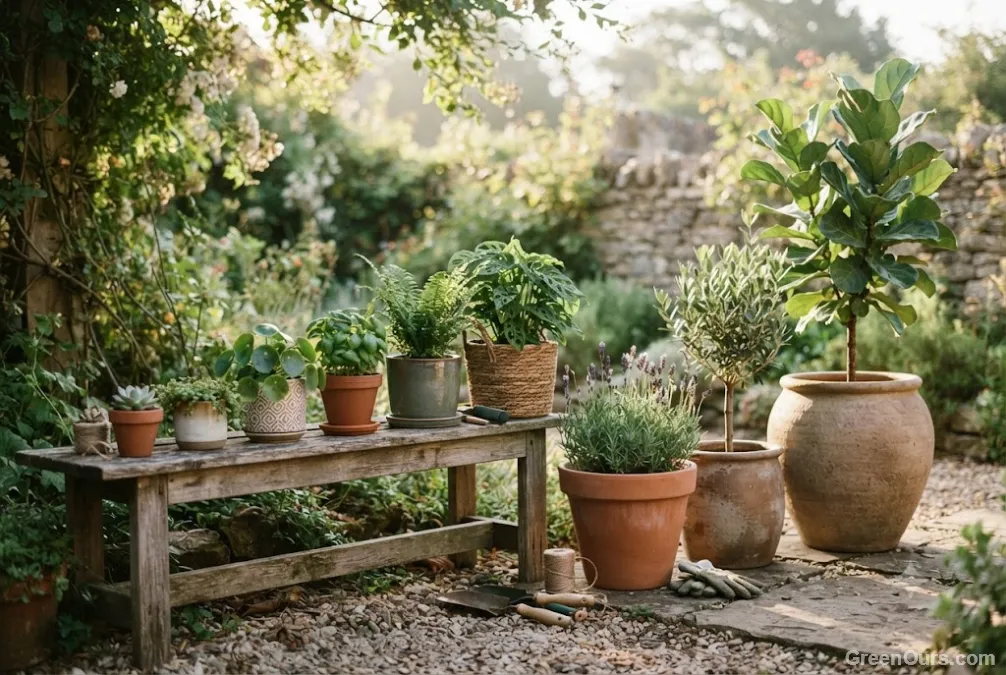
The Volume Problem: Why Container Size Changes Everything
Soil volume determines how much water a pot can hold and how long that water takes to deplete. A larger pot holds more water, but that doesn't mean it needs watering more often — often the opposite. More soil mass means slower evaporation from the surface and slower moisture pull from the sides.
Small pots have a high surface-area-to-volume ratio. Water escapes fast through the exposed top layer and through the pot walls if it's unglazed terracotta. A 4-inch pot can go from soaked to bone-dry in two days during summer. A 12-inch pot with the same plant might take a week or more.
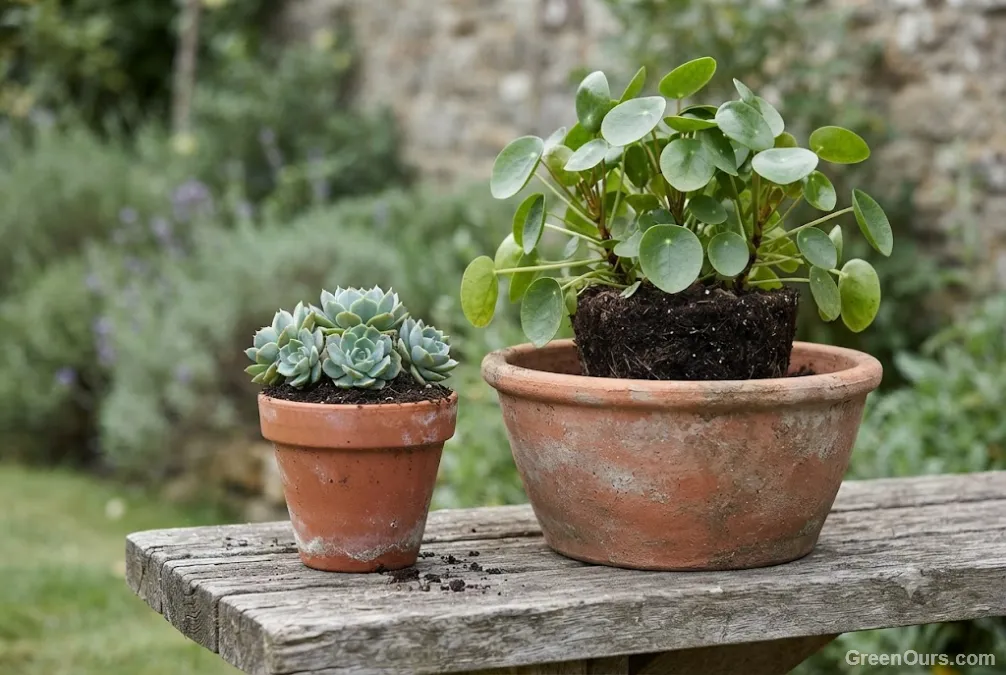
Rule of thumb: doubling the pot diameter roughly quadruples the soil volume, but the plant's root mass doesn't grow at the same rate. That mismatch is where most watering problems start.
Pot Depth vs Pot Width: Different Water Behavior
Depth and width don't behave the same way. A tall, narrow pot drains faster at the bottom due to gravity, but the top few inches of soil can dry out quickly while the base stays saturated. A wide, shallow pot dries more evenly across the surface but holds less total reserve.
This matters for diagnosis. If you're asking whether does pot size affect watering, this difference in moisture distribution is one of the main reasons. If you're checking moisture with a finger test in a tall pot, you're only reading the top two inches — which tells you almost nothing about what's happening at the root ball, six or eight inches down.
Tall Pots
Water thoroughly, less frequently. Check moisture at a 3-inch depth, not the surface.
Shallow, Wide Pots
Water more lightly, more often. These dry out faster overall and have less buffer.
Small Pots Dry Out Fast — Here's the Adjustment
If your plant is in a pot under 6 inches in diameter, expect to water 30–50% more often than a care label suggests. Small pots heat up faster, lose humidity faster, and have roots pressed tightly against the container walls, which accelerates moisture loss through the pot material itself.
Set a 2–3 day check schedule for anything in a small pot during active growing season (spring through early fall). Don't wait for wilting as your signal — by the time a small-potted plant wilts, the root ball is often already fully dry.
Oversized Pots and the Overwatering Trap
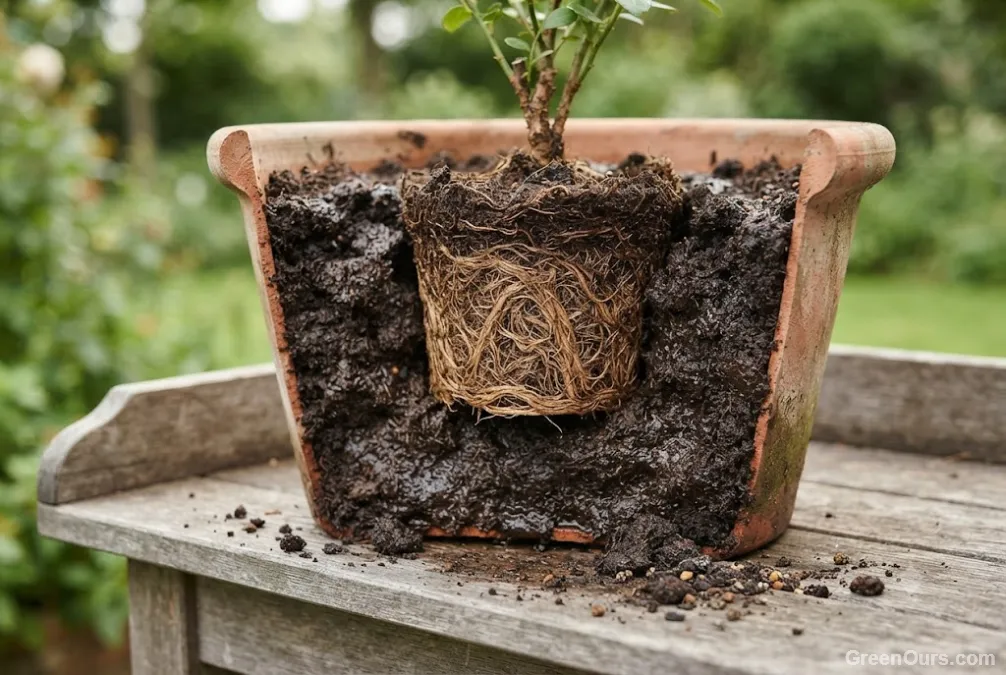
This is where most root rot actually starts. A plant with a small root system placed in a large pot leaves a ring of soil around the roots that no root is actively drawing moisture from. That soil stays wet far longer than the root zone needs, and it sits in constant contact with roots that never asked for it.
Root Zone vs Wet Zone
Roots only pull water from soil they're in direct contact with. In an oversized pot, the outer soil stays saturated while roots sit in a smaller, drier pocket at the center — until that outer moisture eventually migrates inward and overwhelms the root zone anyway.
The Fix: Water Less Often, Not Less Deeply
Don't reduce water volume to compensate for an oversized pot — reduce frequency instead. Water thoroughly until it drains from the bottom, then wait longer than usual before the next watering. Check moisture at root depth, not at the pot's edge.
Material Matters Too: Terracotta, Plastic, and Glazed Ceramic
Unglazed terracotta is porous. Water evaporates through the walls as well as the surface, which speeds up drying by roughly 20–30% compared to plastic. That's an advantage in an oversized pot and a liability in a small one.
Plastic and glazed ceramic hold moisture longer because there's no evaporation through the container itself. Combine a glazed pot with an oversized diameter and you've built the exact conditions root rot needs — slow drainage, low evaporation, and excess unclaimed soil volume.
A Simple Test to Calibrate Any Pot
Water the pot fully and note the time. Check soil moisture at root depth every 24 hours using a wooden skewer or moisture meter. Note how many days it takes to reach dry at that depth — that number is your actual watering interval for that specific pot, not the interval printed on a care tag.
Run this test once per season. Evaporation rates shift with temperature and humidity, so a schedule that worked in spring won't hold in the middle of summer.
Repotting Up? Adjust Your Schedule Immediately
Every time you move a plant into a larger pot, reset your watering assumptions. The interval that worked in the old container no longer applies — you've just added soil volume the roots haven't grown into yet. Extend your first watering interval by several days after any repot, and run the calibration test again once the plant has settled for two to three weeks.
What to Do Next
Pot size isn't a footnote in plant care — it's one of the main variables driving whether your watering routine works at all. Match the schedule to the container, not the calendar, and most of the guesswork disappears.
Run the calibration test on your trickiest pot this week.