
What "Staying Wet" Actually Means
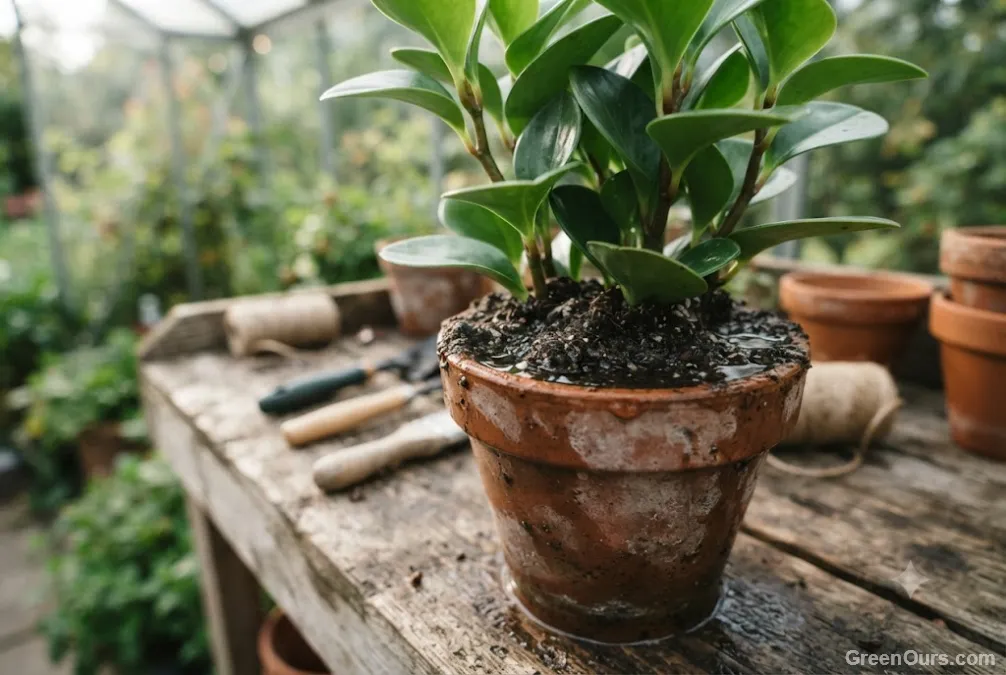
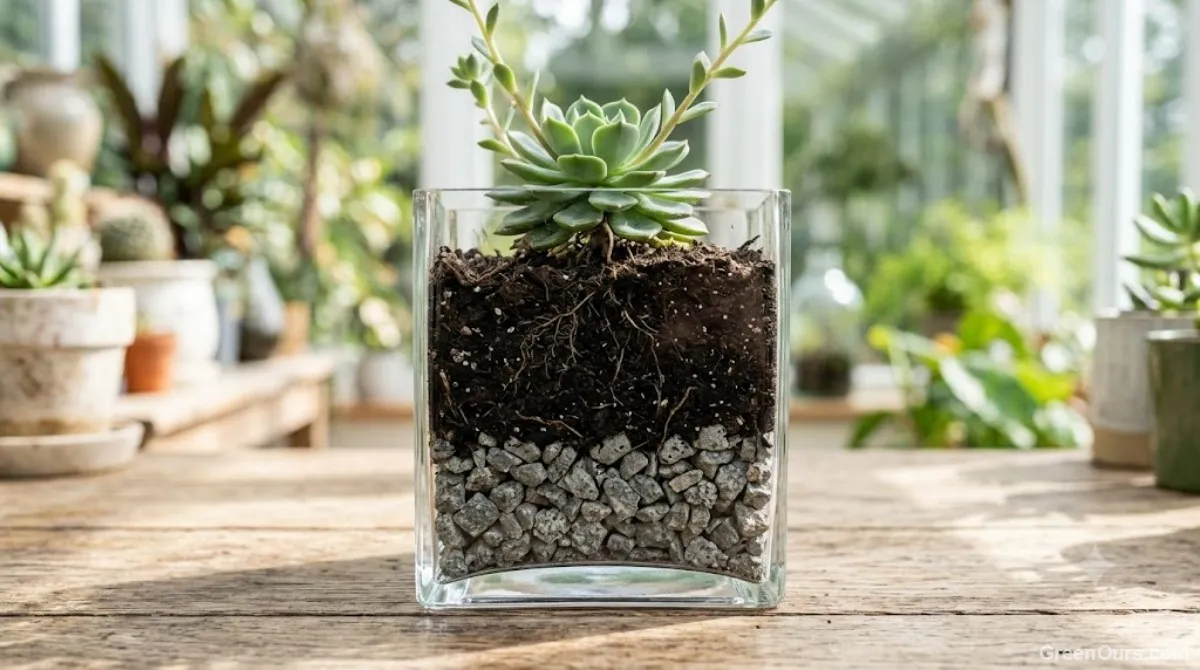
There's no single drying time that applies to every plant. A 4-inch pot with a well-draining mix should feel dry at the top inch within 2 to 4 days. A 10-inch or larger pot can reasonably take 5 to 7 days. The problem isn't a fixed number of days — it's soil staying saturated well past what's normal for that specific pot size and mix.
Check this with a finger, not a glance. Push a finger 2 inches into the soil. If it comes out with mud clinging to it a week after watering, that's saturation, not just surface moisture. A moisture meter reading that stays in the "wet" zone for more than 6 to 7 days confirms the same thing.
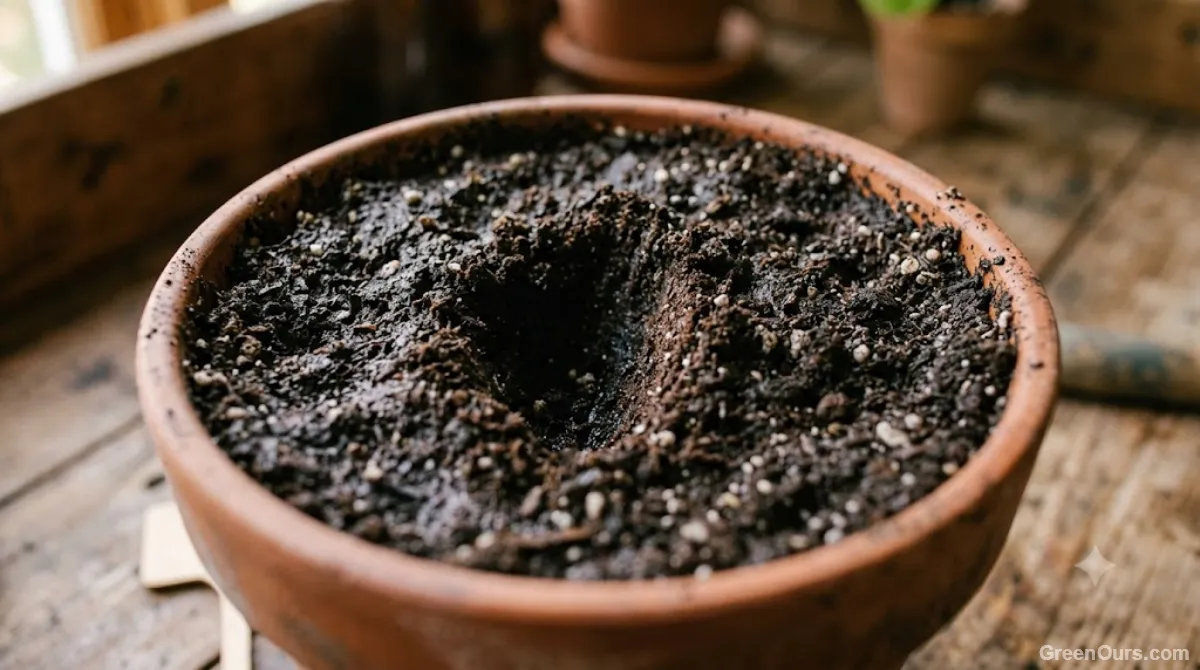
If the top inch is dry but the middle of the pot is still soaked, the issue is almost always compaction or pot size — not your watering schedule.
Start With the Pot, Not the Soil
Before touching the mix, rule out the container itself. This takes two minutes and solves a surprising number of cases.
Check Every Drainage Hole
A single hole isn't enough for pots over 6 inches wide. Decorative outer pots without their own drainage trap water at the base, even when the inner nursery pot drains fine. Lift the plant out and check for standing water pooled in the cachepot. This alone causes chronic wet soil in a large share of indoor plant cases.
Match Pot Size to Root Mass
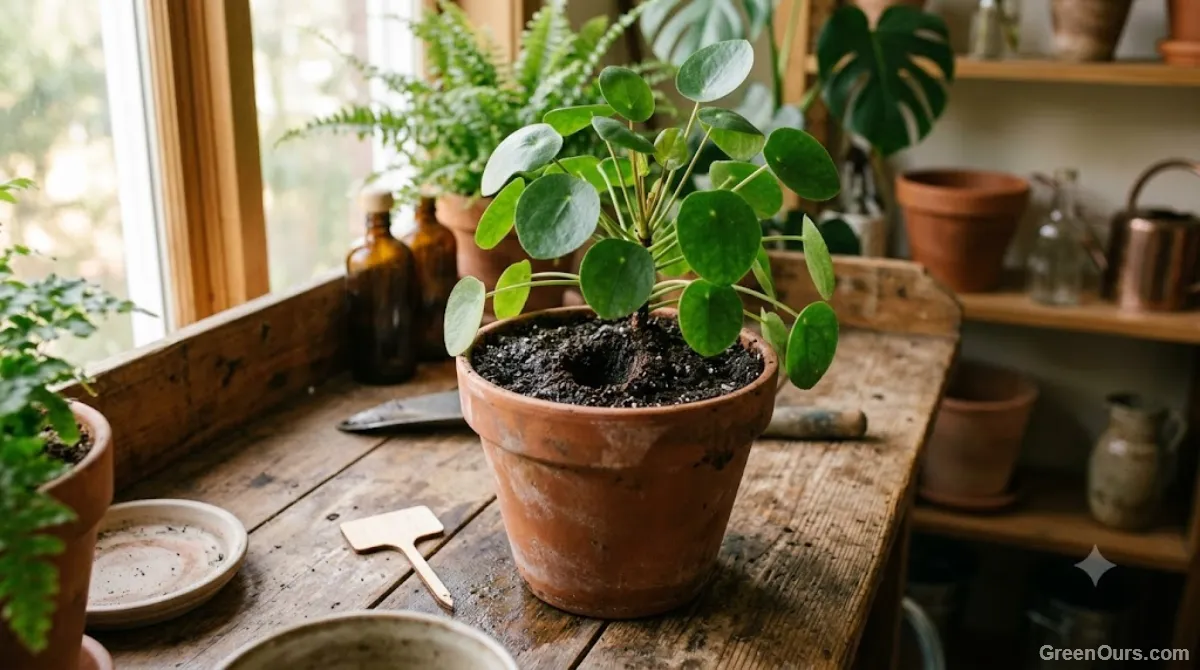
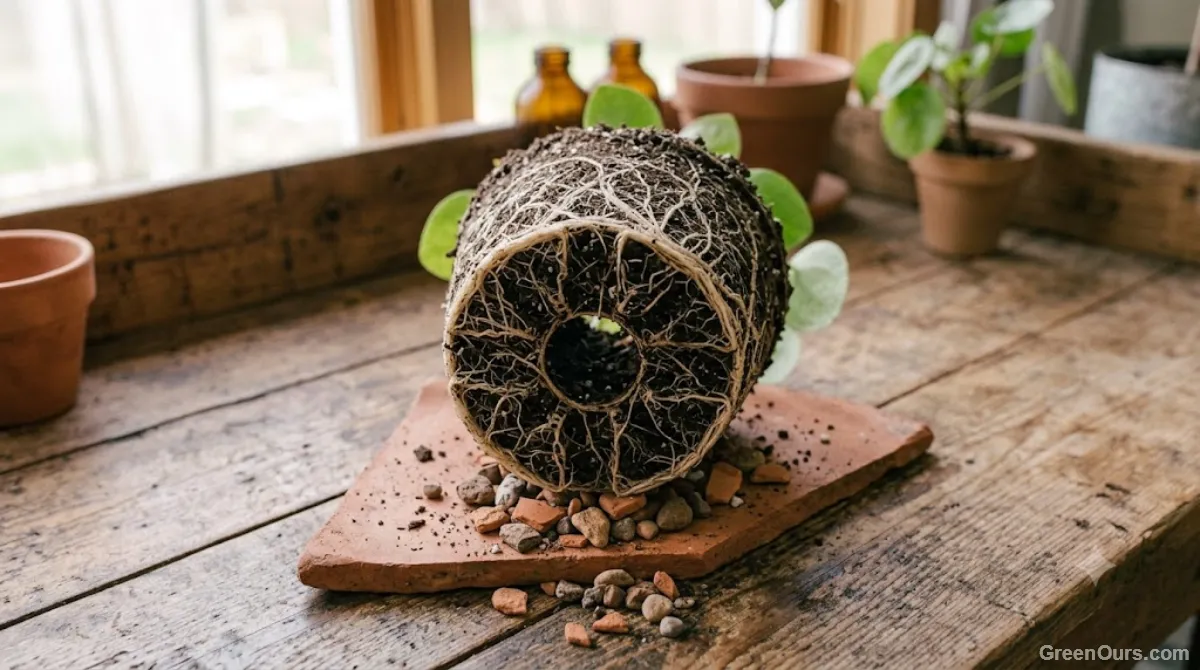
A pot that's too large for the current root system holds more soil volume than the roots can pull water from. Water sits in the space beyond the root zone with nothing to absorb it. As a rule, a pot should be no more than 2 inches wider in diameter than the existing rootball for most houseplants.
Four Reasons Soil Stays Saturated
Compacted or Broken-Down Potting Mix
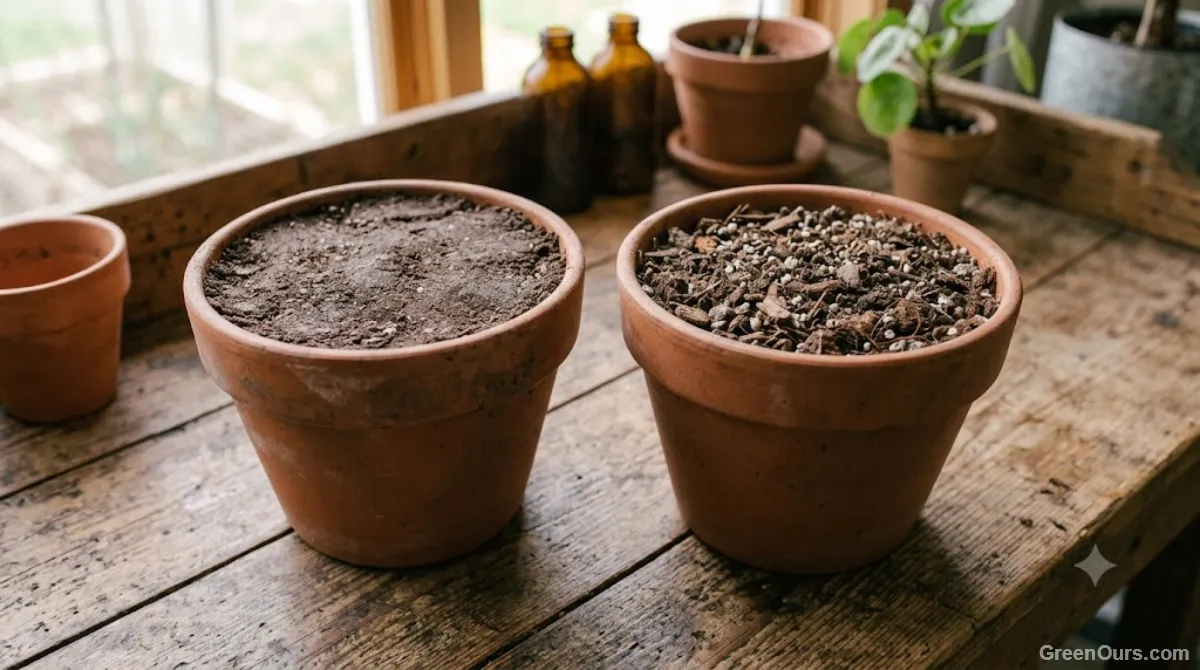
Bark, perlite, and coir break down over 12 to 18 months of regular watering. What starts as a loose, aerated mix compresses into something closer to dense clay. Water can no longer move through air pockets that no longer exist, so it pools instead of draining.
A Pot That's Too Large for the Plant
As above — this is one of the most common and most overlooked causes, especially after a plant was upgraded to a decorative pot without resizing the root system to match.
Low Light Slowing Water Uptake
Plants in low light photosynthesize less and pull less water through their roots. A pothos in bright indirect light might use its available water in 3 days. The same plant in a dim corner can take 7 to 10 days to use the same amount, leaving soil wet far longer with identical watering habits.
A Blocked or Missing Drainage Layer
Roots, debris, or compacted soil can clog the drainage holes from the inside, even when the holes themselves are unobstructed from below. Water enters but has nowhere to exit.
The Troubleshooting Sequence
Work through these steps in order before considering a full repot.
- Remove any decorative outer pot and check for trapped standing water at the base.
- Confirm all drainage holes are clear by running water through the pot and watching for steady flow, not a slow trickle.
- Move the plant to a spot with brighter indirect light if it's currently more than 6 feet from a window.
- Reduce watering frequency by 30 to 40 percent for two weeks and track how long the top 2 inches take to dry.
- Gently loosen the top inch of soil with a chopstick or skewer to break up surface compaction without disturbing roots.
When Repotting Is the Only Fix
If soil is still saturated a week after watering once these five steps are in place, the mix itself is the problem. Broken-down potting mix loses its structure permanently — loosening the surface won't restore drainage at the root zone. At that point, repot into fresh, well-draining mix with perlite or orchid bark mixed in at roughly a 20 to 30 percent ratio, using a pot sized to the current rootball rather than the old container.
Read more on diagnosing wet, slow-draining soil.
Slow-drying soil is data, not a mystery. Work through pot fit, drainage, and light before assuming the mix has failed. In most cases, one of the first three steps solves it without a single root disturbed.