
Mapping Your Balcony Microclimates
Before purchasing any plants, observe how light, heat, and wind interact across your space throughout the day. Most balconies contain two distinct environmental zones: a high-exposure zone along the top railing and wall surfaces, and a sheltered zone near interior corners or door overhangs.
Reflected thermal energy from glass windows, concrete walls, or brick facades can raise local ambient temperatures by 10 to 15 degrees above surrounding air. This heat speeds up soil evaporation significantly. Additionally, wind velocities increase on higher floor levels, pulling moisture from leaves faster than root systems can absorb it from small pots.
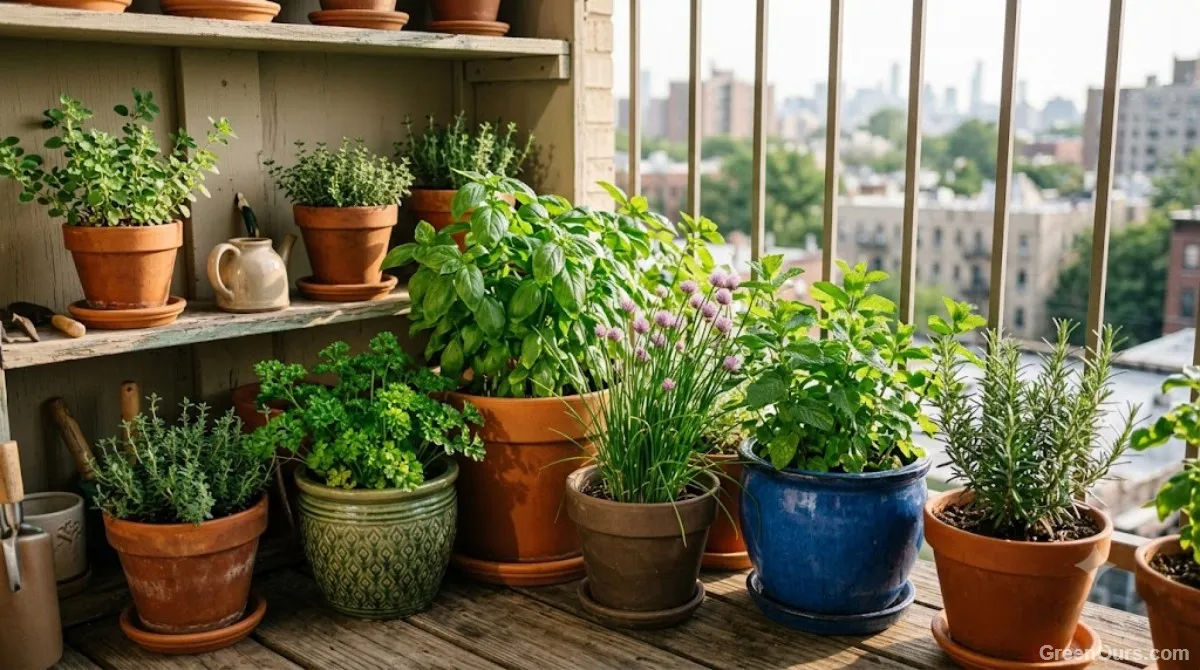
Check your balcony at 9:00 AM, 1:00 PM, and 5:00 PM. Note where direct sun hits concrete or brick, as these thermal zones dry small pots out fastest.
Selecting Herbs by Balcony Exposure Zone
Match your plant choices directly to your balcony's environmental zones rather than buying purely based on culinary preference.
High-Exposure Railing Zone
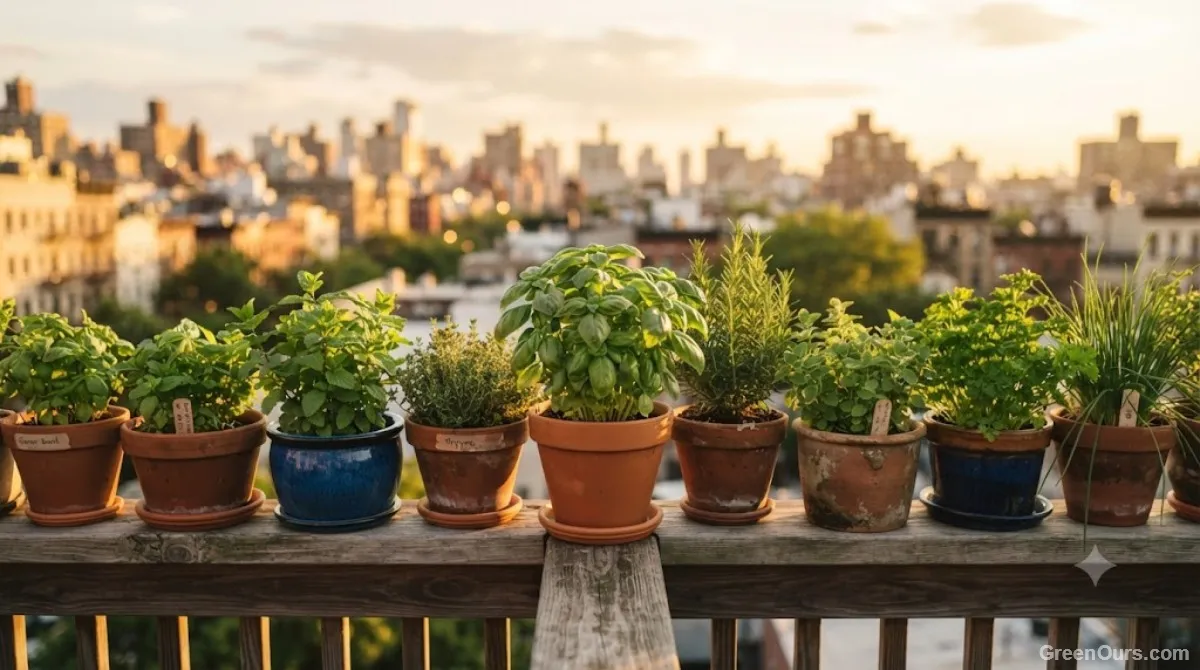
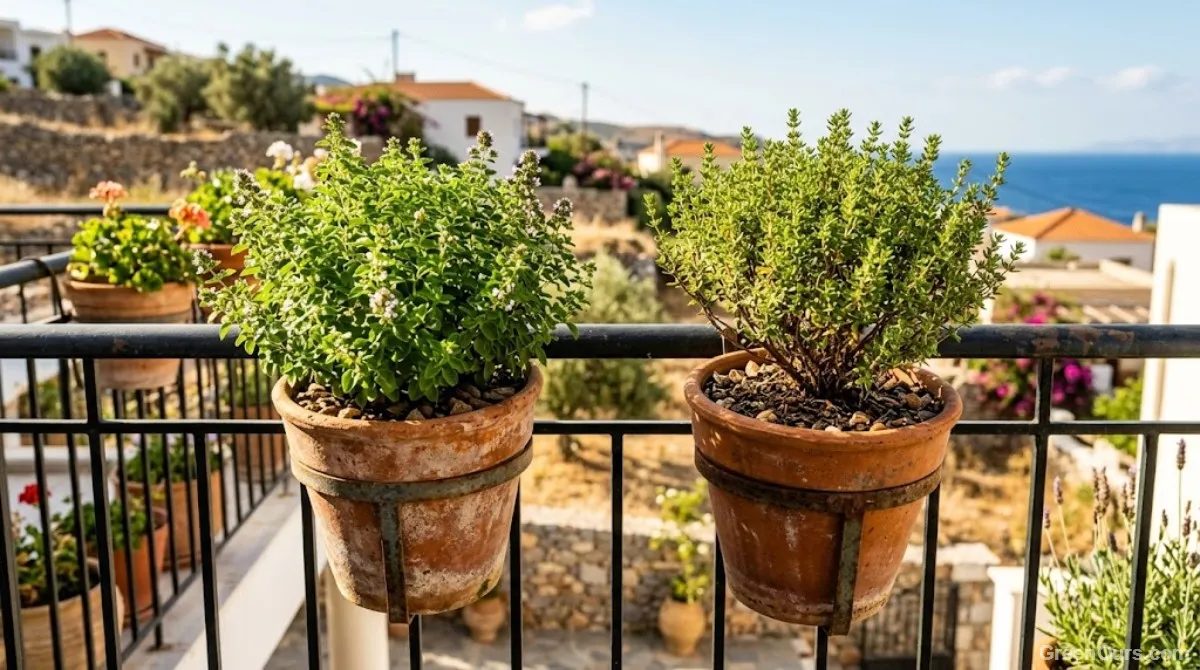
Railings receive unshaded sunlight and high airflow. Mediterranean perennials—thyme, oregano, and winter savory—are biologically structured for these intense conditions. Their narrow, waxy, or hairy leaves minimize water loss under bright sun and high winds. Chives also excel here, as their slender, tubular foliage bends with wind gusts without snapping.
Sheltered Corner and Wall Zone
Recessed alcoves, floor corners, and shaded areas under overhangs protect delicate foliage from scorch and wind-shear. Parsley, cilantro, chervil, and mint thrive in these lower-energy pockets. Mint should always occupy its own dedicated pot to prevent its invasive runner roots from choking nearby roots.
Pot Materials and Thermal Protection
Container material dictates how quickly root zones heat up and dry out on elevated balconies. Porous terracotta allows excellent aeration and root breathing, making it suitable for sun-loving, drought-tolerant herbs like thyme and oregano. However, in intense direct sun and wind, unglazed terracotta evaporates water very fast, requiring daily soil checks.
For moisture-sensitive herbs or exposed railings, double-walled resin, fiberglass, or glazed ceramic pots provide thermal insulation that protects delicate root systems from overheating. Avoid thin, dark plastic pots in direct sun, as dark surfaces absorb solar radiation and cook root systems in midsummer.
Always prioritize pot volume over convenience. Small pots under eight inches dry out within hours during summer heat waves. Using pots ten inches or larger provides enough soil volume to insulate roots against temperature spikes.
Wind Mitigation and Container Clustering
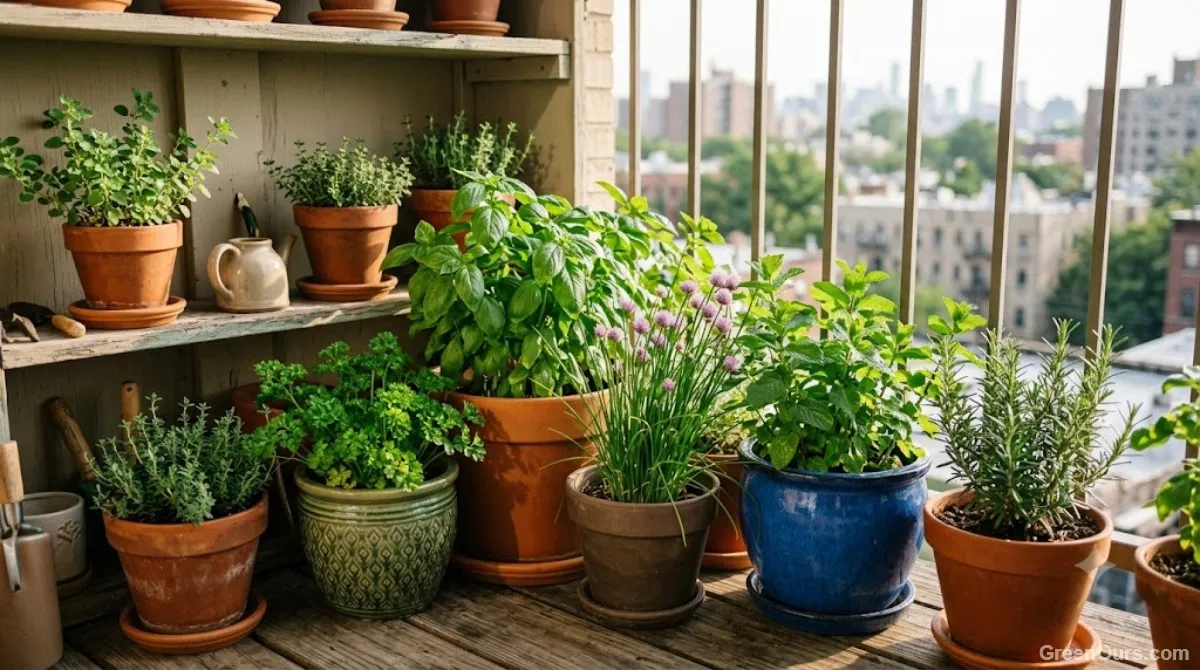
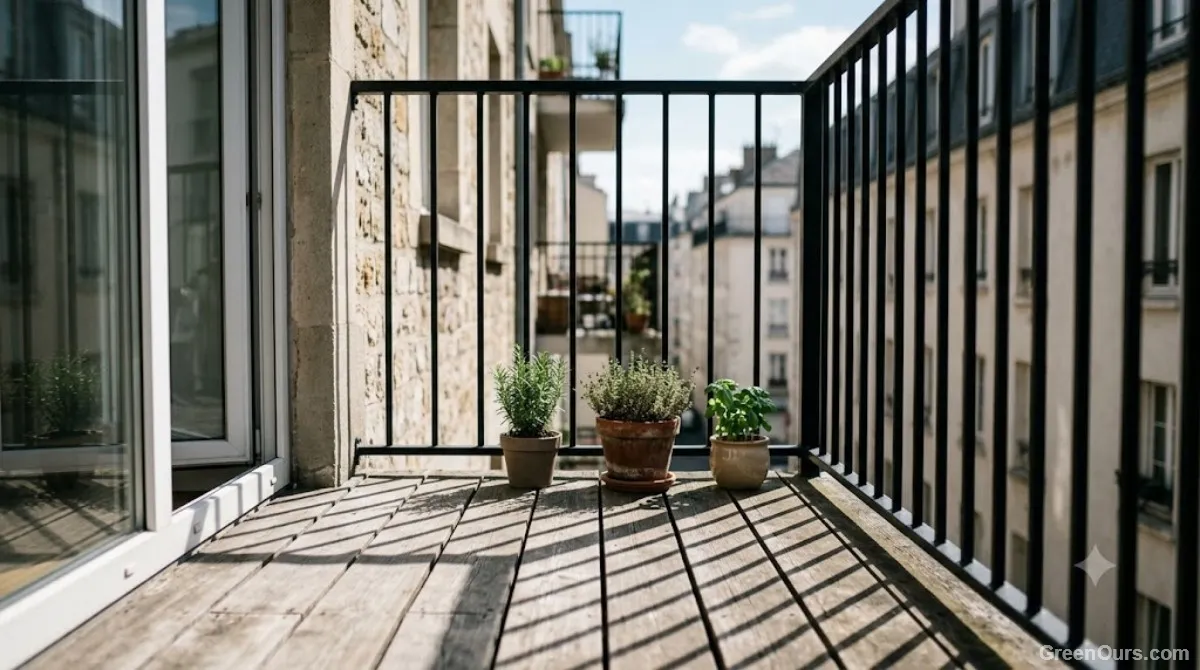
High wind is one of the most under-addressed challenges in balcony gardening. Rather than scattering individual containers across the floor or rail, cluster your pots together tightly against interior walls or corners.
Grouped containers create a localized micro-zone that traps humidity and reduces air movement around foliage. Position low-growing, heavy pots (like wide terracotta pans of thyme) on the outer edge as a windbreak, shielding taller, flexible herbs (like potted bay or upright rosemary) placed closer to the wall.
Watering and Heat Wave Management
Water balcony herbs based on actual soil conditions rather than a rigid calendar schedule. Insert a finger two inches into the soil: if it feels dry and cool, water thoroughly until excess drains from the bottom. Because surface soil on balconies dries quickly from wind, checking deeper moisture levels prevents both overwatering and drought stress.
During severe heat waves or high-wind advisories, temporarily move railing containers down to the balcony floor against interior walls. Moving pots out of direct wind during extreme weather preserves foliage and keeps lightweight containers safely anchored.
Explore more small-space growing guides