
Why Some Herbs Make Better Neighbors Than Others
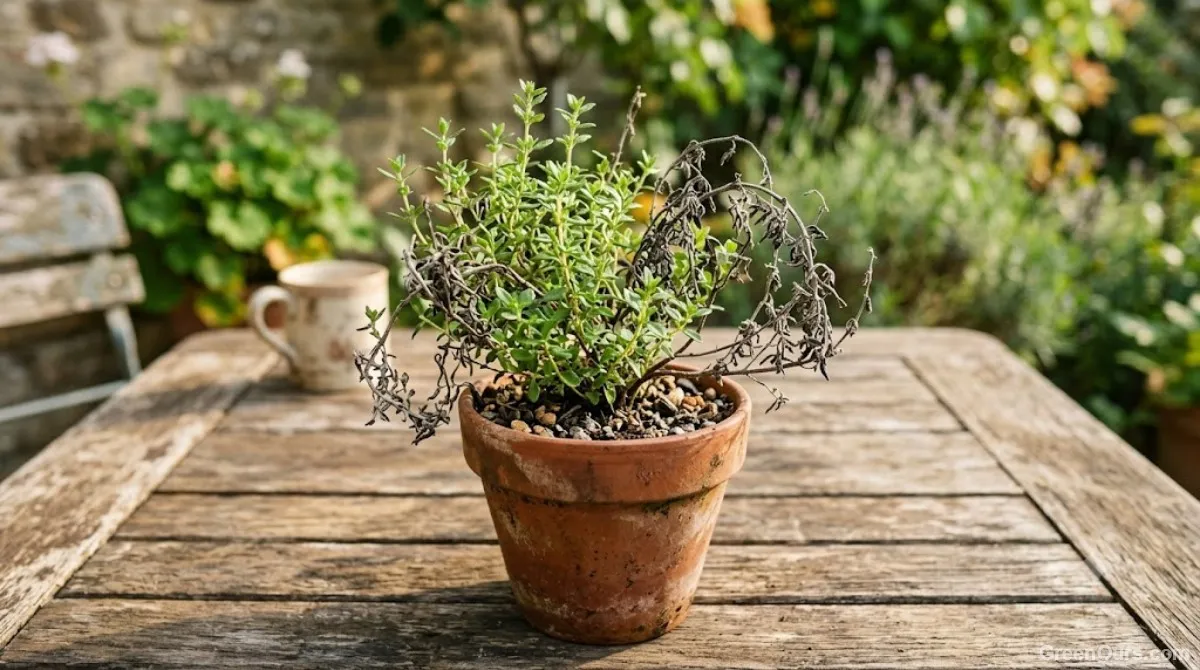
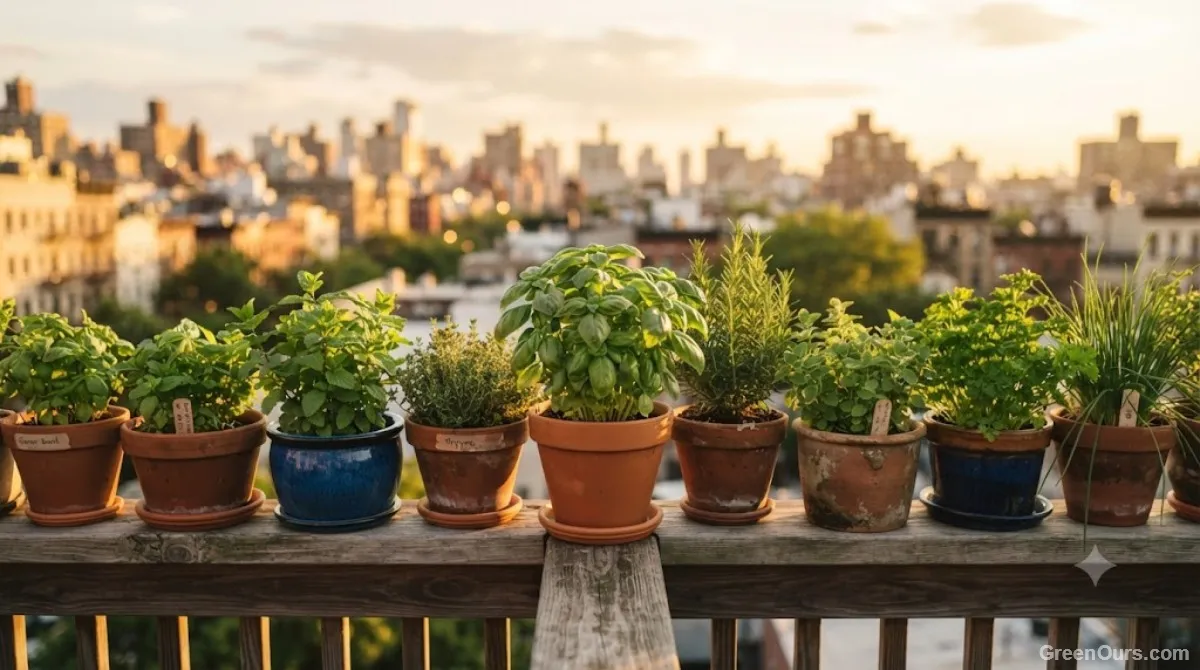
The single biggest factor in whether a mixed herb planter succeeds or struggles is water. Some herbs, such as basil, parsley, chives, and coriander (cilantro), like their potting mix to stay consistently moist. Others, such as rosemary, thyme, oregano, and sage, come from dry, rocky Mediterranean hillsides and can suffer when their roots sit in damp mix for too long. Plant these two groups in the same pot and you'll spend all season hunting for a watering routine that makes everyone happy. You probably won't find one.
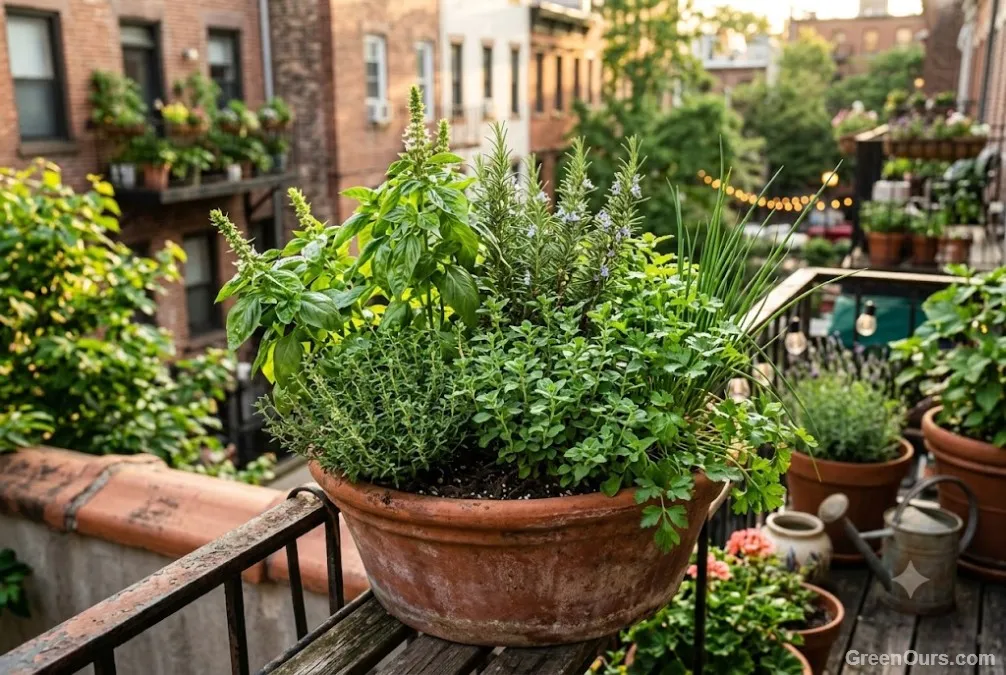
Growth habit matters too. Mint spreads through underground runners and will outcompete almost anything sharing its pot. Rosemary, given time, wants to become a shrub. Knowing how a herb naturally grows saves you from watching a beautiful planting slowly become a one-herb situation by midsummer.
Sunlight is simpler, because most culinary herbs agree: about six hours or more of direct sun is ideal. If your balcony or patio is shadier, parsley, mint, and chives are more tolerant than most.
Quick Compatibility Chart
| Herb | Likes | Good partners |
|---|---|---|
| Rosemary | Dry, fast-draining mix | Thyme, oregano, sage |
| Thyme | Dry conditions | Rosemary, oregano, sage |
| Oregano | Dry to lightly moist mix | Rosemary, thyme, sage |
| Basil | Consistent moisture | Parsley, chives |
| Parsley | Consistent moisture | Basil, chives, coriander |
| Mint | Moist soil | Best in its own pot |
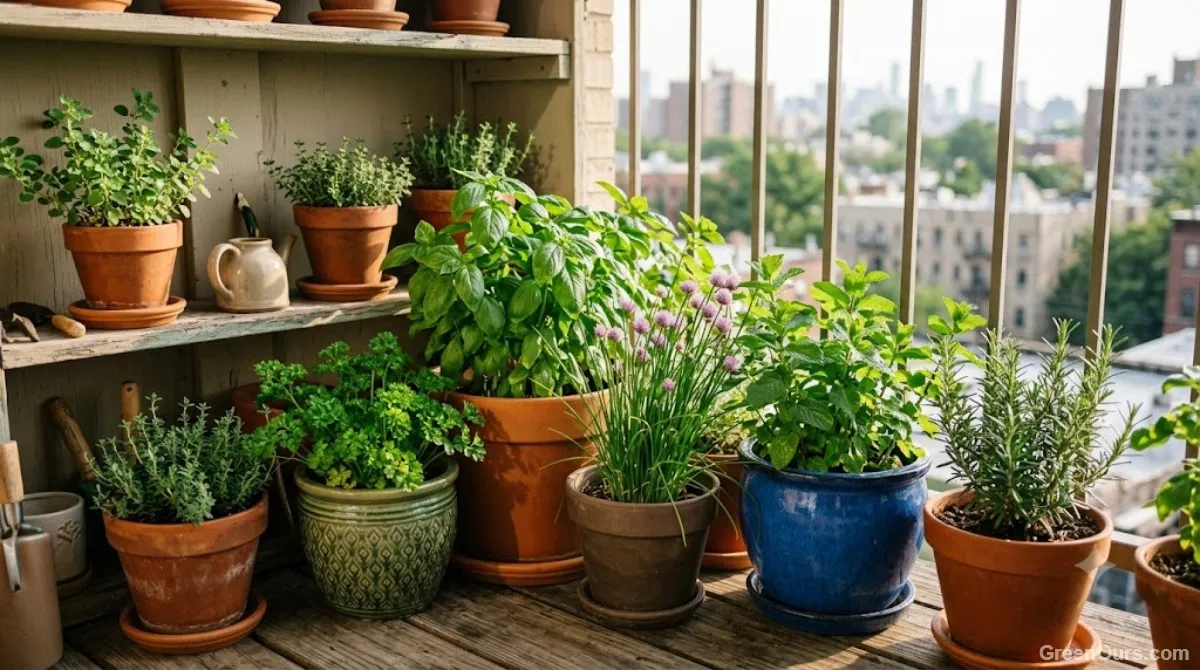
Think of herbs in two camps before you plant anything: Mediterranean drought-tolerant herbs (rosemary, thyme, oregano, sage, lavender) and moisture-loving herbs (basil, parsley, chives, coriander, mint). Keep each camp together, and your watering decisions become straightforward.
The Mediterranean Group: Rosemary, Thyme, Oregano, and Sage
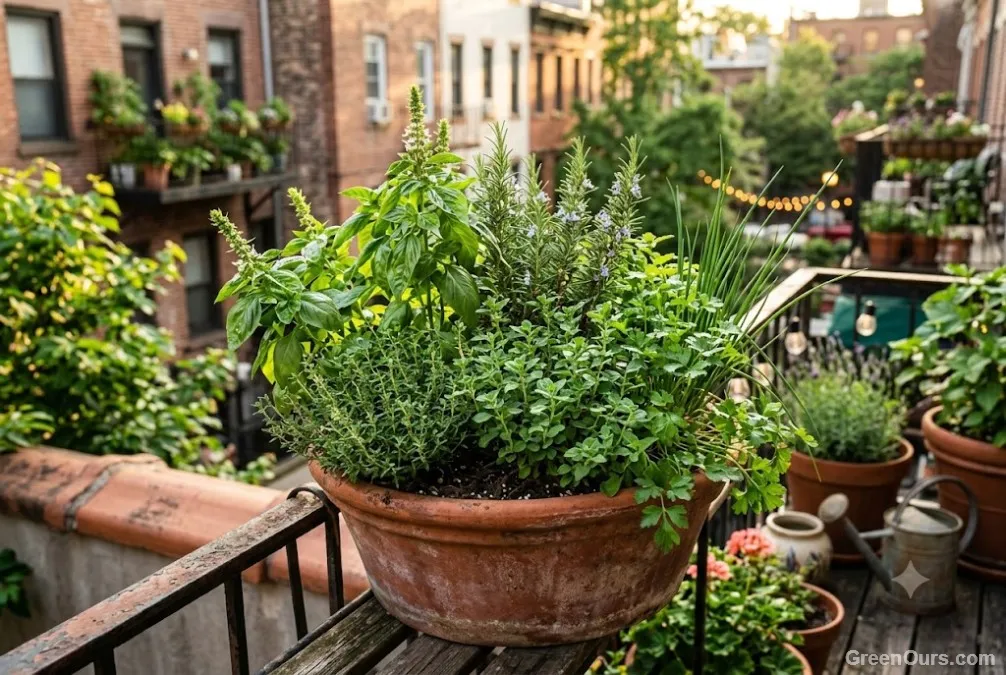
These four herbs come from the same general part of the world and want the same things: gritty, free-draining mix, plenty of sun, and watering only once the mix has dried out almost completely. In a terracotta pot, which breathes and dries faster than plastic or glazed ceramic, they tend to be very happy together.
A practical combination for a medium-to-large pot (30 to 35 cm / 12 to 14 in across) is rosemary at the back or center, thyme spilling over one edge, and oregano filling the space between them. If your pot is wider, sage makes a handsome fourth addition, though it grows more vigorously than the others, so give it extra room.
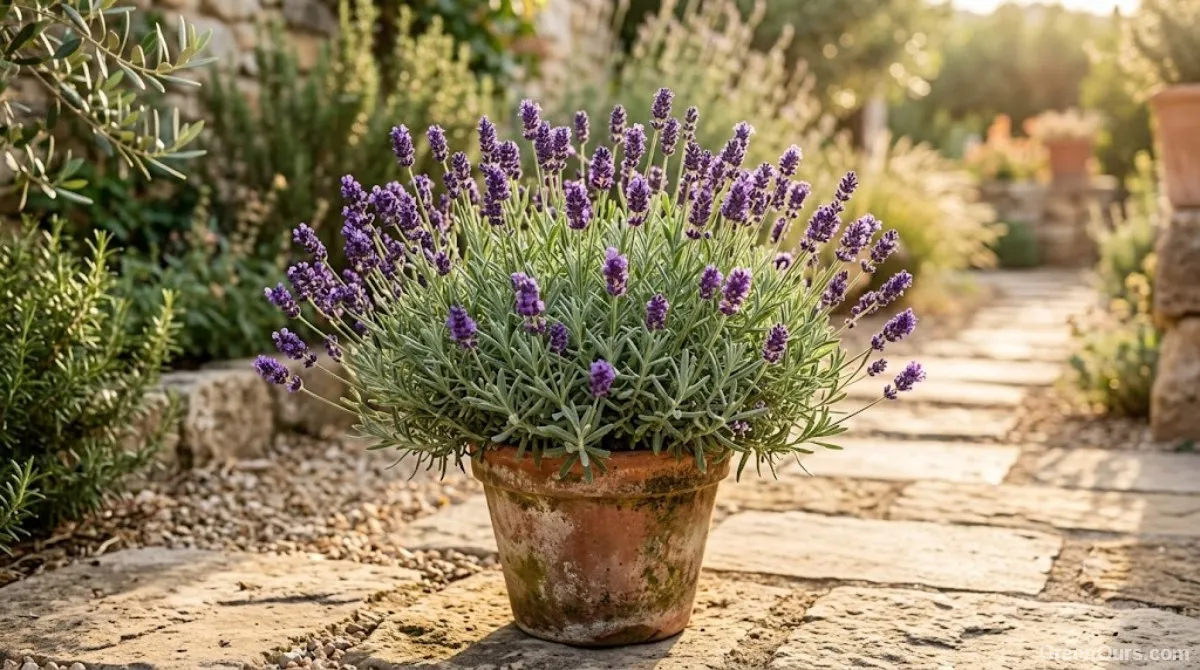
A note on lavender
Lavender can be grown alongside Mediterranean herbs, although culinary use depends on the variety and how it's grown. It tends to grow larger than the others over a season, and it can shade out thyme if it isn't kept trimmed back.
Watering the Mediterranean pot
Water deeply but infrequently, and let the mix tell you when. Push a finger about 2 cm (¾ in) into it, and if it still feels damp, leave it. In summer heat that might mean every few days, and in cooler or cloudier weather once a week or less, but pot size, material, wind, and plant size all change the answer. These herbs would rather be slightly too dry than slightly too wet.
The Moisture-Loving Group: Basil, Parsley, and Chives
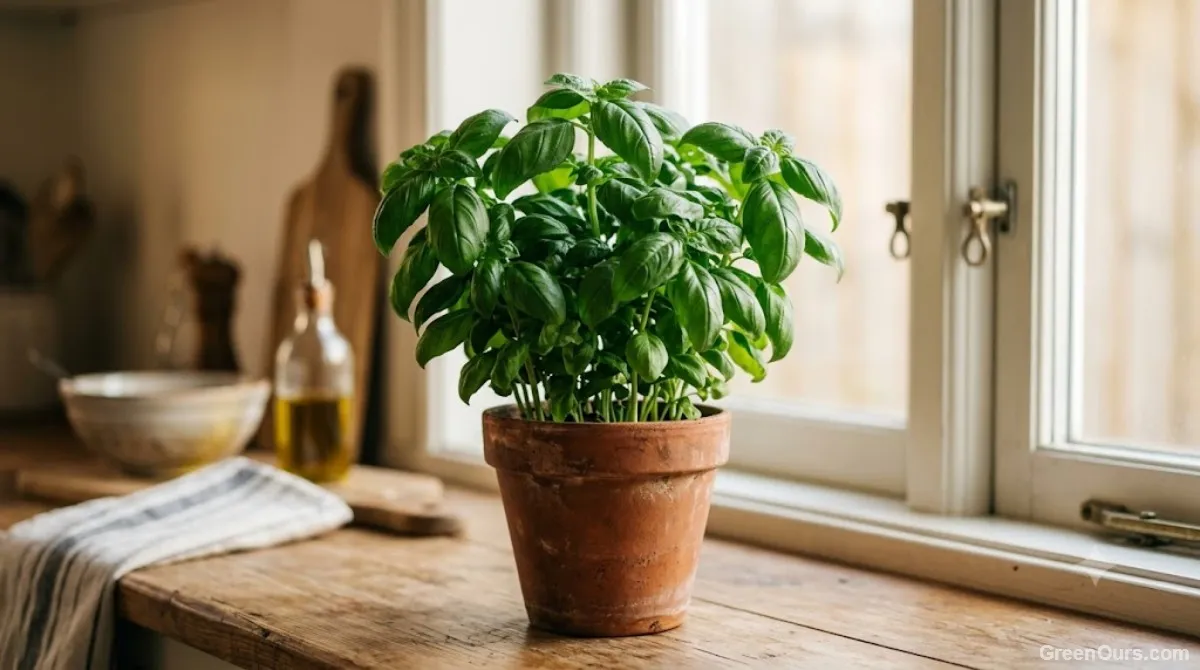
This group wants almost the opposite of the Mediterranean herbs: regular moisture, richer potting mix, and consistent attention. Basil in particular looks sorry for itself very quickly if it dries out. The leaves lose their gloss and the plant flags, and it often struggles to bounce back the way a thyme plant would after a dry spell.
Basil, parsley, and chives together in a wide planter (at least 30 cm / 12 in across, ideally deeper for the parsley's taproot) make one of the most useful kitchen combinations you can grow. They grow at similar rates, they won't crowd each other out, and they're content with the same watering rhythm.
Where coriander fits in
Coriander (cilantro) is moisture-loving and can share a pot with this group, but it has a tendency to bolt, rushing toward flowering and seed, especially in warm weather. If you're growing it for the leaves, keep the mix evenly moist, harvest regularly, and give it a slightly cooler spot than basil if you can.
Watering the moisture-loving pot
Check these daily during warm spells. The surface should feel just barely dry to the touch before you water again, not bone dry and not soggy. In a hot summer that may mean daily or every other day, but let the soil, not the calendar, decide. Good drainage holes and a saucer you empty regularly keep the roots moist without leaving them waterlogged.
Container Sizing: Getting the Pot Right
One of the most common reasons a mixed herb planter disappoints is a pot that's too small. Cramped roots compete for moisture and nutrients, the mix dries out unevenly, and the weaker herbs tend to get crowded out by the more vigorous ones.
For a two-herb combination, a 20 to 25 cm (8 to 10 in) pot is workable. For three herbs, aim for at least 30 cm (12 in). Four herbs want 35 to 40 cm (14 to 16 in) at minimum, and a wide window box or trough can work beautifully for a fuller planting. Depth matters too: parsley has a taproot that wants roughly 20 cm (8 in) to develop, while thyme and oregano are shallower-rooted and more flexible.
Material and drainage
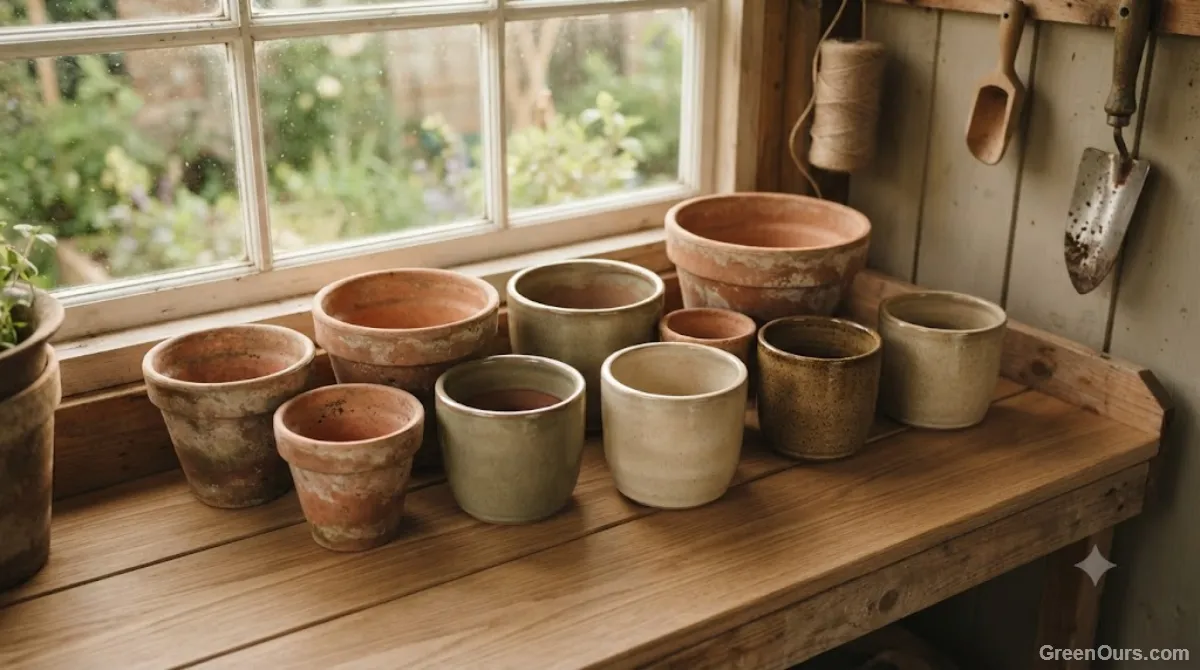
Terracotta suits the Mediterranean group because it breathes and dries faster between waterings. For the moisture-loving group, plastic or glazed pots hold moisture longer and often work better. Whatever the material, drainage holes are non-negotiable, and it's worth keeping them clear. You don't need a thick layer of gravel or crocks at the bottom. A well-draining potting mix and unobstructed drainage holes matter far more, and a gravel layer doesn't improve drainage the way many gardeners assume.
Mint: Grow It, But Give It Its Own Pot
Mint deserves its own section because it's both wonderfully useful and genuinely difficult to manage in a shared container. It spreads through underground rhizomes, horizontal root stems that travel outward in every direction, and it does this faster than most gardeners expect. Within a single season, mint can take over a pot and crowd out everything else in it.
The standard advice is to grow mint in its own pot, and it's good advice. A dedicated 20 cm (8 in) container of spearmint, peppermint, or apple mint on a shaded corner of the balcony will give you more than you can use.
If you want mint in a mixed planting, keep it in its nursery pot and sink that whole pot into the larger container. The plastic barrier slows root spread considerably, though it won't stop it indefinitely, so check every month or so and watch the drainage holes, where roots tend to escape.
Herbs That Are Harder to Combine
These plants can technically share a pot, but their moisture or growth habits differ enough to make one container hard to manage:
- Rosemary and basil: rosemary wants to dry out between waterings, while basil wilts if it does.
- Thyme and parsley: thyme prefers lean, dry conditions, and parsley likes steady moisture.
- Oregano and mint: mint's spreading roots tend to overwhelm oregano and want wetter soil.
- Sage and coriander: sage prefers drier conditions and coriander needs even moisture.
If you love a herb from each camp, the easy fix is two pots side by side, with each watered to suit.
Combinations Worth Trying This Season
If you're deciding where to start, here are three combinations that work well and cover a lot of culinary ground:
- The Italian pot: rosemary, thyme, and oregano in a terracotta container in full sun. Low maintenance and drought-tolerant, and useful for roasting, grilling, and pasta dishes from spring to the first frosts.
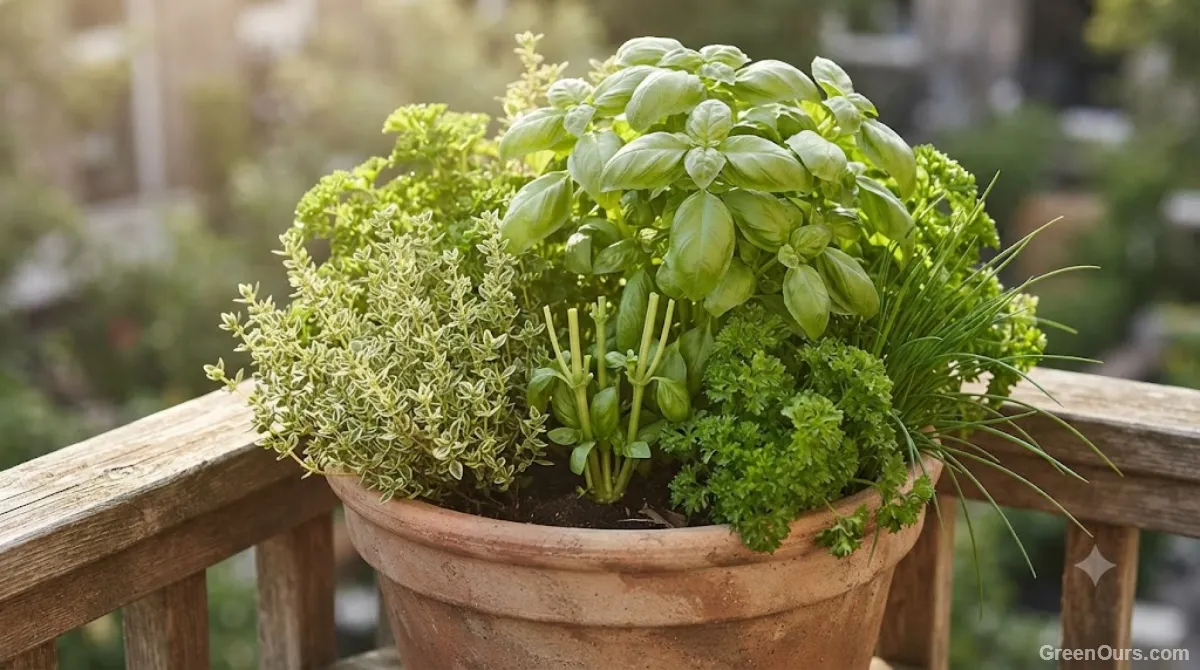
- The everyday kitchen pot: basil, flat-leaf parsley, and chives in a wide planter in a warm, sheltered spot. It needs more watering, but you'll reach for it almost daily. Add a second basil plant if you cook Italian food often, since a single plant is easy to strip bare.
- The window box: thyme, oregano, and sage in a long trough on a sunny windowsill or balcony rail. The trailing thyme softens the edges, and it works in both ornamental and culinary terms.
A Few Things Worth Knowing Before You Plant
Use a good-quality multipurpose potting mix as your base, and for the Mediterranean group, mix in around 20 to 30 percent horticultural grit or perlite to sharpen the drainage. Feed container herbs every two to three weeks through the growing season with a diluted liquid fertilizer, since they can't forage for nutrients the way ground-planted herbs can. Mediterranean herbs need less feeding, and too much can make them leggy.
Harvest regularly and generously. Snipping the top third of a basil plant encourages bushy, leafy growth rather than the leggy, flowering stems that mark the beginning of the end. The same principle applies to parsley and chives, and a light trim after flowering keeps the Mediterranean herbs compact.
Position matters more than most beginners expect. A mixed herb planter on a sunny wall will usually outperform the same planting in shade, sometimes dramatically. If you're working with limited light, lean toward the more shade-tolerant moisture-loving group rather than trying to coax Mediterranean herbs through a dim season.
Where to Start
A well-matched herb container doesn't need a lot of space, money, or expertise, just a reasonable understanding of what each plant needs and the good sense to keep the thirsty ones away from the drought-tolerant ones. Pick the combination that suits your cooking, get to know how it behaves through a season, and you'll find it becomes second nature to expand from there.
Ready to dig deeper into growing herbs at home? Explore more beginner herb growing guides.