
What to Do When You Bring Store-Bought Basil Home
Since that supermarket basil is usually where the trouble starts, it's worth handling the first week deliberately rather than just setting it on the counter and hoping. A little care right away prevents most of the wilting before it happens.
- Check whether the soil is dry or saturated before doing anything else — that tells you which direction to correct in.
- Move it to the brightest suitable spot you have (see Light below); most store displays are dimmer than an actual windowsill.
- Make sure water can actually drain. Nursery pot holes are often blocked by dense, tangled roots, so check that water is genuinely running through, not just sitting on top.
- Hold off on fertilizing right away — a stressed plant needs to stabilize before it can use added nutrients.
- If the pot is packed with many crowded stems, consider gently separating them into two or three clumps once the plant has settled in.
- Skip heavy pruning or harvesting for the first week or so, until the plant has adjusted to its new spot.
Why Basil Wilts Indoors (Even When You're Doing Your Best)
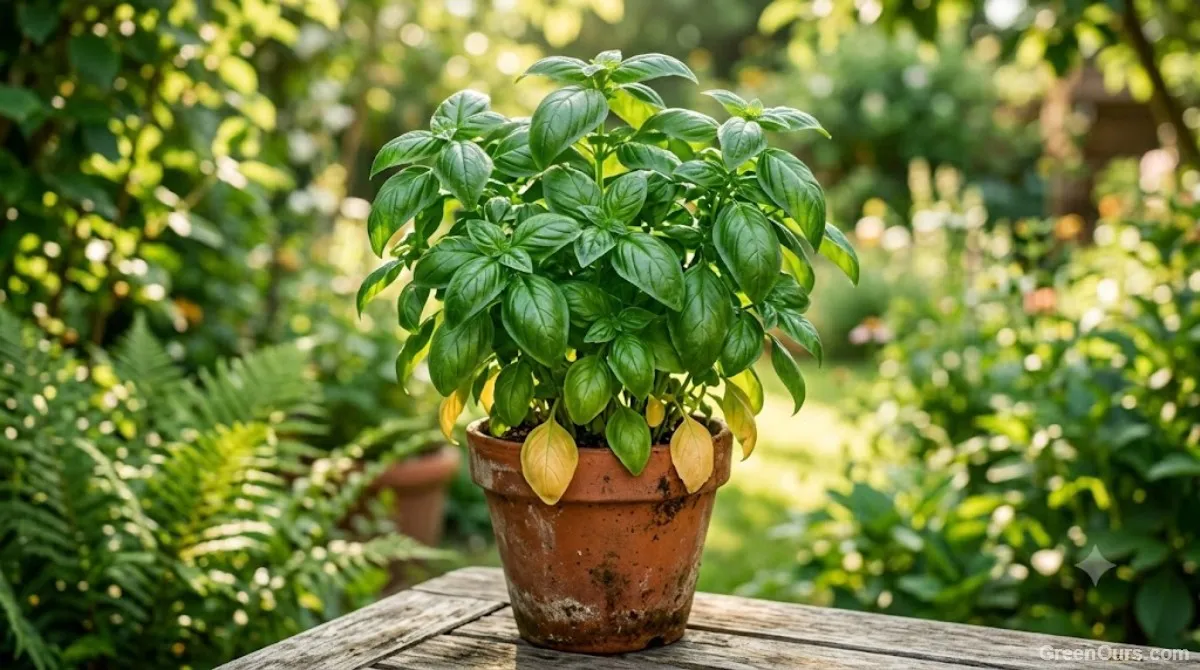
Basil wilts for a handful of reasons, and the tricky part is that two very different problems — too much water and too little — can look almost identical from a glance. A wilted basil plant with dry, crumbly soil is thirsty. A wilted basil plant with soggy, heavy soil is drowning, and its roots are likely struggling to breathe. Before you reach for the watering can, always check the soil first. It's the single fastest way to know which direction to correct in.
There's a third cause that catches a lot of new growers off guard: not enough light. Basil that's stretching toward a window, with pale or sparse leaves and long gaps between them, is often wilting from sheer exhaustion rather than a water issue at all. It's putting so much energy into reaching for light that it doesn't have much left to hold its leaves up.
Light: The Non-Negotiable Basil Needs
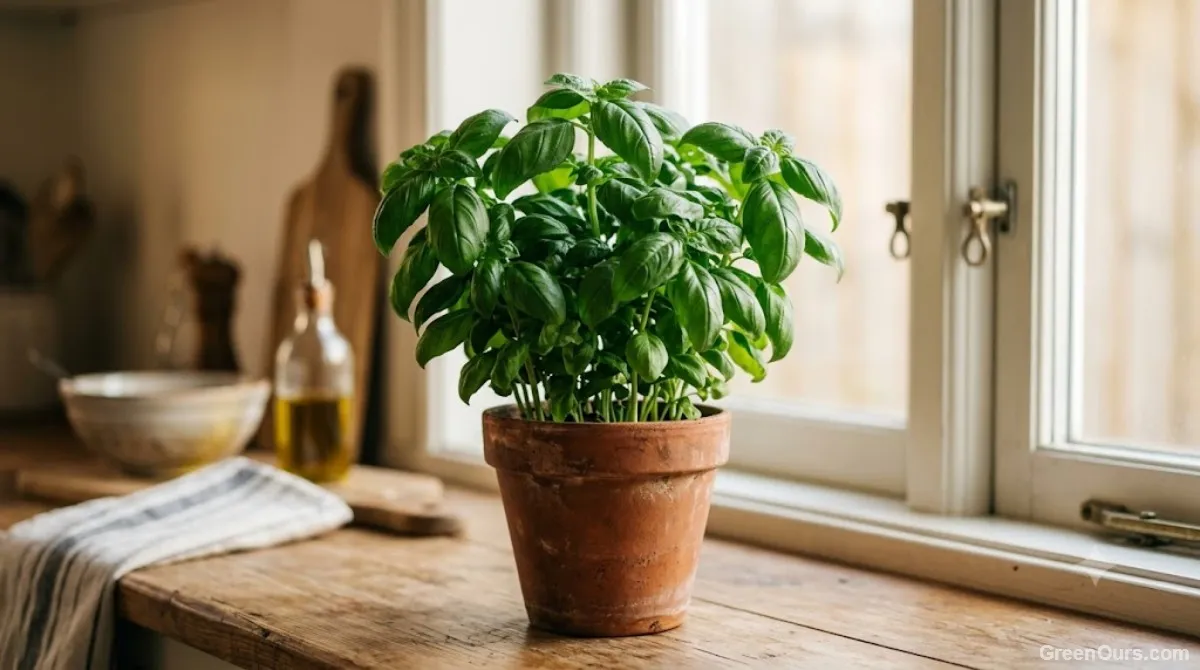
Basil wants at least six hours of bright light a day, and it's genuinely happiest with direct sun for part of that. A south-facing windowsill is ideal in most homes. East-facing works well too, especially if the morning sun is strong where you live. West-facing can work, but afternoon sun through glass gets intense, so keep an eye out for scorched, papery patches on the leaves closest to the window.
If your only option is a north-facing window or a dim corner, basil will survive for a while but rarely thrives — you'll notice thin stems and small, widely spaced leaves. A small full-spectrum grow light, positioned roughly 6 to 12 inches above the plant and run on a timer for around 12 to 14 hours a day, solves this cleanly. It doesn't need to be expensive or elaborate, but distance and intensity matter as much as duration — a light that's too far away or too dim won't do much good even at 14 hours a day.
A simple light check: hold your hand about six inches above the soil at midday. If the shadow it casts is sharp and well-defined, that spot is bright enough for basil. A soft, fuzzy shadow means the light is too indirect.
Watering Basil Without Overdoing It
Basil likes consistently moist soil, but consistently moist is not the same as constantly wet. The most reliable approach is to water thoroughly when the top inch of soil feels dry to the touch, letting water run through the drainage holes until it comes out the bottom, then letting the pot drain fully before it goes back on its saucer.
Skip the light daily sprinkle that a lot of new growers default to. It keeps only the surface damp, encourages roots to stay shallow, and does nothing for the deeper soil where the plant actually needs moisture. Water again once the soil has reached that same level of dryness — the right interval depends on your pot, light, and season rather than a fixed number of days — and that rhythm will serve the plant far better than frequent shallow watering.
That store-bought nursery pot deserves special attention here — it's often packed with several seedlings sharing a small volume of soil, so it can dry out noticeably faster than you'd expect and may need checking both morning and evening for the first week or two. Underwatered basil droops but perks back up within an hour or so of a thorough watering; overwatered basil stays limp even after watering and may show yellowing at the base of the stems or a faintly sour smell from the soil. Dry indoor air, especially near heating vents in winter, speeds up drying further, so check a little more often during those stretches.
Pot choice matters here too. Basil in a container without drainage holes is far more likely to sit in trapped water and develop root problems, even if you're careful about how much you pour in. If you've inherited a decorative pot with no drainage, use it as a cachepot and keep the basil in its original nursery pot inside it.
When to Repot Basil
If you notice roots circling or pushing out of the drainage holes within the first couple of weeks, that's a sign it's outgrown its nursery pot already. Otherwise, a healthy indoor basil plant typically appreciates sizing up once, into a pot an inch or two wider, once it's established and growing steadily — there's no need to repot on a fixed schedule beyond that first check.
Pruning for a Fuller, Sturdier Plant
Pruning feels counterintuitive to a lot of beginners — cutting a plant back seems like it should weaken it, not help it. With basil, the opposite is true. Regular light pruning is one of the best things you can do for a full, upright plant that doesn't wilt or flop as easily.
Once your basil has at least six to eight sets of leaves, start pinching off the top set just above a pair of leaves lower down the stem. This encourages the plant to branch out sideways at that point instead of growing tall and leggy on a single stalk. A leggy, top-heavy basil plant is more prone to drooping simply because it doesn't have the structure to support its own growth.
Pinch off any flower buds as soon as you spot them, too. Once basil flowers, it shifts its energy toward seed production and the leaves turn noticeably more bitter. Removing buds regularly keeps the plant focused on producing the tender leaves you actually want.
How to Use Fresh Basil
Growing basil indoors is even more rewarding when you can harvest a little whenever you need it. Fresh basil works well in simple everyday dishes, and you usually don't need to harvest a large amount at once.
- Add it fresh. Tear or gently slice young basil leaves over pasta, pizza, salads, sandwiches, soups, or roasted vegetables just before serving — adding it near the end helps preserve the fresh aroma and flavor.
- Make a quick basil sauce. Fresh leaves can be blended with olive oil, garlic, nuts, and a little grated cheese into a simple pesto-style sauce, adjusted to suit whatever you have on hand.
- Use the stems wisely. Tender upper stems can be chopped along with the leaves. Older, tougher stems are better added to stocks and sauces, or left out entirely.
- Harvest only what you need. Instead of stripping many leaves at once, regularly pinch or cut stems just above a pair of leaves — this gives you fresh basil for cooking while encouraging the plant to branch out further, the same habit covered in pruning above.
For the best flavor, harvest in the morning once the leaves are dry and use them soon after picking. If you end up with more than you can use right away, skip the refrigerator — cold temperatures tend to darken basil leaves — and instead keep short stems in a glass of water at room temperature, changing the water every day or two.
Adjusting Care Through the Seasons
Winter
Daylight hours drop, and even a bright window in December delivers a fraction of the light it does in July. This is when a grow light earns its keep. Cut back on watering frequency slightly too, since the plant is growing more slowly and the soil takes longer to dry out.
Summer
Basil often grows fast enough in summer that you'll be pruning weekly rather than every couple of weeks. Watch for soil drying out faster near sunny windows, and keep the plant a few inches back from glass that heats up in direct afternoon sun.
Common Mistakes to Avoid
A few habits show up again and again in wilting basil: watering on a fixed schedule instead of checking the soil first, keeping the plant too far from a light source, letting it flower without pinching the buds, and using a pot with no drainage. None of these are hard to fix once you know to look for them, and correcting even one usually shows improvement within a week or two. If yellowing rather than wilting is your main symptom, it's worth ruling out separately — it doesn't always share the same cause.
Explore more beginner herb guides
Basil isn't a plant that punishes small mistakes forever — it bounces back quickly once its light, water, and pruning needs are actually being met. Give it a bright spot, a proper soak-and-drain rhythm, and a regular pinch here and there, and you'll have a plant that keeps producing leaves for cooking long after the store-bought version would have given up.