
Why Watering on a Schedule Sets You Up to Overdo It
A calendar doesn't know your apartment. It doesn't know that your living room gets less afternoon sun than your kitchen, or that your radiator kicked on last week and dried the soil out faster than usual, or that your pothos just pushed out three new leaves and is drinking more than it was a month ago. A fixed "every Sunday" routine treats every plant and every week the same, and that's exactly where overwatering sneaks in.
Plants don't use water at a constant rate. Growth, light, humidity, and pot size all change how quickly soil dries out, sometimes week to week. The plant that needed water every five days in July might only need it every twelve in November. Watering by the calendar instead of by the soil is the single most common habit behind root problems in houseplants — and it's an easy one to break.
Your plant's roots don't just need water — they need air in between waterings. Soil that stays constantly damp suffocates roots almost as fast as drought stresses them.
The Finger Test (And Two Backup Checks If You Don't Fully Trust It)
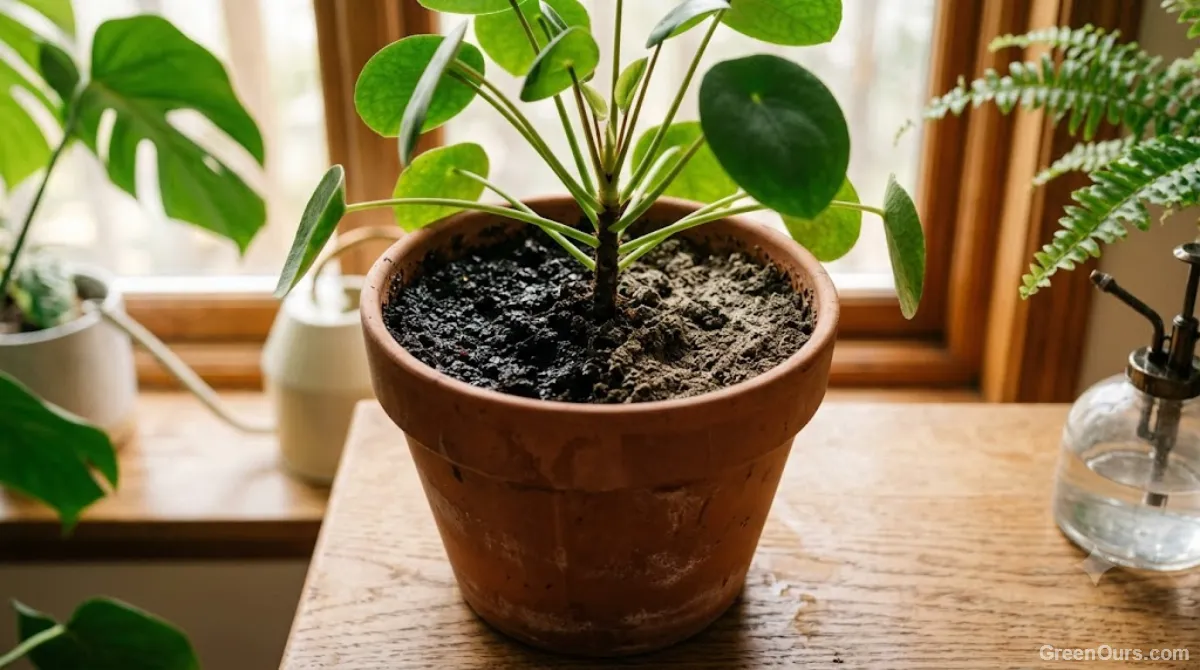
Skip the schedule and start with your finger. Push it into the soil up to your second knuckle, about two inches down. If it comes out with soil clinging to it and feels cool or damp, wait. If it comes out mostly clean and the soil feels dry at that depth, it's time to water.
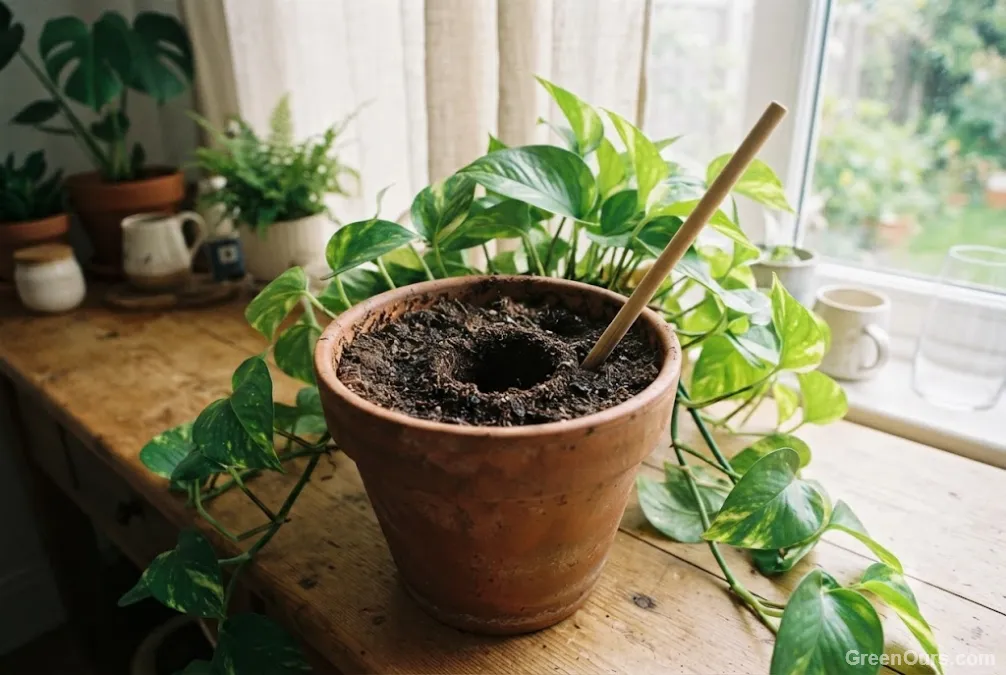
If you'd rather not get your hands dirty, a wooden skewer works the same way — push it in, pull it out, and check whether soil sticks to it. And if you like a number instead of a feeling, an inexpensive moisture meter will give you a reading without any of the guesswork. All three methods are checking the same thing: what's happening below the surface, not just what the top layer looks like.
What Your Leaves Are Already Telling You
Soil checks catch the problem early. Leaves tell you when it's already underway, and they're worth learning to read on their own.
Soft, Yellowing Leaves
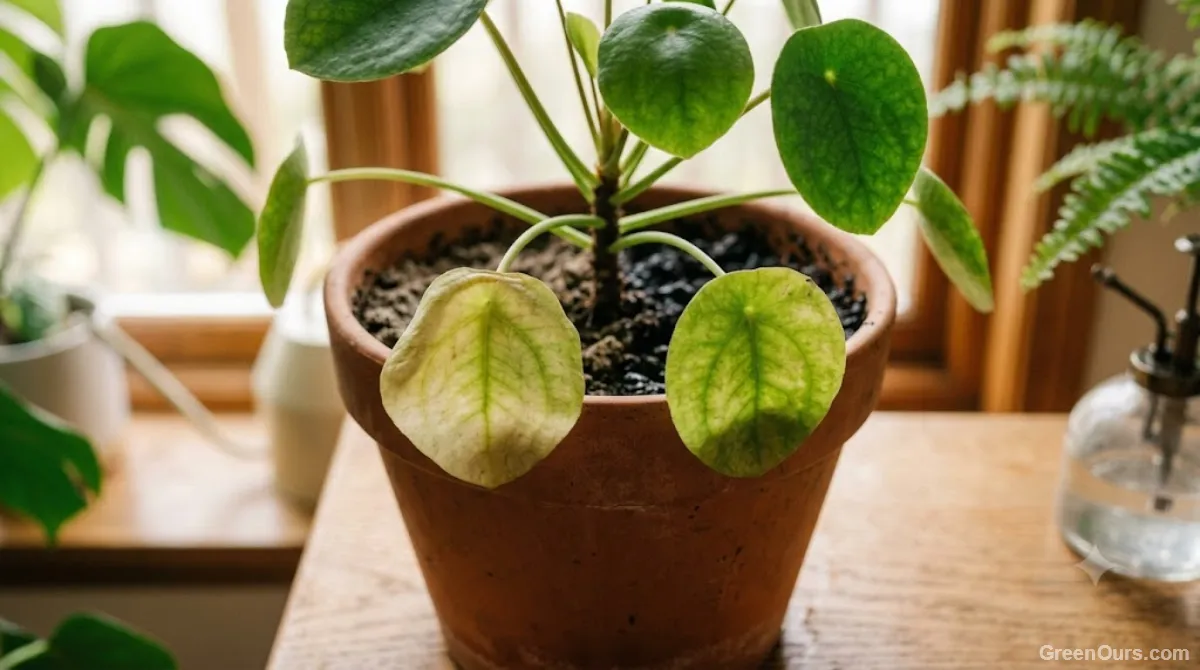
Overwatered leaves tend to yellow from the base of the plant first, and they'll often feel slightly soft or mushy rather than crisp. Underwatered leaves, by contrast, usually go dry and crispy at the tips before they yellow. That texture difference is the fastest way to tell the two apart.
Drooping That Doesn't Bounce Back
Underwatered plants droop and then perk back up within an hour or two of a good drink. Overwatered plants droop too, but watering them further makes it worse, not better. If your plant looks sad and your instinct is to reach for the watering can again, check the soil first — that instinct is exactly how overwatering compounds.
How Your Watering Habits Should Shift With the Seasons
Most houseplants slow their growth in fall and winter as daylight hours shrink, even indoors under artificial light. That slower growth means slower water use, which means the soil holds moisture longer between waterings — sometimes twice as long as it did in summer.
Rather than switching to a new winter schedule, just increase how often you run the finger test — check every few days instead of watering out of habit. You'll notice the rhythm naturally stretches out on its own, and by spring, when new growth appears, you'll feel the soil drying faster again and know it's time to pick the pace back up.
Habits Worth Breaking
A few small habits cause more overwatering than any single bad decision:
Watering a little bit every day "just in case" keeps soil perpetually damp and never gives roots a chance to breathe. Pouring water without checking whether the pot has drainage traps excess moisture at the bottom, out of sight. And letting a plant sit in a saucer full of runoff water re-soaks the roots hours after you thought you were done. None of these come from carelessness — they come from wanting to do right by the plant, just aimed slightly off target.
What to Do Next
Once you stop watching the calendar and start checking the soil, watering stops feeling like a guessing game. You'll get a feel for your specific plants in their specific spots, and that instinct only sharpens with time — no app, meter, or schedule required.
Ready for more calm, judgment-free plant care? Explore more beginner plant care guides.