
Why Peat-Based Mixes Stop Absorbing Water
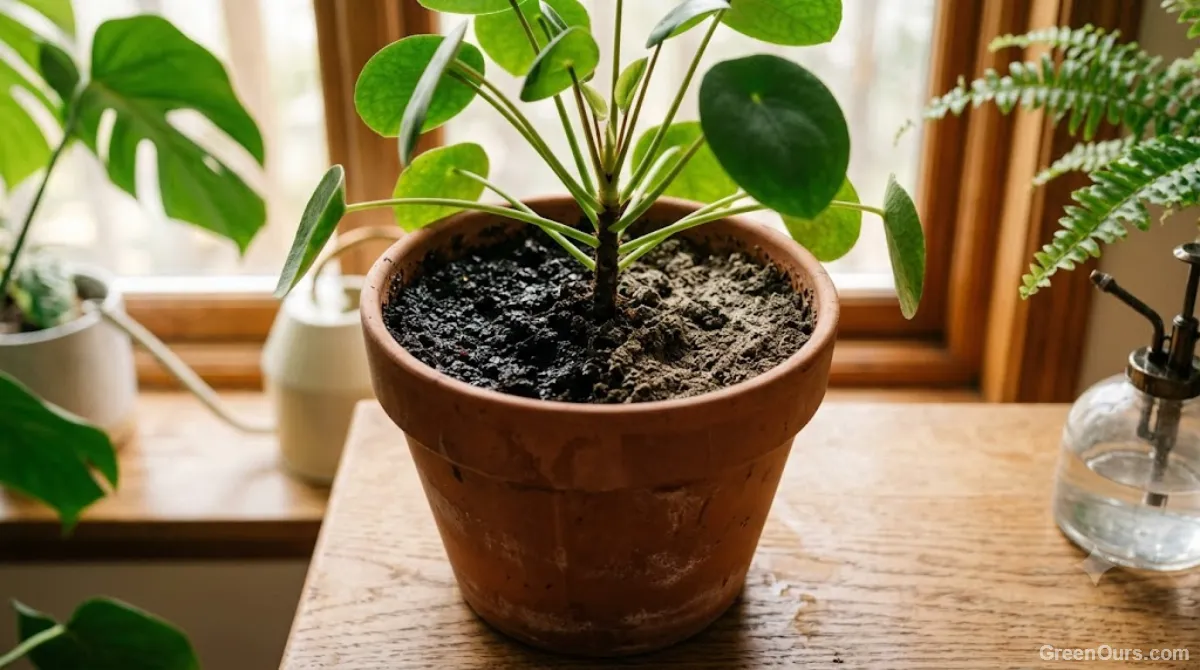
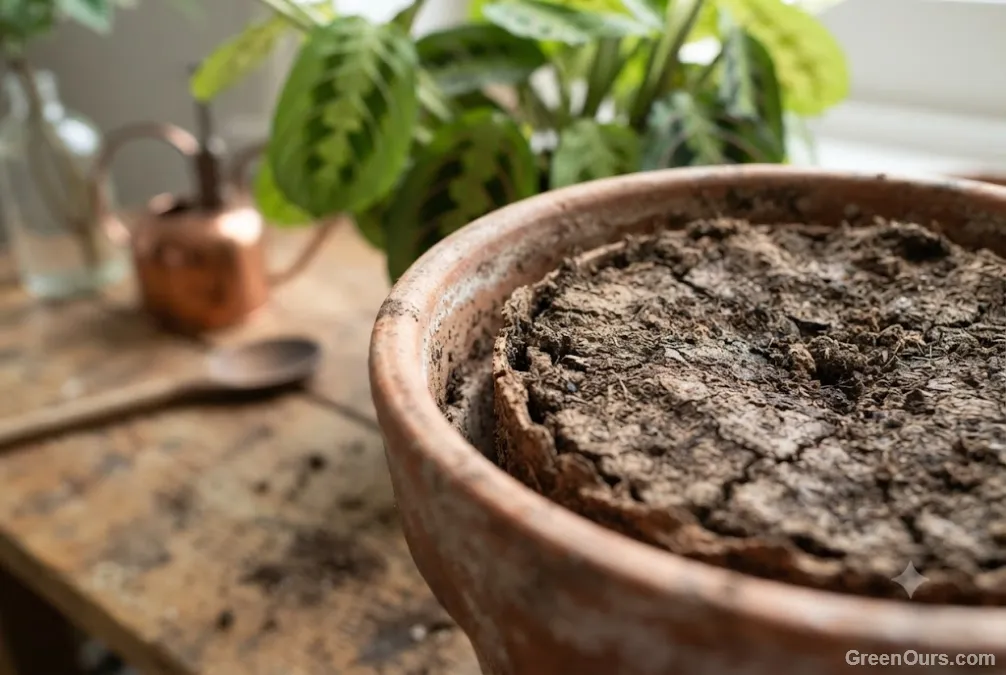
If you're wondering how to rehydrate dry potting soil, it helps to understand why potting mixes stop absorbing water in the first place. Peat moss and coco coir fibers are covered in organic compounds that stay flexible when moist. Dry them out completely, and those compounds harden into a waxy, water-resistant coating. The fibers shrink, pull apart, and leave air gaps where water used to travel by capillary action.
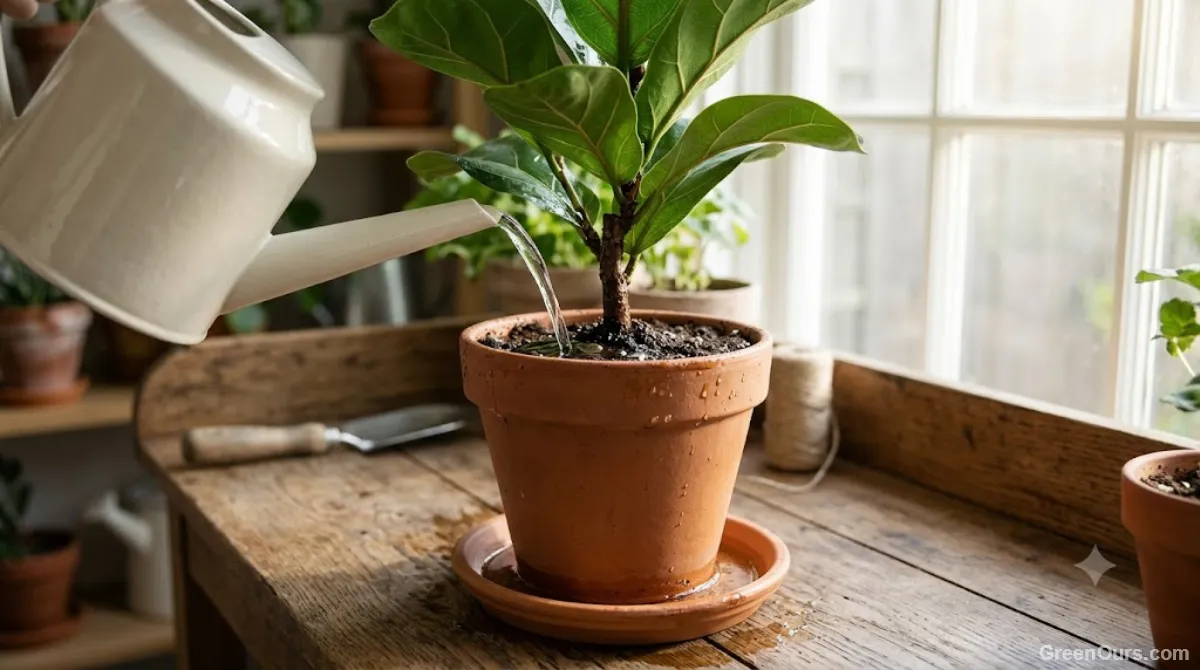
Once those gaps form, water behaves differently. Instead of spreading laterally through the mix, it channels straight down along the inside wall of the pot, where the soil has separated slightly from the plastic or ceramic. That's why you'll often see water running out the drainage holes within seconds of watering, even though the root ball is still dry to the touch.
How Far Gone Is the Soil? Reading the Warning Signs
Not every dry pot needs the same level of intervention. Three stages determine how much work you're in for.
Mildly dry: Water darkens the surface within a few seconds and the pot feels noticeably heavier afterward. One thorough soak solves it.
Moderately hydrophobic: Water beads, then slowly absorbs after 10–15 seconds. The pot feels only slightly heavier post-watering. Expect to repeat the soak two or three times over a single session.
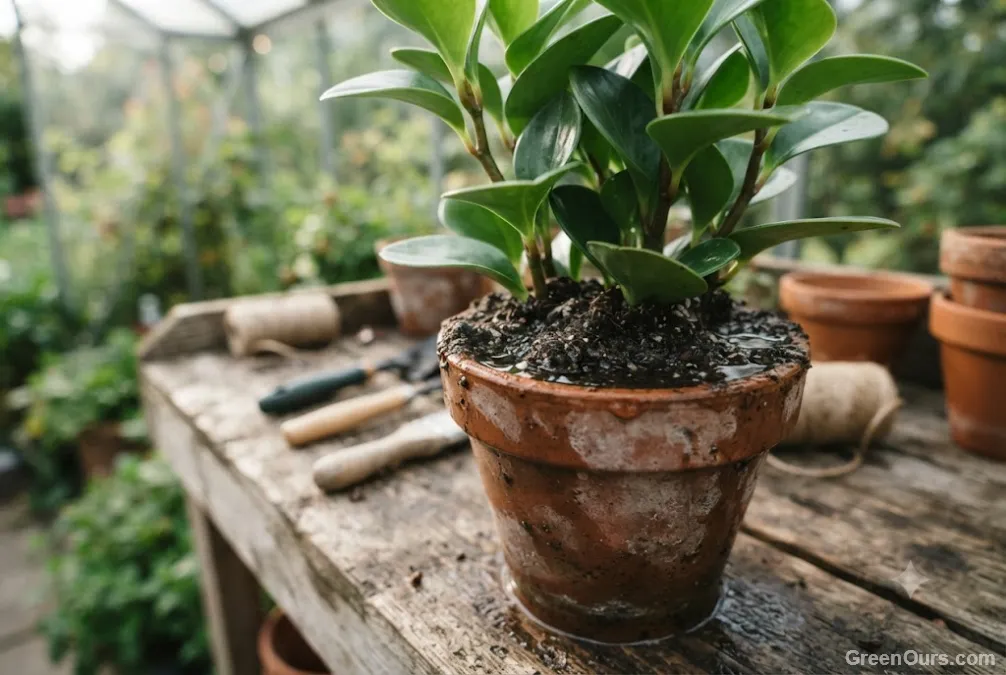
Severely hydrophobic: Water sits on the surface for 30 seconds or longer without absorbing, or runs off entirely. This mix needs a wetting agent, extended soaking, or replacement.
Run the float test before choosing a method. Drop a golf-ball-size clump of the dry mix into a glass of water. If it floats and beads instead of slowly sinking and darkening, the soil is genuinely hydrophobic — not just under-watered.
Three Reliable Methods to Restore Even Moisture
Bottom-Up Soaking
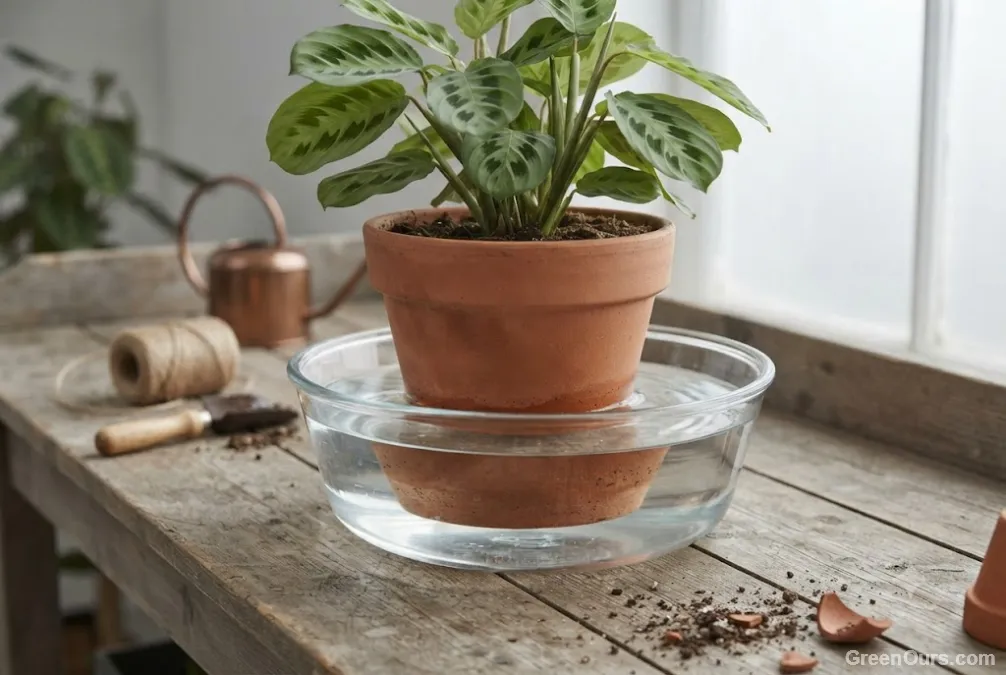
Set the pot in a basin or sink filled with water reaching two-thirds up the container's height. Leave it for 30 to 60 minutes. Water draws upward through the drainage holes via capillary action, rehydrating the mix from the bottom without disturbing the surface gap. Check weight every 20 minutes; a properly soaked pot feels noticeably heavier and no longer floats when nudged.
This method works best for pots under 8 inches in diameter. Larger containers need proportionally longer soak times — up to 90 minutes for anything over 12 inches.
Slow, Repeated Top Watering
Water in small amounts — roughly a quarter of the pot's usual volume — and wait 5 minutes between each pour. Each pass softens the hydrophobic coating slightly more than the last. Three to five passes typically restore full absorption in moderately dry mixes. This method takes longer than bottom soaking but works for pots too large to submerge.
Wetting Agents and Surfactants
For severely hydrophobic mixes, plain water isn't enough. A wetting agent lowers water's surface tension, letting it penetrate the waxy coating on dried peat fibers instead of beading on top. Mix according to label dilution — most concentrates call for roughly 1 teaspoon per gallon — and apply as you would a normal watering, following with a bottom soak 10 minutes later for full effect.
Comparing the Three Methods: Time, Effort, Reliability
Bottom soaking is the most reliable option for small to mid-size pots and requires the least monitoring once submerged. Slow top watering demands more attention but works on containers too large to move. Wetting agents cut rehydration time roughly in half on severely hydrophobic mixes, but they're an added cost and an extra step most moderately dry pots don't need.
For a plant showing stress from a single missed watering, bottom soaking alone usually resolves it same-day. For soil that's been fully dry for weeks — common after a vacation or a skipped watering schedule during a heatwave — expect to combine a wetting agent with repeated soaking over 24 to 48 hours.
When Replacement Beats Rehydration
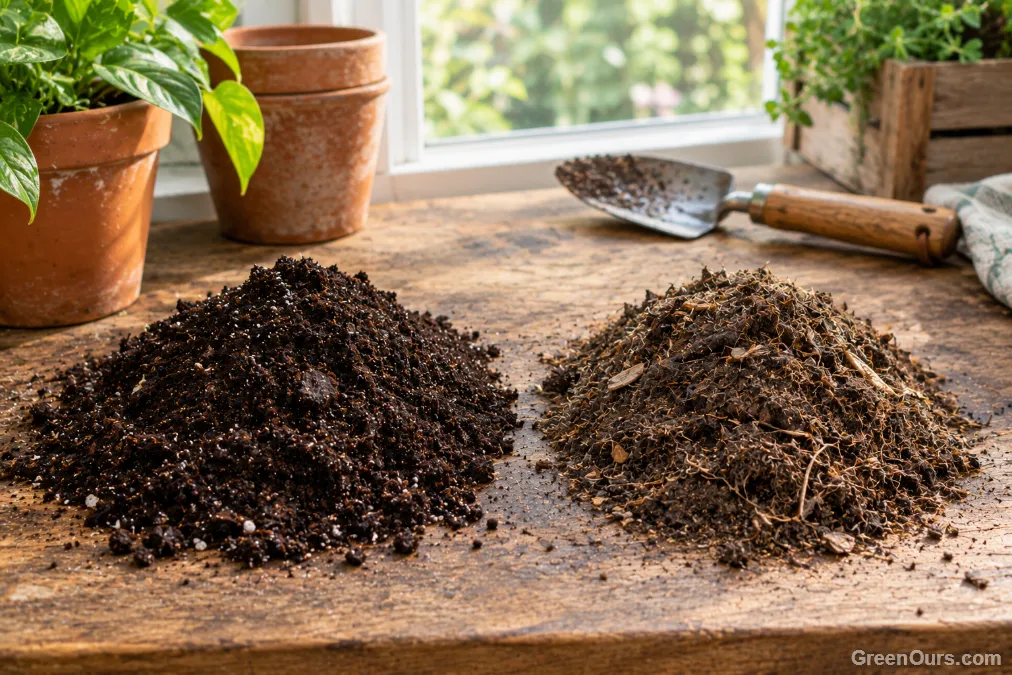
Some mixes are past saving. If the soil has fully hydrophobic patches after two rounds of soaking and a wetting agent, the peat fibers have likely broken down structurally — not just dried out. At that point you're fighting decomposed organic matter that's lost its pore structure permanently, not a moisture problem.
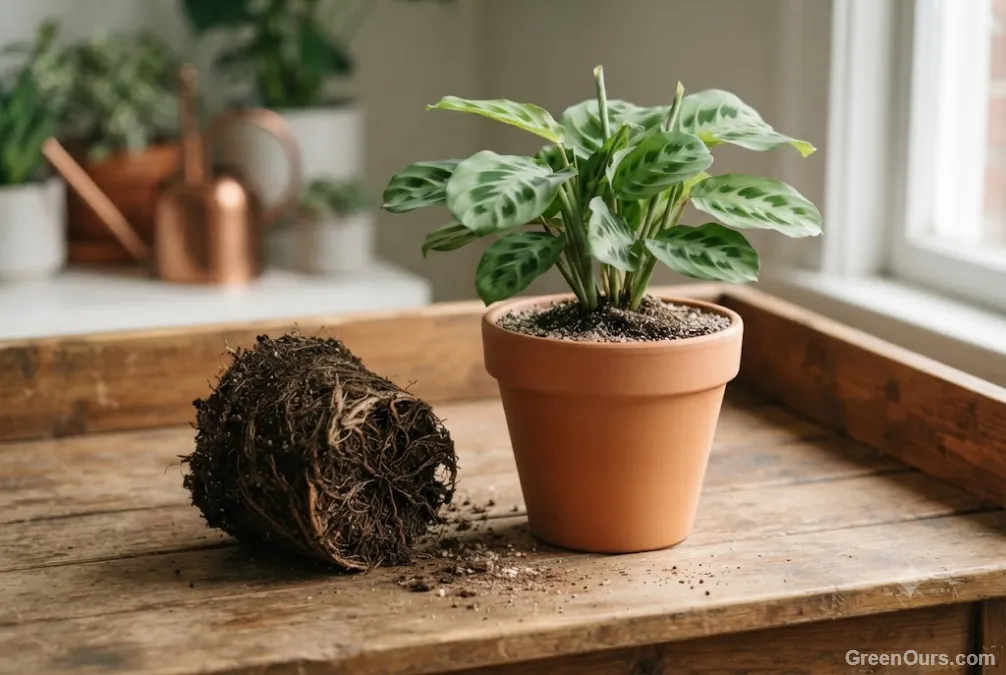
Repot instead. Gently break up the old root ball, rinse away compacted, water-repellent sections, and refresh with a mix that includes perlite or pumice for structural drainage. This is also the right moment to check for girdling roots, since a plant that's gone weeks without proper moisture often shows root stress that a rehydration soak alone won't reveal.
What to Do Next
Check pot weight before assuming a plant needs water at all. A hydrophobic mix that's actually been rehydrated properly will hold moisture for days longer than the same mix left to guess-water on a fixed schedule. Get the method right once, and the pot stops fighting you every time you reach for the watering can.
Run the float test on any pot that's drying out fast.