
What Yellow Leaves Are Actually Telling You
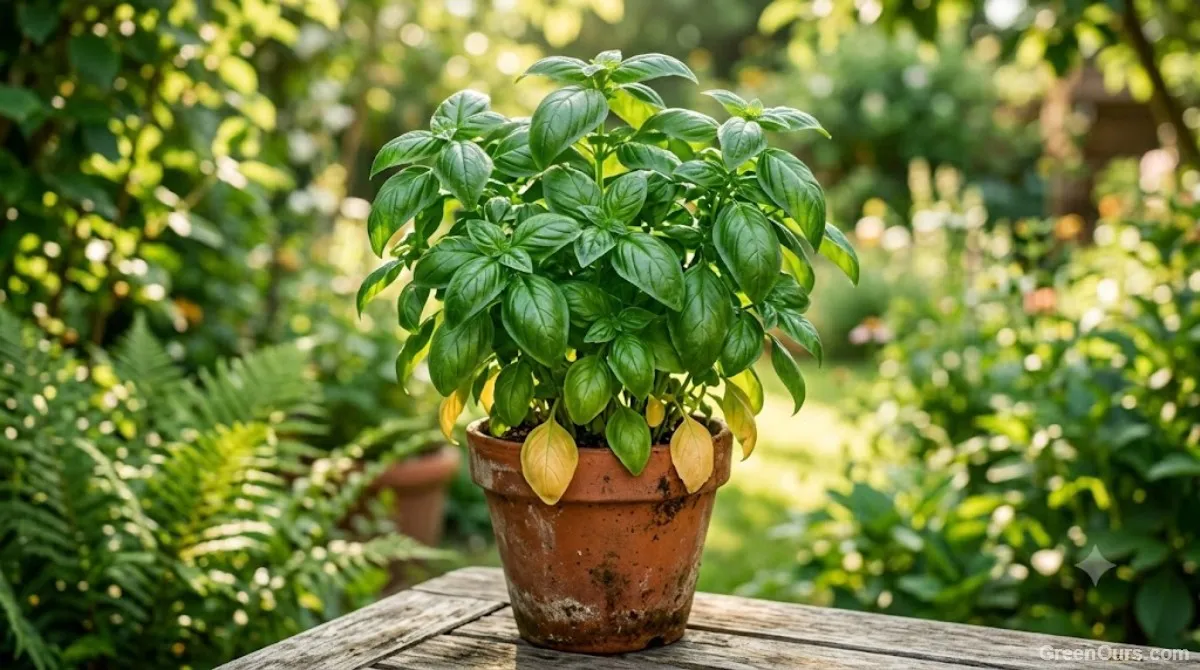
Basil doesn't have many ways to communicate distress, so it leans on its leaves. A yellowing leaf is basil's version of raising a hand — something in its environment has shifted, and it's redirecting energy away from that leaf to protect the rest of the plant. The trick is figuring out which shift caused it, since watering, light, and nutrients can look fairly similar at first glance.
Where the yellowing shows up on the plant is your first clue. Lower, older leaves turning yellow while new growth stays green usually points to something environmental, like watering or nutrients. Yellowing that starts at the top or spreads unevenly across younger leaves often has more to do with light or, less commonly, a pest you haven't spotted yet.
Use this table as a starting point. It lists common triggers rather than guaranteed causes, and more than one can overlap.
| What you see | More likely cause | First thing to check |
|---|---|---|
| Older bottom leaves yellow, new growth green | Normal aging, watering, or nutrition | Soil moisture |
| Several leaves yellow and soft or limp | Overwatering | Drainage and how wet the soil stays |
| Yellow, dry, papery leaves with wilting | Underwatering | Soil moisture |
| Pale growth and long, stretched stems | Too little light | Hours of bright light |
| Whole plant gradually paler | Low nutrients | Age of the potting mix and feeding |
| Yellowing with fine stippling or webbing | Pests | Undersides of leaves |
| Yellowing with a soft, dark stem base | Root or stem rot | Stem and roots |
| Yellowing after a cold night or a move | Cold or environmental stress | Temperature and drafts |
Start With the Roots: Watering Habits
Watering is one of the most common reasons basil leaves turn yellow, and it's often about too much rather than too little. Basil roots are shallow and sensitive, and they suffocate quickly in soil that stays soggy for days at a time. When roots can't breathe, they can't do their job feeding the plant, and yellow leaves are one of the first visible signs.
When It's Too Much Water
If the soil feels wet an inch (about 2.5 cm) down and the pot feels heavy every time you check it, you're likely overwatering. Yellowing from overwatering tends to feel slightly soft or limp rather than crisp, and you may notice the soil has a sour smell if it's been wet for a while.
When It's Too Little
Underwatered basil tells a different story. The yellowing leaves feel dry and papery, and you'll usually notice some wilting before the color even changes. This is the easier of the two problems to fix — basil recovers from a missed watering far faster than it recovers from waterlogged roots.
Before you water on your usual schedule, press a finger about an inch into the soil. If it's still damp, wait a day or two. This single habit prevents a lot of yellow leaves.
When Light Is the Real Issue
Basil is a sun-lover, and it generally does best with around six or more hours of bright light a day where that's practical. When light is limited, the plant starts prioritizing its newest growth at the top and lets older, shaded leaves yellow and drop — partly to save energy, and partly because those leaves simply aren't getting enough light to stay productive.
If your basil sits on a windowsill that gets bright morning light but goes dim by early afternoon, that's often enough of a gap to cause slow, steady yellowing at the base. Rotating the pot every few days so all sides get even exposure helps, and in the darker months, a simple grow light can make a bigger difference than most people expect.
Feeding Basil Without Overdoing It
Basil grown in containers can deplete its soil's nutrients faster than people expect, especially if you've been harvesting leaves regularly. A nitrogen shortage tends to show up as a general, overall paling of the leaves rather than one isolated yellow spot — the whole plant looks a shade lighter than it used to.
Follow the label on a diluted liquid feed during the growing season, which for potted basil often means every few weeks. Basil doesn't need heavy feeding, and too much fertilizer can stress the roots and cause the same yellowing you're trying to fix. If you're using a fresh, quality potting mix, you may not need to feed at all for the first month or two.
Other Causes Worth Ruling Out
If watering, light, and feeding all check out, one of these may be behind the yellowing.
Normal Aging
One or two of the oldest lower leaves yellowing now and then is usually just the plant retiring old foliage. If new growth looks healthy and the yellowing isn't spreading, you can pinch those leaves off and carry on.
Crowded Roots and Blocked Drainage
A pot-bound plant can dry out fast and yellow, and a pot with blocked or missing drainage holes can hold water around the roots. Slide the plant out to check for tightly circling roots, and make sure water actually drains from the bottom.
Pests and Disease
Yellowing paired with fine stippling, webbing, or visible insects on the undersides of leaves points to pests. Yellowing that comes with spots, lesions, or rapid decline may be disease. Isolate the plant from your other herbs while you sort out which it is.
Cold and Sudden Changes
Basil is a warm-weather plant, and cold drafts or nights that dip toward 50°F (10°C) can stress it. A recent move to a new spot can also cause a few leaves to yellow while the plant adjusts.
Bringing a Yellowing Plant Back to Health
Once you've identified the likely cause, recovery is mostly about consistency rather than any single fix. Start by trimming off the yellow leaves themselves — they won't turn green again, and removing them lets the plant put its energy toward healthy growth instead.
Next, adjust the one factor you've identified as the culprit, and give the plant time to respond. If it's watering, switch to checking the soil before every watering rather than following a fixed schedule. If it's light, move the pot somewhere brighter or add supplemental light. If it's nutrients, start a light feeding routine following the label.
Change one thing at a time so you can tell what helped. You may see improvement in new growth within a week or two, though it can take longer in cool or dim conditions.
How to Know When It's Too Late
Most yellowing basil bounces back, but it helps to know the signs that a plant is past saving. If the stem itself has gone soft, mushy, or dark at the base, that usually points to root rot advanced enough that recovery isn't likely. Widespread yellowing paired with wilting that doesn't improve after a watering adjustment is another signal that the roots may be too damaged to recover fully.
In those cases, it's often worth taking healthy cuttings from any remaining green stems and rooting them in water to start fresh, rather than trying to save the original plant. It's a small disappointment, but it's rarely a full loss.
Where to Start
If you only do one thing today, press a finger an inch into the soil and note where on the plant the yellowing began. Those two clues will point you to the right section above.
Yellow leaves feel alarming the first time you notice them, but they're one of the more fixable problems in herb gardening. Pay attention to the pattern, adjust one thing at a time, and give your basil a little patience — it's usually more resilient than it looks.
Ready to give your basil a checkup? Look at the roots, the light, and the soil this weekend.