
Why Mint Spreads the Way It Does
Most herbs you grow — thyme, rosemary, sage — form a tidy clump and stay roughly where you put them. Mint doesn't work that way. It spreads through rhizomes, thin underground stems that travel sideways through soil and send up new shoots as they go. Left alone in open ground, a single mint plant can push runners several feet from its original spot in one growing season, and each new shoot becomes its own independent plant with its own root system.
This is why mint planted directly into a garden bed so often ends up somewhere you never intended. It's not poor luck or bad soil. It's the plant behaving exactly as its root structure allows.
The One Planting Decision That Prevents the Chaos
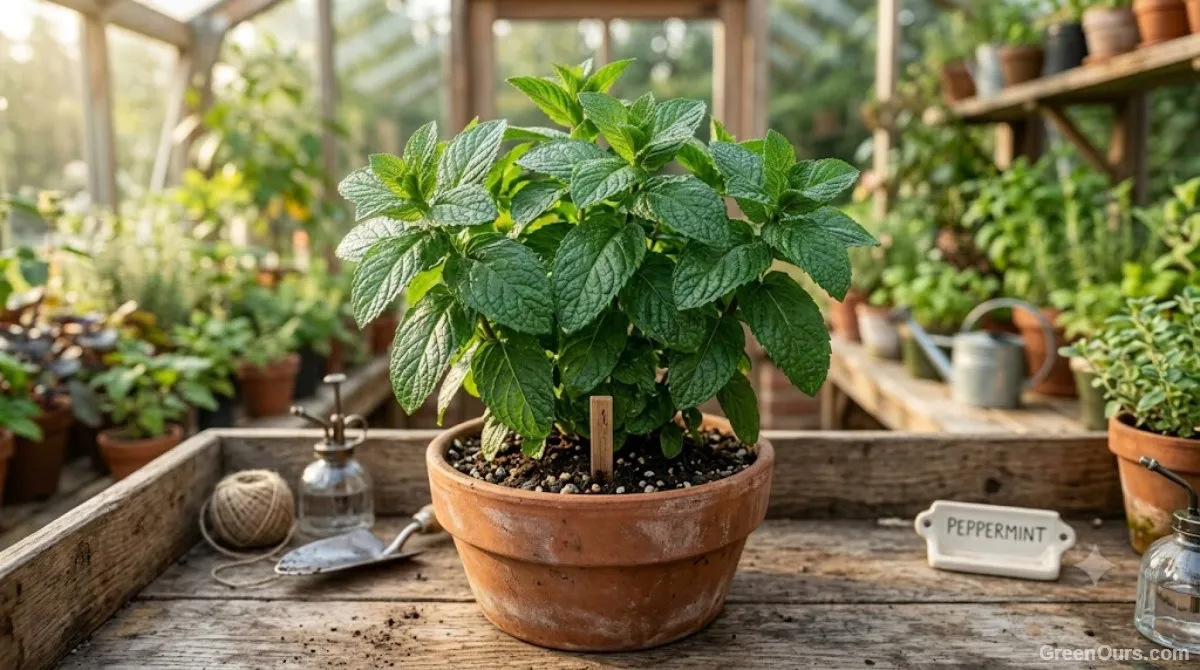
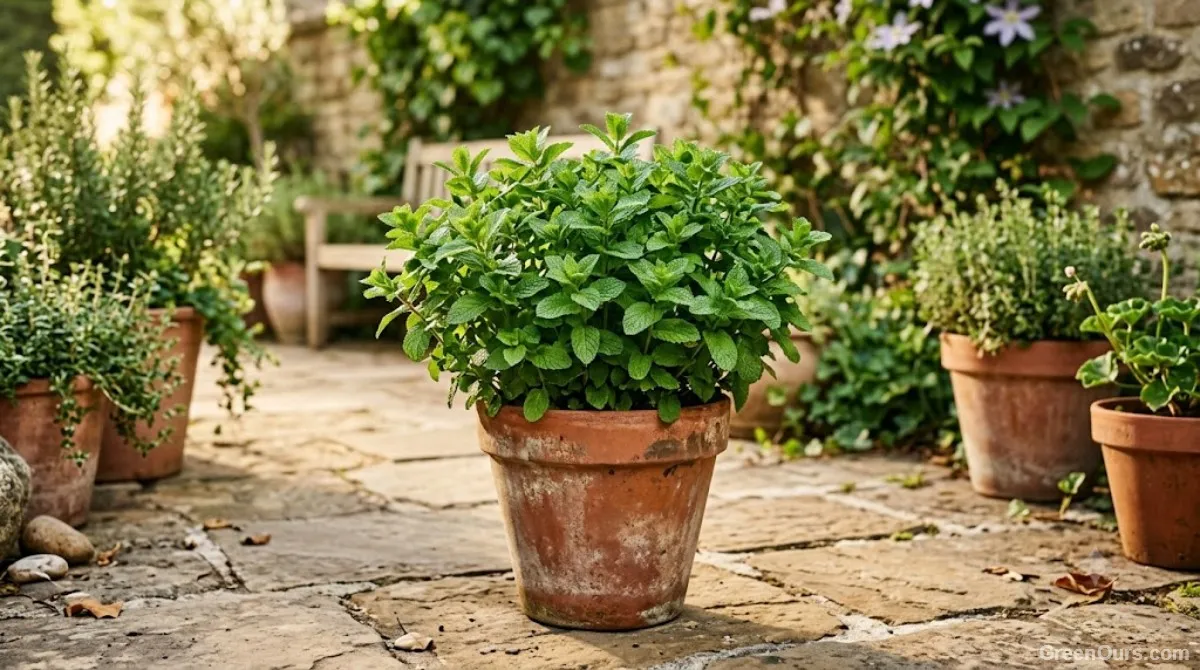
Grow mint in a container, and almost every spreading problem disappears before it starts. This can be a freestanding pot on a patio, or a container sunk into the ground so it looks like part of the bed — either works, as long as the rim sits at least two inches above the surrounding soil line. That small lip stops runners from arching over the top and rooting in the ground beside it, which is the most common way a "contained" mint plant escapes anyway.
A root barrier buried in open ground often fails within a couple of seasons — mint runners are patient enough to find the gaps. A proper container, with a raised rim, is the planting method that actually holds up long-term.
Can I Plant Mint in the Ground?
It's a fair question, especially if you already have an open garden bed and containers feel like extra hassle. The short answer: it depends on how much you're willing to manage afterward.
- Directly in an open garden bed — high risk. This is where mint earns its reputation, and once it's established, digging out every runner is a genuinely tedious, multi-season project.
- A freestanding container — the safest option, and the one this guide is built around.
- A container sunk into the ground — possible, and it gives you the in-ground look, but the rim needs to sit a couple of inches above the surrounding soil, or runners will simply arch over the top and root in the bed beside it.
- A raised bed — still risky unless the bed itself is fully lined or the mint is planted in its own sunken container within it. A raised bed's edges don't reliably stop rhizomes the way a proper container does.
If you're set on an in-ground look, the sunken container is genuinely the best compromise — you get the visual of a garden bed with the containment of a pot.
Choosing a Mint Variety and Getting It Planted
Picking Your Mint
Peppermint has a sharper, more menthol flavor and works well in teas. Spearmint is milder and sweeter, and it's the one you'll usually want for cooking. Chocolate mint and pineapple mint are fun for something less expected, but they behave exactly like their more common relatives, so the same container rules apply no matter which one you choose.
Planting in a Container
Pick a pot at least 12 to 14 inches wide with drainage holes in the bottom. Use a standard potting mix rather than garden soil, which tends to compact and hold too much water in a container. Loosen the roots gently before planting, set the plant so its crown sits just at soil level, and water thoroughly right after planting to help it settle in.
Placement and Light
Mint tolerates more shade than most herbs, but it's happiest with four to six hours of sun and consistently moist — not soggy — soil. A spot that gets hot afternoon sun all day will dry out fast and stress the plant, so morning sun with some afternoon shade is often the sweet spot.
How Often Should I Water Mint?
Rather than watering on a fixed schedule, check the top inch of soil with a finger. If it feels dry, water thoroughly until it drains from the bottom of the pot; if it's still cool and slightly damp, wait a day or two and check again. Mint in a container generally needs checking more often than an in-ground plant would, since pots dry out faster — during a hot stretch, that can mean checking daily.
Keeping Mint Happy Without Letting It Run Wild
A Simple Pruning Rhythm
Pinch back the growing tips every couple of weeks once the plant is established. This does two things at once: it keeps the plant bushy instead of leggy, and it stops flowering, which tends to make the leaves taste bitter. Around midsummer, when growth gets dense and a little unruly, cut the whole plant back by about a third. It looks drastic for a few days and then comes back fuller than before.
Harvesting as You Go
The best part about mint is that regular harvesting basically is the pruning routine. Snip stems just above a leaf pair whenever you're cooking or making tea, and you'll naturally keep the plant compact without setting aside separate maintenance time for it.
How to Use Fresh Mint
Once you're harvesting regularly, it's worth having more than one use in mind so you're not stuck wondering what to do with a full handful of stems.
- Tea. A few fresh leaves steeped in hot water make a simple, fragrant cup — no measuring required.
- Infused water. Bruise a few leaves and drop them into a pitcher of water for a refreshing, low-effort upgrade.
- Salads. Torn mint adds brightness to fruit salads and green salads alike.
- Sauces and chutneys. Mint sauce and mint chutney both rely on fresh leaves rather than dried, and the flavor difference is noticeable.
- Desserts. A few leaves finely chopped work well folded into fruit desserts or as a garnish.
- Cocktails and mocktails. Muddled mint is the backbone of drinks like mojitos and works just as well in a non-alcoholic version.
- Vietnamese and Southeast Asian dishes. Fresh mint is a staple herb alongside cilantro and basil in many noodle salads and wraps.
Fresh mint doesn't keep especially well once cut, so harvest what you plan to use within a day or two rather than stockpiling a large bunch.
Propagating More Mint (Carefully)
Mint is unusually easy to propagate, which is worth knowing both as a shortcut and as a caution. Snip a healthy stem a few inches long, strip the lower leaves, and set the cut end in a glass of water on a bright windowsill. Roots typically appear within a week or two, and once they're an inch or so long, the cutting is ready to pot up in its own container.
The caution part matters as much as the how-to: every rooted cutting is a brand-new plant with the exact same spreading habit as its parent. Give each one its own contained pot rather than tucking it into an existing garden bed "just this once" — that's usually how a single contained mint plant turns into the exact situation this guide is meant to help you avoid.
Common Mint Problems (and Easy Fixes)
Leggy, sparse growth usually means the plant isn't getting enough light or hasn't been pruned back hard enough. Move it somewhere brighter and give it a firm cutback.
Powdery spots or a dusty coating on the leaves is typically mint rust or powdery mildew, both encouraged by poor airflow and wet leaves. Water at the soil line instead of overhead, space plants apart if you're growing more than one, and remove affected leaves as you spot them.
If runners are escaping over the pot's rim, trim them right at the base where they cross the edge. Removing the escaped runner promptly prevents that section from establishing a new plant, so this is a quick fix rather than an ongoing battle.
Wilting despite consistently moist soil often means the roots have filled the container and it's time to size up, or divide the plant and start a fresh pot with half of it.
Explore more beginner-friendly herb garden guides
Once your mint is settled into its container with a rhythm of light trims and regular harvesting, it stops being something to manage and starts being something you just reach for. That's really the whole shift — from a plant you're wary of to one you're glad is exactly where you put it.