
Why Starting Fast Matters for Beginners
Confidence is the real crop you're growing in your first month. When a plant shows visible progress within a week, your brain files gardening under "things I'm good at." When it takes six weeks to see a single new leaf, doubt creeps in, and that's usually the point where pots get forgotten on a windowsill.
Fast-growing herbs shortcut that whole problem. They give you enough small wins, spaced closely enough together, that you build the habit of checking on your plants before the habit has a chance to fade.
Your Starter Herb Trio
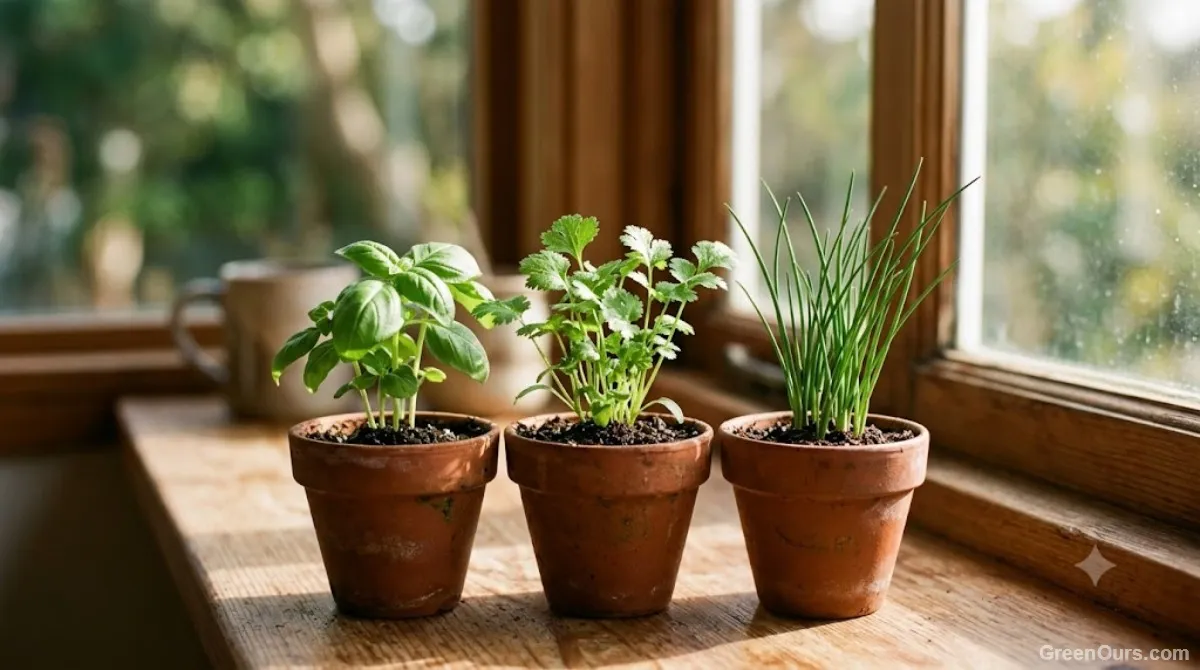
Three herbs make this plan work, each for a different reason.
Basil
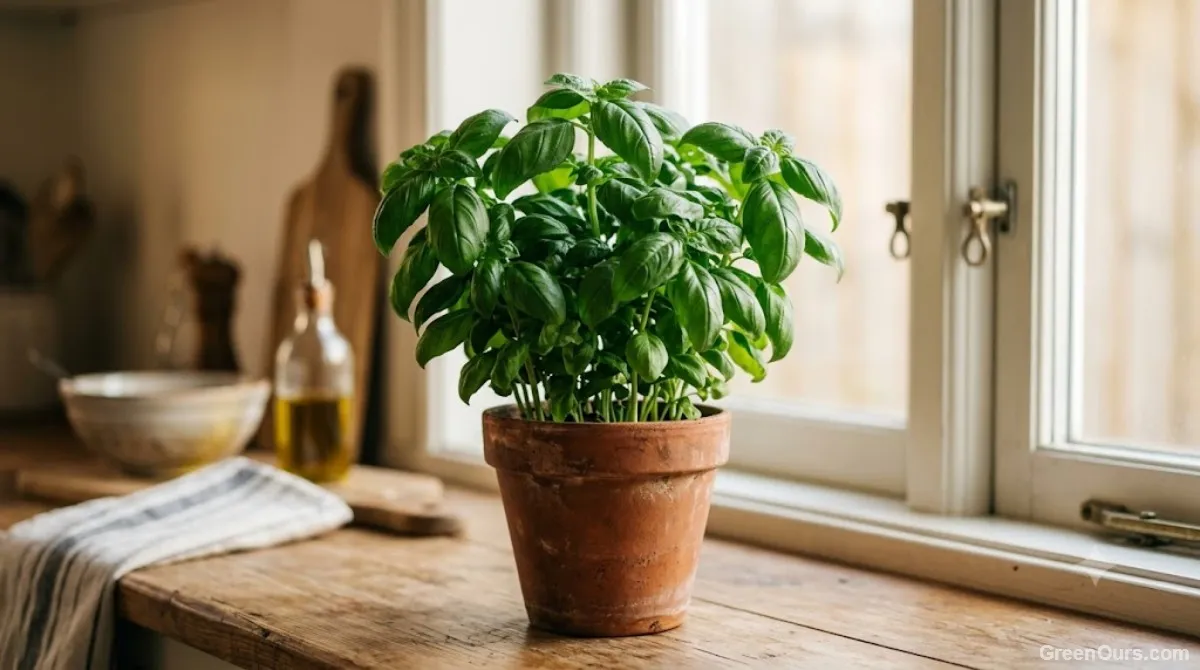
Basil can germinate in as little as five to seven days in warm conditions, and it rewards frequent light harvesting. The more you snip, the bushier it tends to get.
Cilantro
Cilantro sprouts almost as quickly and can give you usable leaves in roughly three to four weeks. It does eventually bolt in heat, which is worth knowing upfront rather than being surprised by later.
Chives
Chives are the slowest of the trio from seed. Once established they're forgiving, tolerating a missed watering and lower light better than fussier herbs, though growth in dim spots will be thinner. From seed, a fuller first harvest can take closer to two months, so you may only get a light trim by day 30. If you start with a small transplant instead, you'll usually reach harvest sooner.
Sow all three the same day, in separate small pots. Staggering the start dates makes it harder to track progress and easier to lose motivation on the slower one.
Your Week-by-Week Growing Plan
Week One: Germination
Keep soil consistently damp, not soggy, and place pots somewhere warm. A spot near 70°F (21°C) speeds things up noticeably. Basil and cilantro often show sprouts by day five to seven. Chives may take closer to ten days or a little longer, and that's completely normal.
Week Two: First True Leaves
Once you see a second set of leaves that look different from the initial seed leaves, move pots to your brightest available spot. This is often the week growth becomes visibly obvious day to day.
Week Three: Thinning and Strengthening
If you sowed multiple seeds per pot, thin to the strongest one or two seedlings now. Crowded seedlings compete for light and slow each other down, which undoes a lot of the speed advantage you started with.
Week Four: First Real Harvest
Harvest a little at a time, and each herb has its own way of doing it:
- Basil: pinch or snip the stem just above a pair of leaves. New growth tends to branch out from that spot.
- Cilantro: pick the outer leaves while they're still young, and leave the center to keep growing.
- Chives: once the clump is established, cut leaves close to the base. If yours are still thin, wait another week or two.
Harvesting now, even a small amount, tends to encourage fuller growth going forward.
Simple Care Rules That Actually Matter
You don't need a complicated routine here, just three things done consistently.
Water when the top half-inch (1 cm) of soil feels dry, not on a fixed schedule. Aim for about six hours of bright light daily, with more being helpful for basil. And go easy on fertilizer in the first two weeks, since young seedlings need steady moisture and light far more than they need extra nutrients.
What Success Looks Like by Day 30
By the end of the month, your basil may be bushy enough for a second harvest and your cilantro producing usable leaves regularly. Your chives should be showing steady new growth, even if they aren't ready for a full trim yet. None of this needs to look picture-perfect. A few uneven leaves or a slightly leggy stem is completely normal for a first attempt.
Common Early Slip-Ups
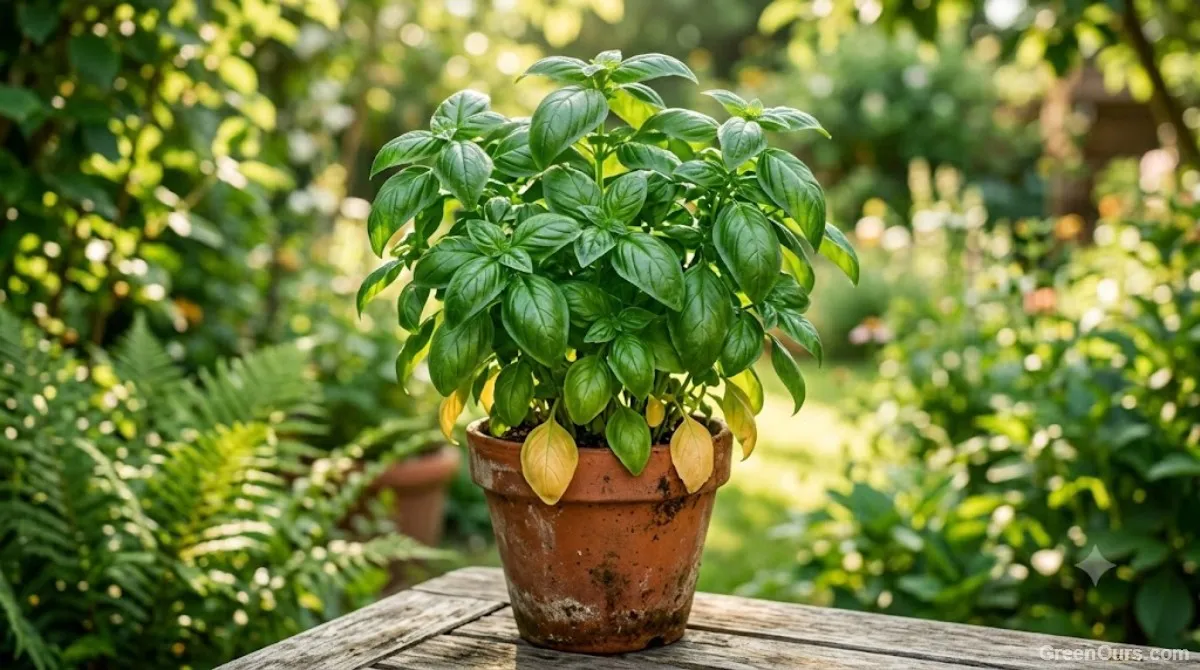
Overwatering is the most frequent mistake, usually driven by anxiety rather than the plant's actual needs. Check soil moisture before watering rather than watering on impulse. Skimping on light is a close second, since a shaded corner will slow every herb on this list. And harvesting too early, before a plant has enough leaf mass to spare, can stall growth right when it's picking up momentum.
Where to Start
This weekend, sow all three herbs in small pots and put them somewhere warm. Thirty days from now, you won't just have three small pots of herbs. You'll have proof that you can start something from seed and keep it alive long enough to use it. That's the part that actually sticks, long after this particular basil plant is gone.
Ready for your next easy win? Explore more beginner herb growing guides.