
Why Cilantro Rushes to Seed in the First Place
Cilantro is a cool-season annual, and its whole life cycle is wired around finishing quickly once conditions turn warm. As temperatures rise and days lengthen, the plant increasingly shifts its energy from leaf production into flowering and seed-making. That's bolting, and it's not a disease or a mistake on your part — it's the plant doing exactly what it evolved to do.
The trouble is that a single planting of cilantro only gives you a few weeks of good leaf harvest before it makes that shift. If you've only ever grown one batch at a time, it can feel like the plant is unreliable. It's not unreliable — it's just short-lived by design, and the fix isn't to make one planting last longer. The fix is to stop relying on just one planting.
A thick central stem shooting up from the middle of the plant is the classic sign that its leaf-producing days are numbered. There's a section on what to do next further down.
Building a Succession Planting Calendar
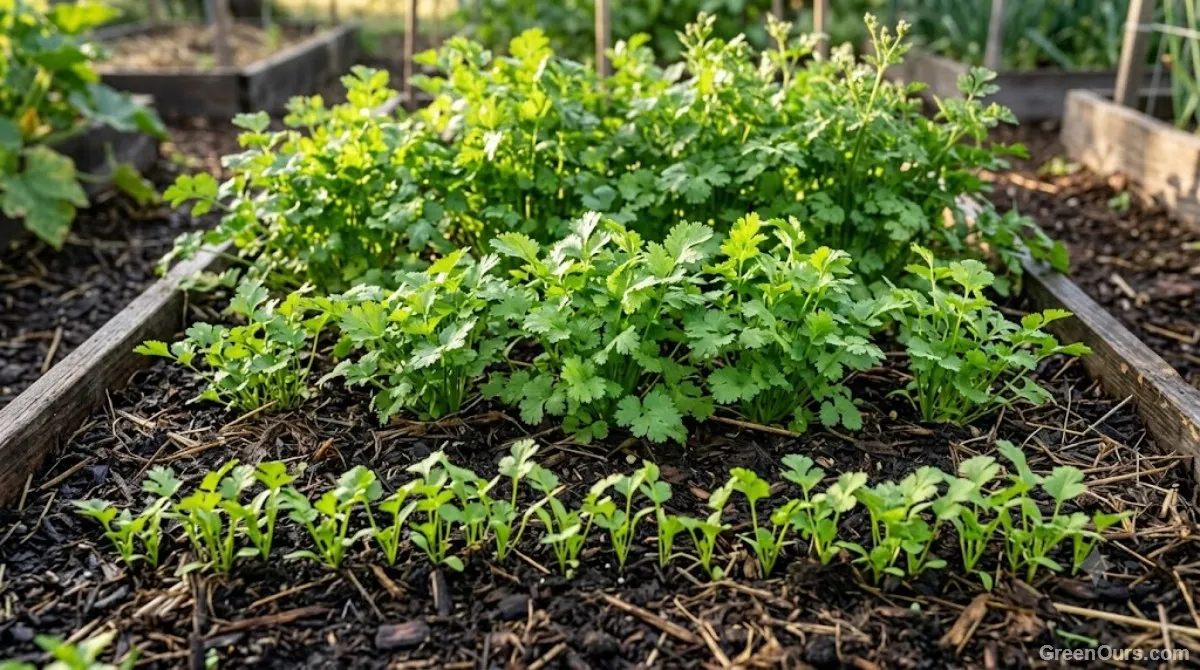
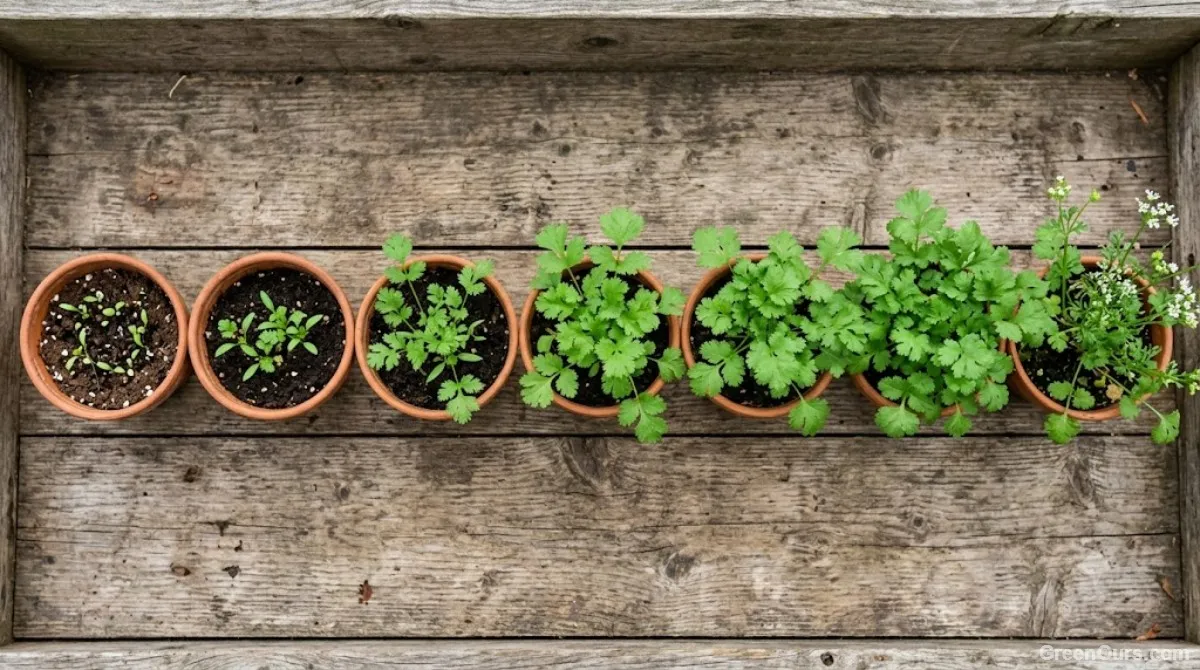
This is the single biggest shift you can make, and it's simpler than it sounds. Instead of planting one row or one pot of cilantro and hoping it lasts, sow a small new batch every two to three weeks throughout the growing season. By the time your first planting bolts, your second one is just hitting its leafy peak, and your third is right behind it.
You don't need much space for this. A few 6-inch (15 cm) pots on a windowsill or patio, each started a couple weeks apart, will keep you in fresh cilantro far longer than one big bed ever could. Label each container with its sowing date so you know roughly when to expect it to bolt and when to start the next one.
A Simple Rotation to Start With
Sow a new batch every 14 to 21 days from early spring until daytime temperatures are regularly hot. In hot climates, pause through the peak of summer and pick the rotation back up as things cool in early fall — cilantro often handles autumn beautifully since the days are shortening rather than lengthening. Here's how that looks over the first couple of months:
| Planting | When to sow | What it does for you |
|---|---|---|
| #1 | Week 0 | Your first harvest |
| #2 | Week 2 to 3 | Reaches its leafy peak as #1 starts to bolt |
| #3 | Week 4 to 6 | Keeps the supply going after #2 |
| #4 | Week 6 to 9 | Backup, or your first fall sowing if summer has turned hot |
Treat these timings as a starting point, since warm weather speeds everything up and cool weather slows it down.
Keeping Track Without Overcomplicating It
A simple notecard or a note on your phone with sowing dates works fine. You're not running a farm operation — you're just giving yourself a nudge every couple of weeks to drop a few more seeds in soil.
Sowing Cilantro So It Starts Strong
A rotation only works if each batch gets off to a good start, and cilantro is easygoing about that.
Direct Sow, Don't Transplant
Cilantro develops a taproot and generally dislikes being moved, so sow seeds directly where they'll grow instead of transplanting seedlings. Sow about 1/4 to 1/2 inch (0.6 to 1.3 cm) deep and keep the soil evenly moist. Seeds often sprout within one to two weeks, though cool soil can slow them down.
Spacing, Light, and Containers
Thin seedlings to roughly 2 to 4 inches (5 to 10 cm) apart so the leaves have room and air can move between them. In cool weather, cilantro does well in full sun; once it warms up, aim for morning sun with some afternoon shade. In a pot, choose one at least 6 to 8 inches (15 to 20 cm) deep to leave room for that taproot.
Choosing Varieties That Buy You Extra Time
Not all cilantro is created equal when it comes to heat tolerance. Standard cilantro seed, the kind sold without a variety name, tends to bolt fastest. Some cultivars are bred to hold off flowering longer, and they're worth seeking out if you can find them.
Slow-Bolt Varieties Worth Looking For
Look for cultivars such as 'Santo' and other varieties sold as slow-bolting. They can give you a little more time before flowering, although no variety will prevent bolting once conditions turn hot.
If you can't find a named slow-bolt variety locally, don't worry too much — the succession planting habit does more heavy lifting than variety selection alone. Think of variety choice as a nice bonus layered on top of your rotation, not a replacement for it.
Small Environmental Tweaks That Buy You Extra Weeks
Where and how you grow cilantro matters almost as much as when you sow it. A few adjustments to its environment can help slow the bolting clock.
Give It Afternoon Shade
Cilantro planted where it gets morning sun but some relief from harsh afternoon heat will hold off bolting longer than cilantro baking in full sun all day. If you're growing in containers, this is as easy as moving pots to a spot that gets shaded by a fence, a taller plant, or the house itself come afternoon.
Keep the Soil Consistently Cool and Moist
Keeping the root zone evenly moist and a little cooler can reduce heat stress and help the plant stay productive for longer. A layer of mulch around the base helps regulate soil temperature and hold moisture, which may buy the plant a little more time in leaf.
Harvesting the Right Way to Stretch Each Planting
You can usually start snipping about a month after sowing, once plants are several inches tall with plenty of leaves. Take the outer, older leaves first, cutting close to the base and leaving the younger center growth in place. Harvesting won't stop a plant from bolting, since cilantro is short-lived by design, but it helps you make the most of every plant while it's in leaf.
Harvest a little from each planting regularly rather than stripping one plant bare all at once. Frequent, moderate cutting keeps your supply steadier than waiting for a big harvest day.
What to Do When Cilantro Starts to Bolt
Once that central stalk rises and the leaves turn finer and feathery, here's how to make the most of the moment:
- Harvest the leaves that are still tender and use them soon.
- Check that your next sowing is up and growing, and start another batch if it isn't.
- Decide what the plant is for now: pull it to free up the pot, or leave it to flower.
If you let it flower, the blooms attract pollinators, and the seeds can be collected as coriander for the kitchen once the seed heads dry and turn brown. Young green seeds are edible too, with a fresher, citrusy flavor.
Setting Realistic Expectations for Hot-Season Cilantro
Even with a rotation running, a slow-bolt variety in the ground, and a shaded spot picked out, cilantro in the height of summer heat is still going to move faster toward seed than it does in spring or fall. That's simply the nature of the plant, and it's worth accepting rather than fighting.
Many gardeners choose to lean into this rhythm instead of resisting it — planting cilantro heavily in spring and fall and easing off during the hottest weeks. There's no failure in a plant doing what it was always going to do. The goal is simply to make sure something else is ready to take its place.
Where to Start
If you only do one thing this week, sow a small pot of cilantro and label it with today's date. Then set a reminder for two weeks from now to sow the next one.
Give this rhythm a season to settle in, and cilantro stops feeling like a plant you can't keep alive and starts feeling like one more thing in the garden you've simply learned to read. That shift — from frustration to familiarity — is really what good gardening comes down to.
Ready to try the rotation? Sow one small pot this weekend and mark the date on the label.