
What Is Vietnamese Coriander, Anyway?
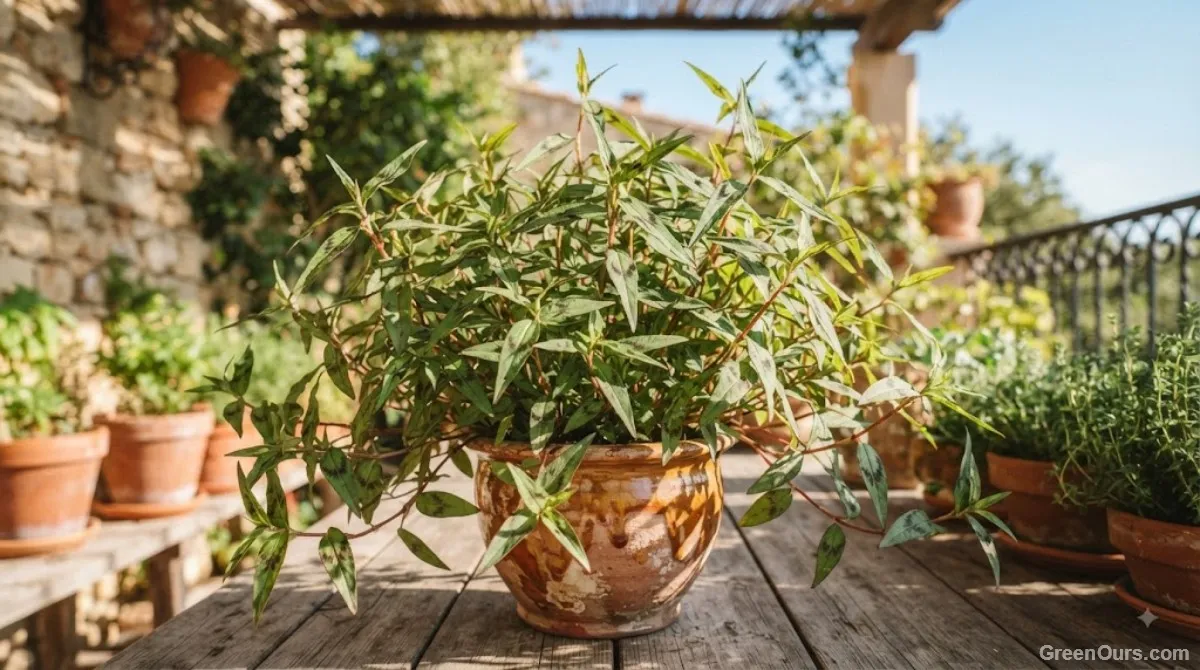
Rau răm is a low-growing, semi-trailing herb native to Southeast Asia, where it shows up constantly in Vietnamese cooking, especially alongside duck, snails, and balut. The leaves are narrow, pointed, and often marked with a dark reddish-brown chevron near the center, which makes it easy to spot once you know what to look for. The flavor sits somewhere between cilantro and mint, with a peppery bite that mellows slightly once cooked.
Unlike cilantro, which is an annual that races to flower and set seed in warm weather, rau răm is a tender perennial in the right climate. It spreads along the ground or trails over the edge of a container, rooting wherever a node touches moist soil. That habit hints at why it tolerates heat so well: it's built for tropical conditions where cilantro struggles.
Getting Started: Propagation From Cuttings
Rau răm is most commonly grown from stem cuttings, because they're quick and reliable, while seed is far less common for home growers. Seed is also hard to find at most garden centers. Look for a bundle of fresh stems at a Vietnamese or Southeast Asian grocery store, or ask a friend who already grows it for a few sprigs.
Choose stems that are firm rather than floppy, with at least three or four leaf nodes. Strip the lower leaves so the bottom two nodes are bare, then place the stems in a glass of room-temperature water, keeping the leaves above the waterline. Set the glass somewhere warm with indirect light, and refresh the water every couple of days so it doesn't go cloudy.
Growing in Water, and When to Move to Soil
Rau răm can stay happily in water for a while, and it's a handy way to watch roots develop. Water alone doesn't supply nutrients, though, so growth slows over time and the roots can turn long and weak.
Move the cuttings to soil once they have an inch or so (about 2.5 cm) of roots. Keep the new pot evenly moist for the first couple of weeks while the roots adapt.
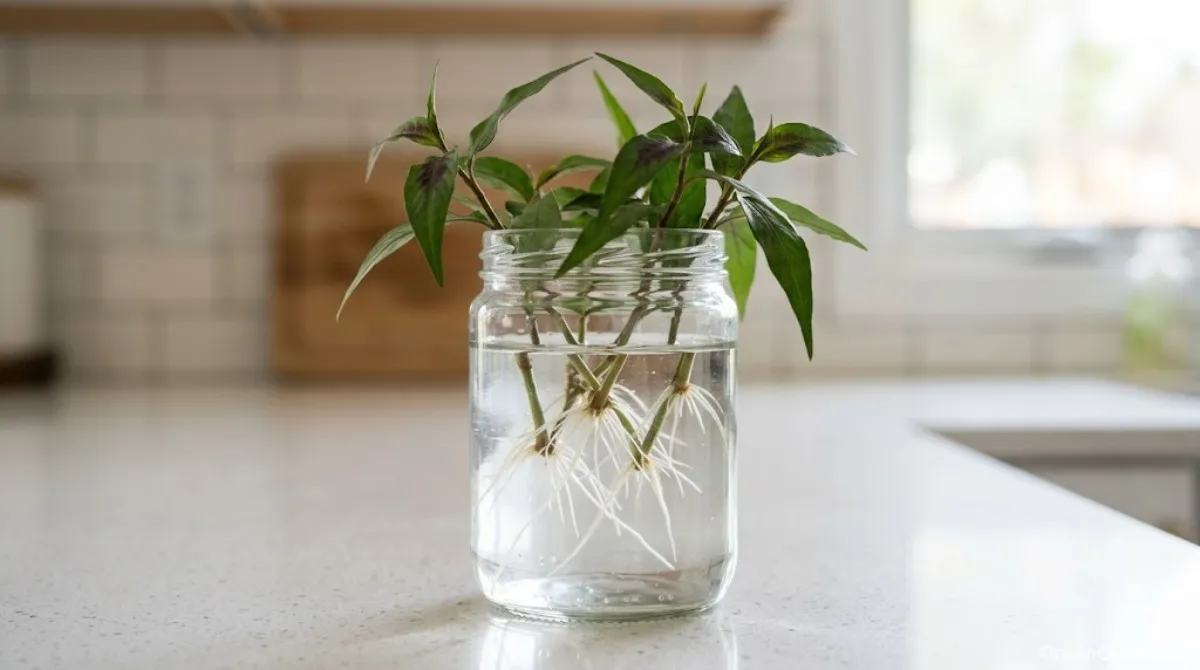
Rau răm roots noticeably faster in warm water than cold. If your kitchen counter runs cool, move the glass somewhere closer to 75°F (24°C), and you'll often see root hairs within seven to ten days instead of two or three weeks.
Choosing the Right Container and Soil
Rau răm doesn't need a deep pot since its roots stay fairly shallow, but it does spread outward, so a wide, shallow container works better than a tall, narrow one. A 10 to 12 inch (25 to 30 cm) pot with drainage holes gives one or two plants plenty of room to sprawl.
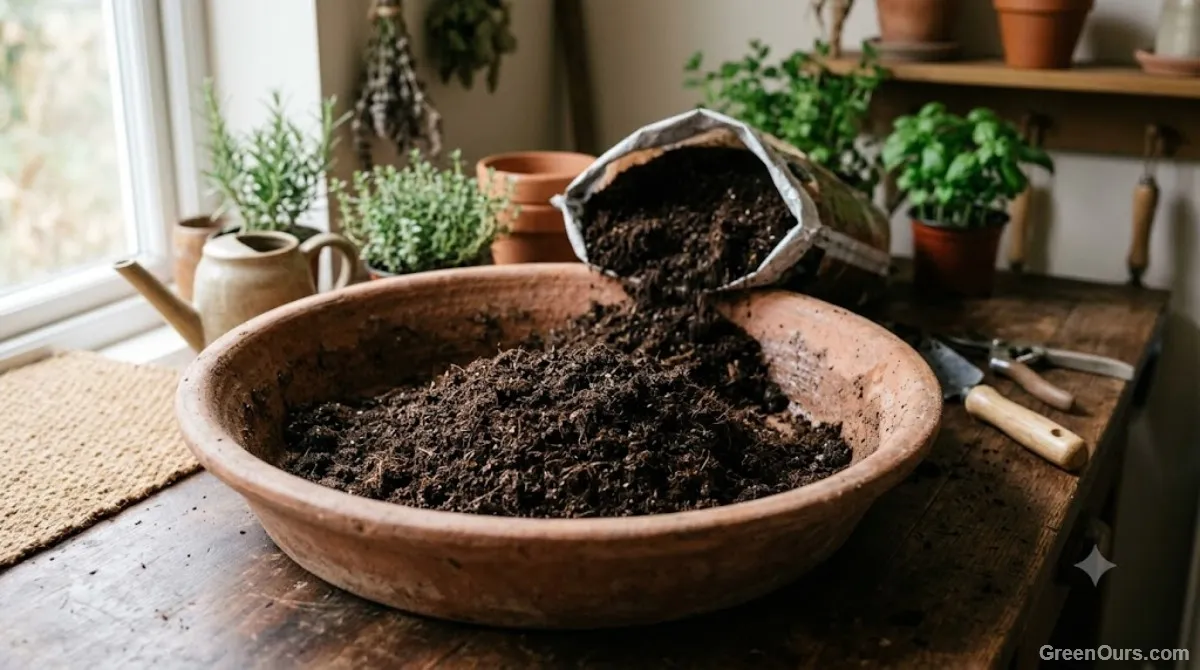
For soil, use a standard potting mix amended with a bit of compost for richness. Rau răm likes consistent moisture, so a mix that drains well but doesn't dry out in an afternoon is ideal. Avoid anything overly sandy or fast-draining, since this herb isn't drought-tolerant the way rosemary or thyme are.
Feeding is light-touch here. A balanced liquid fertilizer diluted to half strength about once a month is usually plenty, since rau răm isn't a heavy feeder, and too much nitrogen mostly produces soft, floppy growth that's more prone to rot. If it outgrows its pot within a season, that's normal: size up by a few inches.
Watering and Light Needs
Sunlight
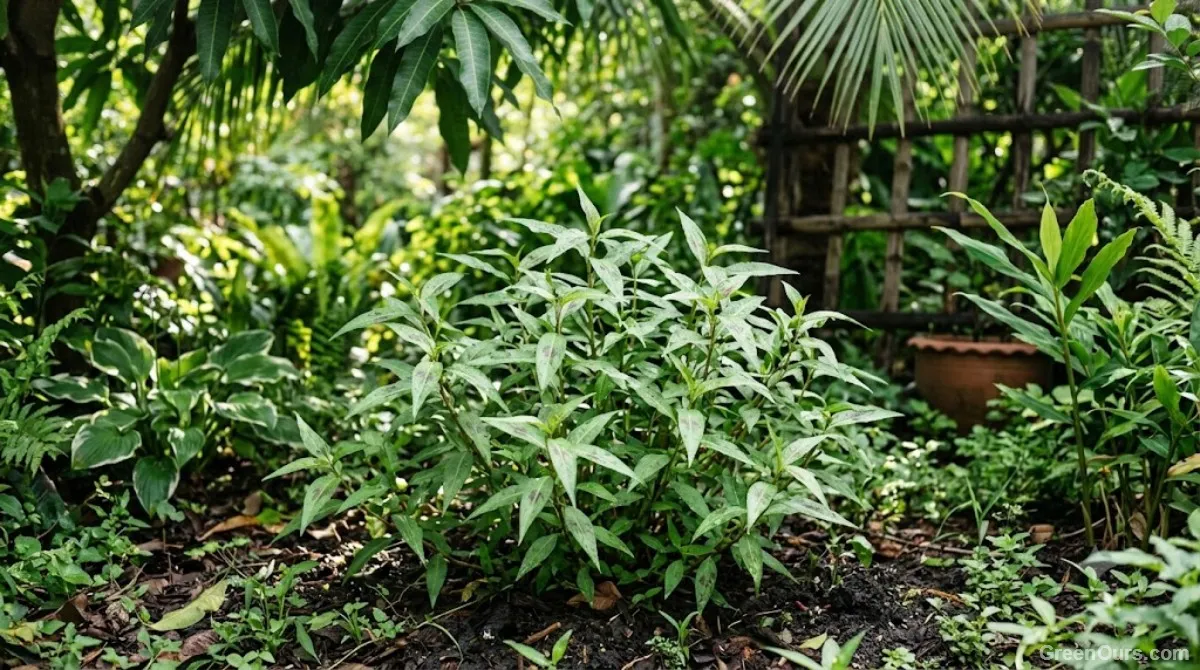
This is one area where rau răm differs from most sun-loving herbs. It tends to prefer partial shade to filtered morning sun, especially in hotter climates. A spot with three to four hours of gentle light, or bright indirect light all day, often produces lusher growth than blazing full sun, where the leaves can scorch and toughen.
Water and Humidity
Keep the soil consistently moist, never bone dry. Rau răm likes moist soil and handles wet conditions better than many Mediterranean herbs, but the pot still needs drainage holes so the roots aren't left sitting in stagnant water.
High humidity is a bonus rather than a problem here, so a naturally muggy spot, such as near a kitchen sink, will likely reward you with faster growth.
Growing Rau Răm Indoors and Through Cold Weather
Can You Grow Rau Răm Indoors?
Yes, and it's one of the easier herbs for a warm kitchen. Give it a bright window with filtered light, keep the soil evenly moist, and keep it away from cold drafts. Indoor air can be dry, so a humid spot such as a kitchen helps.
If stems turn long and leggy with small, sparse leaves, it's asking for more light. Move it closer to the window and snip back the tips to encourage branching.
What Happens in Cold Weather?
Rau răm is a tender perennial, generally suited to warm climates (roughly USDA zones 9 to 11), and it begins to struggle once temperatures fall below about 45°F (7°C).
If you live somewhere cooler, grow it in a pot and bring it indoors before nights turn cold, or keep a few rooted cuttings on a windowsill as insurance. In mild-winter areas it may come back each year; elsewhere, plan to overwinter it indoors or restart it from cuttings in spring.
Harvesting and Using Rau Răm
Harvesting Without Slowing Growth
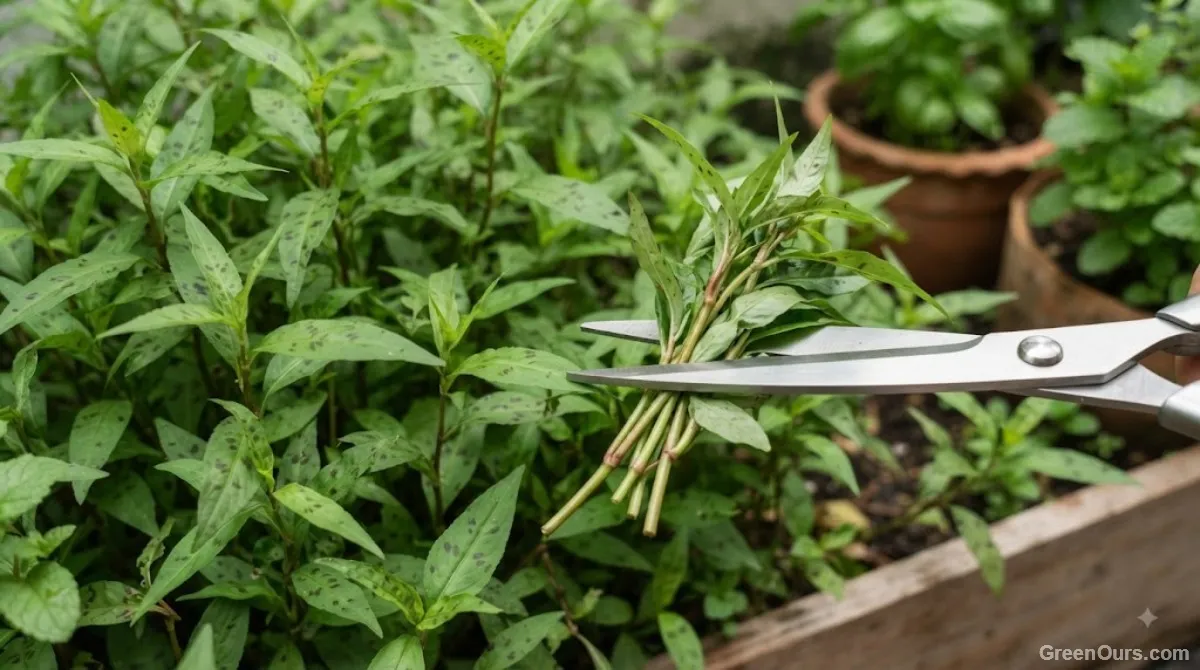
Rau răm is remarkably forgiving to harvest from. Once a plant has several stems that are six inches (about 15 cm) or longer, you can snip individual stems from the outer edges, leaving the center to keep producing new growth. Because the plant roots so easily along its stems, any longer cutting you take can be started as a brand new plant, which is a nice bonus if you want to expand your patch or share with a friend.
Harvest in the morning when the leaves are at their most hydrated and flavorful, and use scissors rather than pinching by hand, since the stems can be a little fibrous. Regular light harvesting encourages bushier growth, so don't be shy about cutting a handful every week or two once the plant is established.
How to Use Fresh Rau Răm
Young leaves are sharpest raw and mellow once cooked, so add them near the end of cooking. A few easy places to start:
- Tear leaves into bún and other noodle dishes
- Tuck them into fresh spring rolls or salads
- Scatter chopped leaves over savory pancakes
- Serve alongside duck eggs, where the peppery bite balances the richness
- Use it as a garnish wherever you'd normally reach for cilantro
Common Mistakes to Avoid
The most common misstep is treating rau răm like a full-sun herb and placing it in the hottest, brightest spot available. That approach often backfires, leaving leaves scorched and the plant stressed rather than thriving.
Letting the soil dry out completely is another frequent issue, since unlike Mediterranean herbs, rau răm doesn't have the reserves to bounce back quickly from drought stress. Starting with cuttings that are too soft or too young is a third, because they tend to rot in water before they root.
Finally, some growers give up on a cutting after a week if they don't see roots yet, when in cooler conditions it can genuinely take closer to three weeks. A warm spot for the glass and a little patience help with most of that frustration.
Quick Answers About Rau Răm
Short answers to the questions people ask most:
| Question | Short answer |
|---|---|
| Can rau răm grow from cuttings? | Yes. Stem cuttings in water or moist soil are the most common way to start it. |
| Does it need full sun? | Usually not. It tends to prefer partial shade or bright indirect light, especially in hot climates. |
| How often should you water it? | Often enough to keep the soil consistently moist. Check with a finger, since heat, pot size, and airflow all change how fast it dries. |
| Can you grow it indoors? | Yes. A bright window with filtered light, warmth, and evenly moist soil are the essentials. |
| Does it come back every year? | In warm, mild-winter climates it often does. In cooler areas, overwinter it indoors or restart it from cuttings. |
Your First Week With Rau Răm
If you can find a bundle of stems this week, start there: strip the lower leaves, set the stems in a glass of warm water on a bright windowsill, and check for roots after a week or so. Once the roots are an inch long, pot them up and keep the soil evenly moist.
Once rau răm is settled in warm, evenly moist conditions, it's a relatively low-fuss herb that can give you repeated harvests. Notice how yours responds to the light in your kitchen, because that tells you where it wants to live.
Ready to grow something different this season? Start with one bundle of stems and a bright, indirect windowsill.