
Why Curry Leaf Plants Are Worth the Patience
Learning to grow a curry leaf plant starts with patience. It grows slowly at first, and that's the part that trips people up. You'll pot one up, water it faithfully, and for a few weeks it'll seem to just sit there. That's normal. It spends its early months building roots before it puts energy into new leaves, and rushing it with extra fertilizer or constant repotting usually does more harm than good.
Once it's established, the growth becomes steadier. A mature plant kept in good light can supply leaves for regular cooking, and unlike many culinary herbs that need replanting each season, it can keep producing for years with the right care.
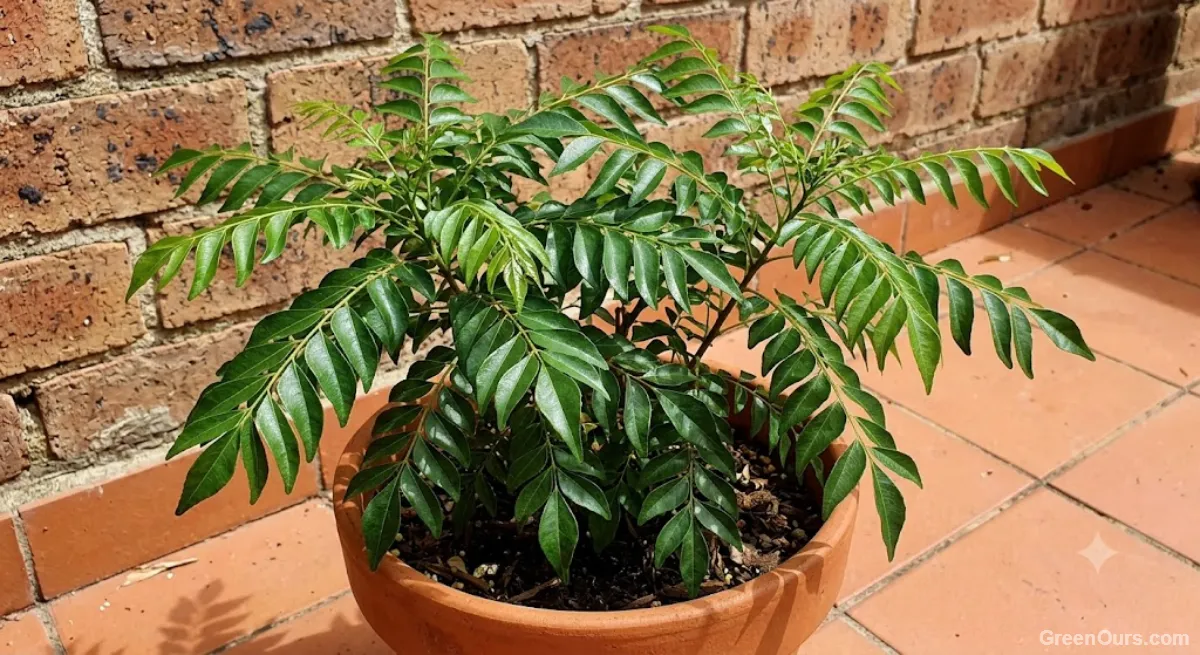
If your new plant looks unchanged for the first month, resist the urge to fertilize or repot. Consistent light and correct watering matter far more than intervention right now.
Nursery Plant, Seed, or Cutting?
There are three ways to start, and they aren't equally beginner-friendly.
- A young nursery plant: the easiest route, because it skips the slowest months. Look for glossy, evenly green leaves and check the undersides for insects or sticky residue before you buy.
- Fresh seed: possible, but seeds lose viability quickly, so use fresh ones. Extension and garden sources describe germination as erratic, often taking two to four months, and it needs steady warmth of around 68°F (20°C). It's the slowest way to your first curry.
- Cuttings and suckers: common routes from an established plant, but success varies, so treat your first attempt as an experiment.
Setting Up the Right Home for Your Plant
Curry leaf plants are tropical natives, and getting their setup right from the start saves you a lot of troubleshooting later.
Container size and drainage
Start with a container only slightly larger than the plant's current root ball, and step up a size as it fills out. A pot that's too big holds excess moisture the roots can't use, which invites rot before the plant has a root system large enough to keep up. Make sure there are real drainage holes, not just a saucer, since curry leaf roots are sensitive to sitting in water.
Soil mix that keeps roots happy
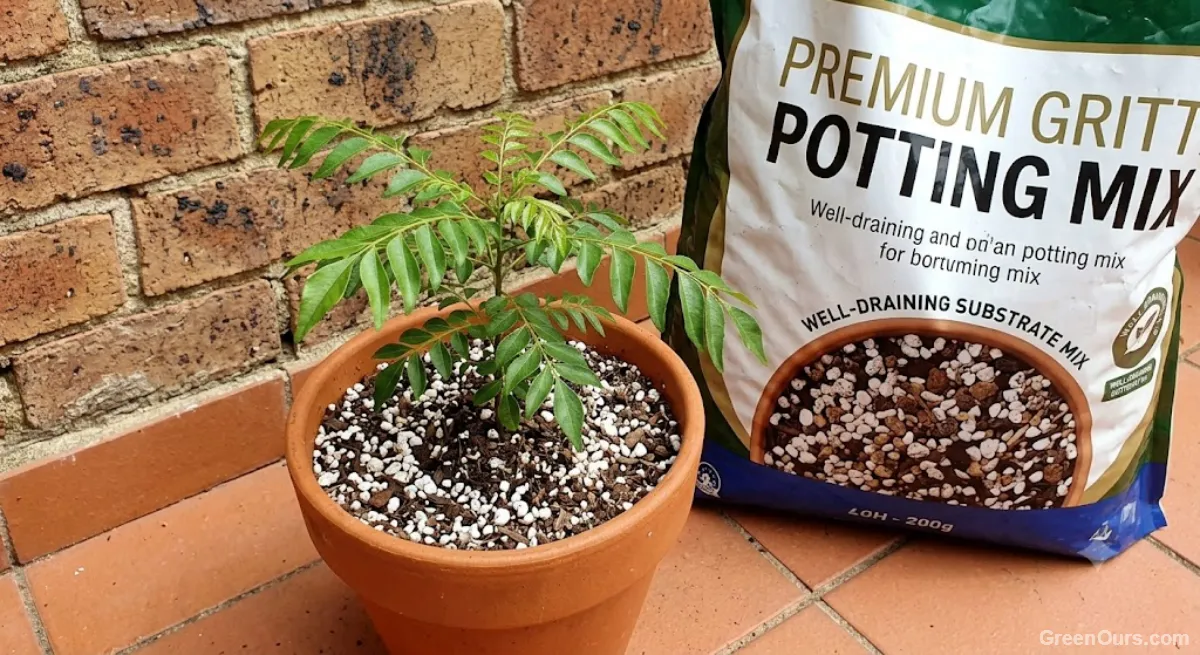
A loose, well-draining mix works best: combine standard potting soil with perlite or coarse sand at roughly three parts to one. Avoid dense, moisture-retentive mixes meant for tropical foliage plants. Curry leaf wants drainage more than water retention.
Light requirements
Curry leaf does well in full sun to partial shade, so give it the brightest spot you have. Indoors, a south-facing window is usually the best option in the northern hemisphere, and a grow light positioned close to the foliage can fill the gap through shorter winter days. In very hot summers, protect it from scorching afternoon sun, and move a plant from indoors to full sun gradually over a week or so, because sudden strong sun can burn the leaves.
Quick setup at a glance
| Requirement | Practical target |
|---|---|
| Light | Bright light, full sun to part shade, with protection from scorching sun |
| Soil | Loose and well-draining |
| Pot | Drainage holes essential; only slightly larger than the root ball |
| Water | When the top inch or two (2.5 to 5 cm) of soil is dry |
| Feeding | Roughly every 4 to 6 weeks in active growth, at half strength |
| Temperature | Frost-free; bring indoors before cold nights (about 50°F / 10°C is a cautious guide) |
| Pruning | Pinch tips once a young plant is about 8 inches (20 cm) tall, then trim regularly |
| Harvest | Light snips once established |
Watering and Feeding Through the Seasons
How much water your plant actually needs
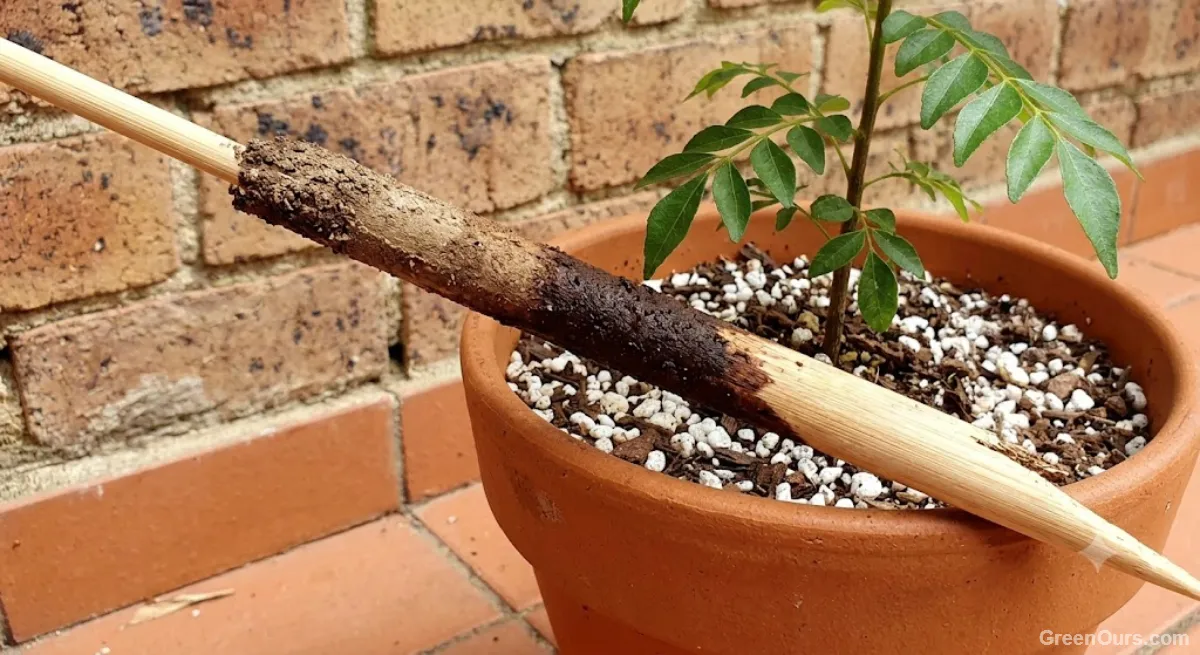
Rather than watering on a fixed schedule, check the top inch or two (2.5 to 5 cm) of soil first. If it's dry, water thoroughly until it runs from the drainage holes. If it's still damp, wait. Letting the soil dry a little between waterings is standard extension advice for this plant, because constantly damp soil invites root rot.
A simple feeding rhythm
During spring and summer growth, feed roughly every four to six weeks with a balanced fertilizer diluted to about half the recommended strength. Once temperatures drop and growth slows, stop feeding until the plant shows new growth again in spring. Feeding a dormant plant does nothing but risk burning its roots.
Pruning for a Fuller, Bushier Plant
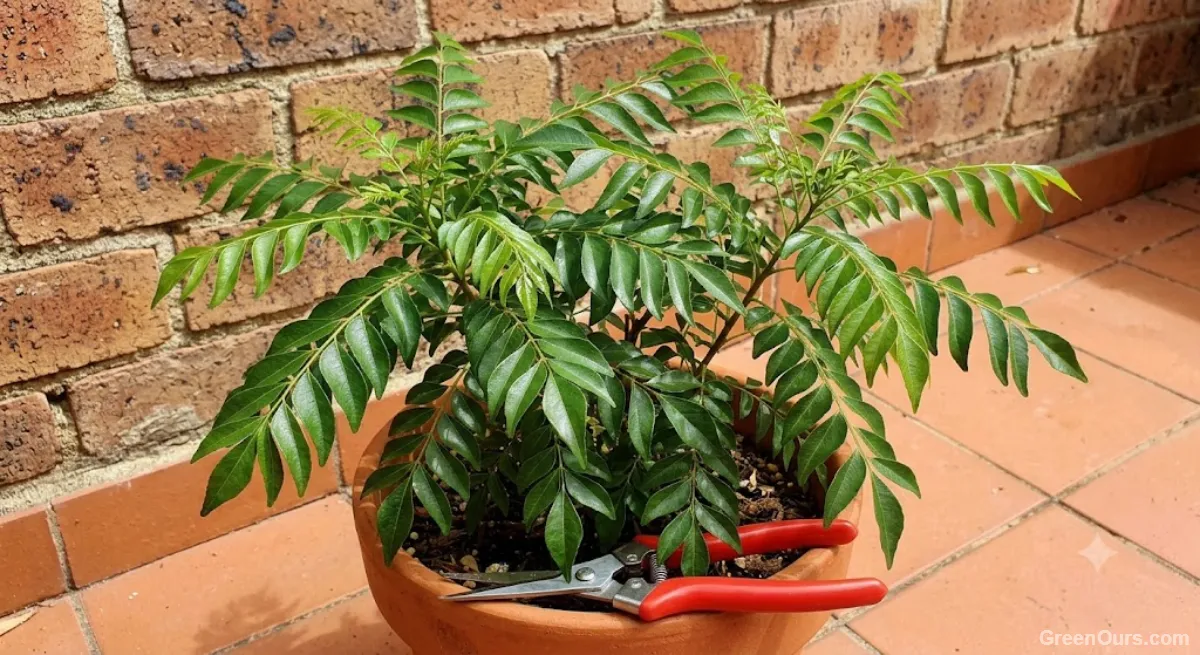
Left alone, curry leaf plants tend to grow tall and leggy rather than full. Pinching back the growing tips once a young plant is about 8 inches (20 cm) tall encourages side branching. After that, regular light trimming keeps a supply of tender young leaves coming, and it's gentler on the plant than occasional heavy cuts.
In early spring, before the main growth period, you can remove thin, weak stems and shorten leggy branches by up to about a third. If your plant flowers and sets berries, plucking them may nudge more energy into leaf growth.
When Something Looks Off
Yellow leaves and leaf drop
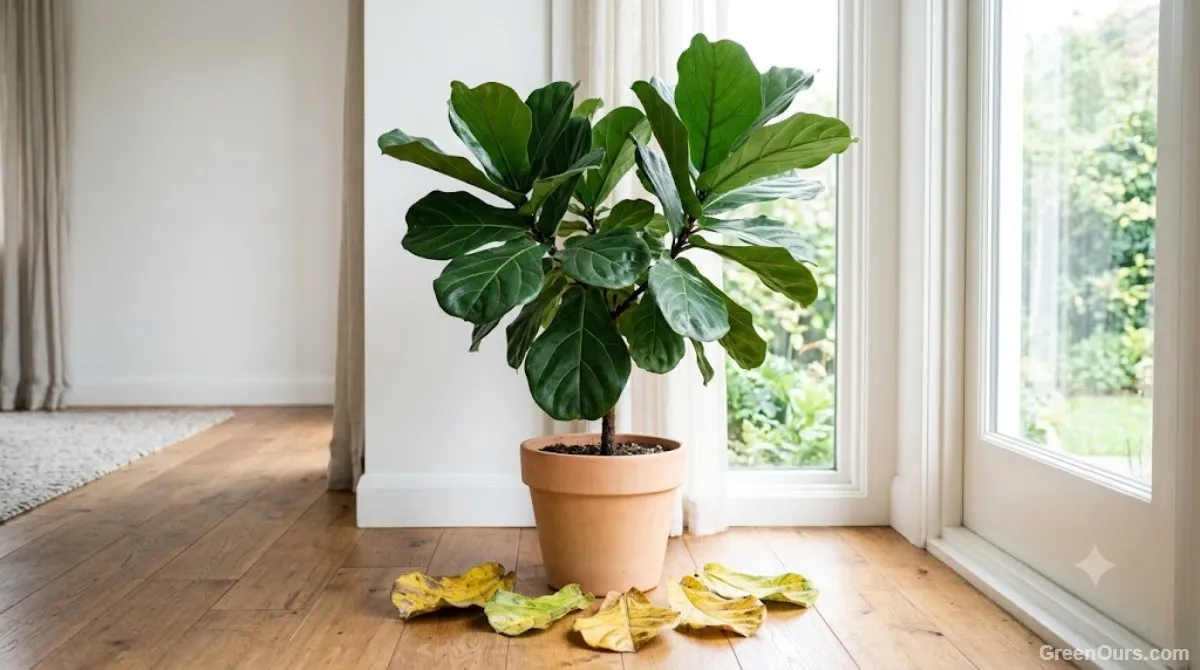
Yellowing is usually a watering clue, most often soil that stays wet for too long. Low light, cold, and hunger can all do it too, so check the soil first, then the plant's spot. Some leaf drop after a move or a cold snap is a normal adjustment and not a sign the plant is failing.
If your plant is producing long stems with widely spaced, sparse leaves, check the light before you reach for fertilizer. Stretched growth is more often a light problem than a feeding one.
Common pests
Scale, aphids, whiteflies, mealybugs, and spider mites can turn up, especially indoors. Check the undersides of the leaves when you water, and wipe or rinse off small infestations early. If you use a product on a plant you'll eat from, follow the label directions and check that it's suitable for edible plants.
Bringing Your Plant Through a Cold Winter
Curry leaf is a tropical plant and needs protection from frost. If your winters are cold, bring the container indoors well before the first frost, and earlier for young plants. As a cautious rule of thumb, aim to move it before nights approach 50°F (10°C), and give it the brightest spot you have.
Don't be alarmed if it drops some leaves after the move. Lower light and drier indoor air trigger a natural slowdown. Water sparingly, hold off on fertilizer, and wait it out. Growth tends to resume once the plant goes back outside or the days lengthen again.
Harvesting Leaves Without Slowing Your Plant Down
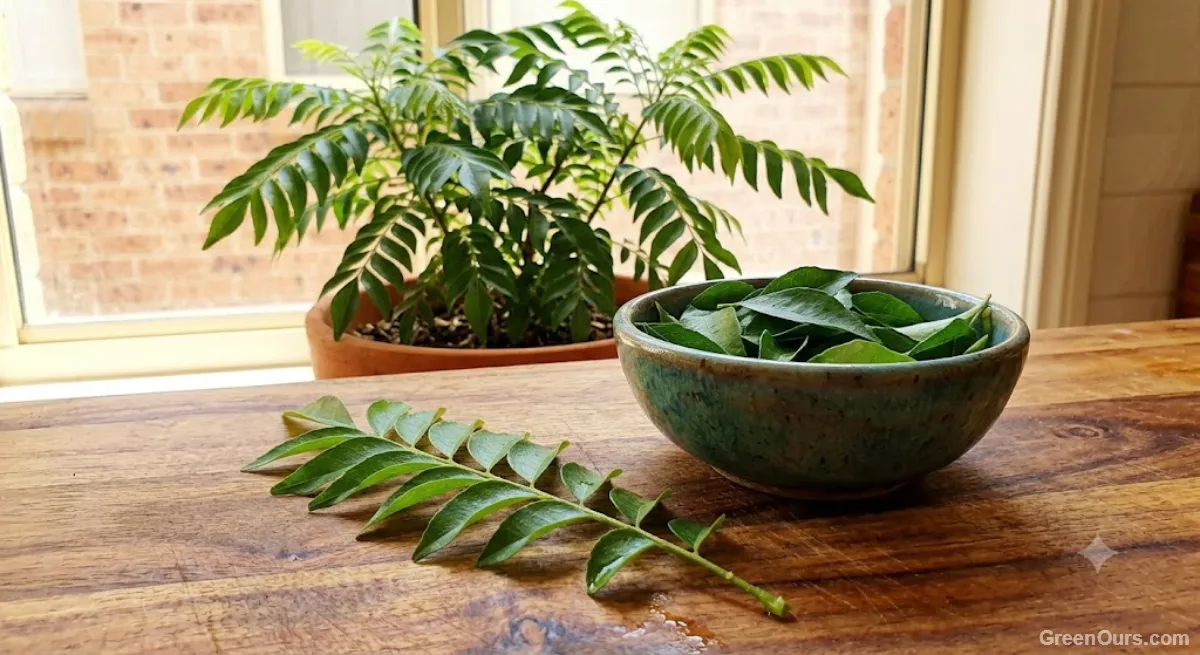
Let a young plant put on a good amount of growth and a few branches before you harvest regularly. Once it's established, snip whole leaf stems rather than stripping individual leaflets, cutting just above a leaf node so the plant can branch out from that point. Take no more than about a third of the foliage at once.
Fresh leaves keep their flavor best used right away, but they also freeze well. Seal whole sprigs in a bag and pull leaves as needed. Dried curry leaves lose much of their aroma quickly, so freezing is the better option if you're harvesting more than you can use in a week.
Quick Questions About Curry Leaf Plants
Can curry leaf grow indoors?
Yes, in a container near your brightest window or under a grow light. Expect slower growth than outdoors, and don't expect to harvest as heavily.
How long does curry leaf take to grow?
A young nursery plant can start giving you light harvests within a season or so, depending on light and warmth. From seed it takes considerably longer, since germination alone can take a few months.
Why are my curry leaves turning yellow?
Soil that stays wet is the most common cause. Check the soil before you water, then look at light, temperature, and feeding.
Can curry leaf survive winter?
Only if it's protected from frost. In cold climates, keep it indoors in bright light. Even in mild climates, some leaf drop in cooler weather is normal.
How often can I harvest curry leaves?
As often as the plant is putting out fresh growth, as long as you leave at least two-thirds of the foliage in place. If growth slows, ease off and let it recover.
Sources and Further Reading
The advice here on seed, light, watering, feeding, and winter protection is consistent with these university and extension resources. The specific numbers are rules of thumb and will shift with your climate.
Where to Start
Start with a healthy young plant, a pot with real drainage holes, and the brightest spot you have. Give it a season or two, and a curry leaf plant stops feeling like a fussy houseplant and starts feeling like a fixture in your kitchen routine, one you reach for without thinking twice. That's really all this plant is asking for: a bit of patience up front, and a spot where it can get comfortable.
Ready to grow more from your kitchen?
See which herbs happily share a pot