
Why Watering Schedules Fail
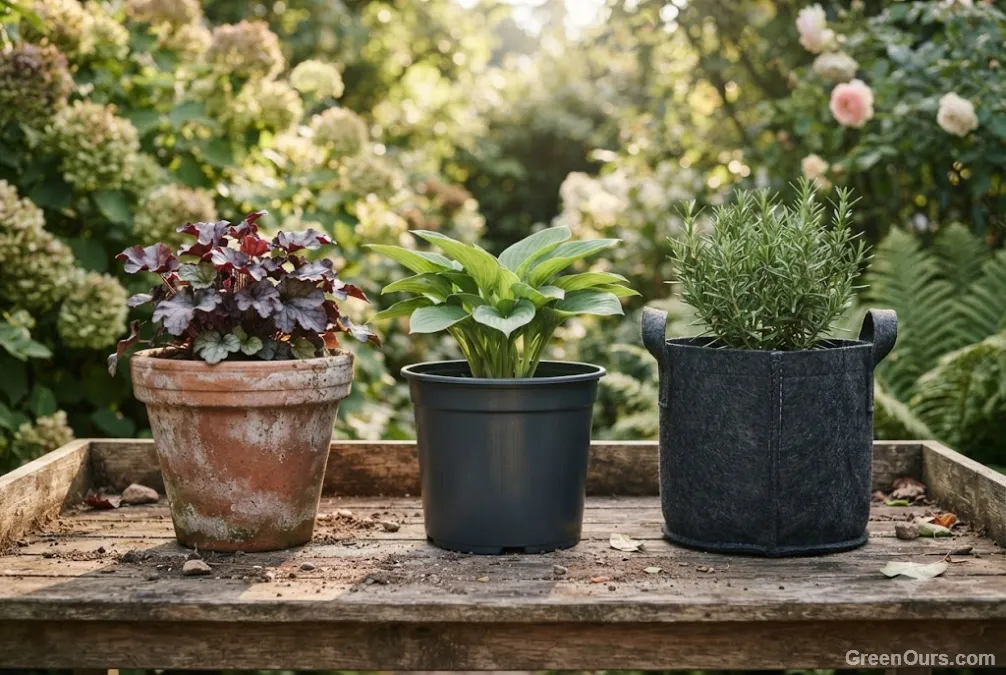
A fixed schedule treats every plant, pot, and season as identical. They're not. A 6-inch terracotta pot dries out in half the time of a 10-inch plastic one, because terracotta is porous and pulls moisture out through the walls. A plant near a south-facing window in summer can use three times the water of the same species in a shaded corner in winter.
Soil composition matters just as much. A chunky, well-draining mix with perlite and bark dries fast. A dense, peat-heavy mix holds water for a week or longer and stays wet at the root ball even when the surface looks dry. If you're watering by date instead of by condition, you're guessing blind on both variables.
The Finger Test: Check Depth, Not Just Surface
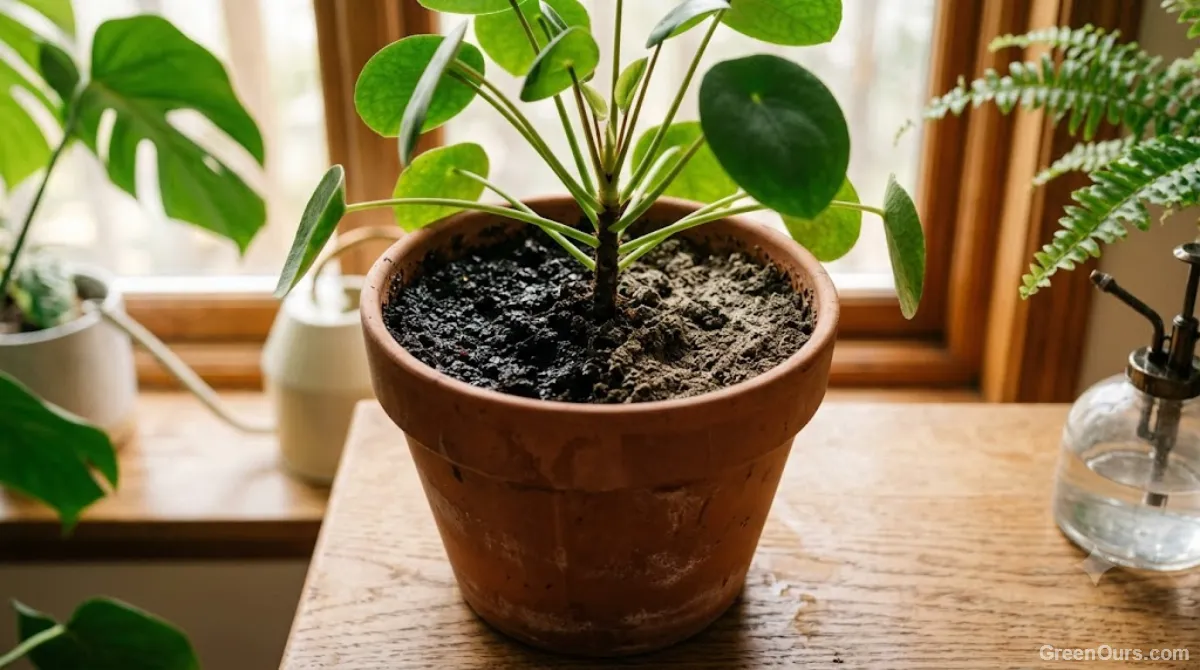
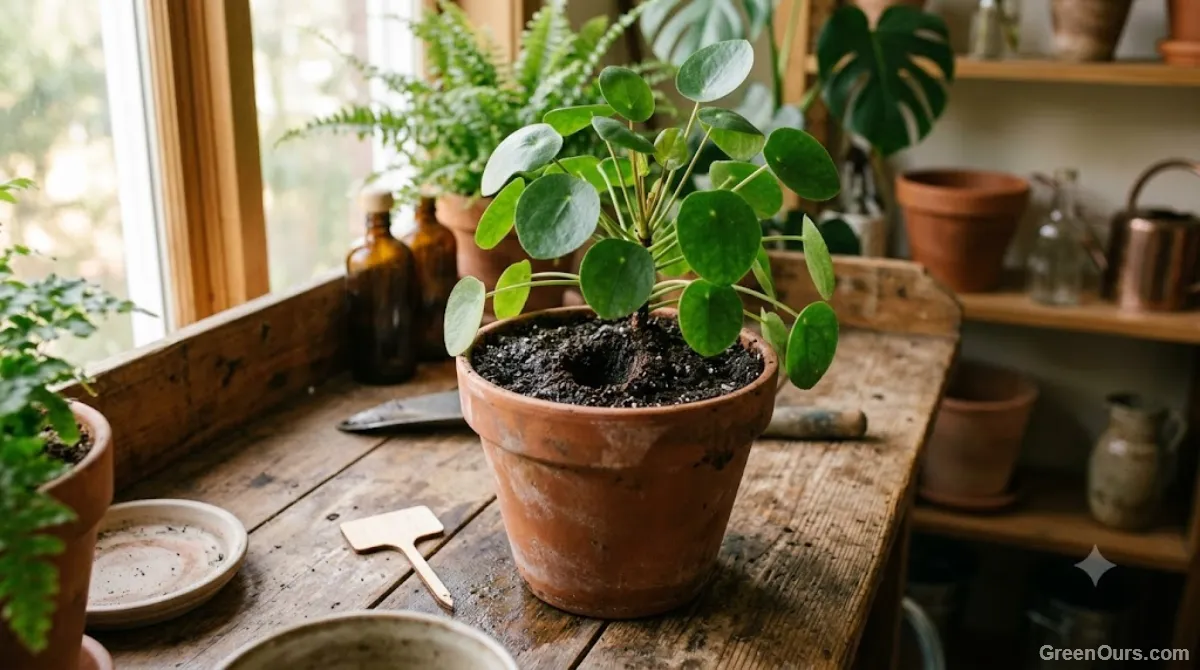
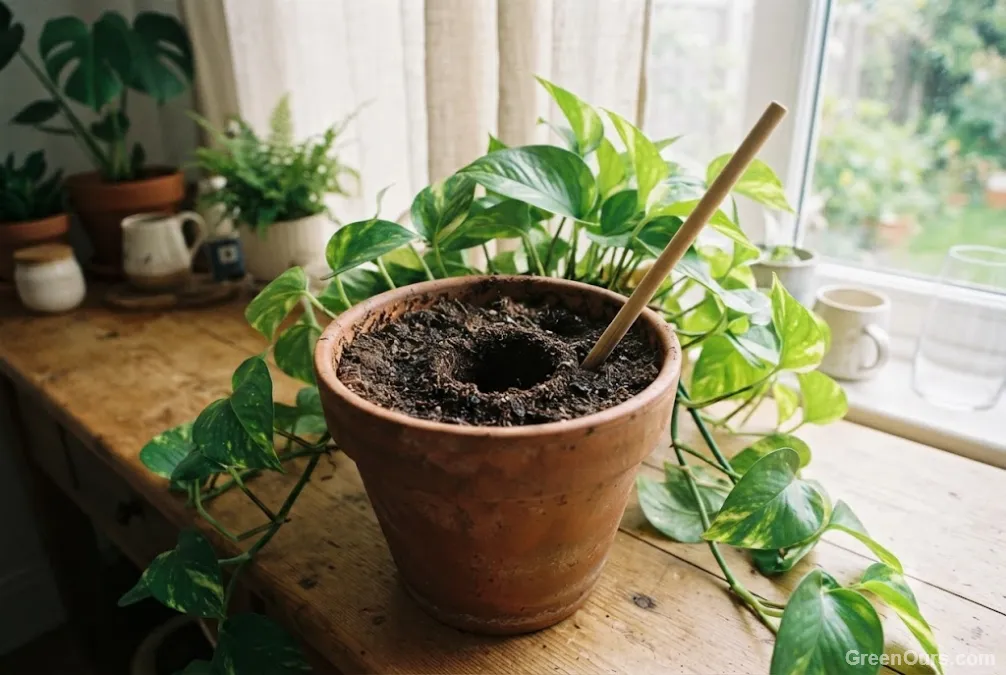
Push your finger into the soil up to the second knuckle, roughly two inches down. Surface soil dries first and tells you almost nothing about root-zone moisture. What matters is what's happening where the roots actually sit.
- Soil feels dry and crumbly at two inches — water now.
- Soil feels cool and slightly damp, sticks lightly to skin — wait 2 to 3 days, recheck.
- Soil feels wet, clumps heavily, or leaves visible moisture on the finger — do not water.
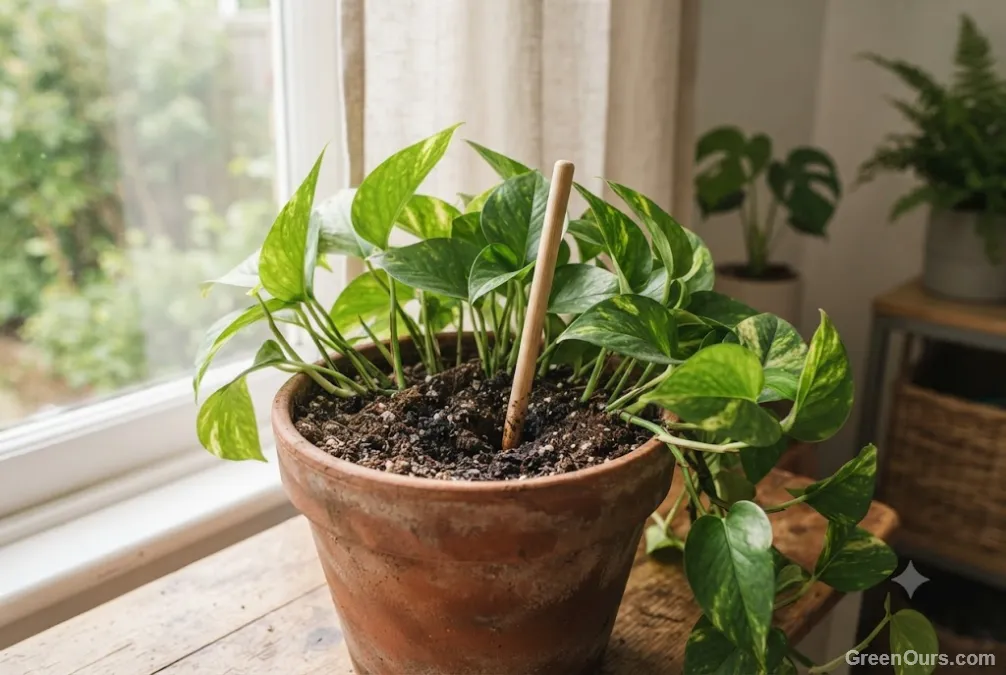
For pots deeper than 8 inches, use a wooden skewer instead. Push it to the bottom, pull it out, and check what sticks. Clean, dry wood means the whole root zone has dried out. Damp streaks partway up mean moisture is still present lower down, even if the top inch looks bone dry.
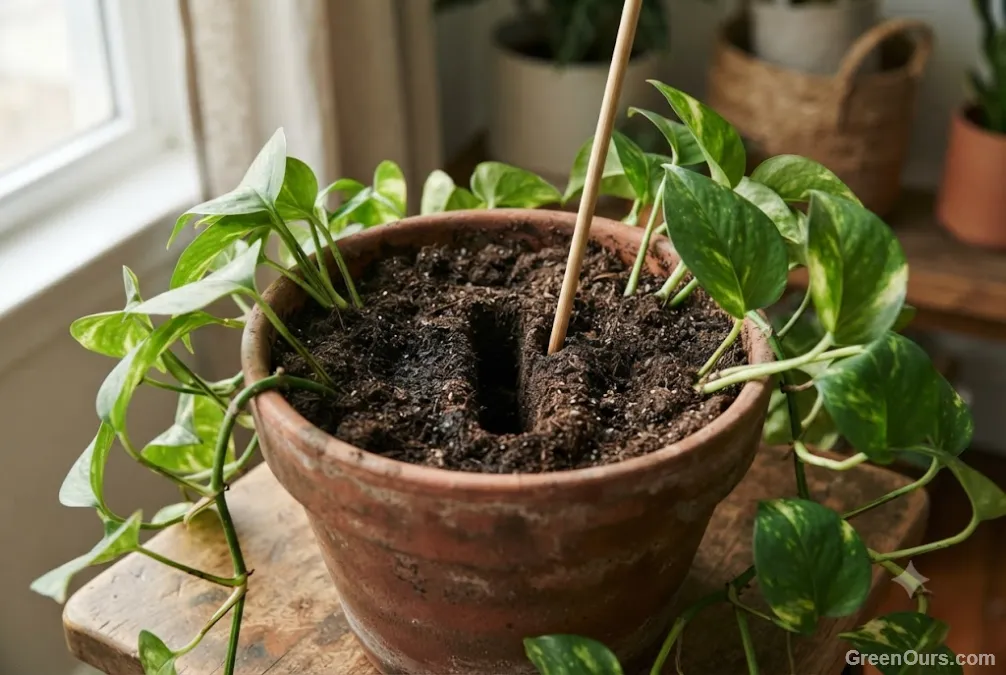
A dry top layer with a wet root zone is the single most common overwatering trap. Always check depth before you water, never just the surface.
Reading Soil Color and Texture
Signs Soil Is Genuinely Dry
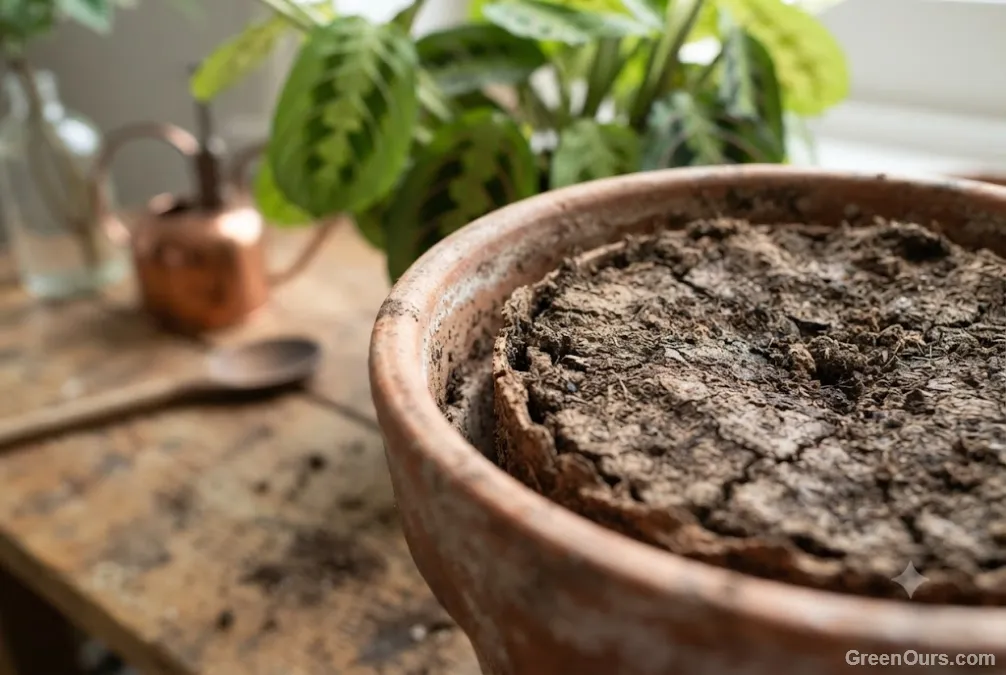
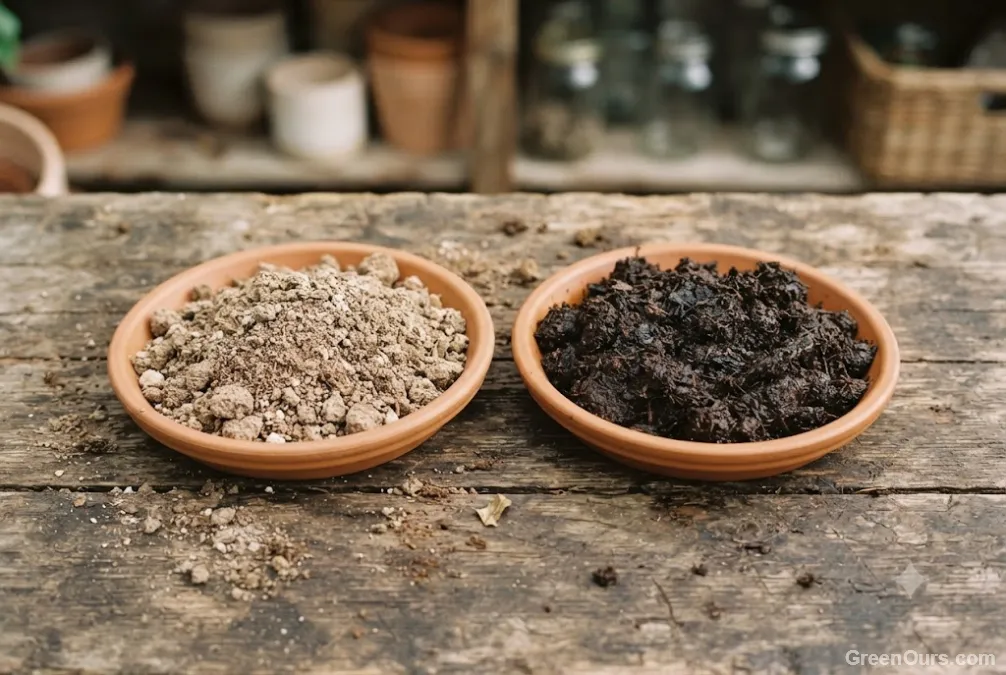
Dry potting mix turns noticeably lighter — often tan or grey instead of dark brown. It pulls away from the edges of the pot, sometimes leaving a visible gap. It crumbles and won't hold shape if you squeeze a handful, and water poured on top may run straight down the inside wall of the pot instead of soaking in, a sign called soil hydrophobicity.
Signs Soil Is Still Wet
Wet soil stays dark and glossy-looking at the surface. It compacts into a ball when squeezed and holds that shape. You may see a slight sheen or standing water in the saucer beneath the pot. If soil smells sour, musty, or like rotting vegetation, that's not just moisture — it's a sign of anaerobic conditions setting in, usually 3 to 5 days into standing water.
The Weight Test: Faster Than Digging
Lift the pot right after watering thoroughly and note how heavy it feels. Lift it again before you'd normally water. A pot that's noticeably lighter has lost most of its water weight and is likely ready. A pot that still feels nearly as heavy as it did right after watering almost certainly still has moisture at the root ball, even if the surface looks dry.
This method works especially well for plastic and lightweight ceramic pots, where soil moisture makes up a large share of the total weight. It's less reliable for heavy stone or concrete planters, where the container itself dominates the weight and masks the change.
What the Leaves Are Actually Telling You
Underwatering Signals
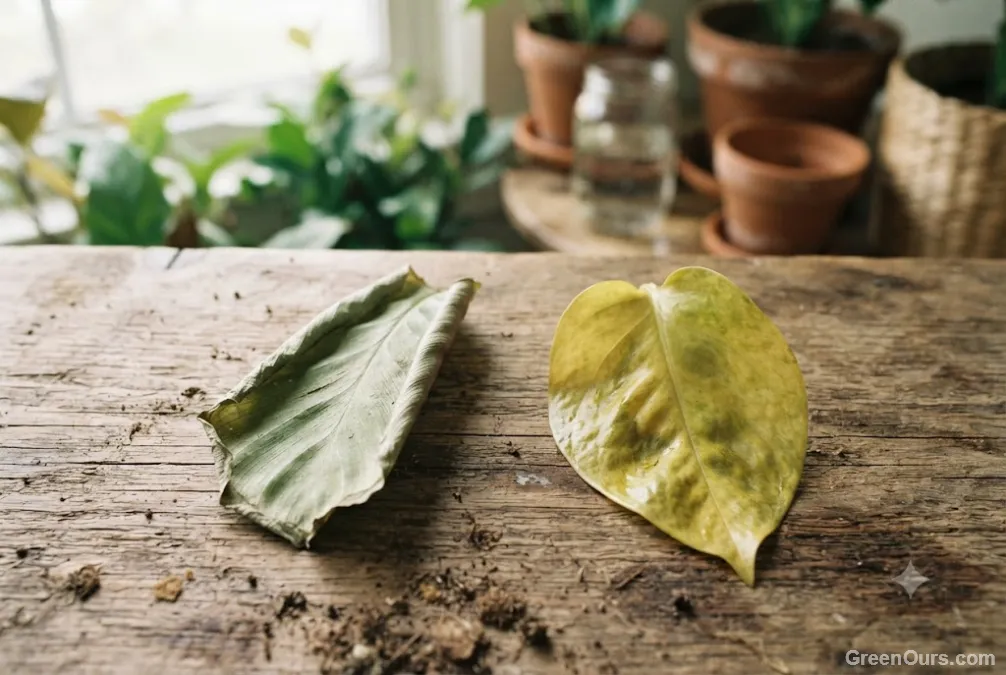
Leaves curl inward or cup along the edges as the plant tries to reduce surface area and slow water loss. Lower, older leaves turn crispy and brown starting at the tips before the rest of the leaf follows. Growth stalls, and new leaves emerge smaller than the ones before them.
Overwatering Signals
Leaves turn yellow starting from the base of the plant, often uniformly rather than in patches. They feel soft, sometimes almost mushy, rather than dry and brittle. Lower leaves may drop while still mostly green, and in advanced cases you'll notice a sour smell from the soil paired with dark, soft patches at the stem base — early signs of stem rot.
Container Plants vs. Garden Beds
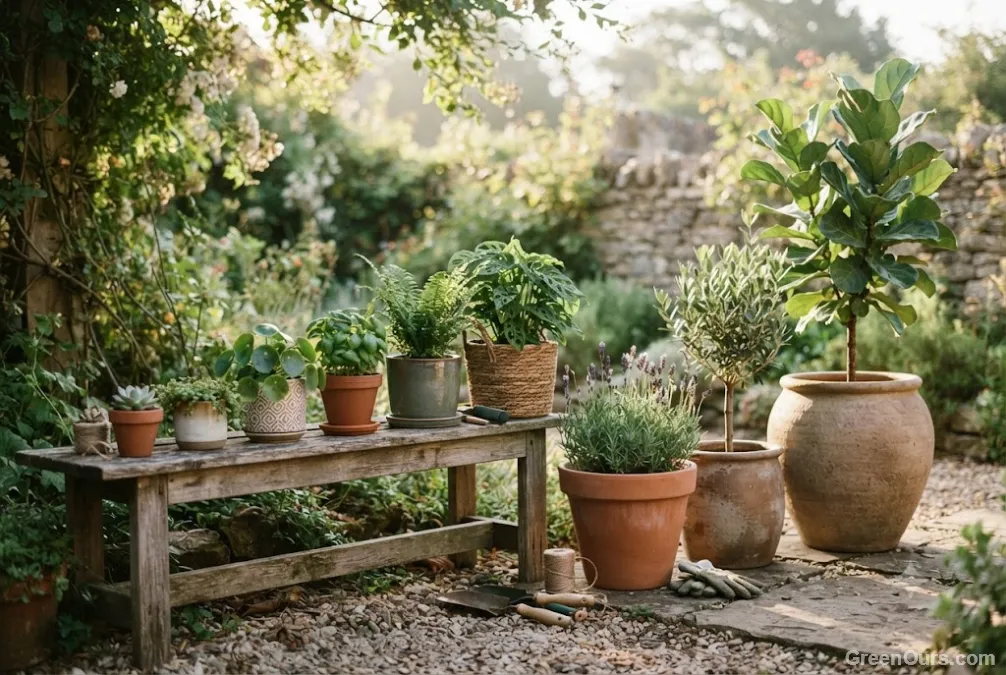
Container soil dries from the outside in and from the bottom up simultaneously, since pots lose moisture through drainage holes and porous walls. Check moisture at root depth, not just the surface, using the finger or skewer method above.
Garden beds behave differently. Soil several inches down can stay moist for a week or more after rain, even when the surface crust looks dry and pale. Dig a small hole 4 to 6 inches deep near the root zone, not right against the stem, and check moisture there before assuming the bed needs watering. Raised beds dry faster than in-ground beds because they drain more freely and warm up quicker in direct sun.
Common Misdiagnoses That Waste Time and Kill Plants
Yellow leaves get blamed on underwatering more often than not, when overwatering is the far more common cause in home settings. Drooping after a plant has just been watered is frequently misread as thirst, when it's often transplant stress, temperature shock, or the early stages of root rot, none of which more water will fix.
Brown leaf tips get attributed to dry soil when the real cause is frequently low humidity, fluoride or salt buildup from tap water, or fertilizer burn. Before you water, rule out these look-alikes. Adding water to a plant with a humidity problem or a salt buildup issue won't help, and it often makes root stress worse.
What to Do Next
Stop watering by date. Check the soil, check the weight, check the leaves, and let the plant tell you what it actually needs. Once you've run this check a handful of times on the same plant, you'll start to feel the pattern without needing to dig at all.
Run the finger test before your next scheduled watering.