
The Feeding Instinct That Trips Up New Plant Parents
Most overfeeding doesn't come from carelessness. It comes from love, and from a mental model borrowed from raising other living things: more attention equals more health. Plants don't work quite that way. A houseplant's roots absorb nutrients dissolved in water, and if the concentration of fertilizer salts in the soil gets too high, roots struggle to take up water and can even lose it. That's fertilizer burn, and it's one of the most common feeding mistakes beginners make.
Here's the reassuring part: fresh potting mix already contains some nutrients, and a houseplant that's never been fertilized will often do fine on them for months. That's especially true right after repotting, so hold off feeding for a while. You have more room for error than you think, until you start feeding aggressively rather than sparingly.
How Often Your Houseplants Actually Need to Eat
During active growth, roughly spring through late summer, most common houseplants do well with a balanced liquid fertilizer at about half the strength on the label, applied every four to six weeks. That's it. Not weekly, not with every watering, and not at full strength unless the label or a plant-specific guide says it's a heavy feeder. Formulations vary, so treat the label as your ceiling, not your target.
Dilution matters at least as much as frequency. A quarter to half strength mixed into your regular watering can gives roots a steady trickle of nutrients without the salt spike that causes burn. Most houseplant fertilizers are meant to go on the soil, and some products are made for foliar feeding, so use those only as the label directs. If you're ever unsure which way to round, round down. A plant usually recovers from underfeeding far faster than from fertilizer burn.
If the label recommends frequent feeding, don't automatically assume that schedule suits a houseplant. Follow the directions for container plants, and use a weaker solution or a longer interval when you're unsure.
Reading the Warning Signs of Too Much Fertilizer
Plants are fairly upfront about being overfed, once you know what to look for. These are the signals worth checking before you reach for the bottle again.
Crusty White Buildup on the Soil
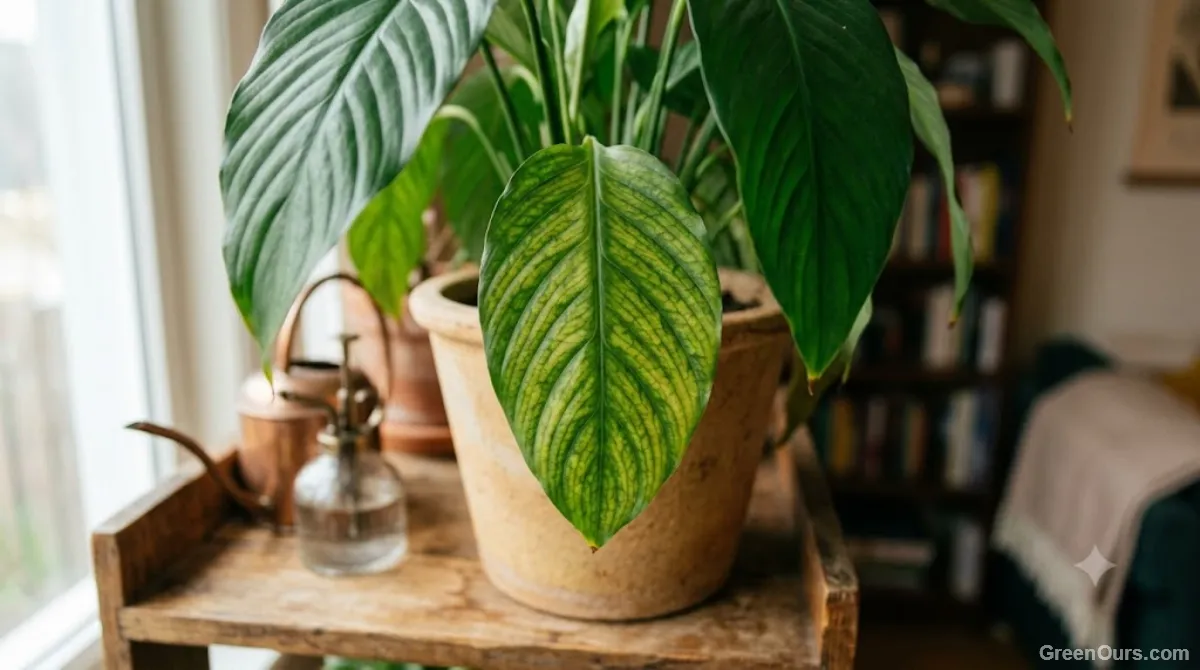
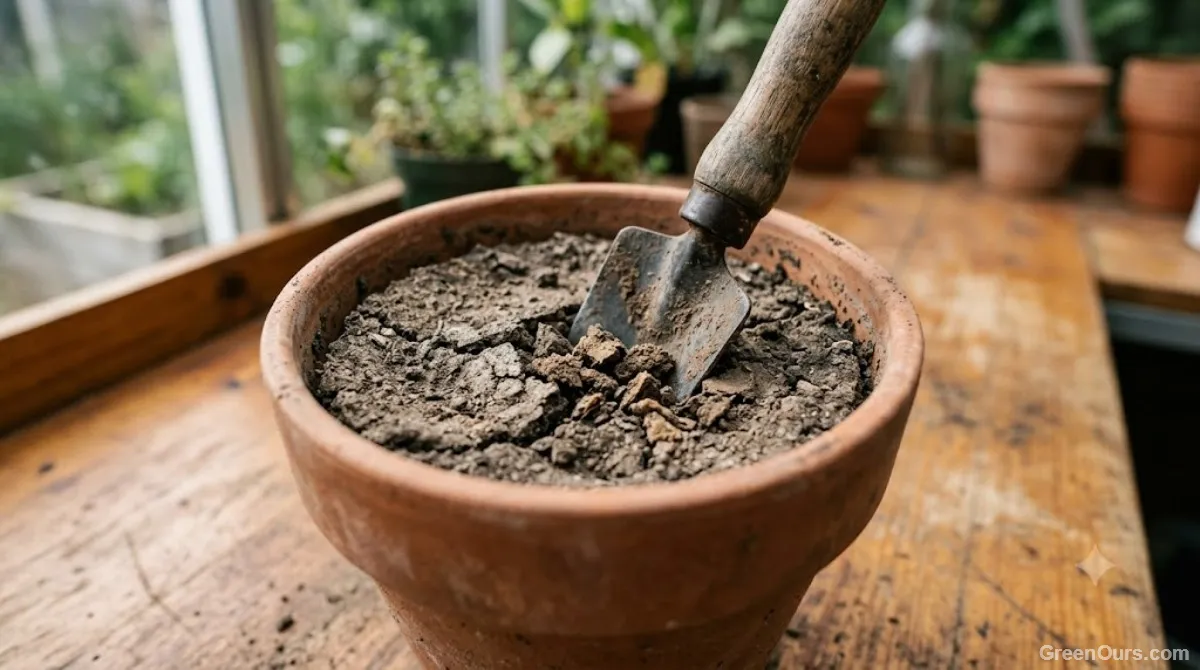
A pale, chalky crust on top of the soil or around drainage holes is mineral salt left behind from fertilizer the plant couldn't use. It's one of the earliest, most reliable signs that feeding has outpaced the plant's needs.
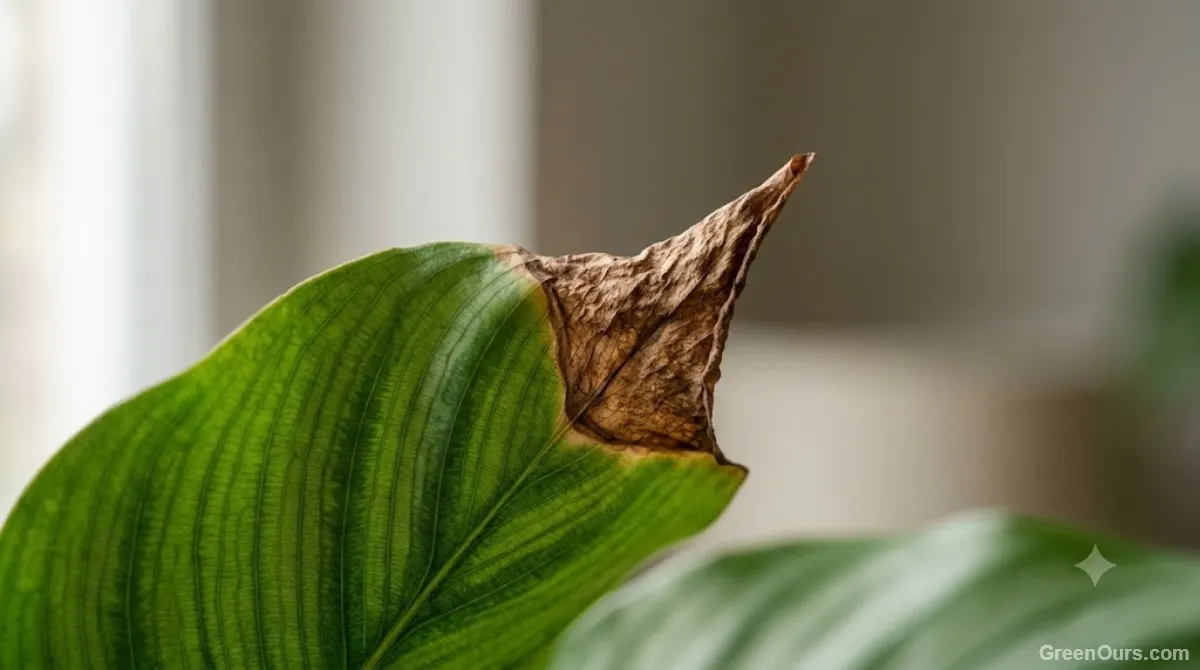
Burnt, Brown Leaf Tips
Crisp, dark brown tips or margins, especially on older leaves, are the classic fertilizer burn signature. This is different from the soft, mushy browning caused by overwatering. Fertilizer burn tends to be dry and brittle to the touch, though other causes can look similar.
Sudden Wilting After Feeding
If a plant droops within a day or two of being fed, even though the soil is moist, the fertilizer solution may have been too concentrated and made it harder for the roots to take up water.
A Simple Feeding Routine You Can Actually Stick To
A workable routine doesn't need a spreadsheet. Water your plant as you normally would, and once every four to six weeks during spring and summer, swap plain water for your diluted fertilizer mix. Always feed into moist soil, never bone-dry soil, since fertilizer applied to dry roots is more likely to cause burn.
If salts tend to accumulate in your potting mix, an occasional thorough flush with plain water can help wash them out. Make sure the pot drains freely afterward. This washes out accumulated salts before they build up enough to cause stress, and it prevents more problems than any fertilizer blend will solve.
If You Already Have Fertilizer Burn
If you're seeing a salt crust or crisp tips, stop feeding first. Then flush the pot with plain, room-temperature water until it runs freely from the bottom, let it drain fully, and repeat once or twice over the next few days. Skip fertilizer until you see healthy new growth.
Damaged tips and leaves won't turn green again, so trim them if they bother you and judge recovery by the new growth. If the crust keeps coming back, or the plant is badly stressed, replacing the top layer of soil or repotting into fresh mix can help.
What "Weak Growth" Really Means (and Why More Fertilizer Won't Fix It)
This is the misunderstanding that sends many beginners reaching for stronger doses. Pale, leggy, or slow growth gets blamed on a hungry plant, when the real cause is often light. Fertilizer feeds a plant that already has enough light to use those nutrients. Without it, extra feeding just sits in the soil, waiting to become the salt buildup described above.
Before increasing how much or how often you feed, ask whether the plant is getting enough bright, indirect light, whether it's root-bound and due for a larger pot, and whether watering has been consistent. Feeding is the last variable to adjust, not the first.
Adjusting Feeding by Season and Plant Type
As daylight shortens into autumn and winter, most houseplants slow their growth, even indoors under artificial light. This is where feeding should taper off, not continue at the same pace. Cutting back to once every couple of months, or stopping altogether for plants that go dormant, keeps you from feeding a plant that isn't growing enough to use the nutrients.
Use this table as a starting point, not a rulebook:
| Plant or situation | Starting approach |
|---|---|
| Most leafy tropicals | Half strength every 4 to 6 weeks in spring and summer |
| Pothos, philodendron, spider plant | Toward the more frequent end of that range |
| Succulents and cacti | A light feed a couple of times in the growing season |
| Low-light plants | Feed less, since they use fewer nutrients |
| Recently repotted plants | Skip feeding for the first few weeks |
Where to Start
Next time you feed, read the label, mix it weaker than it says, and pour it into moist soil. Feeding a houseplant well isn't about generosity, it's about restraint paired with attention. Once you stop treating the fertilizer bottle as a fix for every slow or unhappy-looking plant, you'll reach for it less, and your plants, oddly enough, will start looking better for it.
Explore more beginner plant care guides.