
What Low Light Actually Means in Your Apartment
Before you pick a plant, look at your room the way a plant would. Stand near your window in the middle of the day and notice the shadow your hand casts on the wall. A crisp, dark shadow suggests decent light, even if the room feels dim overall. A faint, blurry shadow, or none at all, means true low light, which is useful information rather than bad news.
Direction matters. In the Northern Hemisphere, a north-facing window never gets direct sun but can still give steady, gentle brightness all day; in the Southern Hemisphere it's the other way around. A window that faces an air shaft or a neighbor's brick wall can be much dimmer than its direction suggests. Distance counts too: light drops off quickly as you move away from the glass, so a plant six feet (about 2 m) back lives in a much dimmer world than one on the sill.
| What you see | Roughly what it means | What it suits |
|---|---|---|
| A crisp shadow, plant on or near the sill | Brighter than low light | The plants below, and many others |
| A soft, blurry shadow a few feet from the window | Low to medium light | The five plants below |
| A very faint or no shadow, well back from a small window | Very low light | Only the toughest plants, growing slowly; consider a grow light |
| No window at all | Not enough natural light | A grow light; most plants won't live long on ordinary room lighting alone |
A room that feels dim to your eyes can still give a plant usable light. Human eyes adjust automatically to darkness, so trust the shadow test or a light meter app over your gut feeling.
Where to Put a Plant in a Dim Apartment
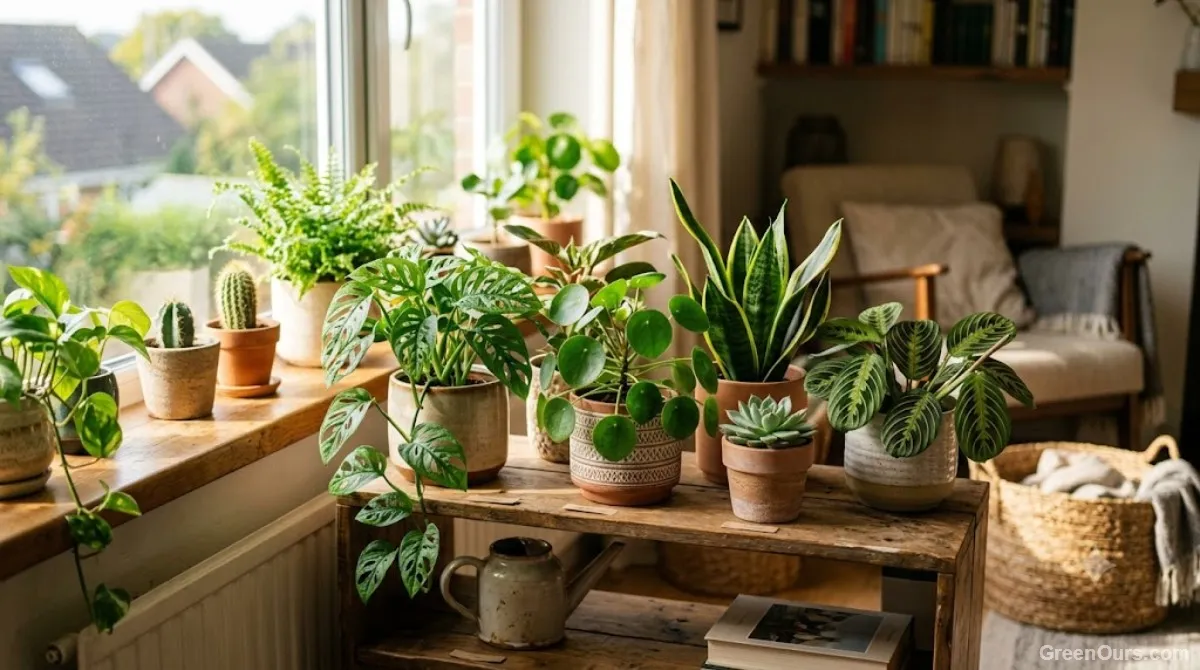
Placement often matters more than which plant you pick. A few feet closer to the window can make a bigger difference to a plant than switching to a more forgiving species, so set plants on a shelf, stool, or sill near the glass instead of across the room.
Match the Plant to the Spot
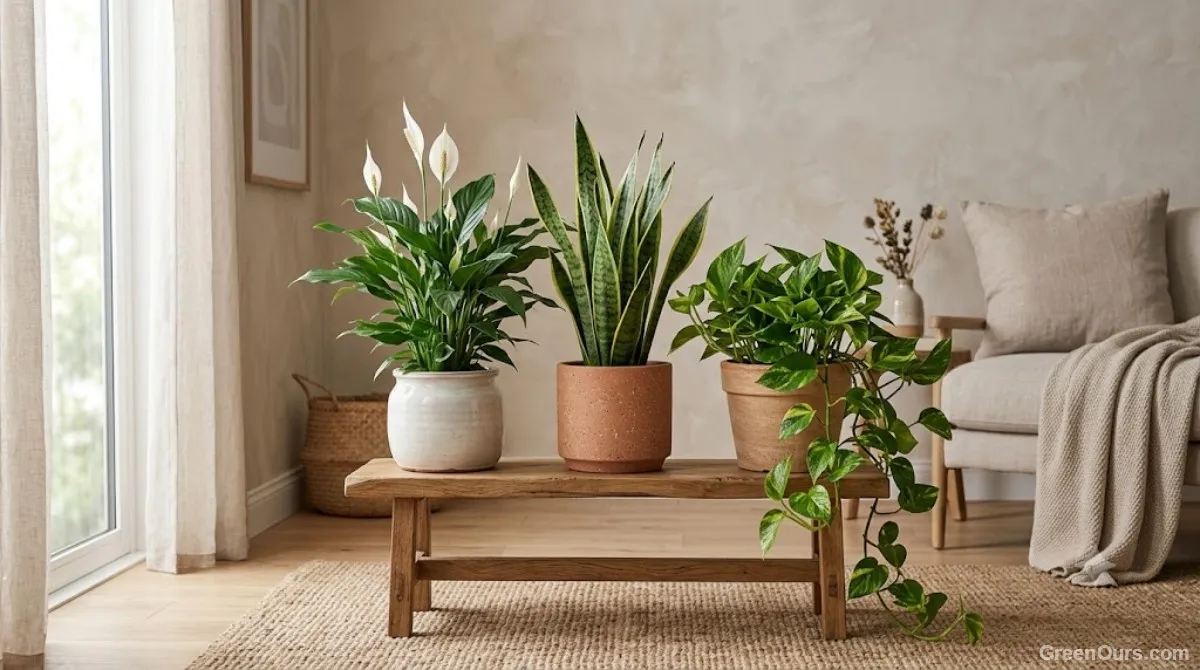
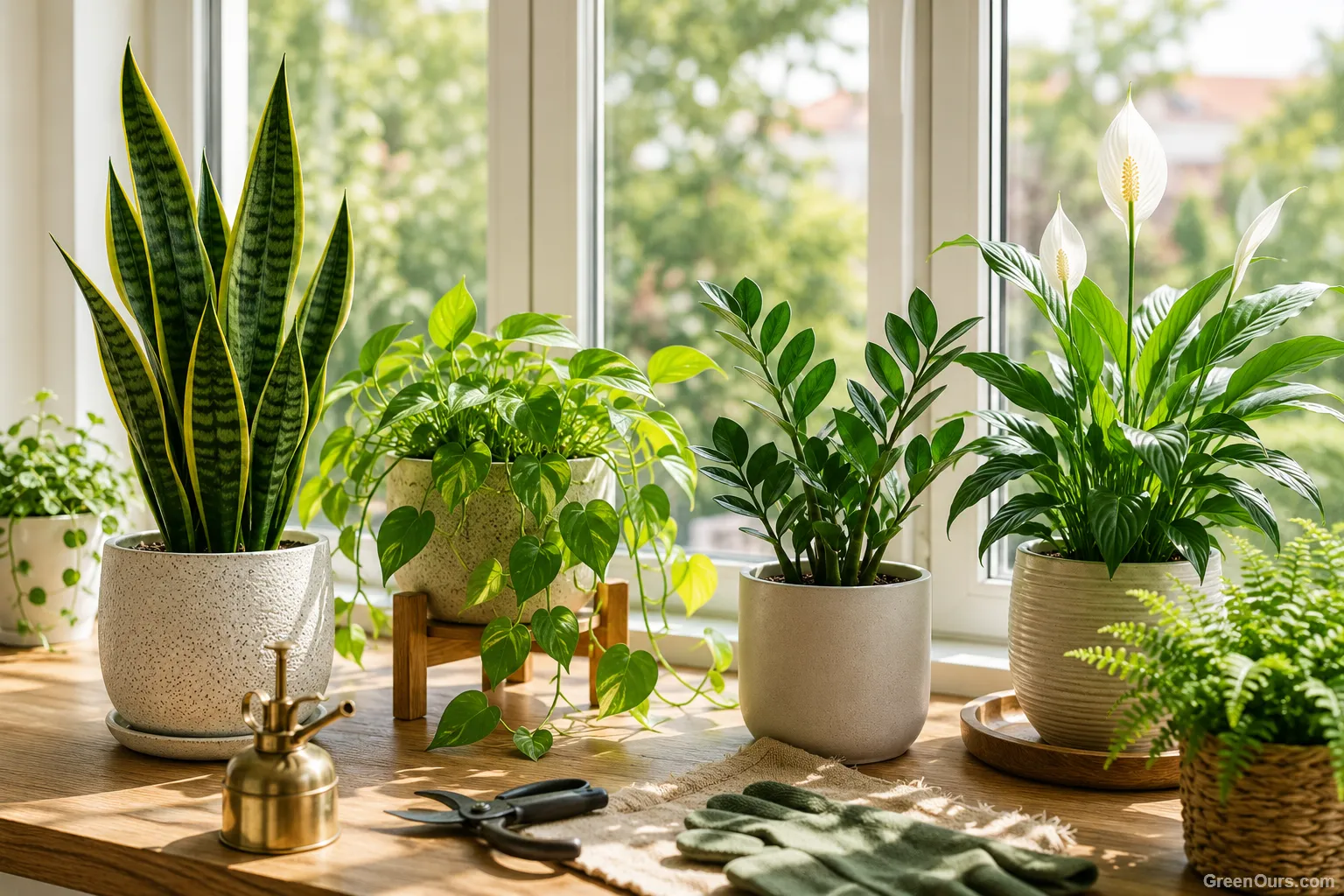
- A shelf or table a few feet from a window: pothos or peace lily
- A corner further back in a room that still gets some daylight: ZZ plant, snake plant, or cast iron plant
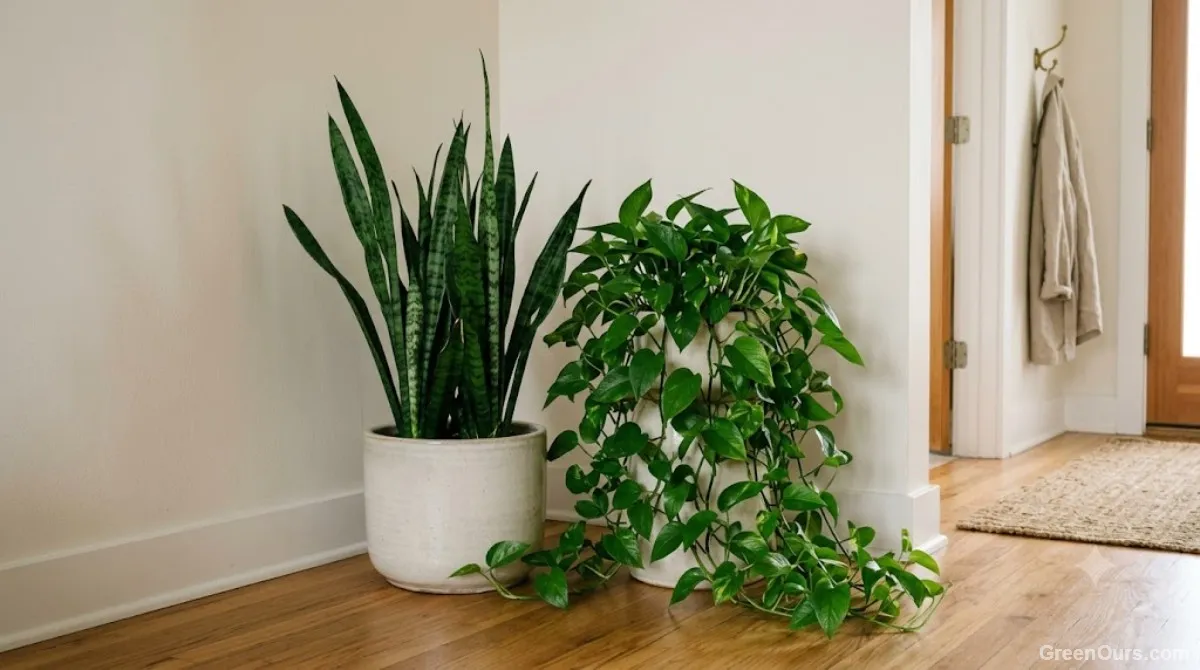
- A hallway or bathroom that catches light from a small window or open doorway: snake plant or ZZ plant, as long as the spot gets some daylight at all
Five Plants That Forgive an Apartment's Dim Corners
Some houseplants cope with low light better than others, and a few do better out of a blasting south window. None grow in complete darkness, so all of them still need some daylight, even if it's faint.
Snake Plant
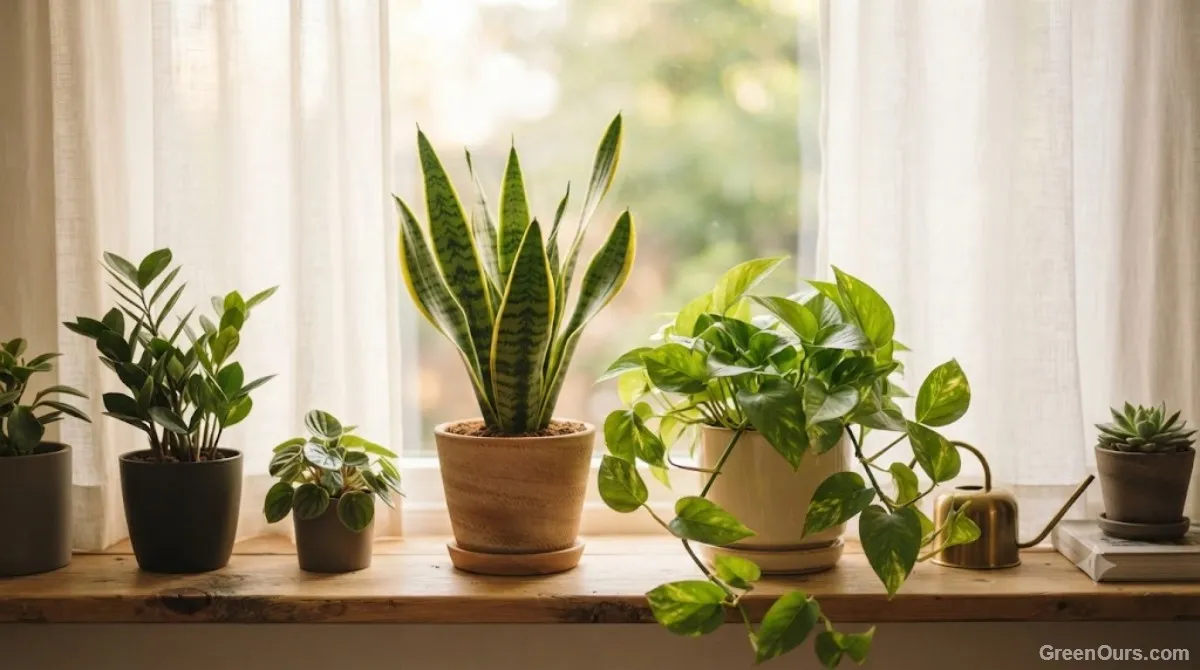
A snake plant can handle the awkward hallway that catches a bit of borrowed light from a doorway or window. Its stiff, upright leaves store water, so it forgives irregular care as well as dim conditions, though growth will be slow.
ZZ Plant
A ZZ plant does well in a dim corner away from the window, as long as it gets some daylight. Thick underground rhizomes let it coast through irregular watering, which suits busy households. It grows slowly in low light.
Pothos
Pothos grows more slowly in dim rooms but often keeps going, which makes it a good match for a shelf a few feet from a shaded window. Its trailing vines bring softness to a bookshelf.
Cast Iron Plant
Cast iron plant is known for tolerating the kind of neglect that would finish off many other plants, which makes it a solid pick for a rental with one small window. Expect very slow growth.
Peace Lily
Peace lily can manage low to medium light and droops noticeably when thirsty, which takes some guesswork out of watering. It may flower less in a dim room than it would in brighter indirect light.
A note for pet owners: pothos, peace lily, ZZ plant, and snake plant can cause mouth or stomach irritation if chewed. Cast iron plant is generally listed as pet-safe, but check with your vet if you have animals at home.
When a Spot Is Too Dark to Try
Even the toughest plants need some light, so it's worth deciding before you shop whether a spot has any to offer. A windowless hallway or closet, a spot behind a heavy curtain, or a corner where the shadow test shows almost nothing is too dark for most plants to live in long-term.
If that's the only spot you have, a small grow light is often a better plan than a tougher plant. A tough plant from the list above can help a borderline spot, but it won't make a truly dark one work. Moving closer to a window is the other simple fix.
Watering Is the Habit That Matters Most
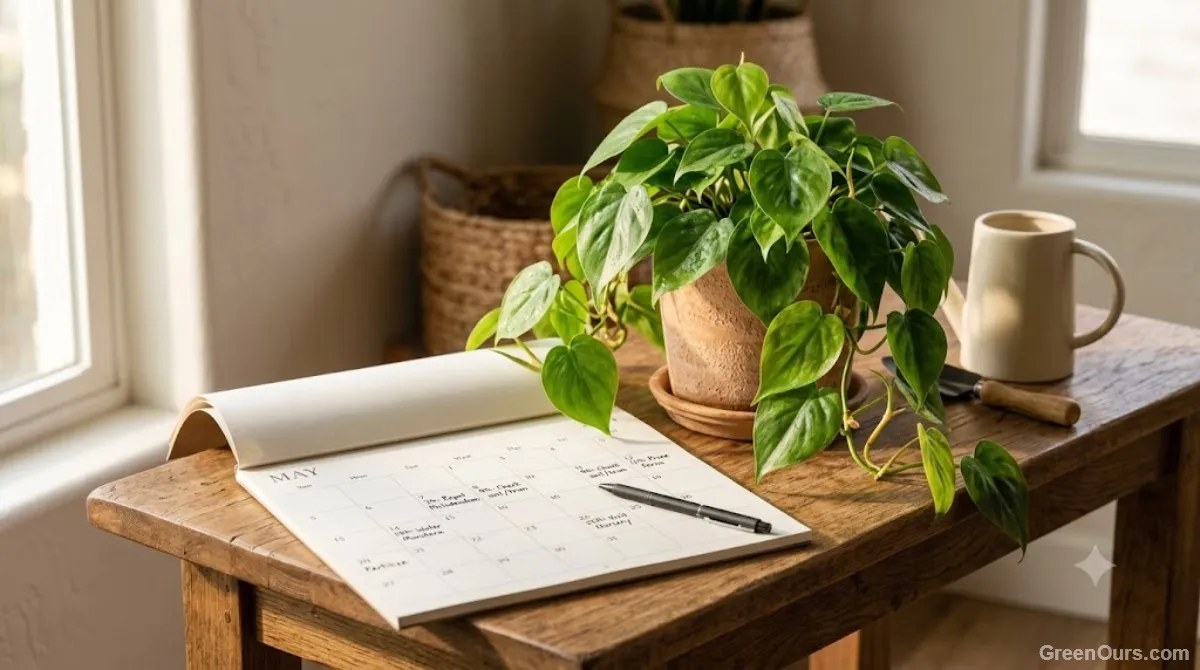
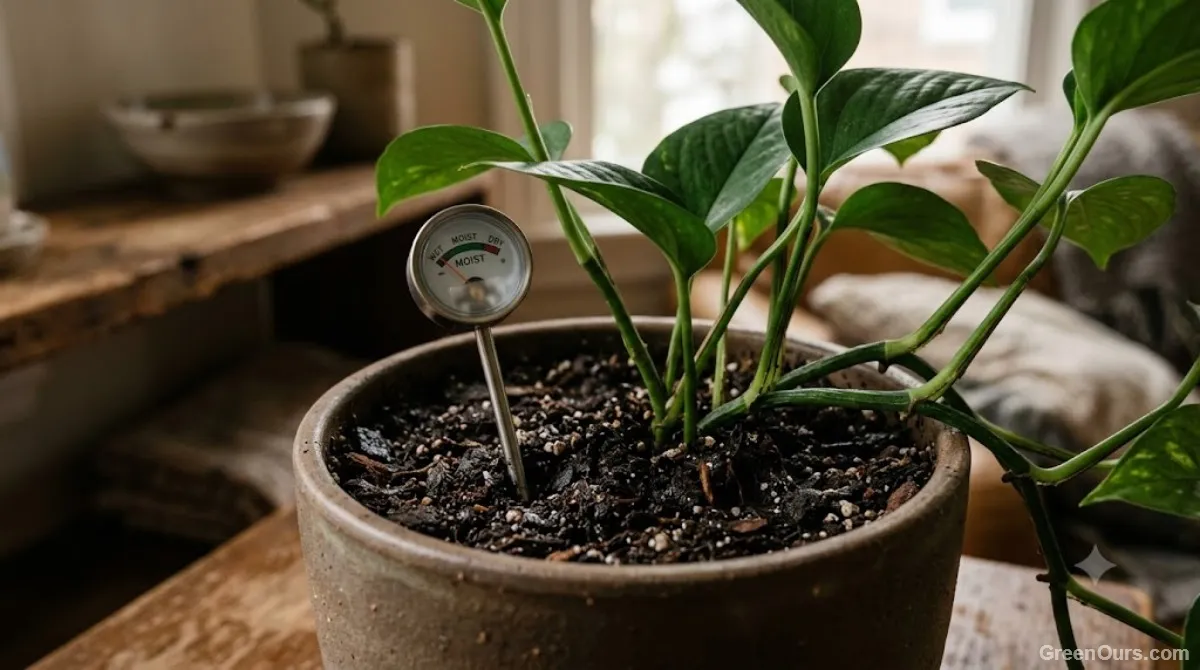
Less light means slower growth, so the soil stays wet longer, and soggy roots are a common route to rot in dim rooms. Skip the calendar and push a finger a couple of inches (about 5 cm) into the soil before you water, waiting if it still feels cool or damp.
Where to Start
If you only do one thing this week, try the shadow test at the spot where you'd like a plant, then match what you see to the closest row in the table above. That tells you which plants to try and how close to the window to set them.
Give a plant a season before you judge whether it belongs in your space. Low light growth is slower by design, not a sign you're doing it wrong. The apartments with the healthiest plants often aren't the brightest ones. They're the ones where someone paid attention and picked greenery suited to the room they actually have.
Ready to choose? Try the shadow test at your favorite spot this weekend.