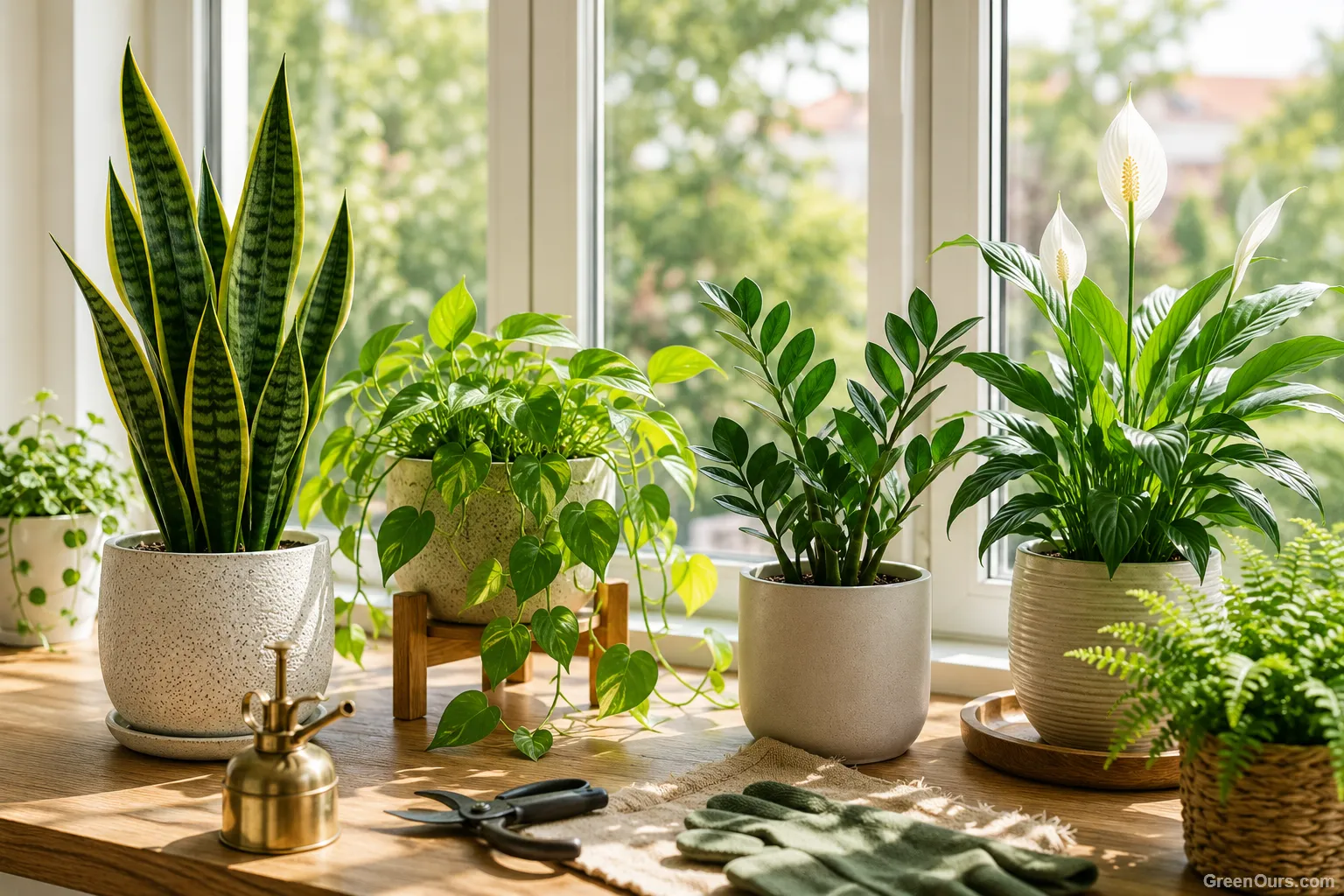

The Plants Most People Give Up On (And the Ones That Won't Let You)
Most first houseplants fail for one of two reasons: too much water, or too little light paired with too much guilt-watering to compensate. The plants below are specifically resistant to both failure modes. They tolerate drying out between waterings, and several of them do just fine in a corner that never sees direct sun.
None of these require a grow light, a humidifier, or a moisture meter. That's the point.
Five Plants Built for Beginners
Snake Plant
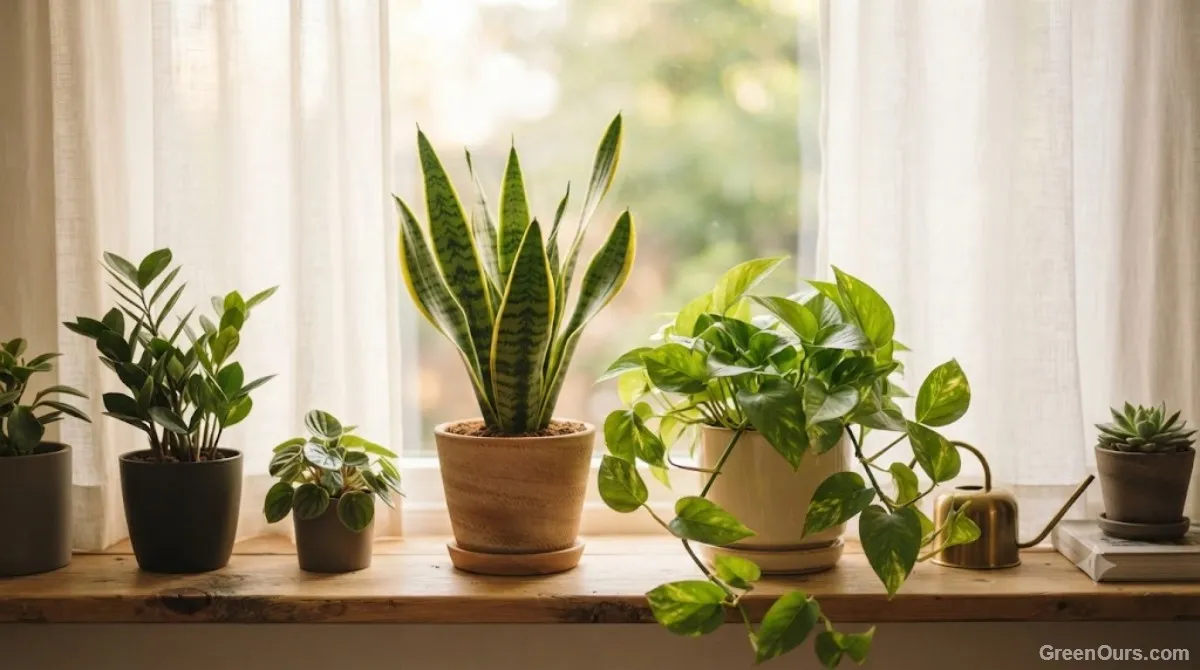
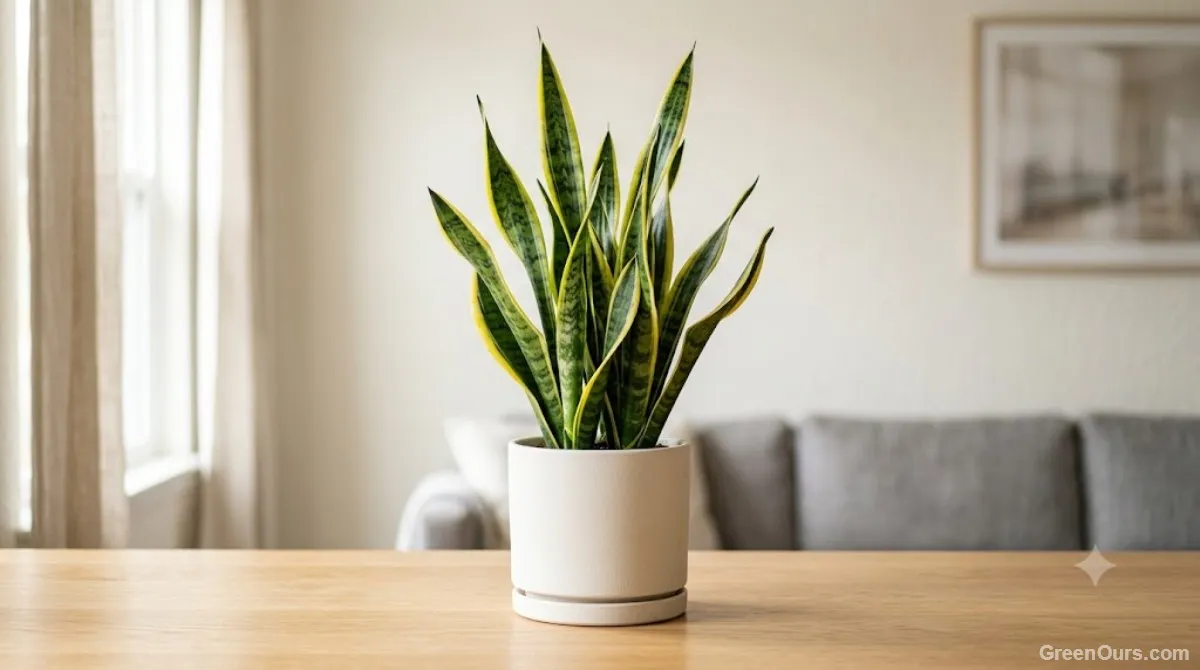
Best for: inconsistent watering. The snake plant is remarkably tolerant of an irregular routine. Its thick, upright leaves store water, which means it's genuinely happier when you underwater it than when you overdo it. It tolerates everything from low light to bright indirect light, although growth can vary with conditions, and a missed week won't set it back the way it would with a thirstier plant. If you've killed other plants through inconsistent attention, this is where you rebuild your confidence.
ZZ Plant
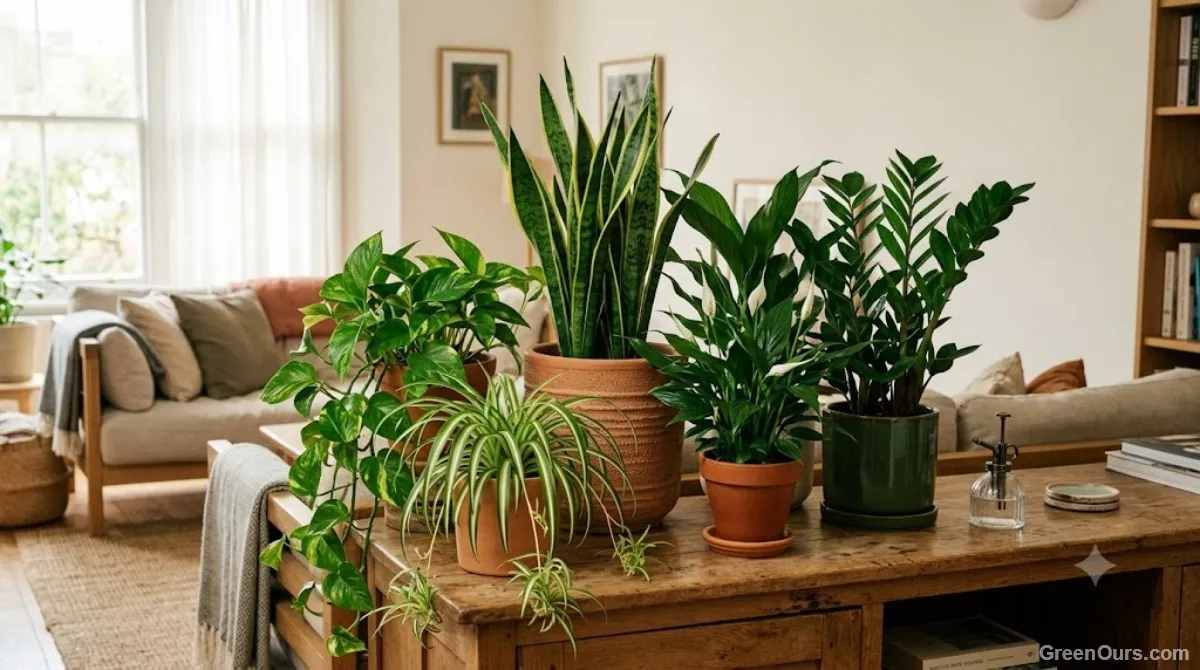
Best for: low light combined with a care routine that's still a work in progress. The ZZ plant stores water in thick underground rhizomes, so an occasional missed watering barely registers. Its glossy leaves also make it look deliberately styled even when you've done very little to earn that. It tolerates low light better than almost anything else on this list, though it still needs some ambient daylight to keep growing — not a fully windowless room.
Pothos
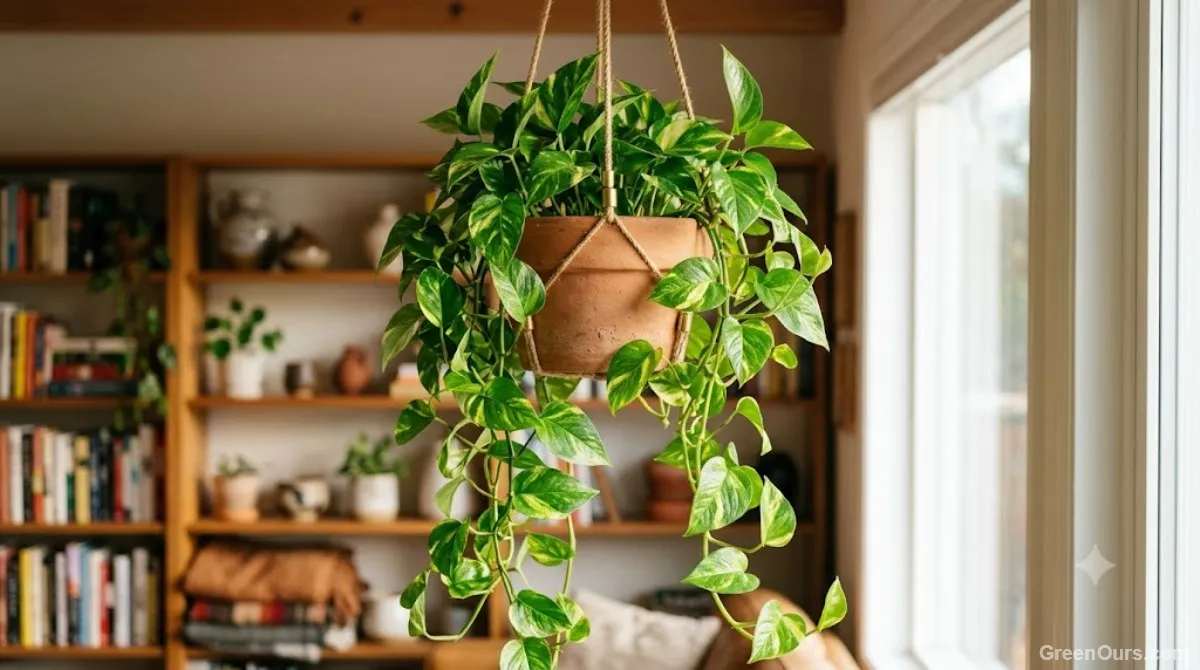
Best for: beginners who want visible proof they're doing something right. Pothos tells you clearly when it's thirsty by going a little limp, then perks back up within hours of watering — an obvious feedback loop that's reassuring when you're still learning to read a plant. It grows in low to medium light and is one of the easiest plants to propagate, so a single healthy vine can eventually fill several more pots for free.
Cast Iron Plant
Best for: a low-light corner where you'd rather not track a growth timeline. True to its name, the cast iron plant tolerates low light, dry air, and temperature swings that would stress out almost anything else. It grows slowly, which some beginners mistake for a downside — but slow growth also means there's less happening week to week for a beginner mistake to disrupt.
Spider Plant
Best for: beginners who want an obvious sign they're getting it right. Spider plants tolerate a wide range of light conditions and bounce back quickly from an occasional missed watering. They also produce small plantlets on long stems, which is a satisfying, low-effort way to end up with more plants without buying them.
Setting Yourself Up to Succeed
Even the toughest of these easy indoor plants for beginners benefits from a reasonable starting point. You don't need to overthink this, but a few basics will make your results noticeably better.
Pick a spot with at least some indirect daylight — a room with a window is enough, even if the plant never sits directly in the sun. Choose a pot with a drainage hole, since standing water is a far more common killer than dry soil. And resist the urge to repot the moment you bring a plant home; most beginner plants do better settling into their new environment for a few weeks first.
Mistakes That Even Low-Maintenance Plants Won't Forgive
These plants are forgiving, not indestructible. A handful of habits will still cause trouble, no matter how resilient the species.
Watering on a schedule instead of by feel
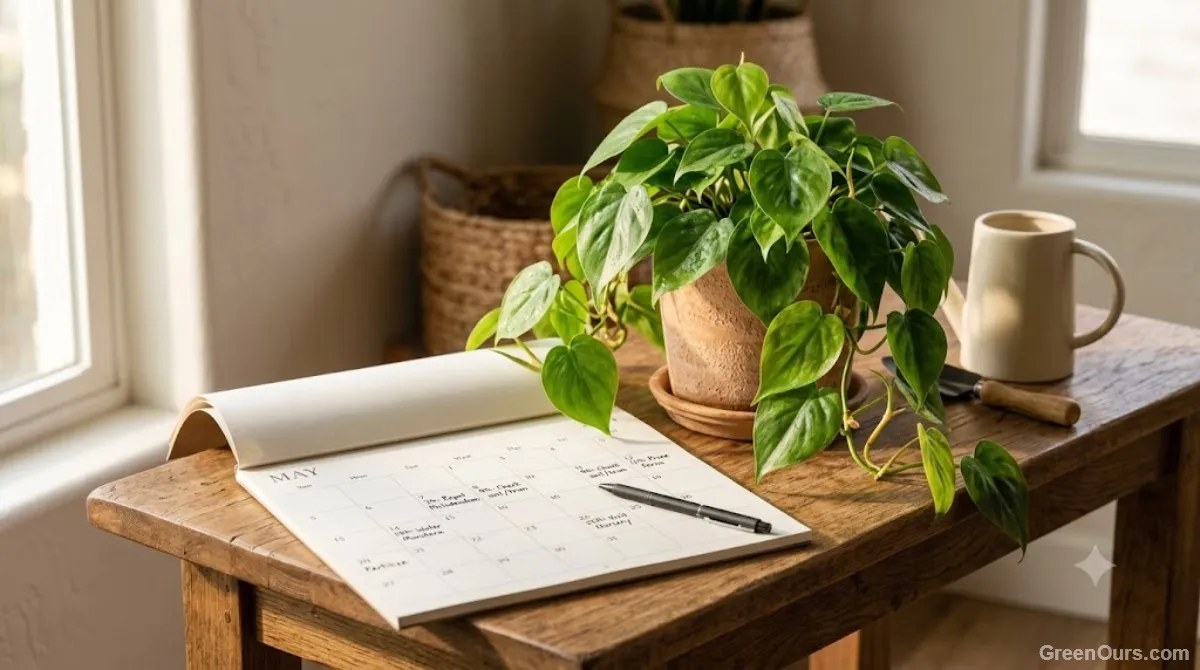
Calendar watering is one of the most common ways beginners accidentally kill low-maintenance plants. Check the soil with a finger before adding water — if it's still damp an inch down, wait.
Leaving pots sitting in water
A saucer that collects water after each watering can quietly rot roots over weeks, even in plants known for tolerating neglect. Empty any standing water from the saucer after watering rather than leaving the pot sitting in it.
Assuming "low light" means "no light"
Every plant on this list tolerates low light — none of them thrive in total darkness. A windowless bathroom or an interior hallway with no natural light at all still isn't a good fit, no matter how tough the species.
Ready to build out your plant shelf? Explore more beginner plant guides.
Starting with one of these five plants won't guarantee you'll never lose a leaf or two along the way — that's normal, even for the toughest species. But it does mean your first real houseplant win is well within reach, and that's usually all it takes to turn "I can't keep anything alive" into a genuine hobby.