
Why Indoor Plants Are Worth Starting Today
Indoor plants do more than fill a corner. They soften a room, give you something small to take care of, and — for a lot of people — become a genuinely calming daily habit. And unlike a garden bed, you can start with one plant, on one windowsill, with almost no upfront cost or commitment.
You don't need a green thumb you were born with — you need a little patience and a willingness to notice things. The good news is that noticing is a skill anyone can build, and it gets easier every week you keep a plant alive. Most of what feels intimidating about houseplants right now is really just unfamiliarity, not difficulty.
There's also something to be said for the small, steady rhythm indoor plants add to your day — noticing new growth, adjusting a leaf toward the light, refilling a watering can. It's a modest ritual, but it's one that a lot of beginners find surprisingly grounding once it becomes part of their routine.
What You'll Need
Resist the urge to buy everything at once — a long shopping list is more likely to discourage you than help you.
- One or two beginner-friendly plants (see below)
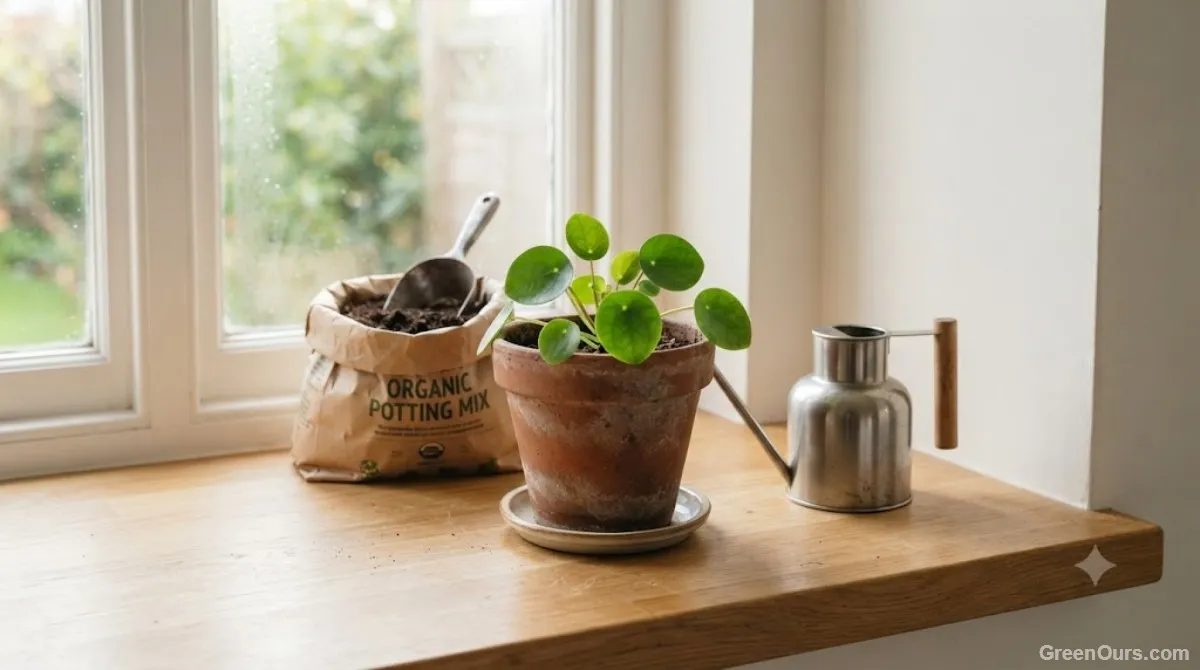
- A pot with a drainage hole, slightly larger than the plant's current container
- Quality potting mix
- A watering can with a narrow spout
A quick note on each of these: choose a pot with a drainage hole no matter how tempting the drainage-free ceramic one at the store looks — standing water at the roots is one of the fastest ways to lose a plant. Skip garden soil entirely; it compacts indoors and doesn't drain the way a proper potting mix does. And a narrow-spout watering can isn't just for looks — it lets you water the soil directly instead of splashing the leaves, which matters more than you'd think for plants prone to fungal spots.
Getting Started: Understanding Light
Step One: Watch Your Light for a Few Days
Before buying anything, notice which windows get direct sun, which get bright indirect light, and which rooms stay dim all day. This single observation will guide almost every plant decision you make.
Step Two: Match Plants to What You Actually Have
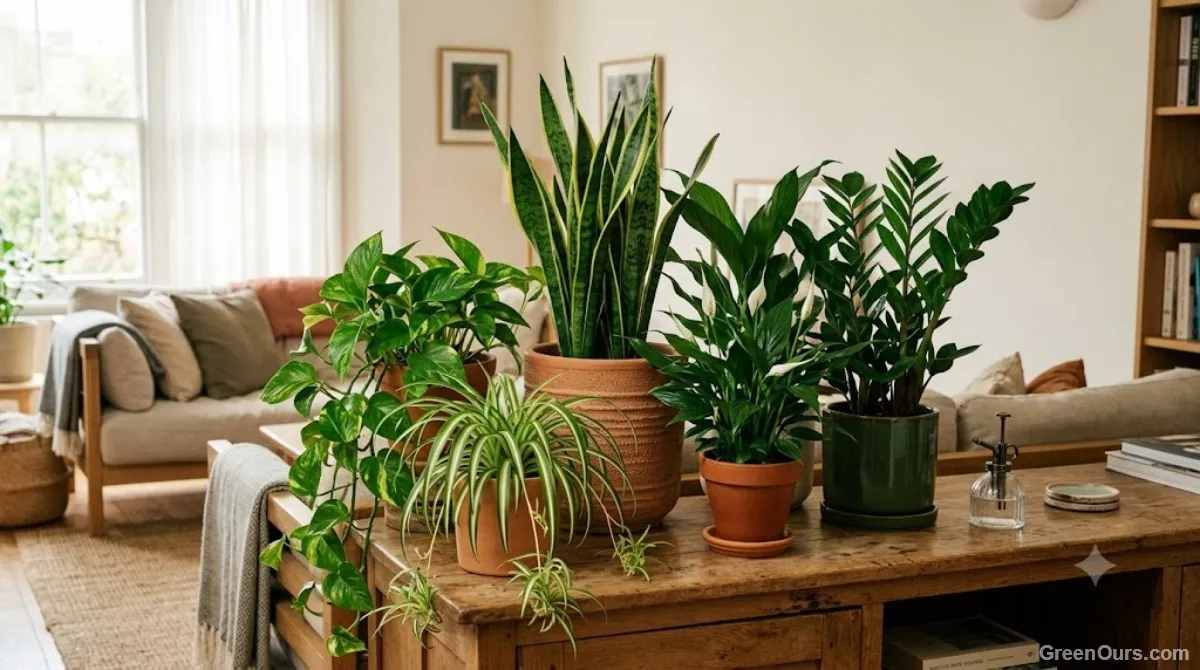
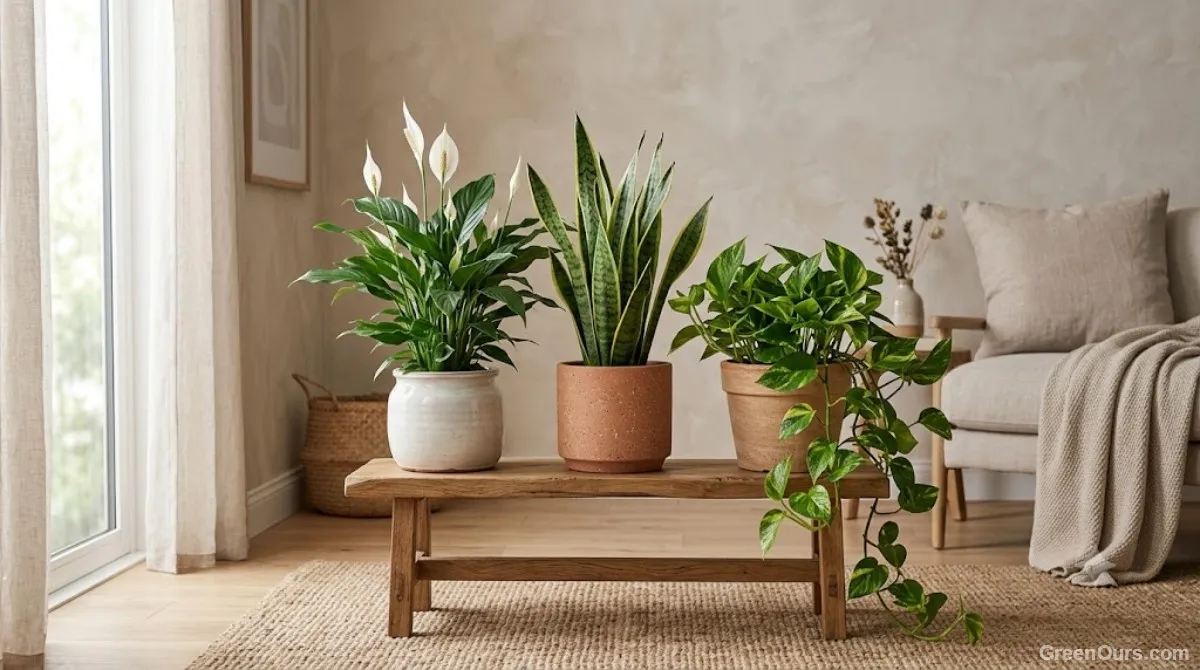
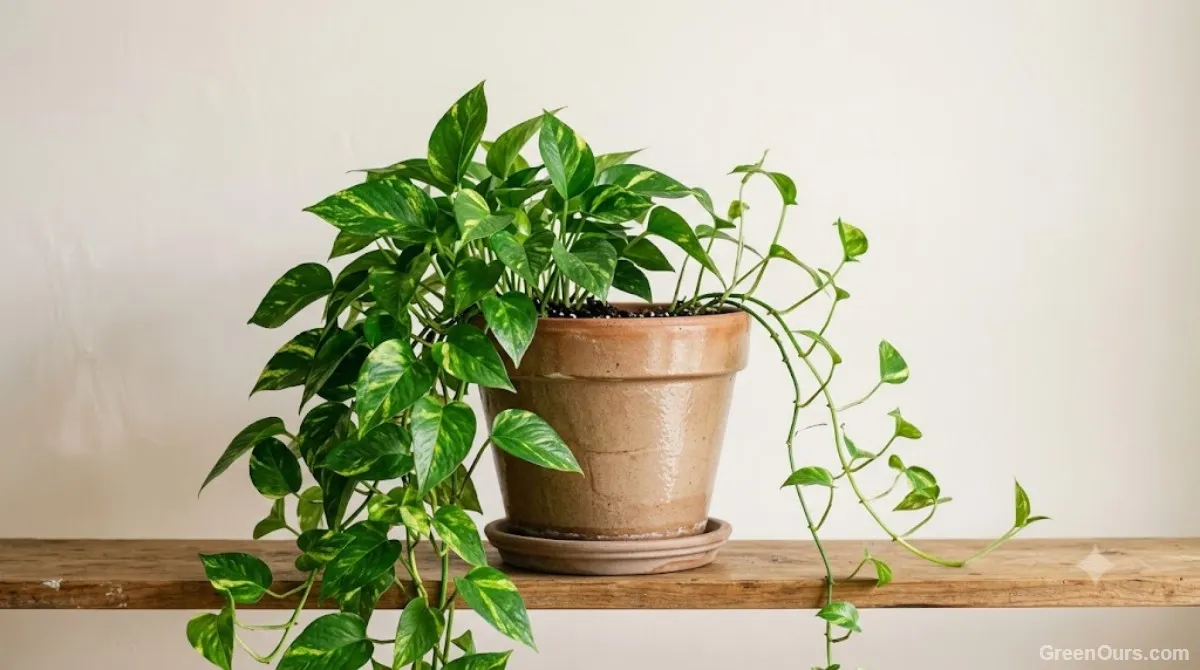
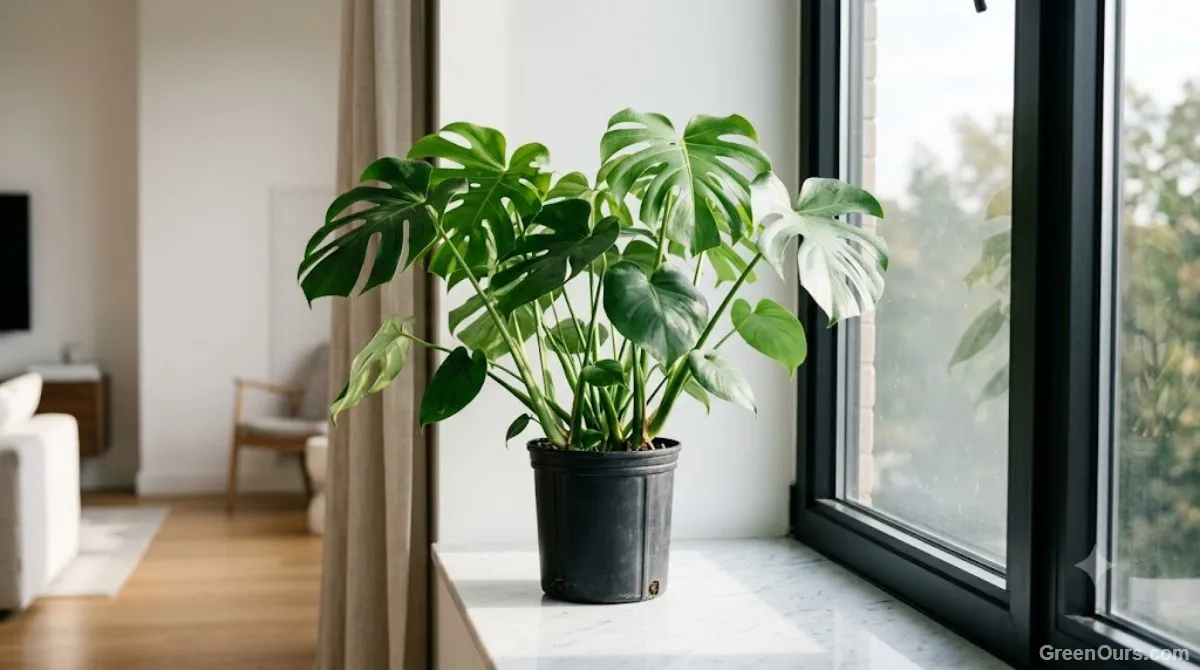
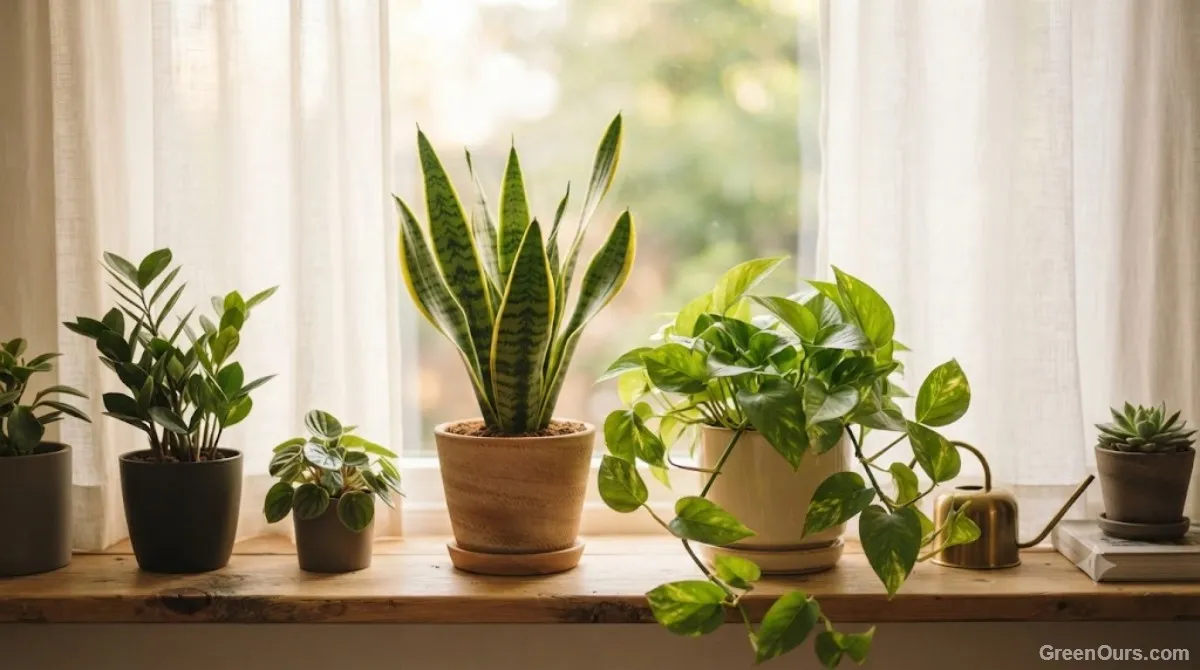
Tolerates lower light: pothos, snake plant, ZZ plant. "Tolerates" is the operative word here — these plants hold up in a dimmer room, but they still grow best with some indirect daylight, not none at all. Bright indirect light: philodendron, peace lily, rubber plant. Direct sun: succulents, cacti, most flowering houseplants. Choosing correctly here does more work than any amount of careful watering later.
If you're not sure which category your space falls into, hold your hand about a foot above the surface where the plant will sit. A soft, diffused shadow usually means bright indirect light, while a sharp, well-defined shadow means you're looking at direct sun.
Step Three: Start With Just One or Two Plants
It's tempting to fill every surface at once. Don't. Get comfortable caring for one or two plants first — you'll learn their signals faster, and you won't feel overwhelmed if something needs extra attention.
One more habit worth building early: give your plant a quarter turn every week or two. Plants naturally grow toward their light source, and without the occasional rotation you'll end up with a lopsided plant leaning hard toward the window.
Keep in mind that light shifts with the seasons even in the same window. A spot that felt like bright indirect light in summer can read as low light once the sun sits lower in the sky through autumn and winter, so don't be surprised if a plant that thrived for months suddenly seems to slow down — it may just need to move a little closer to the glass.
Watering Without Guessing
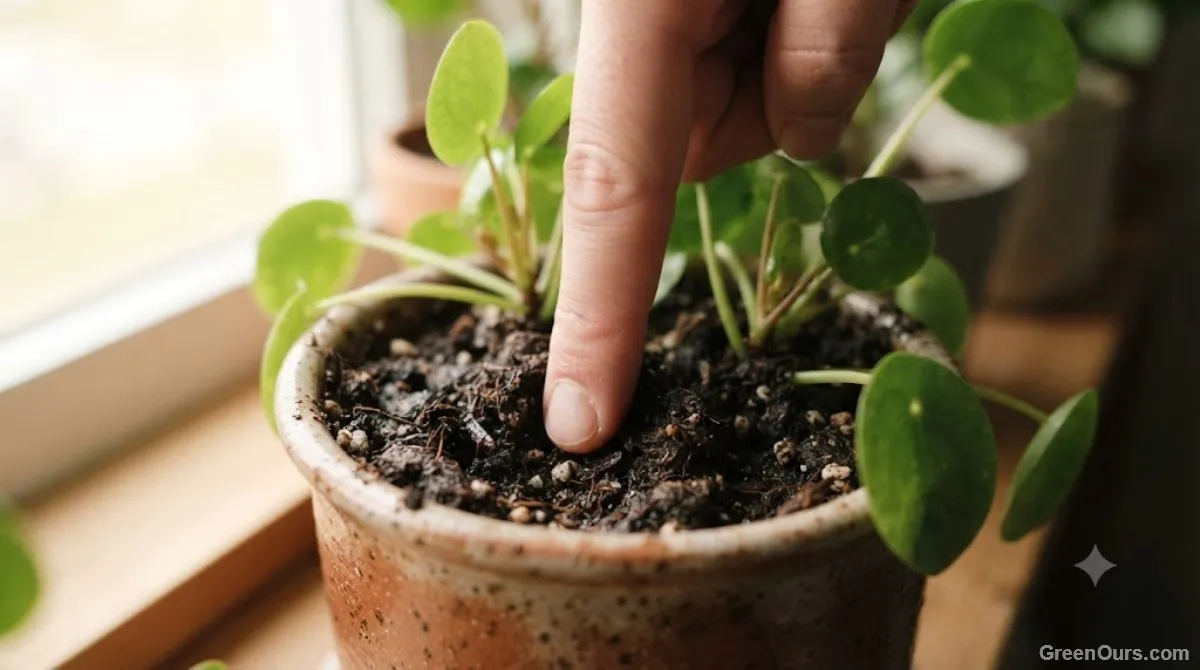
Overwatering trips up far more beginners than underwatering does, mostly because it comes from good intentions rather than neglect. The fix at this stage is simple: check the top inch or two of soil with a finger before you reach for the watering can. If it's still damp, wait. If it's dry, water thoroughly until it runs from the drainage hole, then let the excess drain away completely — never let a pot sit in standing water.
That one habit — checking before you water, rather than watering on a fixed schedule — solves most early mistakes on its own. Watering needs shift with the seasons and with each plant's particular habits in more detail than a beginner guide needs to cover here.
Rounding Out the Basics
Light and water get you most of the way there, but growing plants indoors for beginners is also about knowing a few more fundamentals — enough to know what each one is for, not a full course in any of them.
Humidity, Airflow, and Temperature
Many common houseplants are comfortable at typical indoor temperatures, roughly 65–75°F (18–24°C), though individual species vary. What actually causes problems is a spot right above a heating vent, against a cold windowpane in winter, or in the direct blast of an air conditioner; those extremes dry a plant out or stress it faster than watering alone can fix. Grouping a few plants together raises the humidity around them slightly, which is usually all a beginner setup needs.
Feeding Your Plants
A new plant in fresh potting mix doesn't need fertilizer right away — most mixes come with enough nutrients for the first several weeks. Once a plant is established and actively growing, a diluted liquid fertilizer every four to six weeks in spring and summer is plenty for a beginner setup.
Potting Mix and When to Repot
The potting mix you started with will break down and compact over a year or two, even if the plant still looks fine on top. Roots poking out of the drainage hole, water running straight through without soaking in, or growth that's stalled despite good light and watering are the usual signs it's time to move up a pot size.
Settling In a New Plant
Before a new plant joins the rest of your collection, give it a quick look over the leaves and soil surface for anything unwelcome, and keep it a little apart from your other plants for the first week or two. Most new plants also go through a brief adjustment period after the move home, which is normal and not a sign anything's wrong.
What to Expect in the First Few Weeks
A little stress after repotting or moving a plant home is completely normal — a few yellow lower leaves or a slight droop doesn't mean you've failed. What matters is the overall trend over two or three weeks: is new growth appearing, does the plant perk back up after watering? That's the real sign things are going well, more than any single leaf.
It helps to remember that your plant just went through a move of its own — new light, new air, sometimes a new pot — and like most of us, it needs a little time to settle in. Give it those first two or three weeks before you judge how it's doing, and try to resist relocating it in search of the "perfect" spot during that window; constant moving is its own kind of stress on a plant that's still adjusting.
Troubleshooting the Basics
Yellow lower leaves can be a sign of overwatering, especially when the soil stays wet for long periods. Brown, crispy leaf tips often mean low humidity or a buildup of minerals in tap water; occasional filtered or rain water can help. Leggy, stretched-out growth means the plant is reaching for light it isn't getting, and it's time to move it somewhere brighter. None of these are failures — they're just the plant telling you what it needs.
Tiny flies hovering near the soil line or drifting up when you water are usually fungus gnats; tiny crawling pests on the leaves themselves, sometimes with fine webbing, point to spider mites instead. Both are common on indoor plants and neither means you've done anything wrong. Letting the soil dry out a bit more between waterings tends to discourage fungus gnats, while a gentle wipe-down of the leaves with a damp cloth helps you catch spider mites early, before they have a chance to spread.
If growth stalls completely and water seems to run straight through the pot without the soil ever looking damp, the plant may be root-bound, though a compacted or hardened potting mix that's become hydrophobic can produce the same symptom without the roots being crowded at all. Either way, it usually means it's time to repot with fresh mix.
Ready to go deeper on choosing the right plants for your space?
Explore our pick of easy indoor plants for beginnersGrowing plants indoors gets easier with every plant you bring home, not because you develop some mysterious green thumb, but because you start reading the small signals — a slightly droopy leaf, a pot that feels light — before they become real problems. Start with one plant, pay attention, and let your confidence build from there.