
Why Light Readings Matter More Than You Think
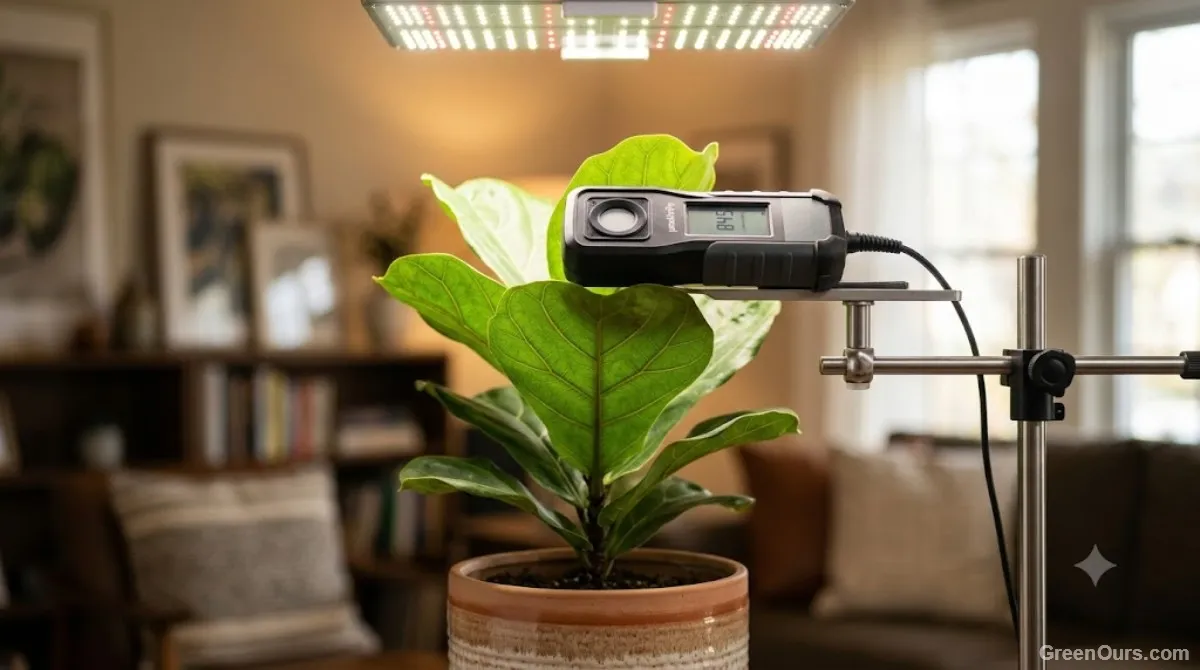
Indoor light drops off fast. A spot that reads as bright to your eye three feet from a window can measure 90% dimmer than the same spot on the sill itself. Move six feet back and the intensity falls again, often below what a medium-light plant needs to maintain steady growth.
Your eyes compensate for this automatically through a process called light adaptation, and they do it so smoothly you never notice the drop. That's useful for navigating a room. It's actively misleading when you're trying to judge whether a plant is getting enough light to photosynthesize at a functional rate.
This is the gap a light meter closes. It reports a fixed number, unaffected by what your pupils did five minutes ago in a brighter hallway.
How Light Meters Actually Work
Most consumer light meters use a photodiode sensor filtered to mimic human eye sensitivity. That output is reported in lux or foot-candles — units built around how bright a space looks to a person, not how much usable light a plant receives.
Higher-end meters designed for growers instead report PPFD: photosynthetic photon flux density, measured in micromoles per square meter per second. PPFD counts photons in the wavelength range plants actually use for photosynthesis, roughly 400–700 nanometers. It ignores the parts of the spectrum your eyes weight heavily but plants barely use.
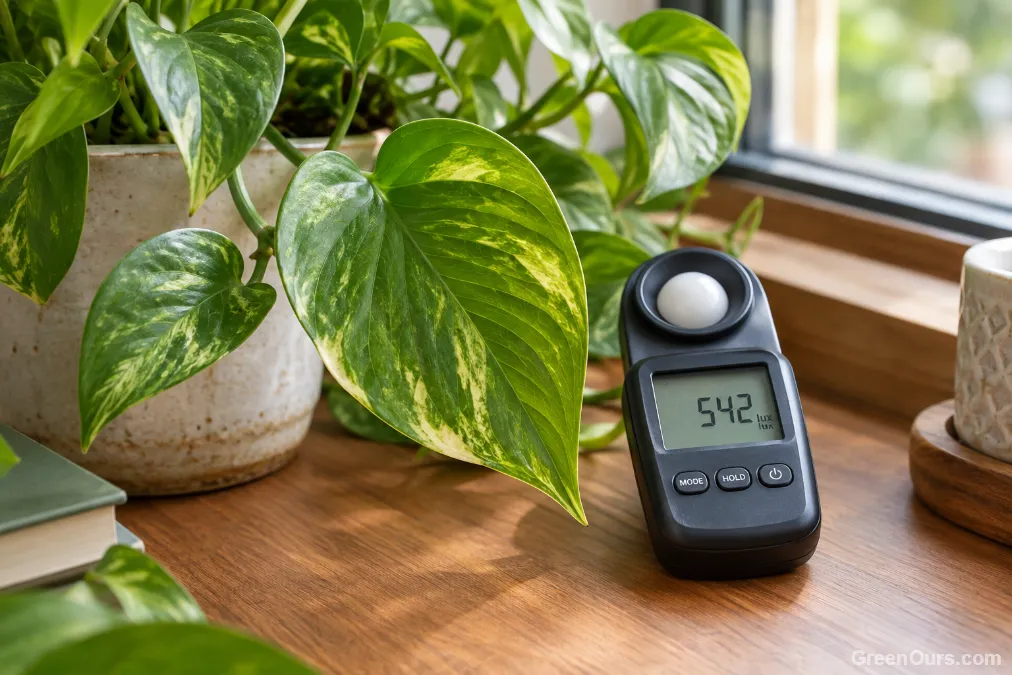
Lux tells you how bright a space looks. PPFD tells you how much usable light a plant is getting. For diagnosing plant performance, PPFD is the number that matters — lux is a rough proxy at best.
Smartphone Apps vs Dedicated Meters: The Real Gap
Sensor Technology
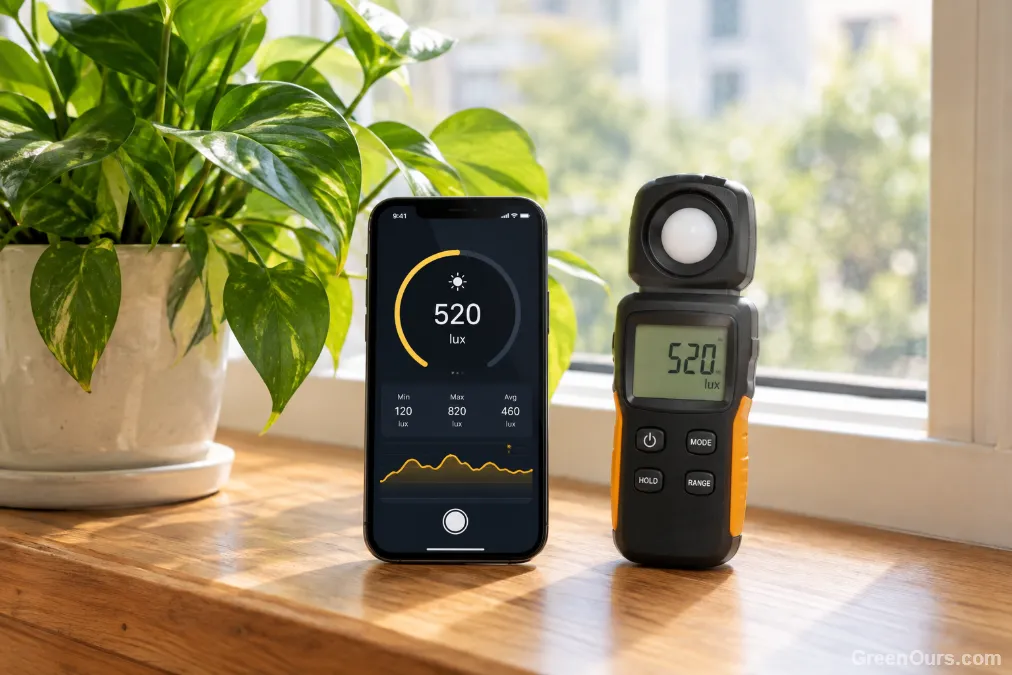
Phone cameras aren't built to measure light — they're built to expose an image correctly. Light meter apps repurpose the camera sensor and back-calculate an estimated lux value using assumptions about aperture, ISO, and shutter speed that vary by phone model. Two different phones in the same spot can report readings that differ by 30% or more.
Where Apps Fall Short
Apps also can't measure PPFD directly. Camera sensors aren't calibrated to the 400–700nm photosynthetic range, so any PPFD number an app shows you is a rough conversion from its lux estimate, not a direct photon count. Treat app readings as a general indicator — bright, moderate, or dim — not a precise figure to plan around.
Reading the Numbers: What the Data Actually Means
Once you have a reading, match it against rough intensity bands rather than chasing an exact number:
- Low light: 75–200 foot-candles (roughly 800–2,150 lux). Suitable for snake plant, ZZ plant, pothos in maintenance mode.
- Medium light: 200–500 foot-candles (2,150–5,400 lux). Covers most common foliage houseplants during active growth.
- Bright indirect light: 500–1,000 foot-candles (5,400–10,750 lux). Needed for fiddle leaf fig, most flowering houseplants, and citrus.
Take readings at leaf height, not floor level, and at the time of day the plant actually sits there — morning light and afternoon light in the same spot can differ by a factor of three or more.
Common Mistakes to Avoid
A meter only helps if you're using it correctly. Four mistakes account for most bad readings:
- Single readings treated as permanent. Light changes with season, weather, and nearby foliage growth. Recheck every few months, not once and done.
- Measuring at the wrong height. A reading taken at the windowsill tells you nothing about the plant sitting on a shelf four feet away.
- Ignoring duration. Intensity alone doesn't capture how many hours the plant receives it. A bright but brief two-hour window differs a lot from six hours of moderate light.
- Comparing app numbers across different phones. Without a consistent sensor, app-to-app comparisons aren't meaningful — only compare a phone's readings to its own past readings.
Should You Buy One?
A budget lux meter, in the $15–30 range, is worth owning if you're placing more than a handful of plants and guessing where each one goes. It won't give you PPFD, but it removes the guesswork lux was designed to remove: is this spot actually bright, or does it just feel bright compared to the hallway.
A PPFD meter makes sense if you're running grow lights and need to dial in intensity or spacing — the extra precision has a real payoff there. For a windowsill collection of pothos and snake plants, it's more tool than the job requires.
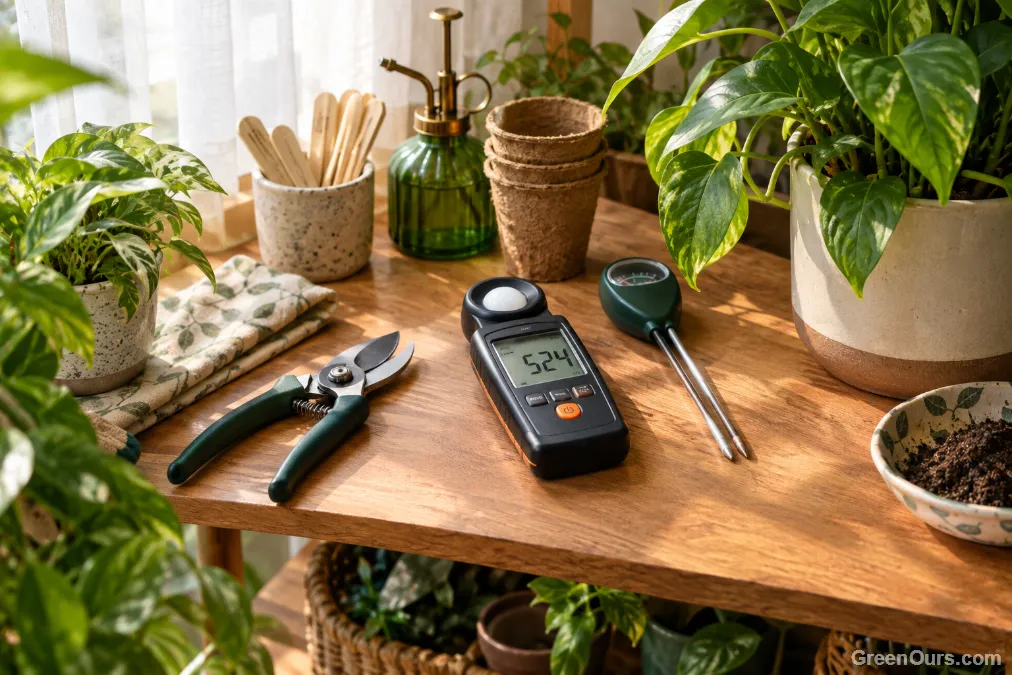
Take one honest reading before you decide anything else.
Buy the tool that matches the decision you're actually making. A good plant light meter guide will point you toward the right level of precision for your setup. A cheap meter that gets used beats an expensive one left in a drawer, and either one beats trusting a room that only looks bright.