
New Growth Doesn't Always Match the Old
When an actively growing plant produces a new leaf, it draws on whatever energy reserves and root capacity are available right now — not what it had months ago in a commercial greenhouse. That distinction matters more than most people realize, and it's the first thing worth checking before assuming something is wrong.
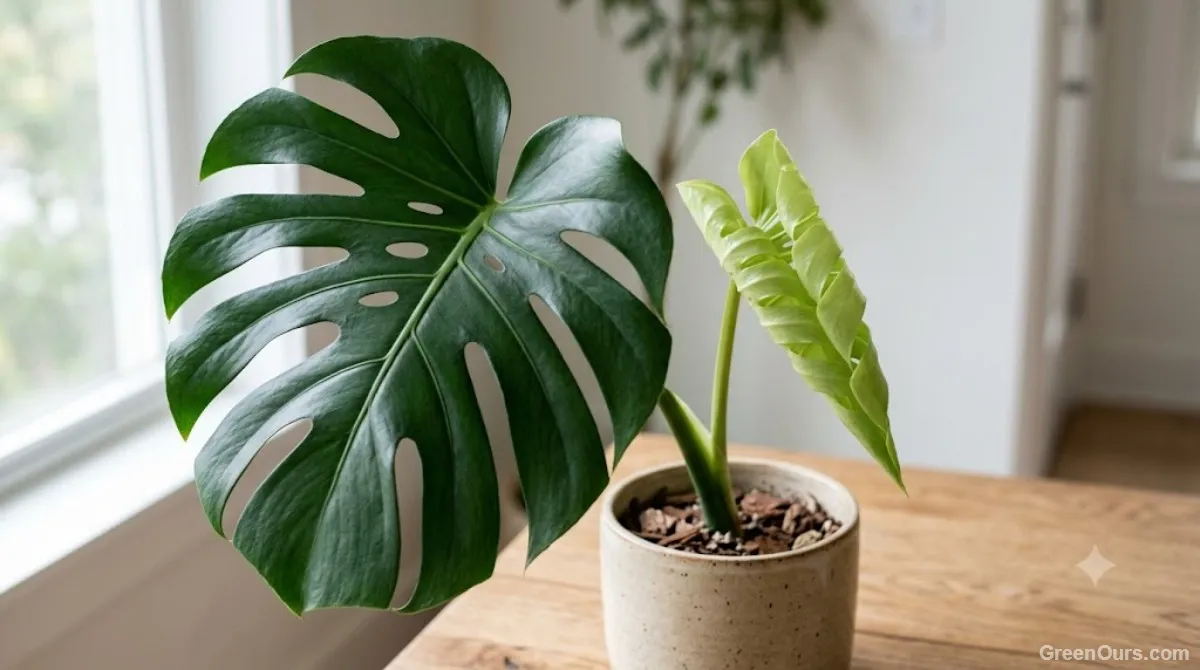
Leaves that unfurl right after propagation, repotting, or a shift to a new location are often smaller than previous growth. Consider a pothos cutting rooted in water: the initial leaves after transitioning into soil are frequently modest compared to the mature vine it came from. The plant is directing its energy toward root establishment first, with leaf expansion taking lower priority. Once those roots settle in, subsequent leaves usually regain their usual proportion under steady care.
This temporary adjustment differs from a pattern where new leaves grow progressively smaller with every cycle over a prolonged period. One or two smaller leaves during a transition reflect natural pacing; a continuous downward trend across multiple months indicates an ongoing resource bottleneck.
How Light Levels Set the Size of Every New Leaf
Leaf size acts as a direct reflection of a plant's energy budget. The more usable light a plant receives while a leaf is actively forming, the more energy it can invest in expanding that leaf surface before it hardens off. Reduced light doesn't immediately injure the plant or stop growth — it simply means the next leaf is constructed on a more conservative budget.
If you've moved a plant from a bright window to a darker corner, or if seasonal sun angles have shifted, new leaves may emerge smaller in response. The plant is dynamically sizing its foliage to match available light energy.
Want a quick light check without buying a meter? Hold your hand about a foot above the plant around midday and check the shadow. A sharp, well-defined shadow indicates bright light. A faint, soft shadow means significantly less usable light — and future leaf size will reflect that difference.
Root Space and Nutrition: The Growth Budget
When Roots Run Out of Room
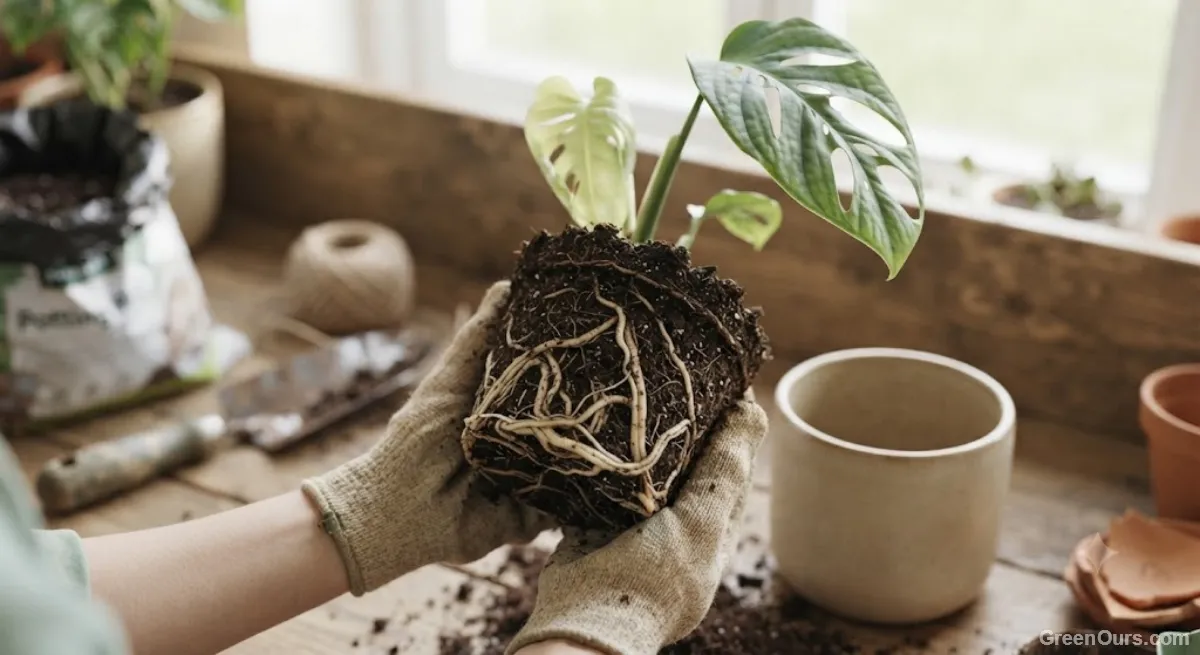
A severely root-bound plant has limited soil volume to hold moisture and nutrients. Restricted root capacity reduces the plant's ability to support expansive top growth, often showing up as smaller foliage over successive growth cycles paired with soil that dries unusually quickly. Inspecting the root ball for tight circling or roots emerging from drainage holes offers clear insight into whether space is the limiting factor.
What Feeding Actually Changes
Overall nutrient availability supports robust foliage expansion. While an occasional missed feeding won't cause immediate shrinking, chronically depleted potting media can lead to smaller growth or paler foliage over time. Applying a diluted, balanced fertilizer during active growth in spring and summer provides the necessary raw materials. Reducing or pausing fertilizer during fall and winter aligns with natural seasonal slowing.
Why Leaves Shrink With the Season
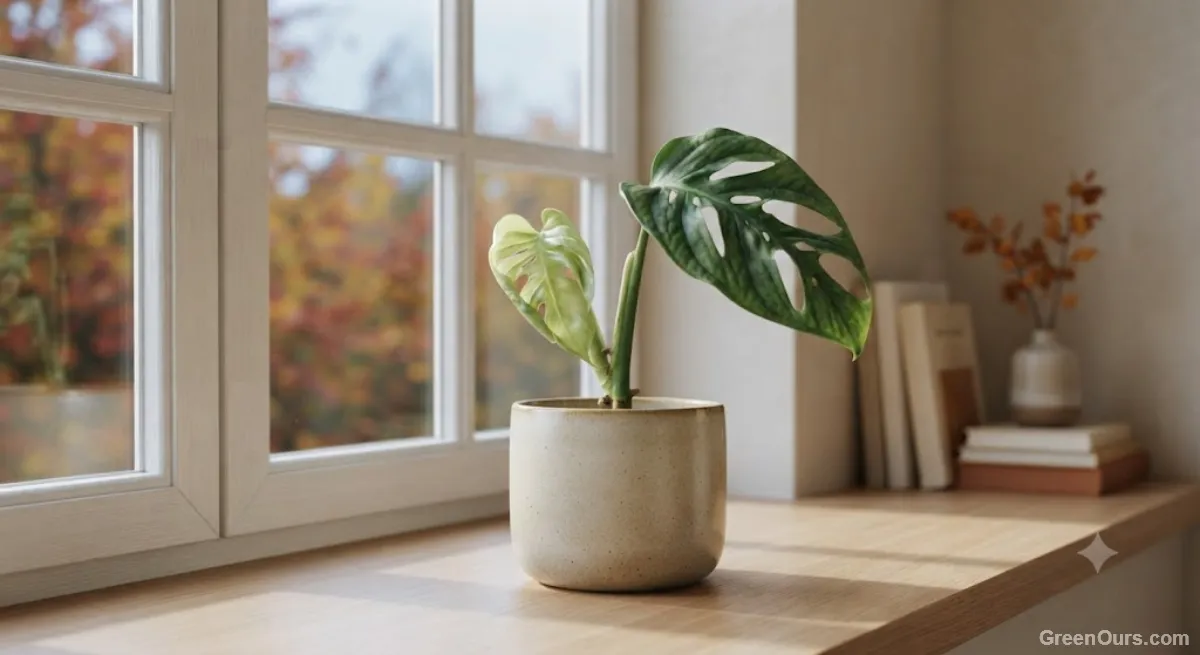
Shorter day lengths in autumn and winter cause most houseplants to slow their metabolic rate. Leaves developed during these darker months are naturally smaller than those produced during peak summer light. This seasonal shift is a normal preservation mechanism, and leaf size typically expands again as spring returns and light levels increase.
When Smaller Leaves Are Actually a Warning Sign
While occasional small leaves are normal, a clear diagnostic threshold exists: if you see three or more new leaves in a row getting progressively smaller despite stable light and care, it is time to investigate. This persistent downward pattern indicates a structural issue rather than a minor environmental shift.
Pay close attention if progressive leaf shrinkage occurs alongside secondary symptoms — such as lower-leaf yellowing, persistent wilting despite damp soil, sticky residue, or fine webbing along stem joints. In these cases, the root system may be compromised by overwatering, root rot, or pest pressure.
Extremely root-bound plants or those suffering from root damage require direct intervention. If roots occupy nearly the entire pot or water passes straight through without absorbing, repotting into fresh media or adjusting watering habits will help restore normal leaf expansion over subsequent growth cycles.
What to Do Next
Evaluate current light exposure at the plant's actual location during this time of year. Inspect root health and soil condition if it has been over a year since the last repot. Ensure feeding practices match active growth phases rather than running on a fixed schedule year-round. Finally, allow time for adjustments to take effect; leaf size responds across new growth over several weeks rather than overnight.
Explore more beginner plant care guides