
It's Not Always About How You Water
Leaf tips and margins are often among the first places visible stress appears, especially when moisture loss or a mineral imbalance affects the leaf. Think of them as an early warning system rather than a watering gauge. Once you stop treating every brown tip as a watering verdict, a wider (and often easier to fix) set of explanations opens up.
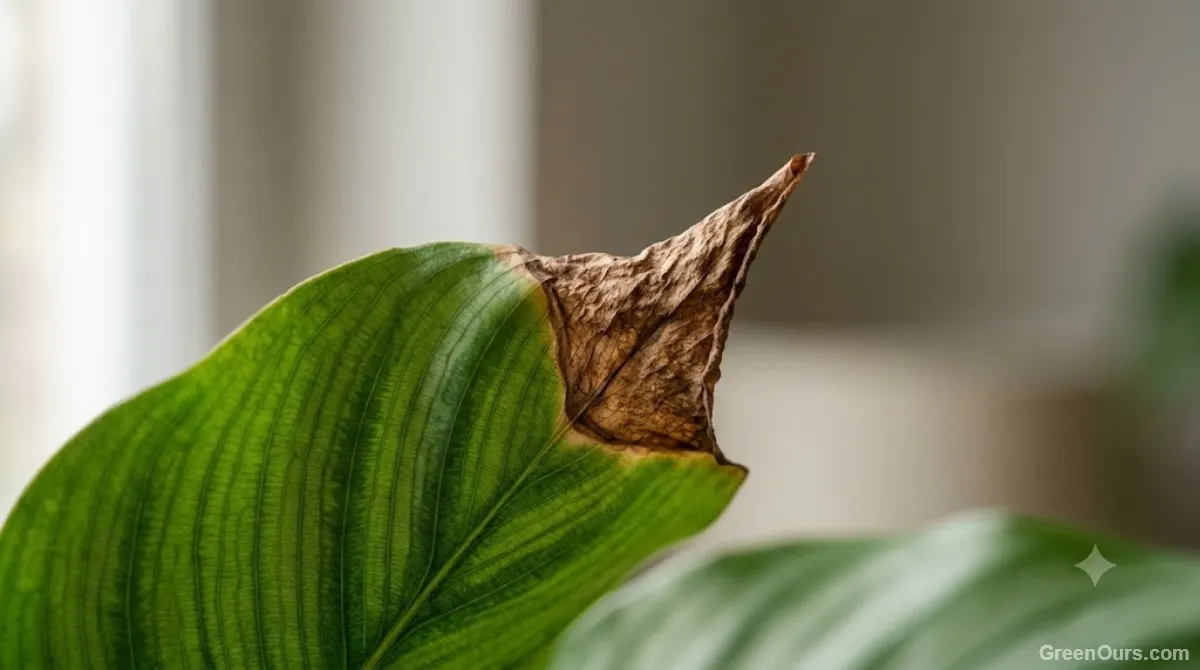
Before changing anything, check whether the browning is dry and papery or soft and mushy. Dry, crisp tips point toward the environmental and mineral causes below. Soft, dark, mushy tissue is a different problem entirely and usually does involve water, just not in the way you'd expect.
The Air Around Your Plant
Low Humidity
Many popular houseplants, including calatheas, ferns, and spider plants, come from far more humid environments than the average living room, especially once the heat or air conditioning kicks on. When the air is dry, moisture leaves the leaf faster than the roots can replace it, and the tips dry out first. It's often the most likely cause, particularly in winter or in rooms with forced-air heating running constantly.
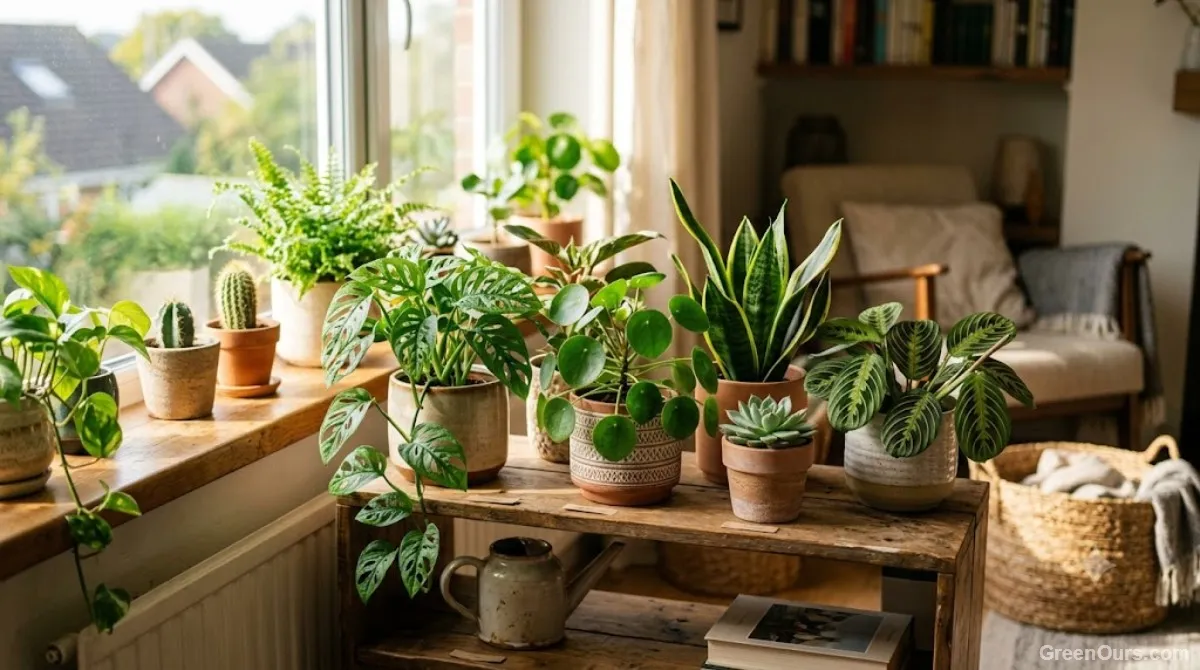
Grouping plants creates a small shared pocket of humidity, and a humidifier nearby does more still. Pebble trays get suggested a lot, but their effect on the air around a plant is modest, so don't rely on them alone.
Cold Drafts and Heating Vents
A plant near a frequently opened door, a drafty window, or a heating vent gets hit with rapid temperature swings every time that air moves, and the tips are often the first tissue to show it. Stand where your plant sits and you'll often feel the draft yourself.
Too Much Direct Sun
A plant labeled for bright indirect light that's been moved to a window with strong direct sun can develop scorched, browned tips and edges within days. That's different from full sunburn, which tends to show as bleached or brown patches on the leaf surface. Scorch shows up first at the margins, where the tissue is thinnest. If you recently rearranged your plant shelf, check this before anything else.
What's In Your Water and Soil
Fertilizer Salt Buildup
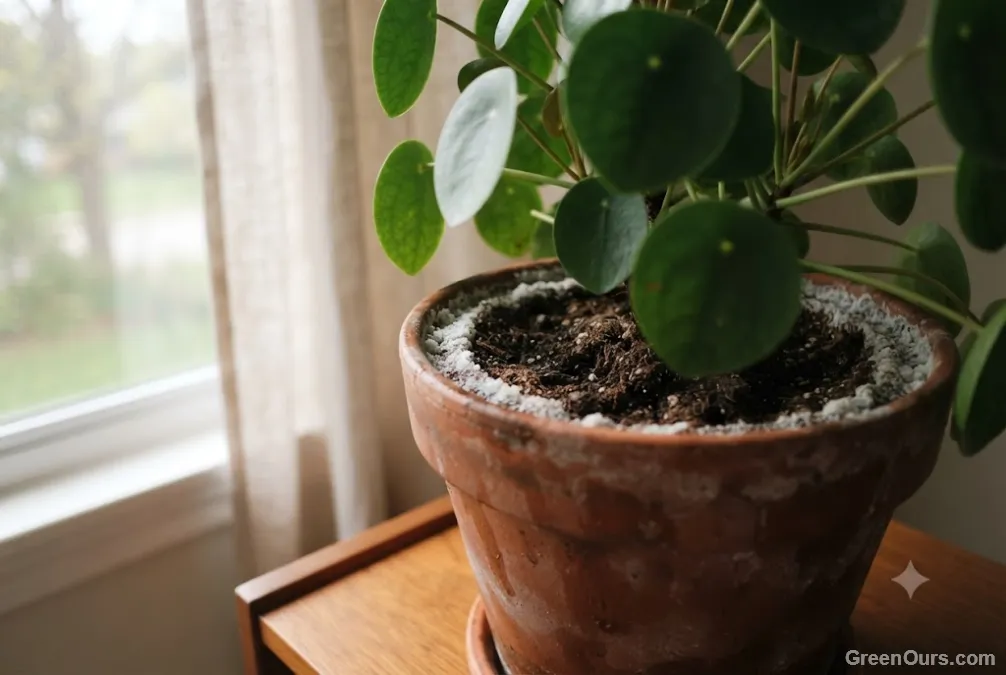
Fertilizer isn't the enemy, but unused mineral salts left behind after repeated feedings can build up around the roots and interfere with water uptake, which looks a lot like underwatering. Look for a white or grayish crust on the soil surface or around the drainage holes. If you see it, flush the pot thoroughly with room-temperature water until it runs freely from the bottom, let it drain fully, and ease off on feeding for a while.
Tap Water Chemistry
Some houseplants, particularly dracaenas, spider plants, prayer plants, and calatheas, are sensitive to fluoride and sometimes to the chlorine or chloramine in municipal water. Letting water stand overnight can let free chlorine dissipate, but it doesn't reliably remove chloramine and does nothing for fluoride. If humidity and watering are consistent but a sensitive plant keeps browning, check your water utility's report and consider a different water source, such as rainwater.
Root-Bound Pots
Being root-bound doesn't automatically cause brown tips, but it can make a plant dry out fast and take up water unevenly. Slide it out gently and look. A dense mat of circling roots, roots pushing out of the drainage holes, or water running straight through the pot all point to needing a size up.
Repotting Shock
If you've recently repotted and notice new browning, that's often temporary transplant stress rather than a sign anything went wrong, especially if the plant looked fine before the move. Give it a few weeks before you intervene further.
Signs of Wear, Not Damage
Natural Leaf Aging
Every leaf has a lifespan, and older, lower leaves browning and dropping while new growth stays healthy is simply the plant reallocating its energy, not a problem to solve. This is especially common on dracaenas and palms, which naturally shed older foliage as they grow taller. If it's isolated to one or two of the oldest leaves, you can usually just trim it away and move on.
Pest Damage
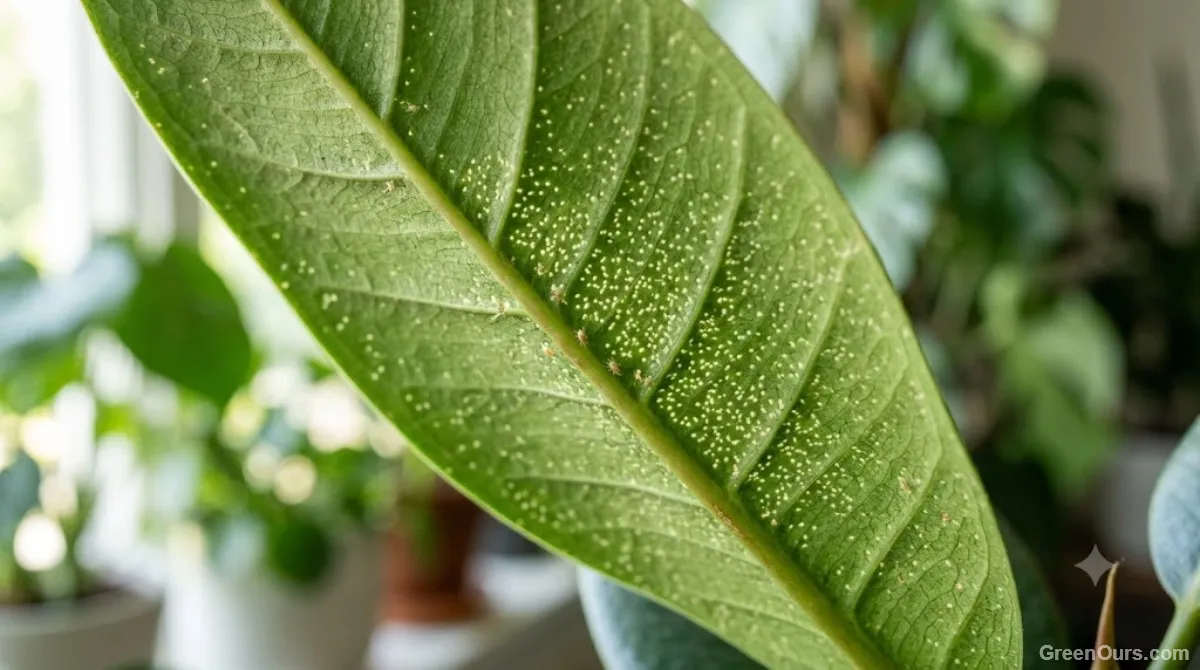
Spider mites and thrips feed by piercing leaf tissue and drawing out fluid. The damage often shows up first as fine speckling or a dull, dusty look, with browning at the tips and edges spreading later. Check the undersides of leaves with a magnifying glass or your phone's camera zoom for tiny moving specks or fine webbing. Catching pests early makes treatment far simpler.
Dust and Poor Airflow
A heavy layer of dust can reduce the amount of light reaching the leaf surface, so gently wiping broad leaves every few weeks can help keep them working efficiently. It's usually a minor contributor rather than the main cause, so rule out the others first.
How to Read Your Plant Before You Change Anything
Telling Similar Causes Apart
Several causes look almost identical, so the pattern matters more than any single symptom:
- Crisp tips across the whole plant, worse in winter: start with humidity and drafts.
- White crust on the soil plus browning tips: suspect salt buildup.
- Only sensitive species browning while neighbors stay fine: suspect water quality.
- Bleached or brown margins soon after a move to a brighter spot: suspect light.
- Fine speckling or webbing on the leaves: suspect mites.
Causes can overlap, so change one thing at a time and judge the result by new growth, because damaged tissue won't turn green again.
Quick Reference Table
| Cause | Typical clue | What to check | First response |
|---|---|---|---|
| Low humidity | Crisp tips and edges, worse in winter | Dry indoor air, heating running | Group plants, move away from vents, consider a humidifier |
| Cold drafts | Browning on the side facing a door or window | Feel for moving air where the plant sits | Move it out of the draft |
| Too much sun | Brown or bleached margins after a move | Any recent change of location | Move it back from intense direct sun |
| Salt buildup | White or gray crust on soil or drainage holes | Soil surface and drainage holes | Flush the pot and pause feeding |
| Root-bound | Dries out fast, slow growth | Roots when slipped from the pot | Repot one size up |
| Pests | Fine speckling, webbing, tiny moving specks | Leaf undersides | Inspect closely and treat early |
| Natural aging | Only one or two of the oldest leaves | Whether new growth looks healthy | Trim and keep an eye on it |
Quick Questions About Brown Leaf Tips
Can brown leaf tips turn green again?
No. Damaged tissue doesn't recover. What you're watching for is clean new growth, which tells you the cause is fixed. The old browning simply stays until you trim it.
Should I cut off brown leaf tips?
You can, for looks. Use clean scissors and trim just outside the brown edge, following the leaf's natural shape. Trimming won't fix the cause, so check the causes above first.
Are brown tips caused by overwatering?
Sometimes. Waterlogged roots can't take up water properly, so tips brown even though the soil is wet. Soft, dark, mushy browning with damp soil points that way, while dry, crisp tips usually point elsewhere.
Does tap water cause brown tips?
It can on sensitive plants such as dracaenas, spider plants, prayer plants, and calatheas. Most other houseplants cope with tap water fine. If only the sensitive plants brown, water quality is worth checking.
How do I fix brown tips without repotting?
Repotting is rarely the first fix. Work through humidity, drafts, light, and water source first, flush the pot if you see a salt crust, and only repot if the roots are truly crowded.
Sources and Further Reading
The advice on humidity, fertilizer salts, and water quality is consistent with these extension resources. Details vary by plant and home, so treat them as starting points.
Where to Start
Start with the dry-or-mushy check tomorrow morning, then work down the table. Your plant isn't trying to tell you that you're bad at this. It's just responding to its environment the only way it knows how, one leaf at a time, and now you've got a much better idea of what it's actually trying to say.
Want more guidance like this? Explore more beginner plant care guides.