
Why Potted Lavender Struggles When Garden Lavender Doesn't
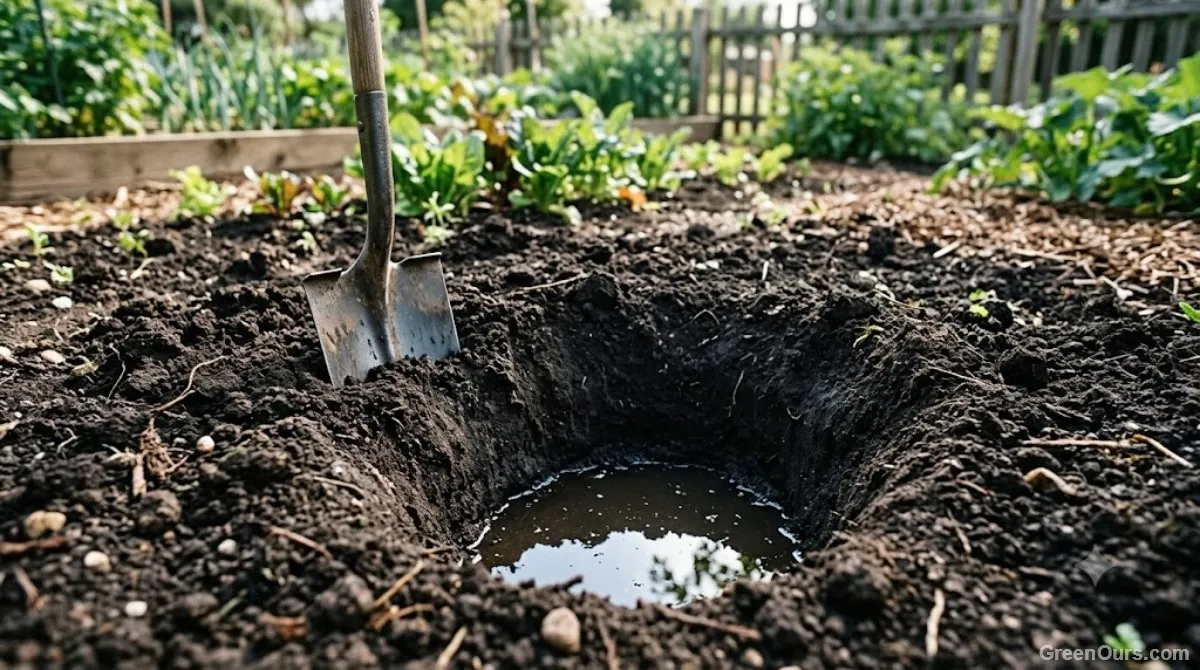
In the ground, lavender's roots can spread wide and deep, chasing moisture down through loose, well-drained earth and drying out between rains without much drama. In a pot, that same plant is working with a finite volume of soil that holds onto water far longer than open ground ever would. Add a container without great drainage, and you've essentially built a small reservoir sitting right against the roots.
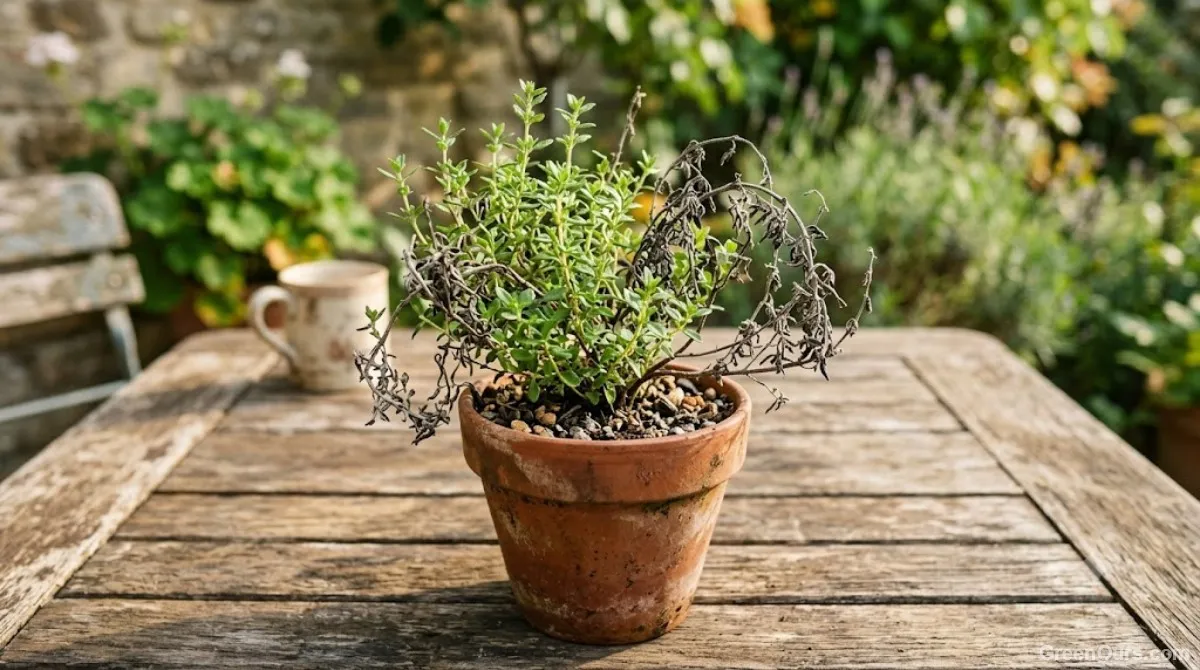
This matters because lavender's roots are built for dry spells, not damp ones. When they sit in soggy soil, they lose the ability to take up oxygen, and the fine root hairs responsible for absorbing water and nutrients start to suffocate and rot. The plant above the soil line reads as thirsty — drooping, pale, crisping at the tips — which tricks a lot of well-meaning growers into watering more. That's the trap.
If you're still asking yourself why your lavender is struggling, this combination of trapped moisture and poor drainage is a very common place to start looking.
Start With What You See
Use this table as a quick starting point. It lists common triggers rather than guaranteed causes, and more than one can overlap.
| What you see | Most likely problem | What to check |
|---|---|---|
| Drooping, pale, or crisping leaves with soil that stays damp | Excess moisture and suffocating roots | Drainage and root condition |
| Grey or brown foliage with dry, pulled-away soil | Severe drought or heat stress | Moisture through the whole root ball |
| Black or soft stems, or a musty smell from the soil | Possible rot | Stem base and roots |
| Long, floppy growth | Too little light | Hours of direct sun |
| Healthy leaves but few flowers | Too little sun or too much nitrogen | Light exposure and fertilizer |
Getting the Pot and Soil Right First
Before you touch the watering can, it's worth looking at what the roots are actually living in. Two things make the biggest difference here: the container and the soil mix.
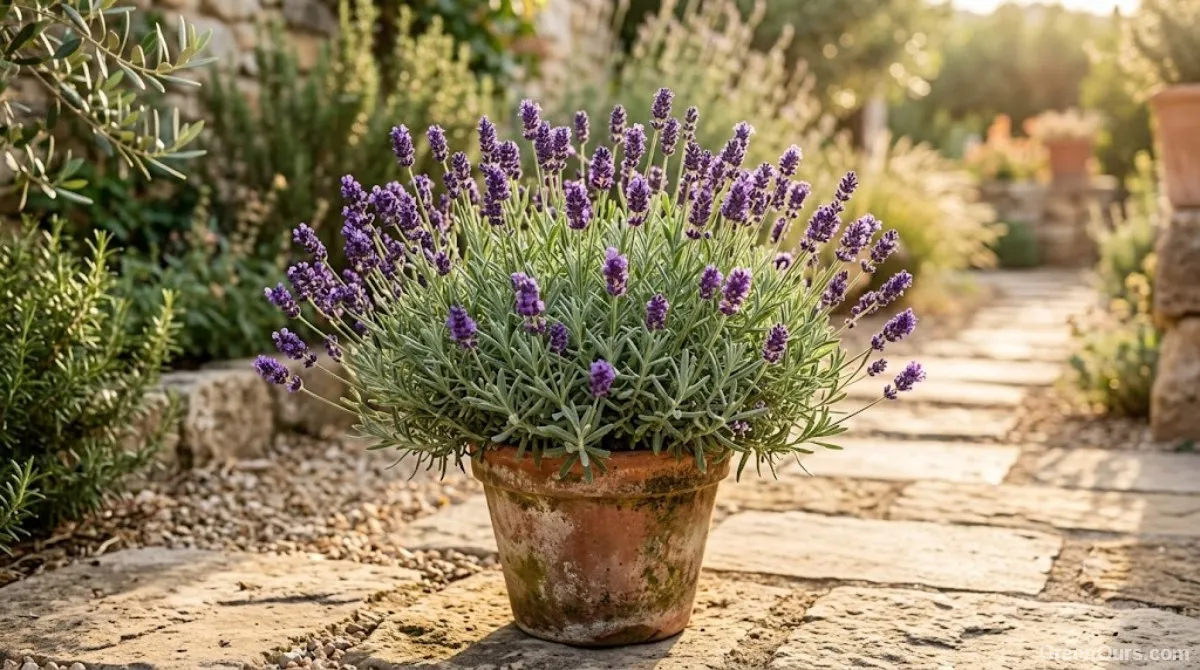
Choose a pot with at least one generous drainage hole, and skip the saucer underneath, or empty it after every watering. Terracotta and unglazed ceramic are especially good choices because the porous material wicks excess moisture out through the walls, giving the roots one more way to dry out between waterings.
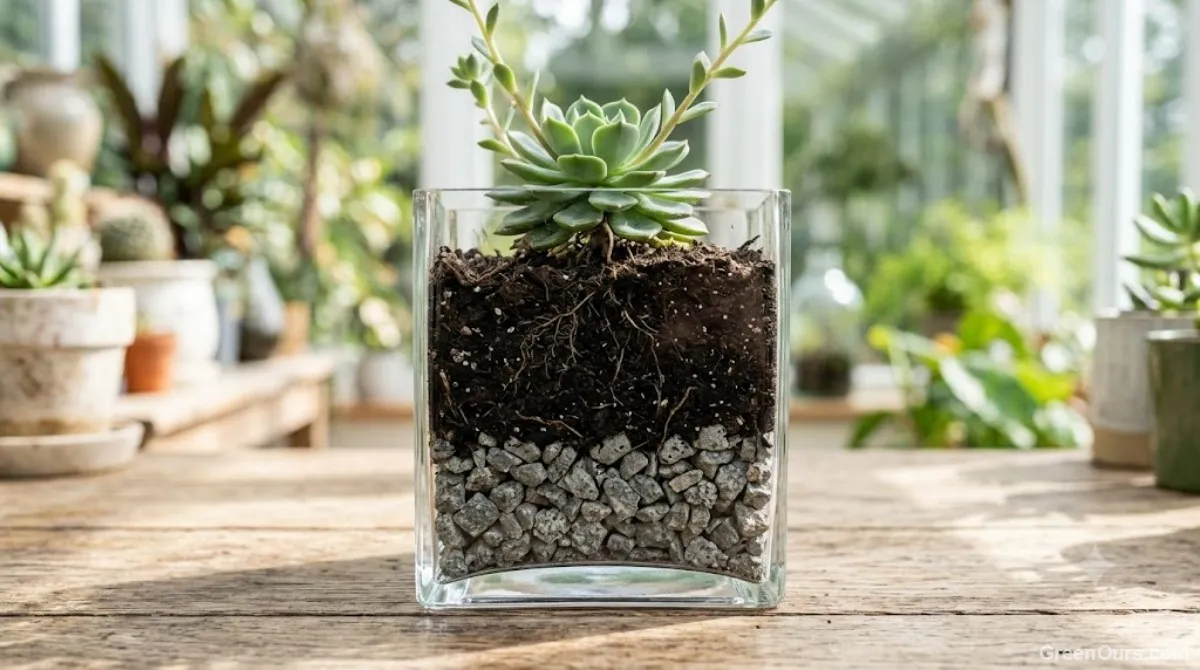
For soil, regular potting mix is usually too rich and too moisture-retentive on its own. Lavender wants something closer to what you'd find on a scrubby hillside — fast-draining and a little lean. Start with a quality potting mix and blend in a generous amount of perlite or pumice; a common starting point is about one part perlite or pumice to two or three parts potting mix. Some growers add a little horticultural grit as well.
Skip fine sand, which can pack down between the particles and make drainage worse. Water should often run through and start dripping from the drainage hole within a few seconds of watering, not sit on top of the soil.
If you're repotting, size up gradually rather than jumping to a much bigger container. Too much extra soil volume around a smaller root ball just means more moisture sitting where the roots can't reach it yet.
Watering Lavender Without Drowning It
This is where a lot of potted lavender ends up in trouble — not from neglect, but from care. A fixed watering schedule, like every three days regardless of conditions, doesn't account for how quickly a pot dries out based on weather, pot size, and material.
Instead, check the moisture several inches down, not just at the surface. In a small pot, an inch or two may be enough; in a larger pot, push a finger or a wooden skewer deeper toward the root zone. If it's still cool and slightly damp down there, wait. Lavender would rather go a day too long without water than sit in it. When you do water, soak the pot thoroughly until water runs from the drainage hole, then leave it alone until the soil dries out again at that depth.
In cooler months, this might mean watering every couple of weeks instead of every few days, especially if the plant has slowed its growth. You'll notice the plant needs far less in fall and winter than it did during a hot summer stretch, and adjusting for that seasonal shift is often one of the biggest changes that turns a struggling pot around.
Light, Airflow, and Placement
Soil and water get most of the attention, but placement plays a quiet supporting role. Lavender generally does best with around six or more hours of direct sun a day where that's practical. With less light, stems stretch thin and floppy while flowering drops off almost entirely.
Airflow matters too, more than most people expect. Lavender tucked into a shady corner or crowded against other pots stays damp longer after watering or rain, which invites the same rot issues as poor drainage. Give it some breathing room, and if you're growing it on a balcony or patio, an occasional afternoon breeze does more good than you'd think.
A Note on Winter
If you're in a colder climate, potted lavender is more vulnerable to freezing than garden-grown plants, since the roots have less insulation from surrounding earth. Hardiness varies by lavender type, so check yours. Moving pots against a sheltered wall or into an unheated garage for the coldest stretches can make the difference between a plant that bounces back in spring and one that doesn't.
Reviving a Plant That's Already Struggling
If your lavender is already showing blackened stems, mushy roots, or a strong musty smell from the soil, it's worth a full reset rather than a small adjustment. Gently tip the plant out of its pot and look at the roots — healthy ones are pale and firm, while rotted ones turn brown, soft, and slimy.
Trim away any damaged roots and stems with clean shears, then repot into fresh, fast-draining mix in a container with solid drainage. Hold off on watering again until the mix has dried out well below the surface, even if that means going longer than feels comfortable. This is the point where patience does more than any amount of extra care.
Not every struggling lavender comes back, and that's worth saying honestly rather than promising a miracle. But plants with some green left at the base and firm, pale roots underneath have real odds of recovering once they're given a setup that actually matches what they need.
Where to Start
If you only change one thing this week, tip the plant out of its pot and look at the roots, then check that water actually drains freely from the bottom. Those two checks tell you more than any amount of guessing at the leaves.
Lavender in a pot isn't a lost cause — it's just a plant asking for slightly different terms than the ground would give it. Get the drainage and watering rhythm right, and it tends to reward you with years of silvery growth and that unmistakable scent every time you brush past it.
Ready to give your lavender a fresh start? Check the drainage and the roots this weekend.