
What Perlite, Pumice, and Sand Actually Are
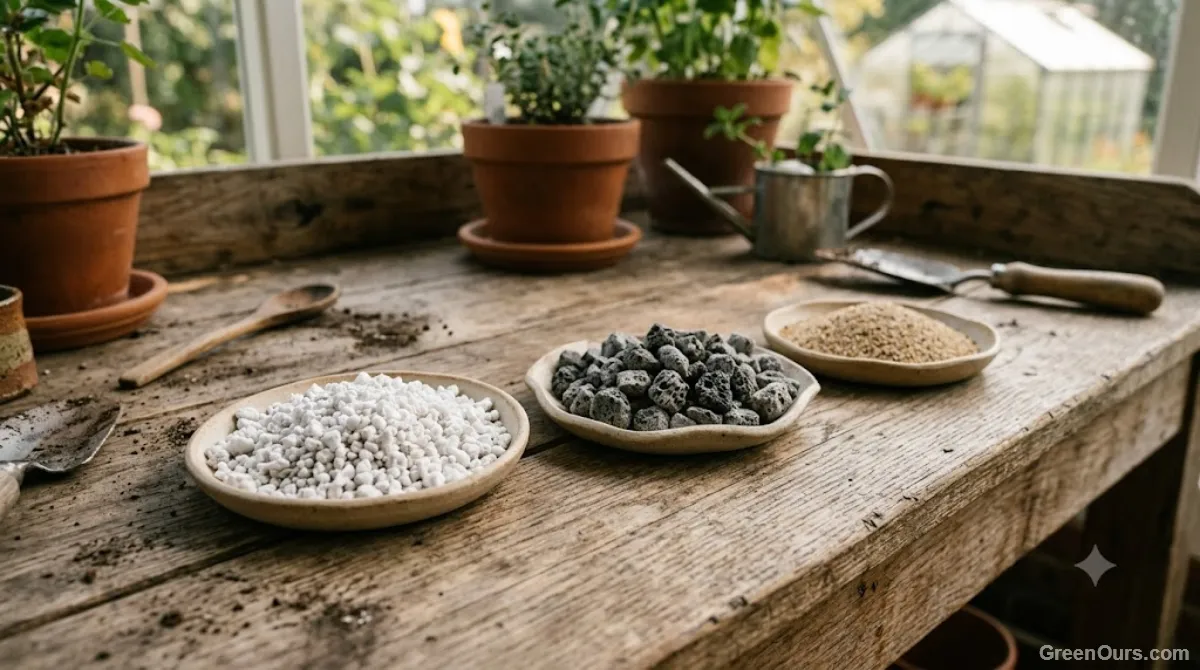
Perlite is volcanic glass, heated until it expands into lightweight white granules full of tiny air pockets. Pumice is also volcanic in origin, but it forms naturally through rapid cooling under pressure — no processing involved. Sand is just weathered mineral rock, ground down over time with no internal air structure at all.
That structural difference explains everything else in this guide. Perlite and pumice are porous. Sand is solid. Porosity is what creates air channels in your soil; density is what sand adds instead.
How Each Amendment Affects Drainage and Aeration
Drainage and aeration are related but not identical. Drainage is how fast water moves through the pot. Aeration is how much oxygen reaches the roots between waterings. A mix can drain fast and still stay poorly aerated if the particles compact.
Perlite creates the most air space per volume because of its irregular, popcorn-like shape. Pumice creates slightly less air space but holds its shape far longer under repeated watering. Sand fills gaps between soil particles rather than creating new ones, which increases density without adding meaningful air pockets.
If your pot feels heavier than it should after watering and stays wet for days, check whether sand — not perlite — is the amendment in that mix. Sand adds weight without adding drainage capacity.
Perlite vs Pumice: The Real Differences
When comparing perlite vs pumice for plants, perlite floats. That's not a quirk — it's a problem in mixes that get watered from the top repeatedly, since granules migrate to the surface within a few months and stop doing their job below the root zone. Pumice is denser and stays distributed through the mix indefinitely.
Perlite also breaks down under physical pressure faster than pumice. Repotting, root pressure, and freeze-thaw cycles crush perlite granules into smaller pieces over one to two years, reducing the air pockets that made it useful. Pumice resists crushing and typically lasts the life of the mix without needing replacement.
Perlite is lighter and cheaper, which makes it the practical choice for large-volume vegetable beds where cost per gallon matters. Pumice costs more but performs better in long-term potted arrangements — houseplants and succulents that won't be repotted annually.
Where Sand Fits (and Where It Doesn't)
Coarse builder's sand has one legitimate use in potting mixes: adding weight to top-heavy plants that tip over, like tall cacti or agave in narrow pots. Beyond that, it's the weakest drainage amendment of the three.
Fine sand is worse than no amendment at all. It packs between soil particles and can create a denser, more waterlogged mix than plain potting soil. If a bag of amendment doesn't specify "coarse" or "horticultural" sand, don't use it in a container mix.
Matching the Amendment to Plant Type
Houseplants
Most tropical houseplants do well with 15–25% perlite by volume mixed into a standard potting soil. This is enough to break up compaction without drying the mix too fast between waterings.
Succulents and Cacti
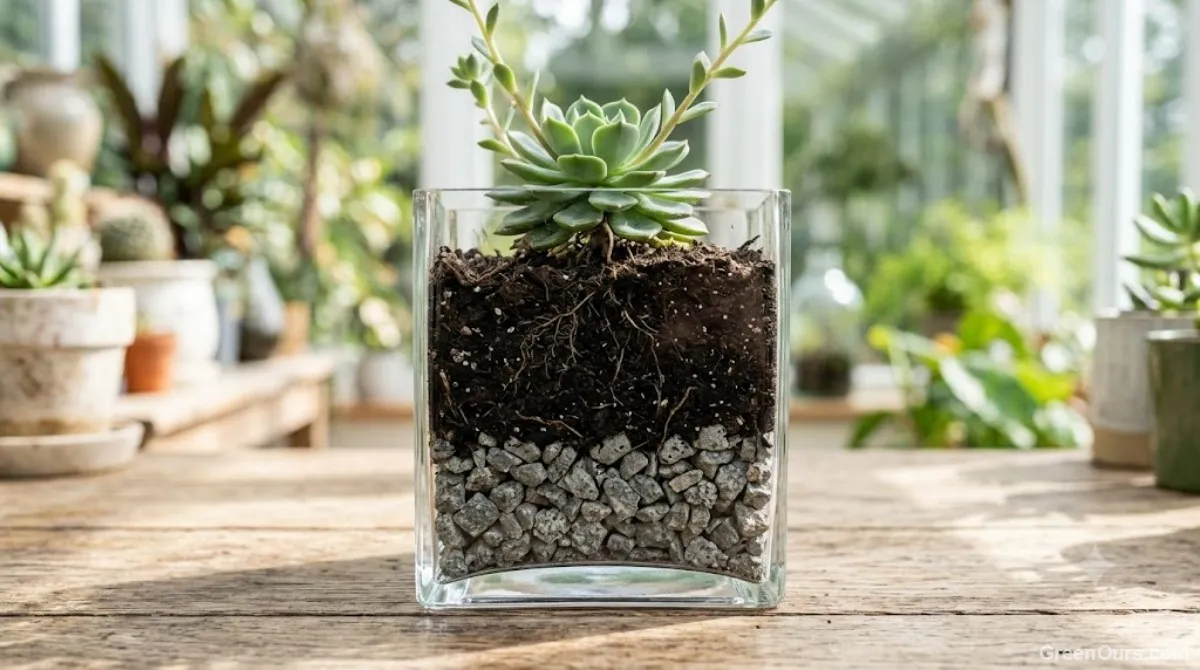
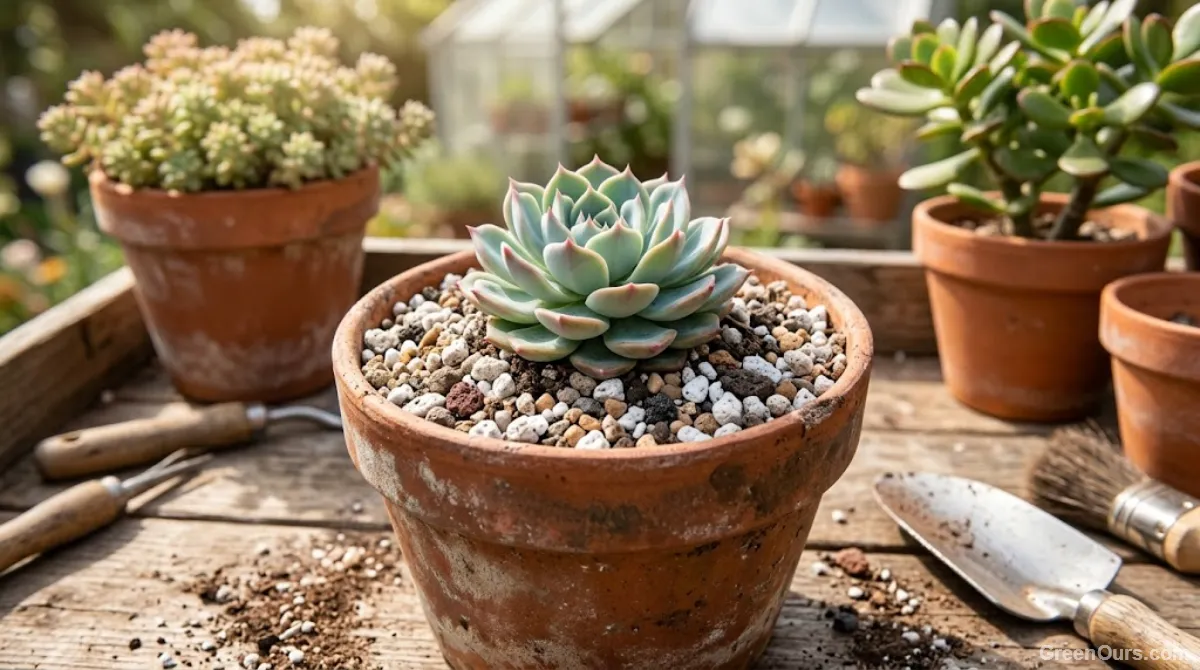
These need 40–60% mineral amendment — pumice performs better here because succulent mixes often sit for a year or more without repotting. Perlite's tendency to float and crush becomes a real problem over that timeframe.
Container Vegetables
Vegetables need consistent moisture more than extreme drainage, so 10–15% perlite is usually enough. Pumice is rarely worth the added cost here since vegetable containers get refreshed with new soil every season anyway.
Building a Mix That Actually Works
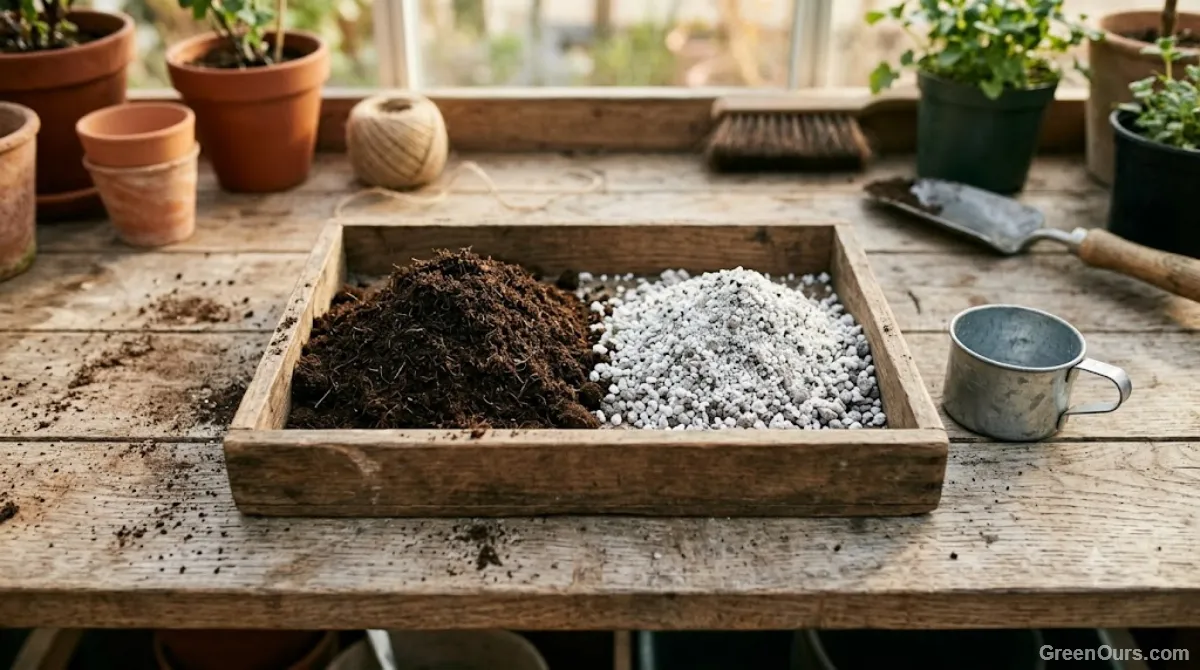
Start with a base potting mix, not garden soil. Garden soil compacts in containers regardless of what you add to it. Add your amendment by volume, not by scooping until it "looks right" — inconsistent ratios are the most common reason a mix underperforms.
Test the mix before committing a full batch: water a sample cup of the blend and check how fast it drains. If water sits on the surface for more than a few seconds, increase the amendment ratio by 5–10% and retest.
Common Mistakes to Avoid
Using fine sand instead of coarse sand is the most frequent error, followed by relying on perlite in succulent mixes that won't be refreshed for a year or more. A third common mistake: adding amendment to already-compacted garden soil and expecting it to behave like a proper potting mix. It won't — the amendment needs a porous base to work with, not dense clay.
What to Do Next
Get the amendment matched to the plant and the pot, and you won't be troubleshooting standing water again next season. That's the whole goal here — a mix you don't have to think about once it's in the pot.
Test a sample cup before you commit a full batch.