
Is Your Balcony Right for Tomatoes?
Spend a few days evaluating your balcony's exact environmental conditions before purchasing seedlings or heavy supplies.
Sunlight and Reflected Thermal Energy
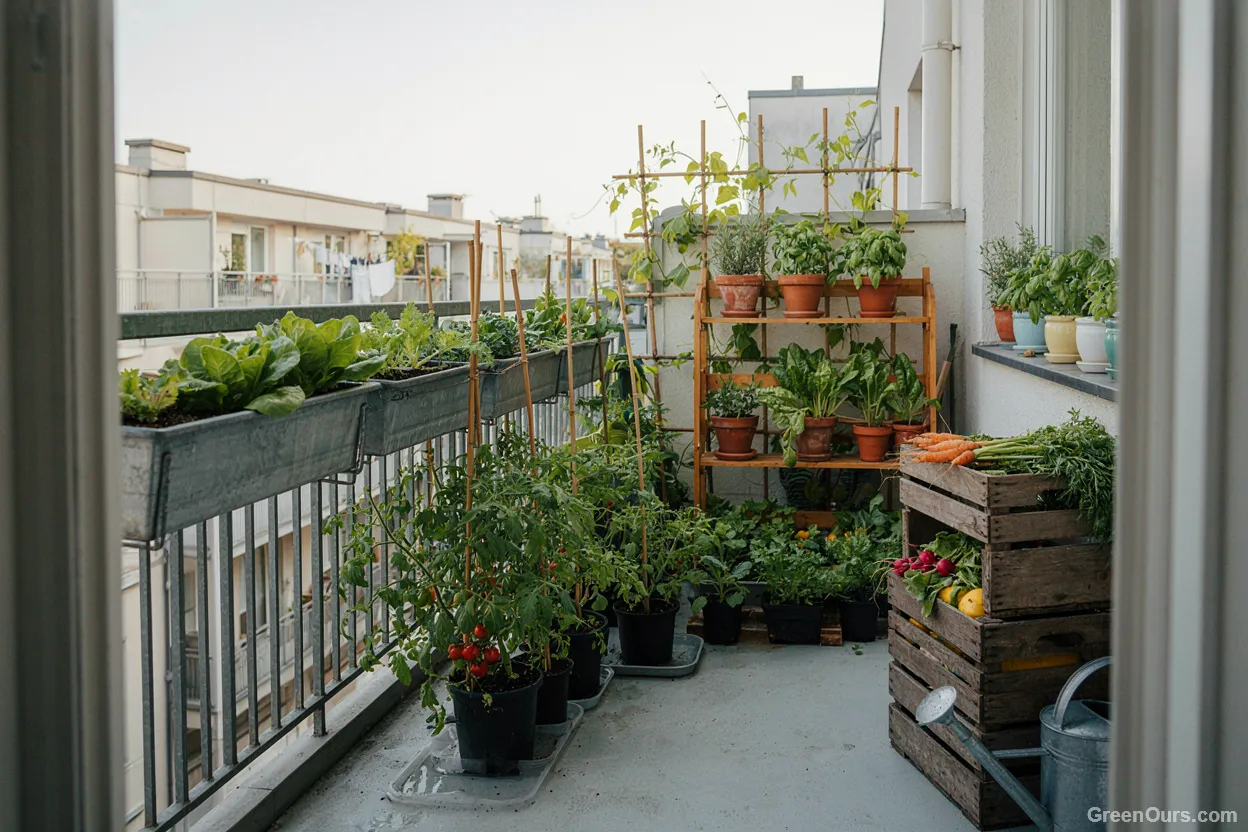
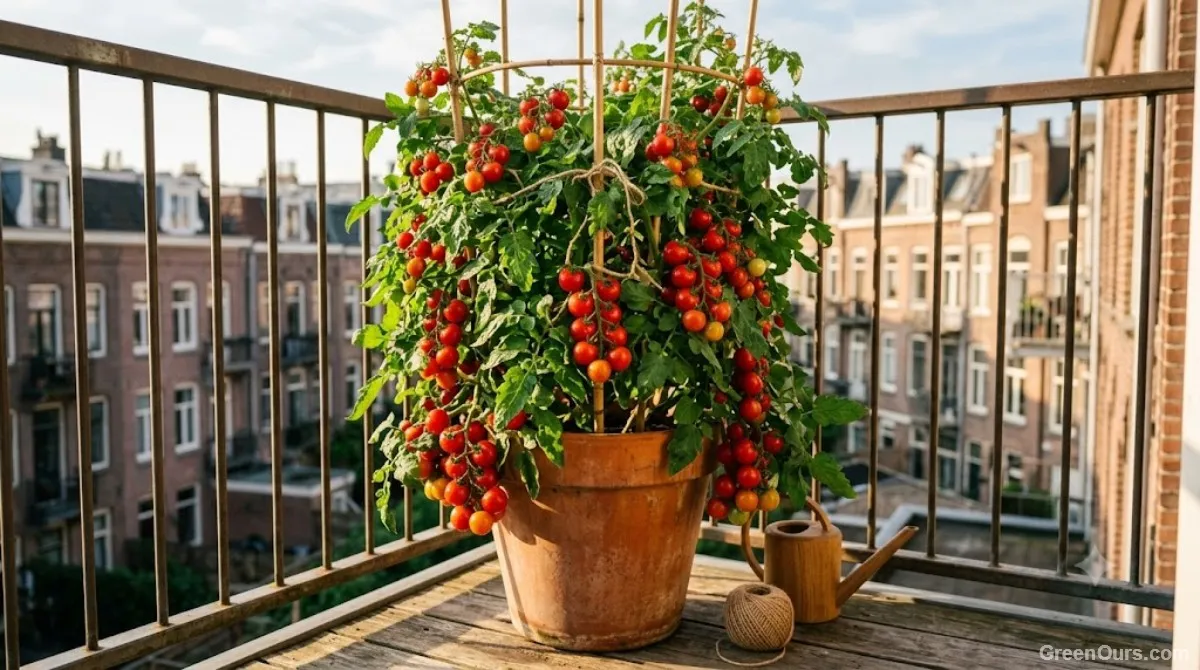
Fruiting tomatoes require six to eight hours of direct sunlight daily. Observe how light shifts across your space throughout the day. South- and west-facing balconies receive the highest light intensities in the Northern Hemisphere. However, surrounding glass windows, brick, and concrete absorb solar radiation, creating hot thermal microclimates that raise local temperatures significantly above ambient air.
Wind Dynamics and Structural Safety
Higher floor levels funnel wind into high-velocity gusts. A mature tomato foliage canopy acts like a sail, catching wind and tipping over top-heavy containers. Position heavy pots low on the balcony floor against interior walls or corners rather than along elevated railings.
Always verify building load limits. A five-gallon pot of saturated potting mix weighs roughly 20 to 25 pounds (9–11 kg), while a 15-gallon container exceeds 60 pounds (27 kg). Keep heavy pots distributed evenly over structural support beams and clear of fire escape routes.
Fewer than six hours of direct sun? Standard tomatoes will grow leggy and drop blossoms. Select ultra-compact dwarf or cherry varieties, which require fewer heat units to ripen fruit.
Selecting Compact Balcony Varieties
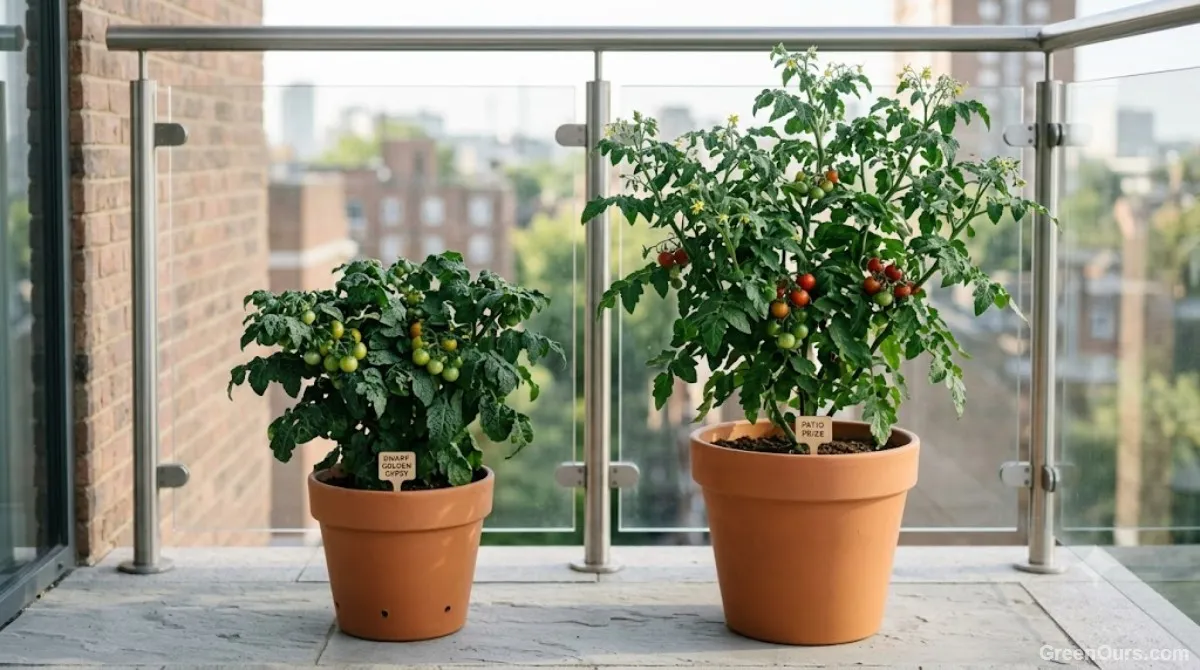
Selecting inappropriate varieties causes most balcony tomato failures. Sprawling indeterminate vines grow indefinitely, requiring massive support structures that catch wind. Determinate or dwarf bush varieties stop growing at a fixed height (typically 2 to 4 feet) and set fruit reliably in small spaces.
Plant Tag Identifiers
- Determinate / Bush / Dwarf: Varieties engineered for compact container growth.
- Micro-Dwarf / Patio: Compact plants that thrive in 3- to 5-gallon pots on narrow ledges.
- Cherry & Grape Varieties: Smaller fruits mature faster, providing frequent harvests with lower risk of blossom-end rot.
Start with one or two well-cared-for plants. On an exposed balcony, a single healthy container tomato out-produces multiple crowded pots fighting for light and root volume.
Container Selection and Root Temperature Control
Pot volume dictates root stability. Use containers holding at least 5 gallons (19 liters) for dwarf cherry types, and 10 to 15 gallons (38–57 liters) for standard determinate cultivars. Deep pots protect roots from rapid temperature swings.
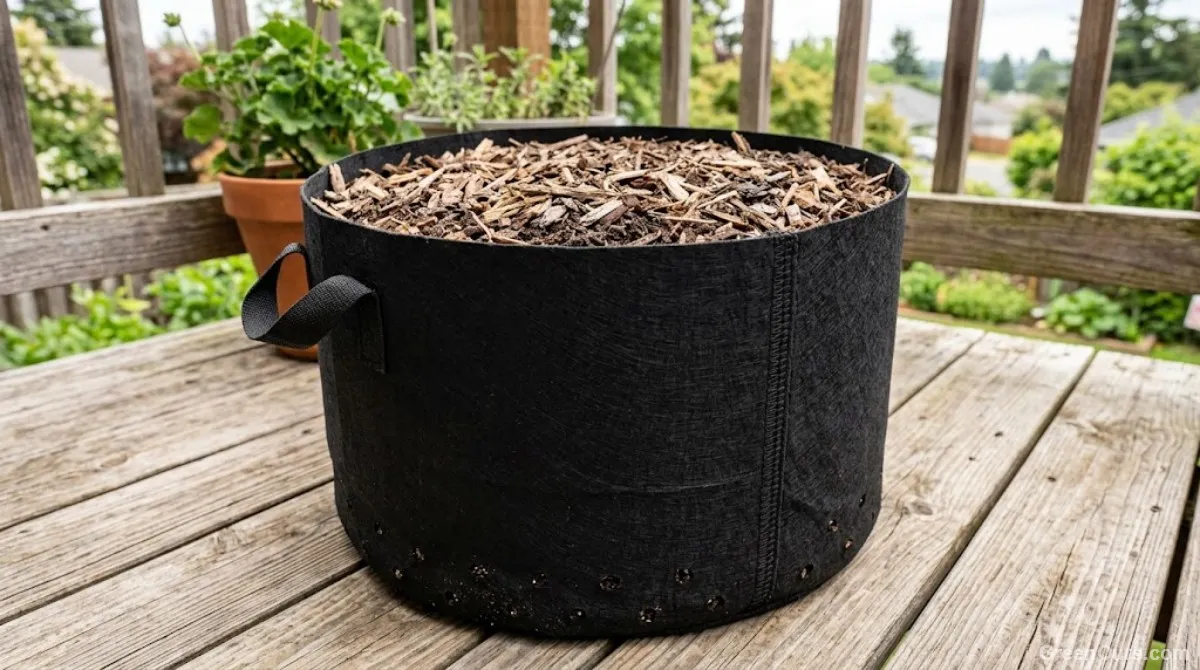
Ensure robust drainage holes exist. Fabric grow bags and light-colored resin pots are ideal for balconies: grow bags air-prune roots and prevent heat buildup, while light-colored containers reflect midday sunlight. Avoid dark plastic containers in direct sun, as they absorb solar heat and overheat root systems.
Transplanting & Deep Planting Technique
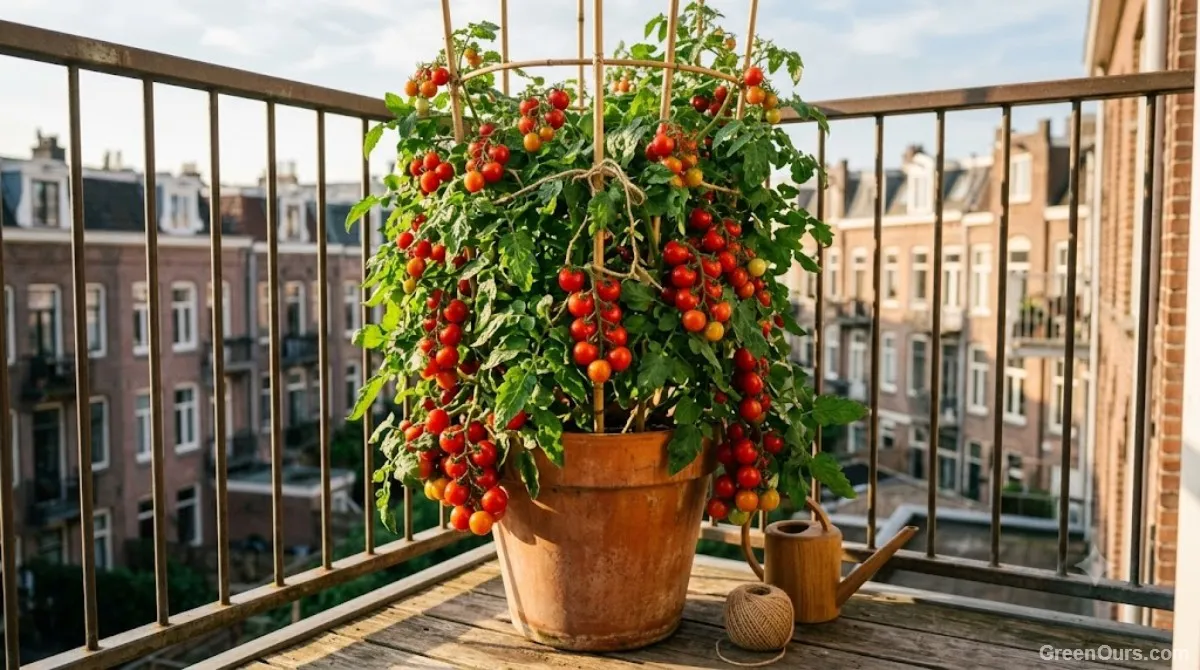
Tomatoes possess the unique ability to sprout adventitious roots along their stems when buried beneath soil. Deep planting creates an extensive root network that anchors the plant against balcony winds and improves nutrient uptake.
- Pinch Off Lower Leaves: Clip off the bottom two or three sets of leaves on your seedling, leaving only the top foliage intact.
- Dig a Deep Hole: Excavate a hole in your container mix so that up to two-thirds of the seedling stem will sit below the soil surface.
- Set and Backfill: Place the seedling deep into the container, backfill with light container mix, and press firmly around the stem base to eliminate air pockets.
- Install Support Immediately: Insert your cage or stake into the container right after planting. Pushing stakes into established root systems later causes severe root damage.
- Water Thoroughly: Soak the pot until water drains freely from the bottom holes.
Hand-Pollination for Sheltered Balconies
Tomatoes are self-pollinating, containing both male and female flower parts within each blossom. In outdoor gardens, breeze and wild bees vibrate the flowers to release pollen. However, enclosed balconies, glass barriers, or sheltered corners often lack sufficient airflow and pollinator activity, leading to unpollinated flowers that simply drop off.
To ensure high fruit set on balconies, assist pollination manually every two days during flowering:
- The Stem Flick Technique: Gently tap or flick the main flowering stems behind open yellow blossoms with your fingers to release pollen dust.
- Vibration Assist: Touch the back of open flower clusters with an electric toothbrush handle for two seconds to mimic the buzz pollination of bumblebees.
Watering, Feeding, and Wind Anchoring
Balcony Water Management
Strong winds and reflected masonry heat evaporate container moisture rapidly. Check soil daily by inserting a finger two inches into the potting mix: water deeply whenever the soil feels dry and cool below the surface. Always apply water directly to the root zone at the soil surface; wet foliage on windy or humid balconies encourages fungal diseases like early blight.
Nutrient Replenishment
Frequent container watering flushes water-soluble nutrients out through drainage holes. Once flowering begins, apply a low-nitrogen, high-potassium tomato fertilizer every two weeks. Excessive nitrogen encourages plush leafy growth at the expense of blossom and fruit development.
Wind Anchoring and Pruning
Secure tomato cages or support stakes to solid balcony railings or wall brackets using soft plant ties. For compact determinate varieties, prune sparingly—only remove damaged foliage near the base to maintain airflow. Excessive pruning on determinate tomatoes reduces total yield.
Troubleshooting Balcony Tomato Issues
| Symptom | Primary Cause | Balcony Action Step |
|---|---|---|
| Blossom drop (no fruit setting) | Lack of pollination, heat over 90°F (32°C), or shade | Hand-pollinate blossoms manually; move pot away from hot walls |
| Black sunken bottom on fruit (blossom-end rot) | Fluctuating soil moisture levels interrupting calcium transport | Maintain consistent soil moisture; avoid letting pots dry out completely |
| Cracked fruit skins | Sudden heavy watering following dry soil periods | Harvest fruit at breaker stage; maintain even daily watering |
| Yellowing lower leaves | Natural leaf aging, nitrogen leaching, or soggy soil | Ensure drainage is clear; apply balanced tomato fertilizer |
| Tipped container or bent stems | Balcony wind gusts catching top-heavy growth | Anchor supports to balcony structures; move pot low against wall |
Harvesting Strategy: The Breaker Stage
Leaving fully ripe tomatoes on balcony vines exposes them to sun-scald, skin cracking from sudden rainfall, and bird damage.
Harvest tomatoes at the breaker stage—the moment the fruit shows its first blush of pink or yellow color at the blossom end. At this stage, the fruit has sealed off its stem connection and accumulated all its natural sugars and acids. Bringing tomatoes indoors to finish ripening at room temperature on a kitchen counter yields identical flavor and texture while protecting your crop from extreme outdoor conditions.
Ready to get your hands in the soil? Pick your sunniest corner this weekend and start with one well-anchored pot.